2604
3'-9" x 6'-6"
AGE & ORIGIN:
19th C.
Persia
OVERVIEW:
Let me begin by saying Bidjar rugs are some of my personal favorite types of rugs, and examples like this one are the types I would point to in order to illustrate why.
This is a magnificent example of the idea of how great art influences the masses. The rug is undeniably a village piece, yet the subject matter is reflective of some of the greatest curvilinear designs ever woven. The weaver was no doubt influenced by the designs she must have known only tangentially as those enjoyed by the Persian aristocracy, and as such, in an inadvertent and poetic way, the rug is quite literally, only a fraction of what those great carpets would display.
What I mean by this, is that the field is an unrepeating pattern. It’s almost as if we’re looking at about 1/8th of what a larger version of this carpet would be displaying; the result being that we are presented with what would normally be mistaken as a ‘sampler’ or 'wagireh’, except this is not, and contrarily quite intentional. The nomenclature really may be referred to as an Ornak or Dastur, which were guides for weavers before the advent of using cartoons (drawings of designs) as guides.
Rich natural dyes coat a detailed lattice of old designs, including elongated tentacular herati-type leaves. Four unique florals, including a palmette and bard burst forth from a central floral medallion, all of which are intertwined in a sea of unrepeated stems and vines.
A truly unique piece that deserves recognition, perhaps even a space on a wall, and simply one of the most elegant Bidjars I’ve ever seen. Also a very useful study tool for the earliest Bidjars known and as the basis-of-design for modern rugs.
CONDITION:
Fragment condition, sold as-is
2604
3'-9" x 6'-6"
AGE & ORIGIN:
19th C.
Persia
OVERVIEW:
Let me begin by saying Bidjar rugs are some of my personal favorite types of rugs, and examples like this one are the types I would point to in order to illustrate why.
This is a magnificent example of the idea of how great art influences the masses. The rug is undeniably a village piece, yet the subject matter is reflective of some of the greatest curvilinear designs ever woven. The weaver was no doubt influenced by the designs she must have known only tangentially as those enjoyed by the Persian aristocracy, and as such, in an inadvertent and poetic way, the rug is quite literally, only a fraction of what those great carpets would display.
What I mean by this, is that the field is an unrepeating pattern. It’s almost as if we’re looking at about 1/8th of what a larger version of this carpet would be displaying; the result being that we are presented with what would normally be mistaken as a ‘sampler’ or 'wagireh’, except this is not, and contrarily quite intentional. The nomenclature really may be referred to as an Ornak or Dastur, which were guides for weavers before the advent of using cartoons (drawings of designs) as guides.
Rich natural dyes coat a detailed lattice of old designs, including elongated tentacular herati-type leaves. Four unique florals, including a palmette and bard burst forth from a central floral medallion, all of which are intertwined in a sea of unrepeated stems and vines.
A truly unique piece that deserves recognition, perhaps even a space on a wall, and simply one of the most elegant Bidjars I’ve ever seen. Also a very useful study tool for the earliest Bidjars known and as the basis-of-design for modern rugs.
CONDITION:
Fragment condition, sold as-is


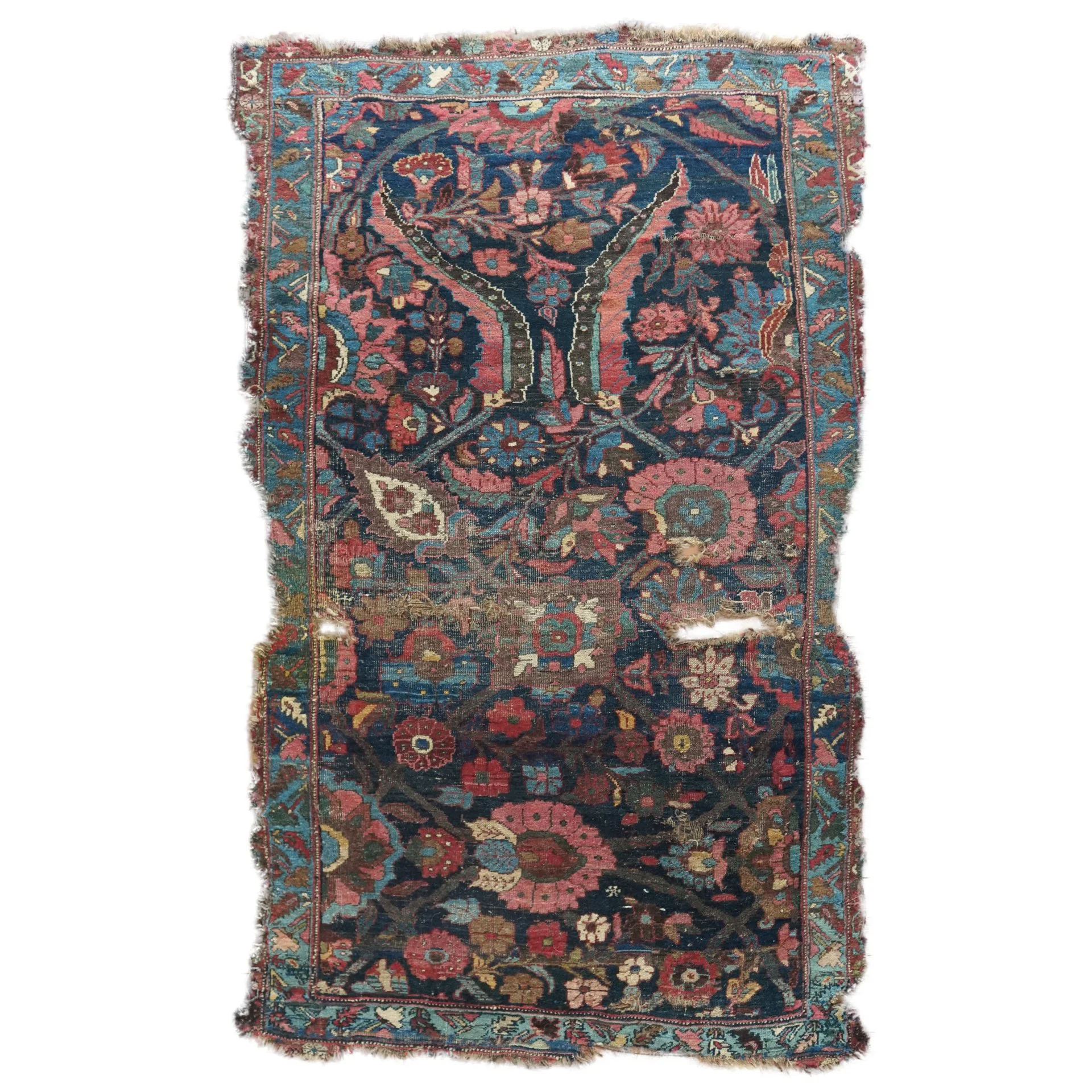 Image 1 of 7
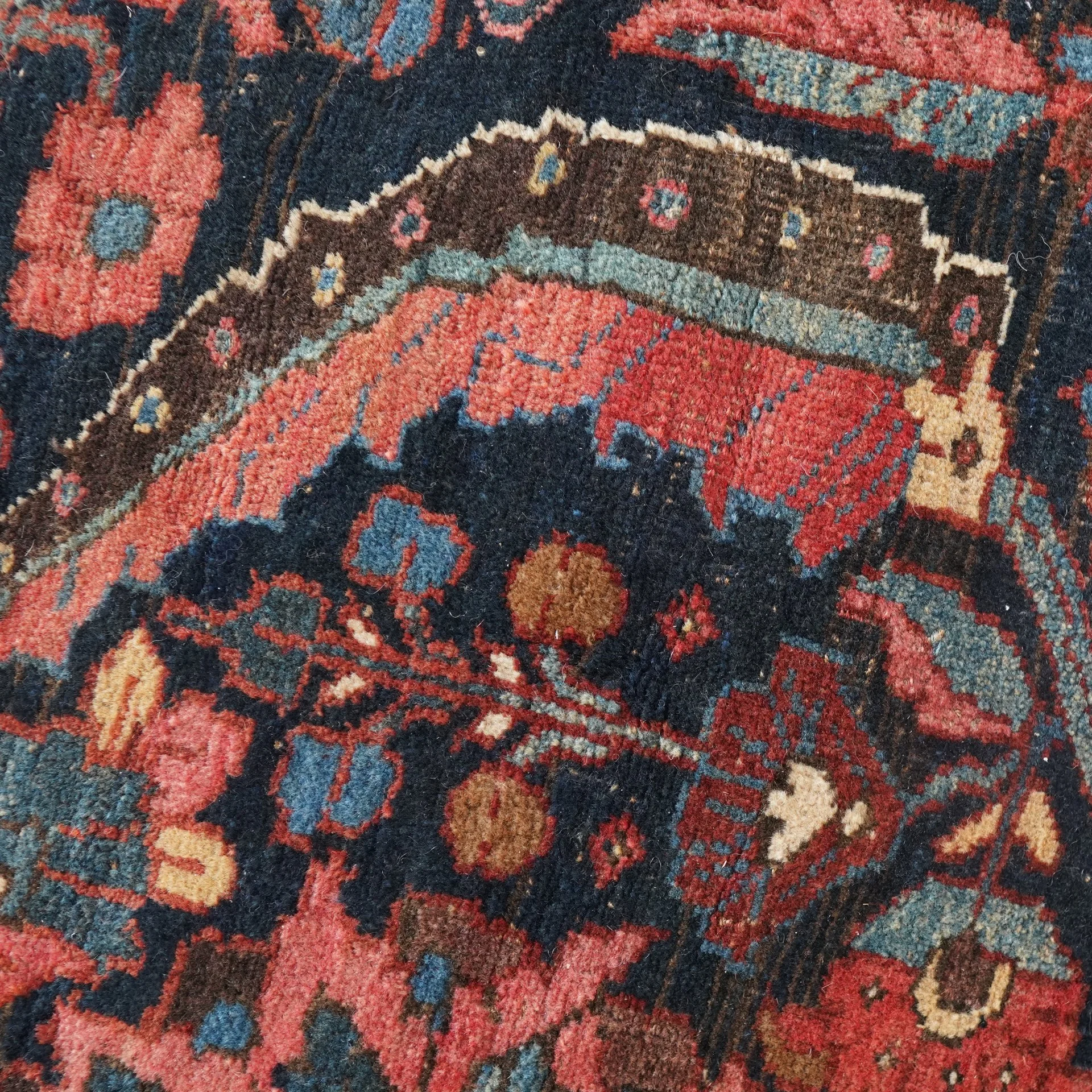 Image 2 of 7
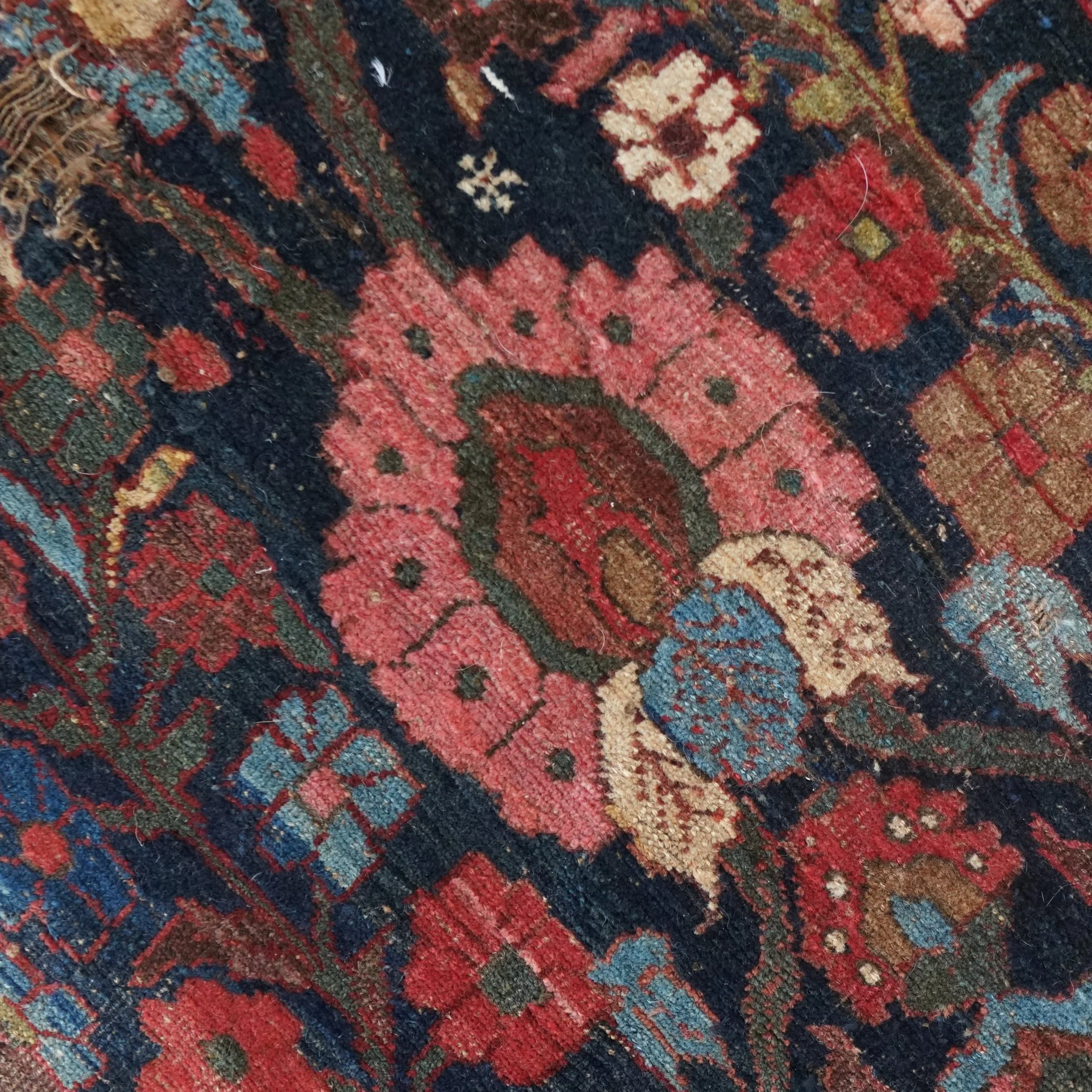 Image 3 of 7
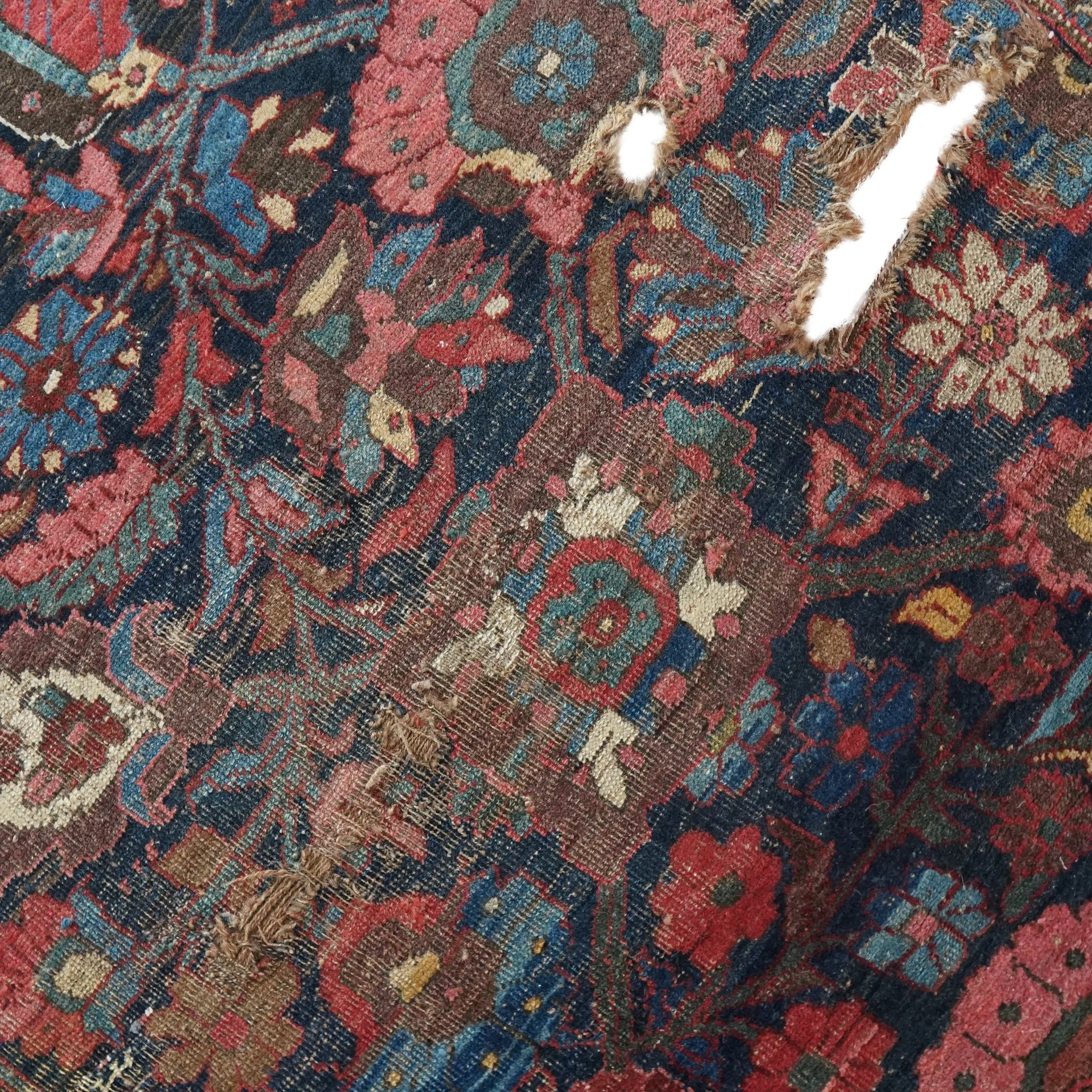 Image 4 of 7
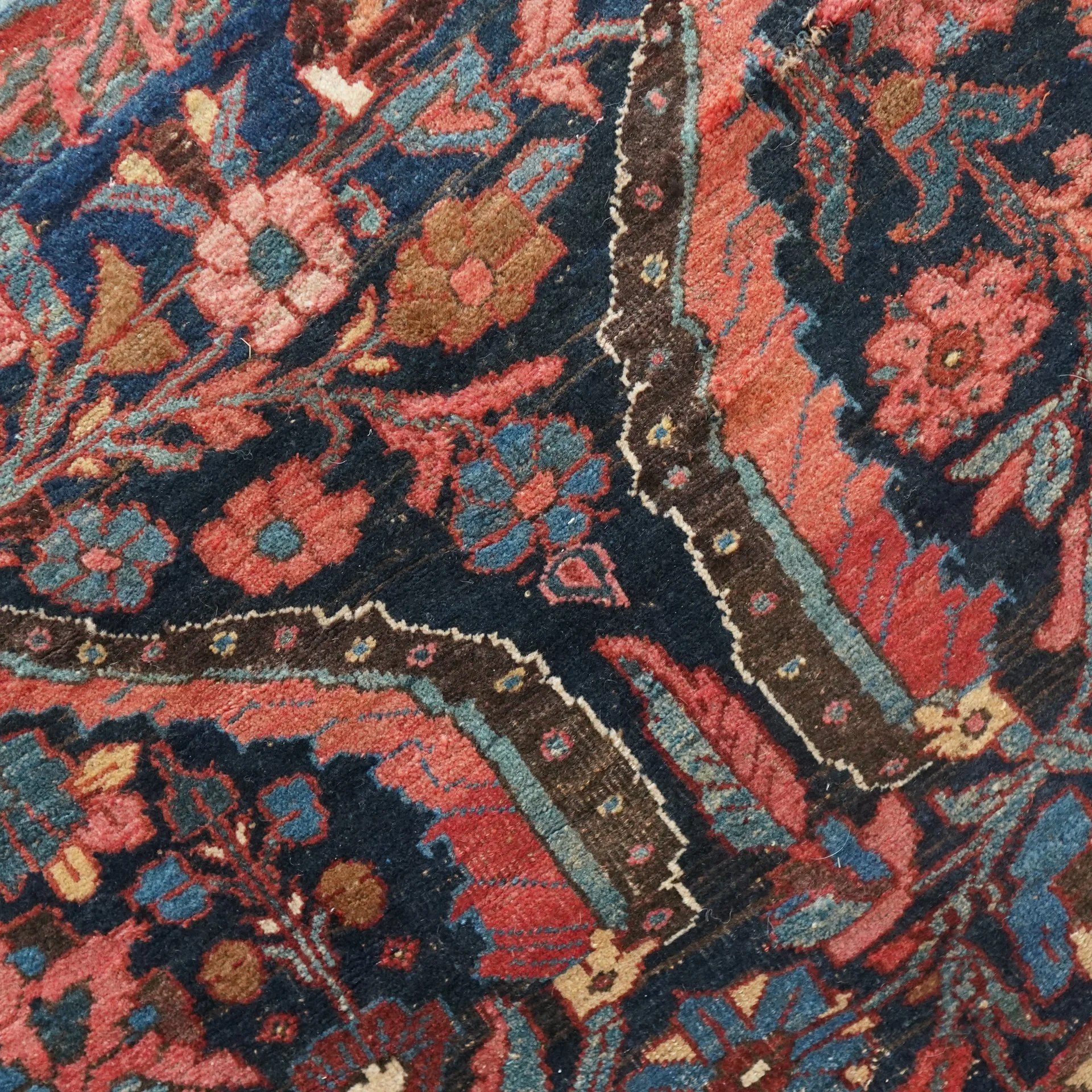 Image 5 of 7
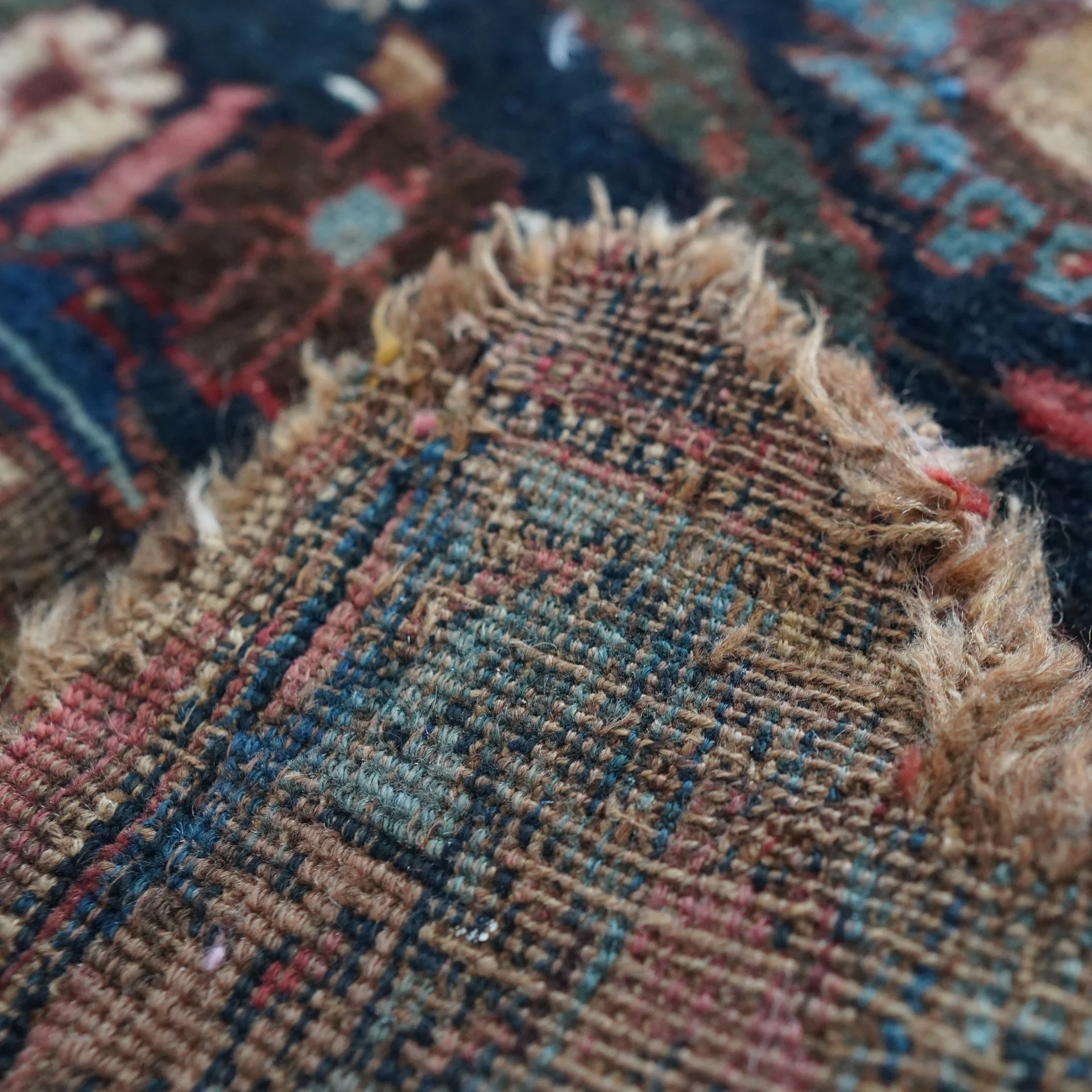 Image 6 of 7
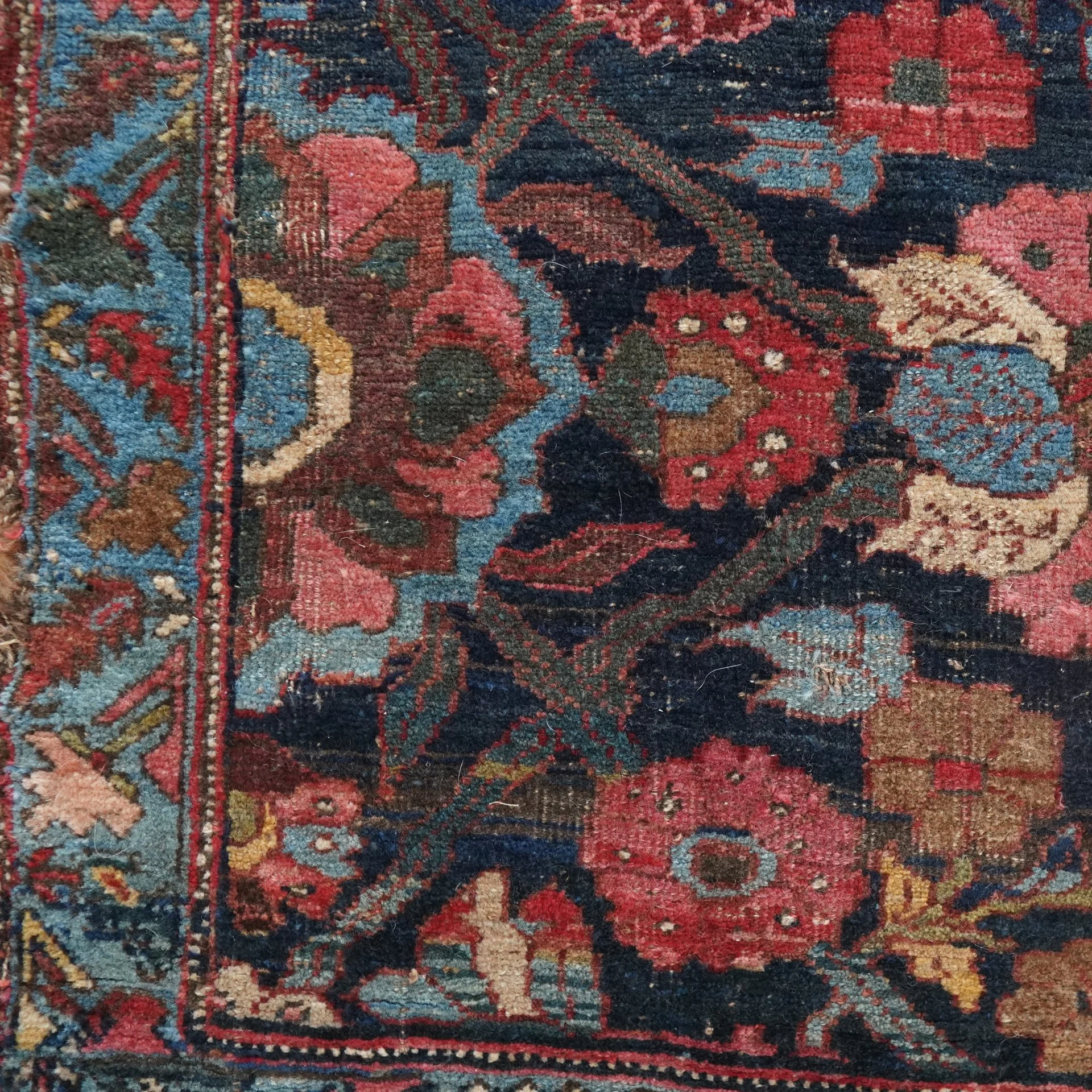 Image 7 of 7