

NOTICE:
We will be ON BREAK for the month of October.
All orders made between October 1st and October 31st will be shipped the first week of November.
L I M I R O K O
ANTIQUE & VINTAGE
RUGS
foundation
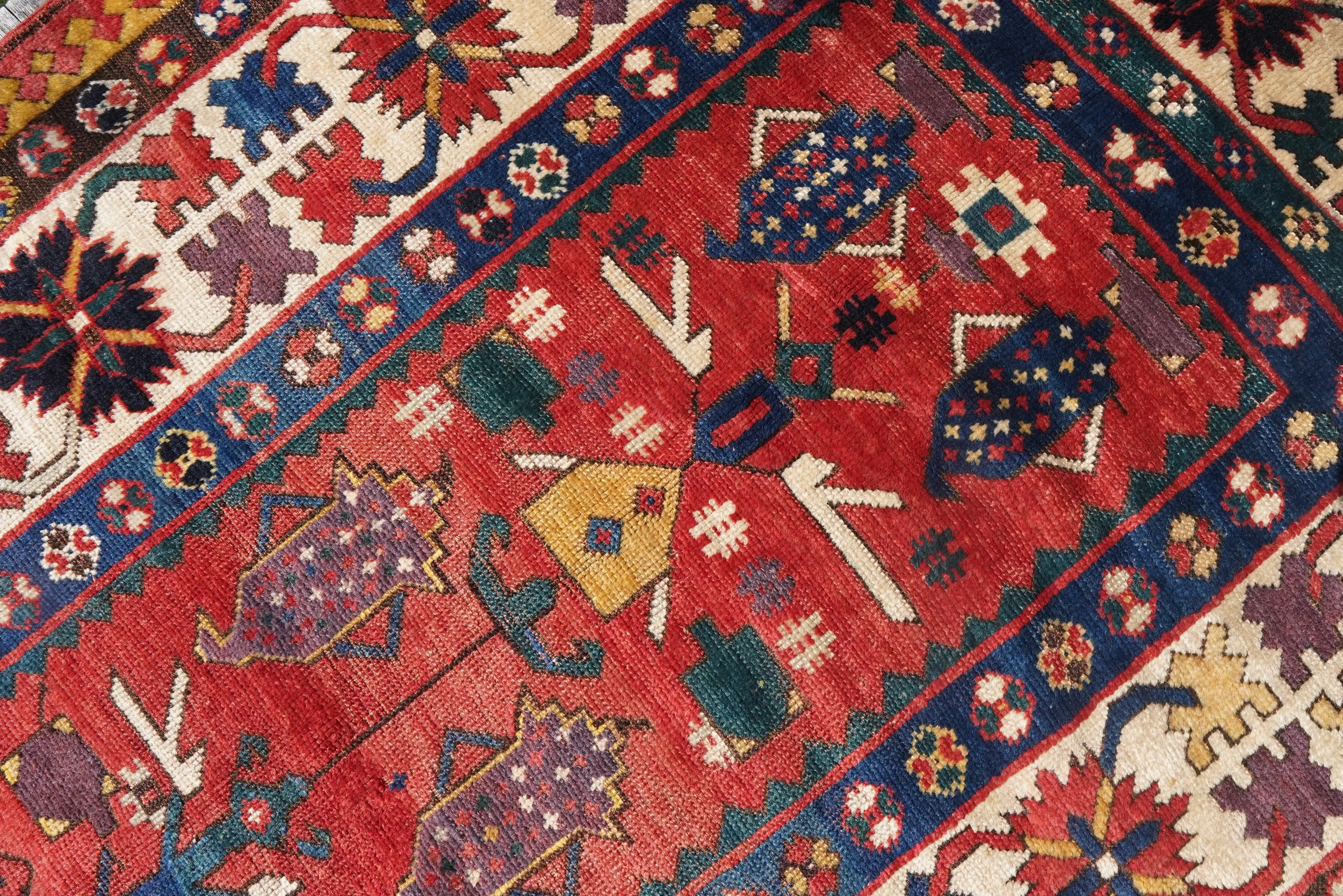
WE LOVE RUGS. IT DOESN’T GET MUCH SIMPLER THAN THAT
Check out our curated,
ever-growing collection
of nomadic, village
and workshop weaves.

education
taking in knowledge, one rug at a time
Knowledge is power. Become an informed client by checking out the content we make on our socials.
dealer’s choice
learn more about us and our policies
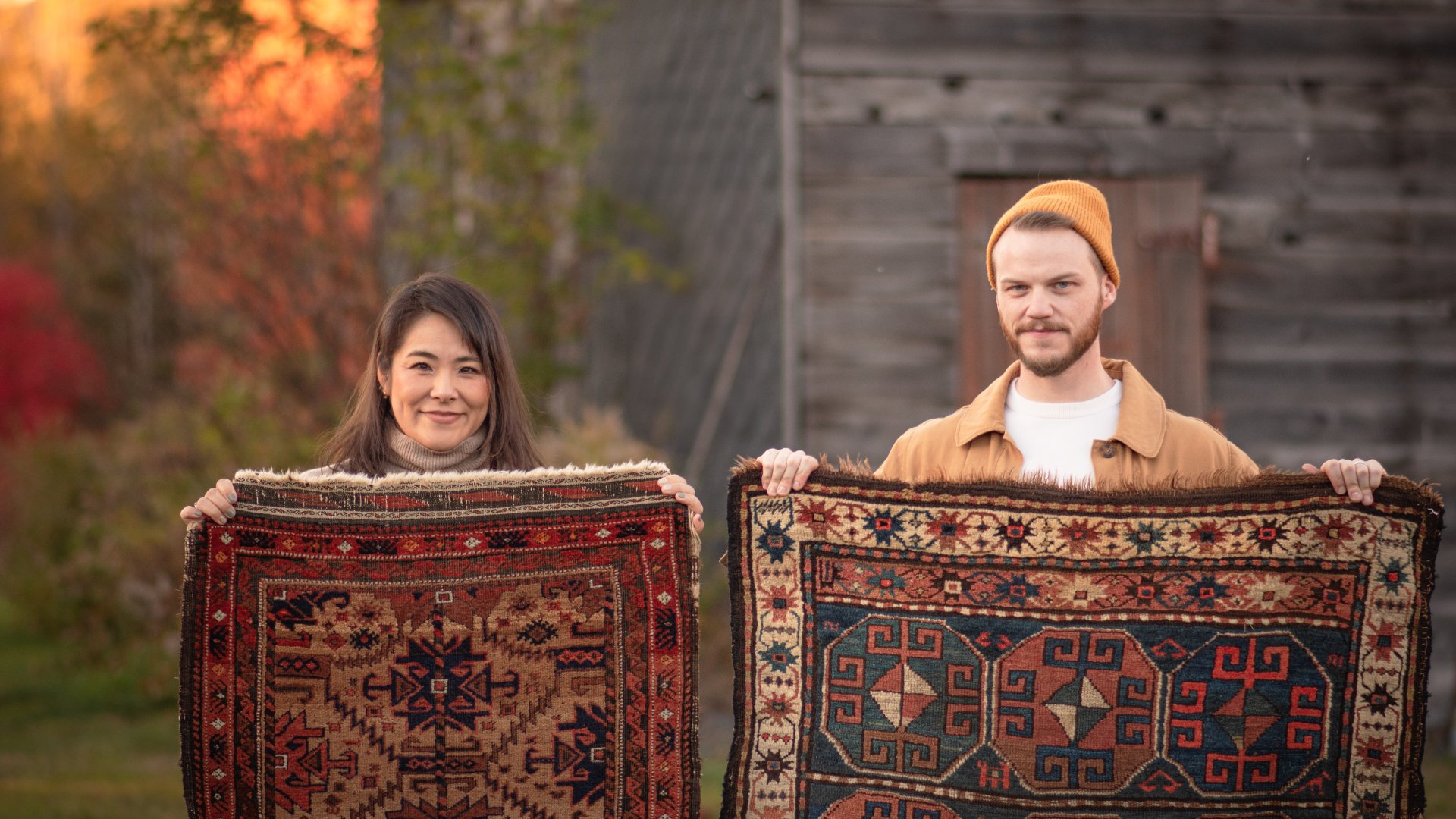
We’re Maine-based couple Liam and Minori Hedefine. Read about what we believe, and the goals we try to accomplish in regards to rugs.
Featured Rugs
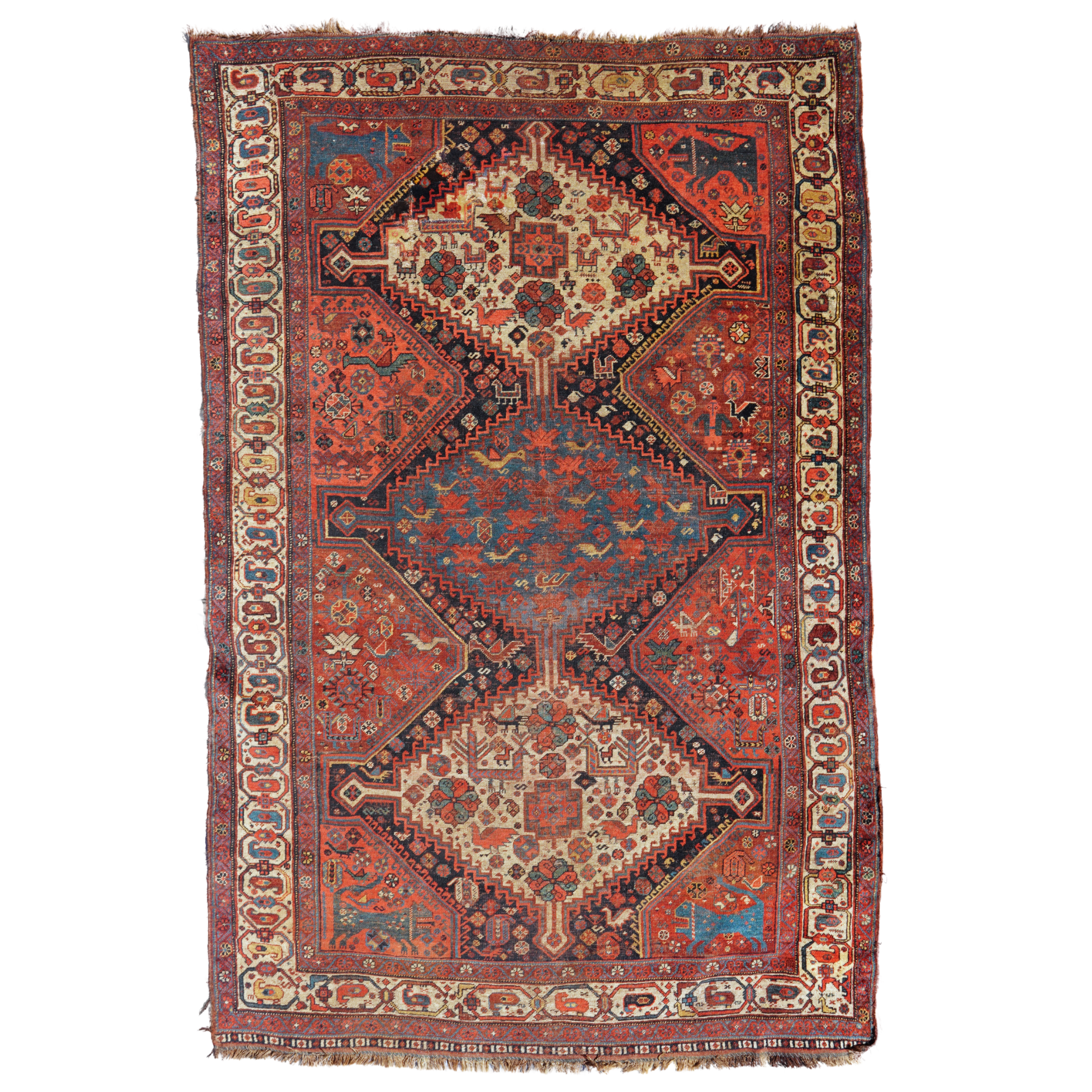
2651
5’-7” x 8’-9”
AGE & ORIGIN:
c. 1900
Persia
OVERVIEW:
A stellar example of tribal art that contains elements of the sophisticated without losing sight of it’s humble roots. Lions borrowed from a regal Persian legacy act as sentries, protecting (or perhaps hunting) a menagerie of avians and unuglates with a single steward of these beasts also portrayed.
Without postulating too much on singular elements, the greatest aspect, to me, of this rug is that while there is a veneer of symmetry in the main medallions, their conjoining trapezoidal offsets, and the borders, when one peers into the details and color usage, that symmetry simply isn’t there.
All these elements play into a fantastic and relatively substantial Khamseh carpet that manages to shake the rigidity of later, more export-focused pieces that also utilize this ‘tribal’ design language to a much lesser degree.
CONDITION & NOTES:
Low pile
Some yellowing of the ivory border, most likely a result of oxidation of the natural wool
Ends have been secured
Several patched areas limited to top third of the rug (see final photo for extent)
2649
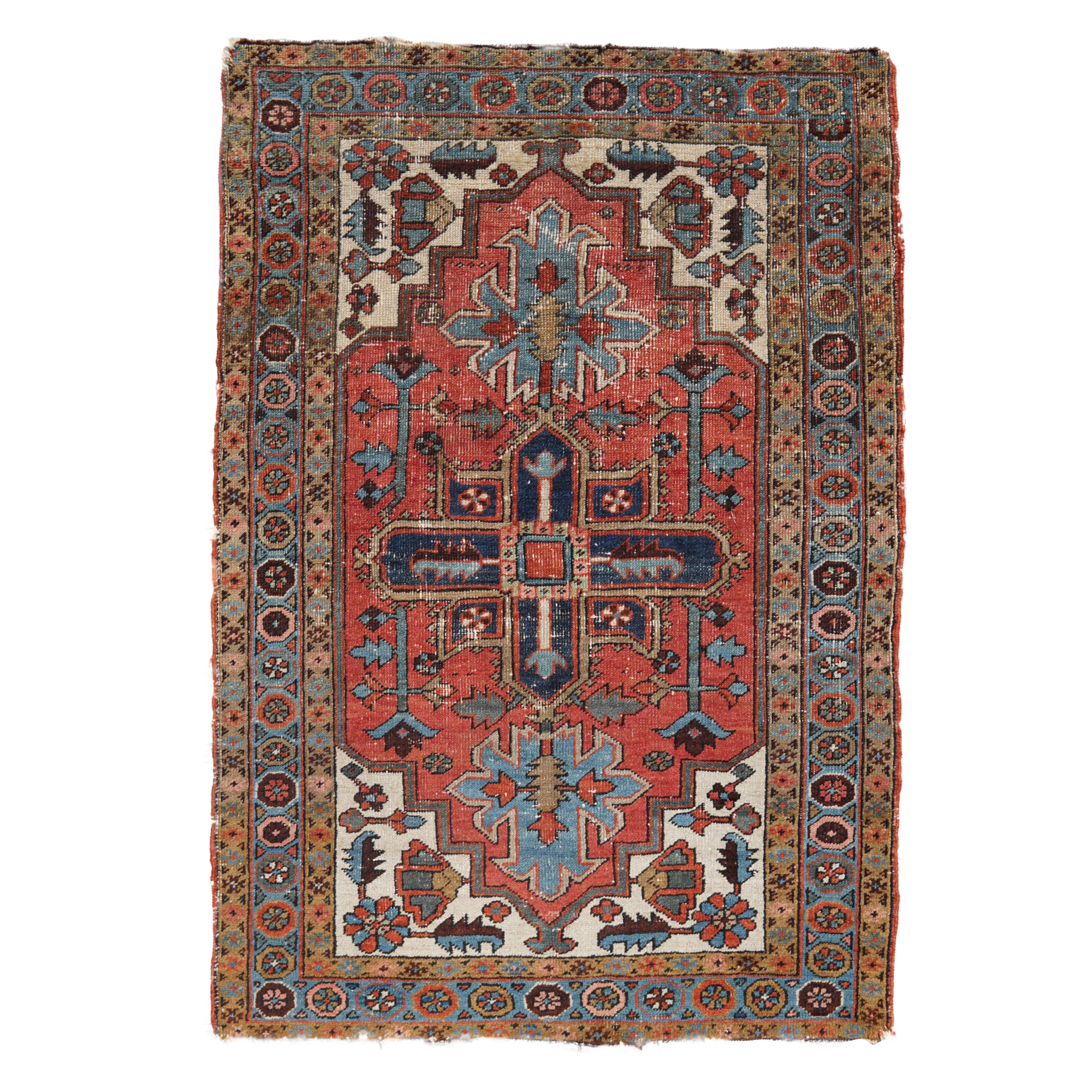
3’-7” x 5’-3”
AGE & ORIGIN:
Early 20th C.
Persia
OVERVIEW:
From a region known more for it’s area and oversized rugs comes a miniature version of those more common types. An interesting result from this (from a design perspective) is that this Northwest Persian rug begins to lean and look more like its Caucasian cousins than something from Heriz.
Wonderful anchors and spandrel designs all surrounded by a repeating floral medallion main border. A perfect accent piece to another NW Persian area rug, or perhaps something that is able to stand on its own.
CONDITION:
Areas of lower pile, some end loss.
2671
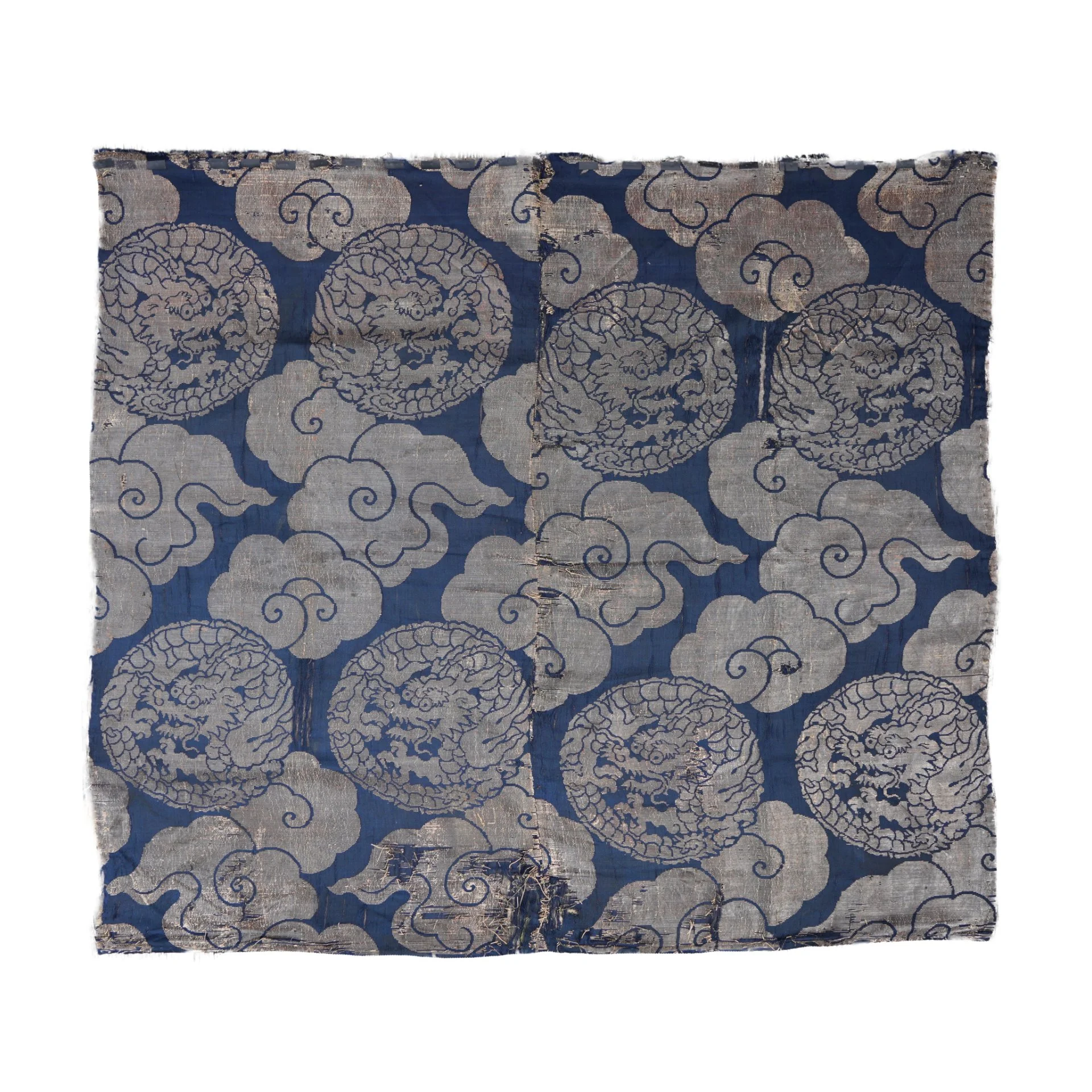
3’-10” x 3’-4”
AGE & ORIGIN:
c. 1800
Japan
OVERVIEW:
Two intricate and delicately woven panels of silk and lacquered-paper thread depicting dragons and clouds. While the piece consists of two panels, it’s most likely that these were sewn together some years after the initial work was done, as both contain cotton backings with calligraphy denoting them as having been patronage to a monastic setting.
While the original purpose remains somewhat muddled, it’s possible that they were used as wrappings for utensils or perhaps other gifts, as, once again, the backing calligraphy denotes evidence of the textile as a gift, with receivers of the gift being listed by name.
The execution of the drawing is stunning, especially when one thinks about the painstaking work to achieve this repeating design by hand. The dichotomy of such powerful imagery drawn with such delicate, even fragile material is evocative of the idea of a paper tiger.
A very similar piece exists on display at the Chicago Art Institute:
Fragment of a Temple Hanging
CONDITION:
Fraying in areas
Contact
Have a question about a rug?
Looking to potentially sell a piece?
Reach us through Instagram DMs or:
contact@limiroko.com