2669
3’-6” x 9’-0”
AGE & ORIGIN:
Late 19th C.
Caucuses/Persia
OVERVIEW:
Boasting the essence of something firmly in the ‘Trans-caucus’ region, with a weaving structure and drawing expected of the Kurds, but with design elements of rugs found deeper into the Caucus region (Shulaver Kazak designs come to mind). Of course, the star of the show has to be the color, although it’s slightly more deceptive than it looks.
The rug is, in reality, quite dark in its palette, being occupied by several shades of brown and aubergine in the field and borders. However, a downstream effect of this is the softening (almost ‘pasteling’) of the plethora of other shades on the rug, making them, not overwhelming, but quite complementary, despite their wide range.
To those taking note, there is an interesting phenomenon occurring in the main chevron-like border; the nested ‘birds foot’ motif. Although absent from the top and bottom borders, its inclusion in the sides is a nice touch by a weaver who was clearly interested in the small details, as made clear by the other small idiosyncrasies found throughout the negative space. Of course, I’d be remiss if I didn’t mention one of my favorite elements, the outer border; an interlocking, multicolored serpentine ‘S’ outlined in a fine coral with what look to be small stars flanking a field of blue night.
CONDITION/NOTES:
2669
3’-6” x 9’-0”
AGE & ORIGIN:
Late 19th C.
Caucuses/Persia
OVERVIEW:
Boasting the essence of something firmly in the ‘Trans-caucus’ region, with a weaving structure and drawing expected of the Kurds, but with design elements of rugs found deeper into the Caucus region (Shulaver Kazak designs come to mind). Of course, the star of the show has to be the color, although it’s slightly more deceptive than it looks.
The rug is, in reality, quite dark in its palette, being occupied by several shades of brown and aubergine in the field and borders. However, a downstream effect of this is the softening (almost ‘pasteling’) of the plethora of other shades on the rug, making them, not overwhelming, but quite complementary, despite their wide range.
To those taking note, there is an interesting phenomenon occurring in the main chevron-like border; the nested ‘birds foot’ motif. Although absent from the top and bottom borders, its inclusion in the sides is a nice touch by a weaver who was clearly interested in the small details, as made clear by the other small idiosyncrasies found throughout the negative space. Of course, I’d be remiss if I didn’t mention one of my favorite elements, the outer border; an interlocking, multicolored serpentine ‘S’ outlined in a fine coral with what look to be small stars flanking a field of blue night.
CONDITION/NOTES:


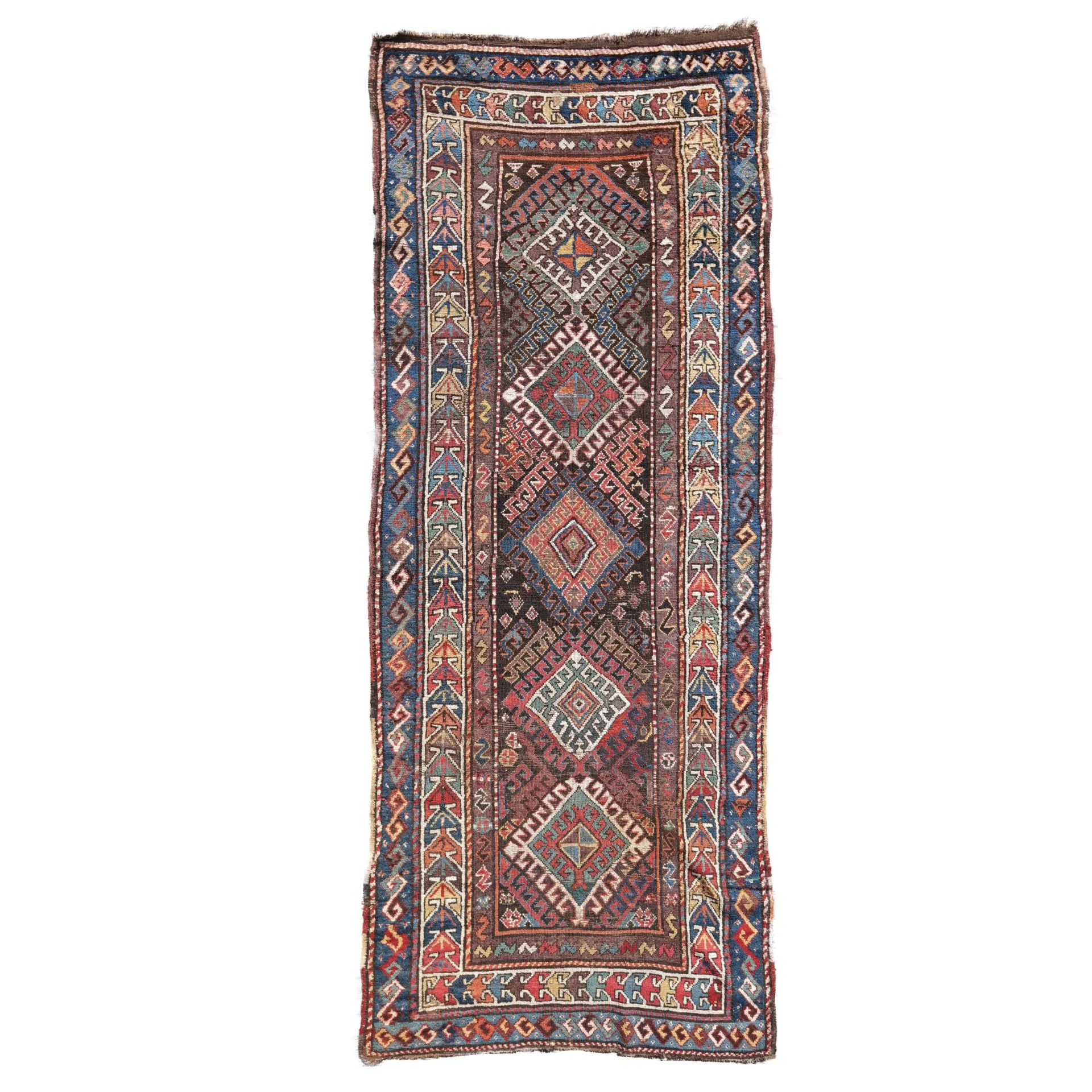 Image 1 of 10
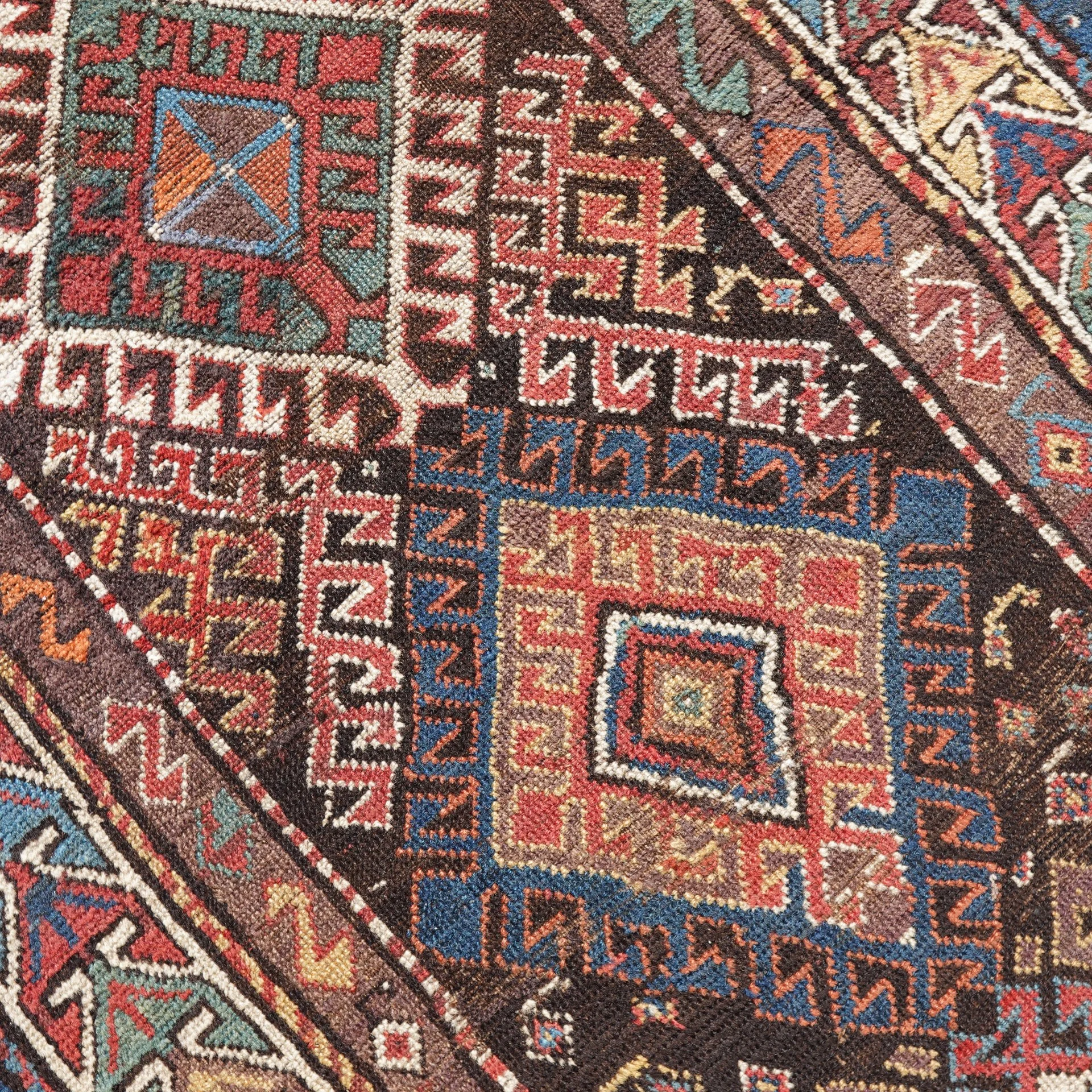 Image 2 of 10
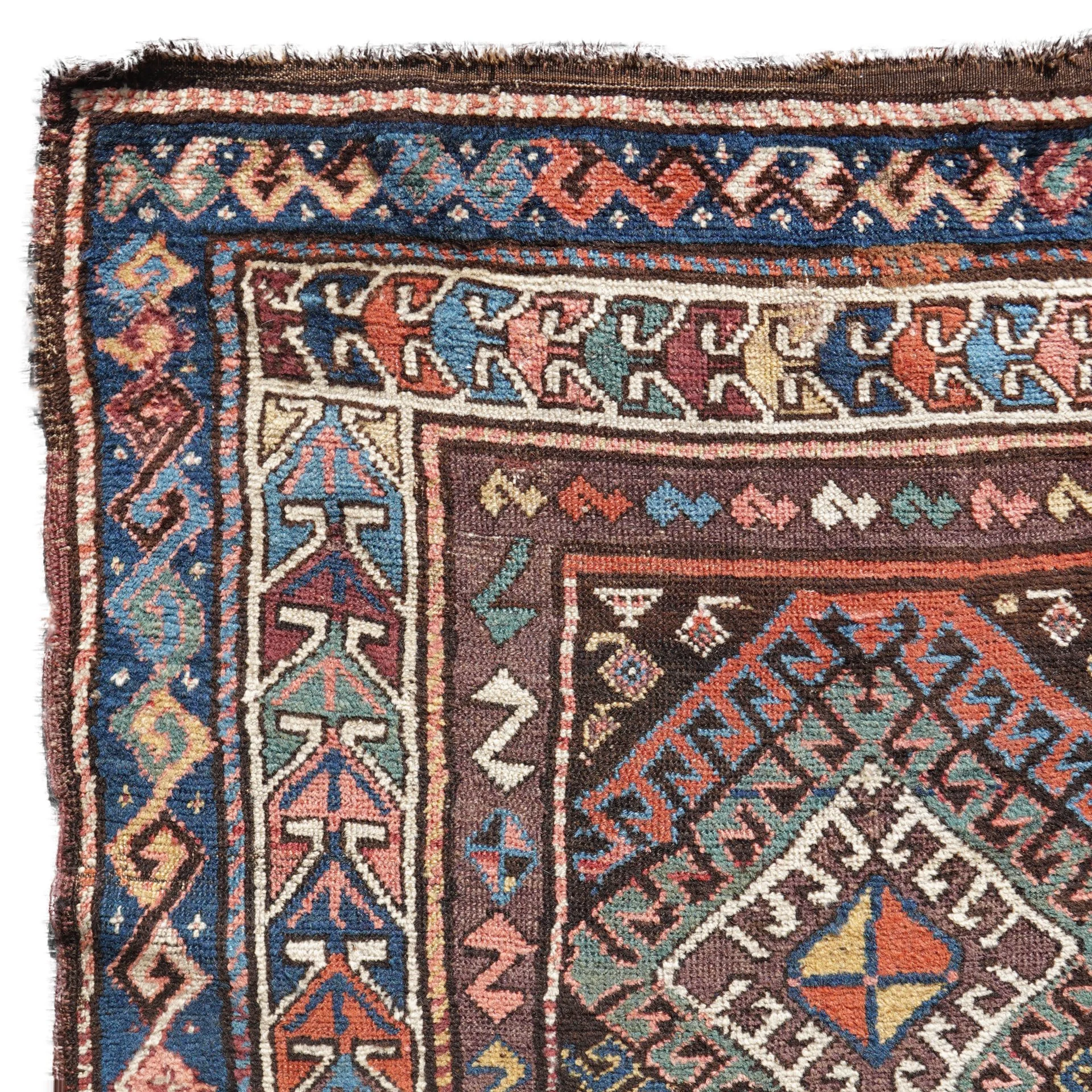 Image 3 of 10
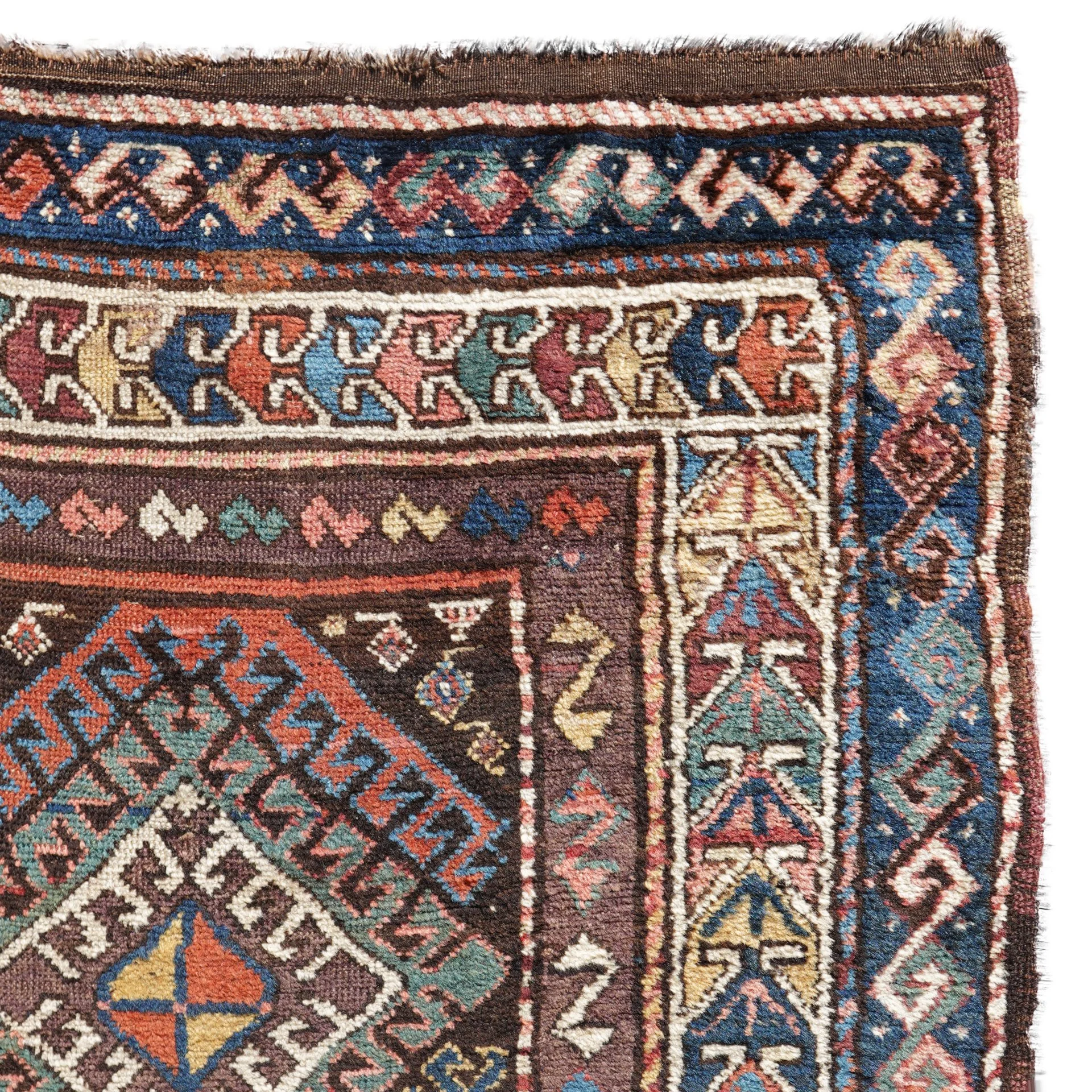 Image 4 of 10
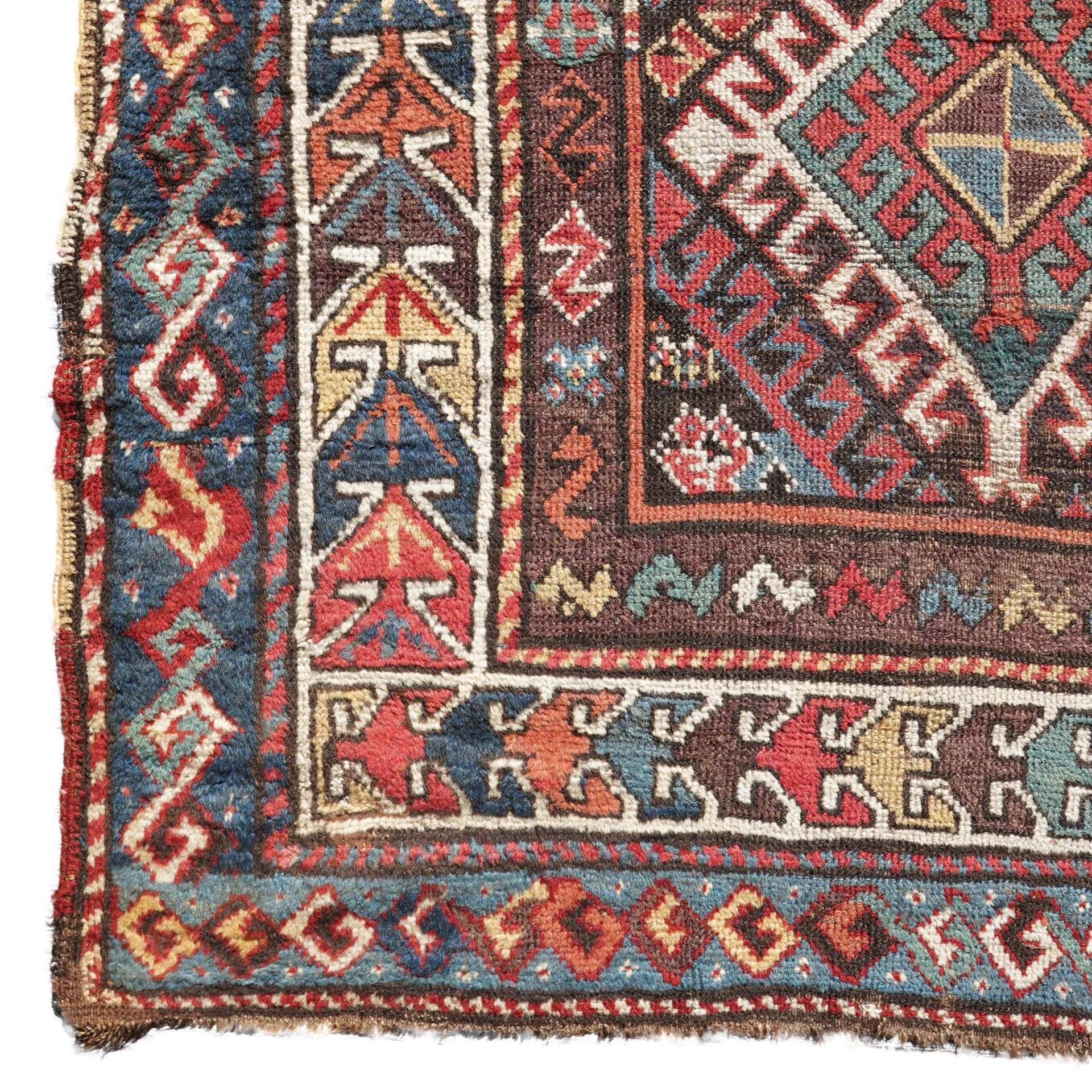 Image 5 of 10
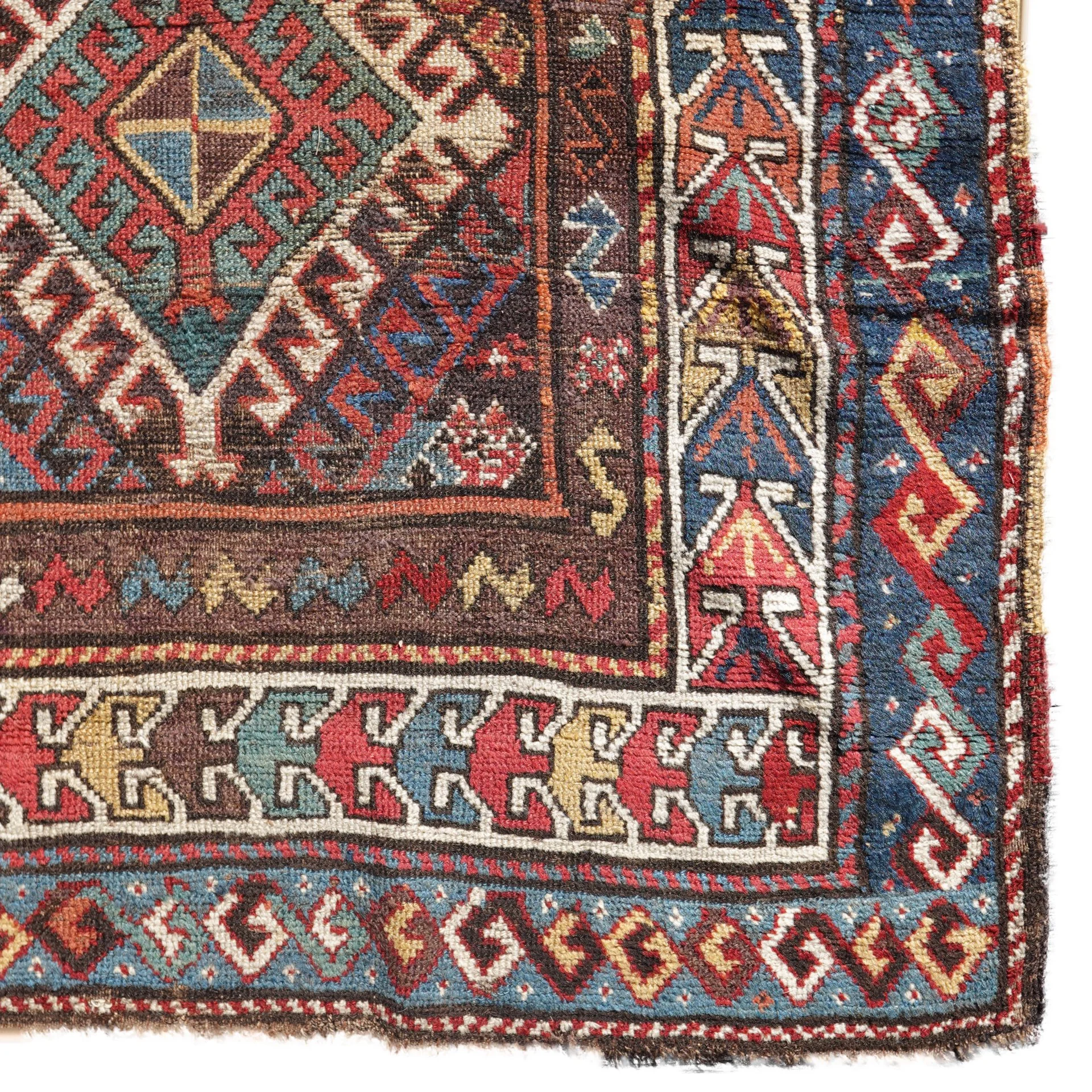 Image 6 of 10
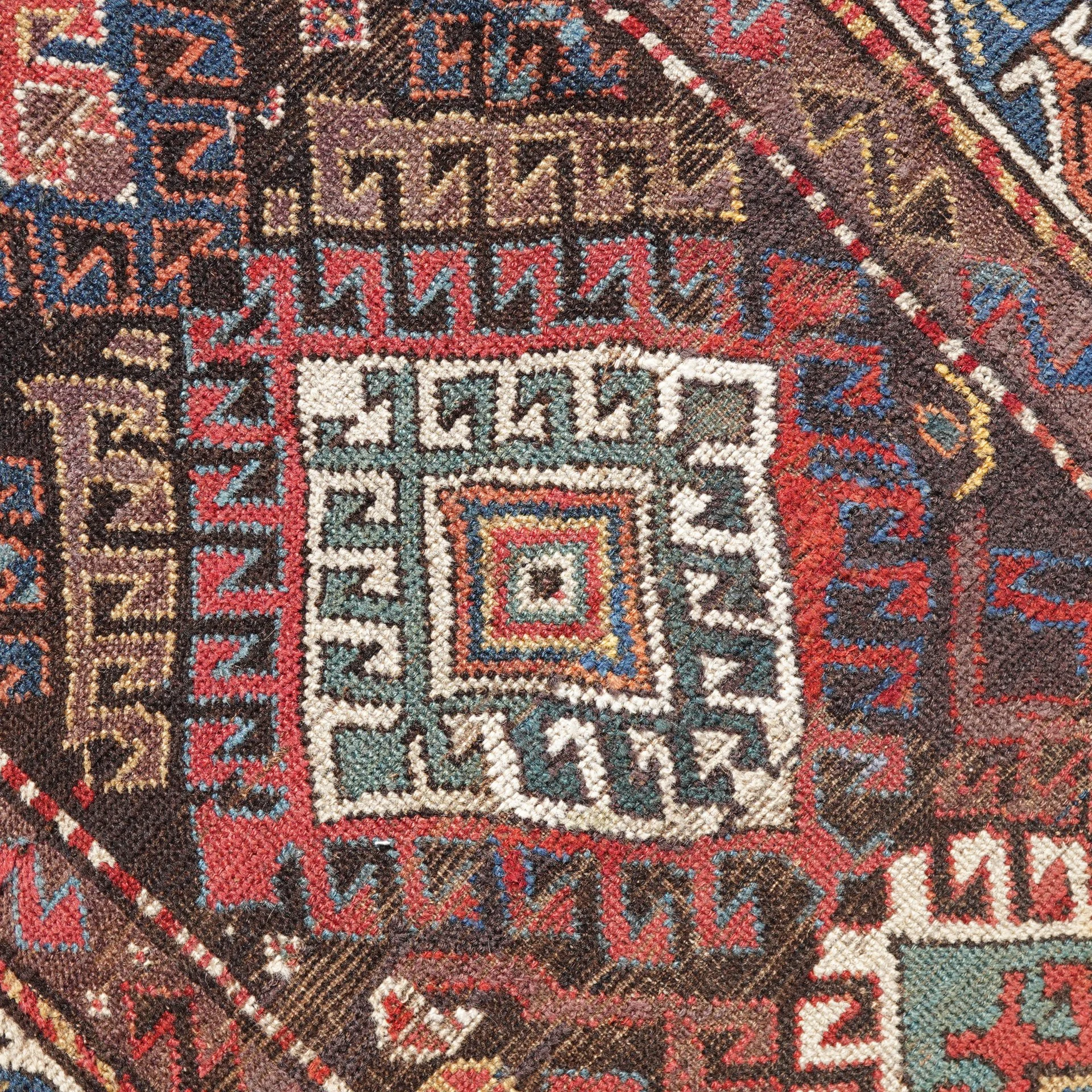 Image 7 of 10
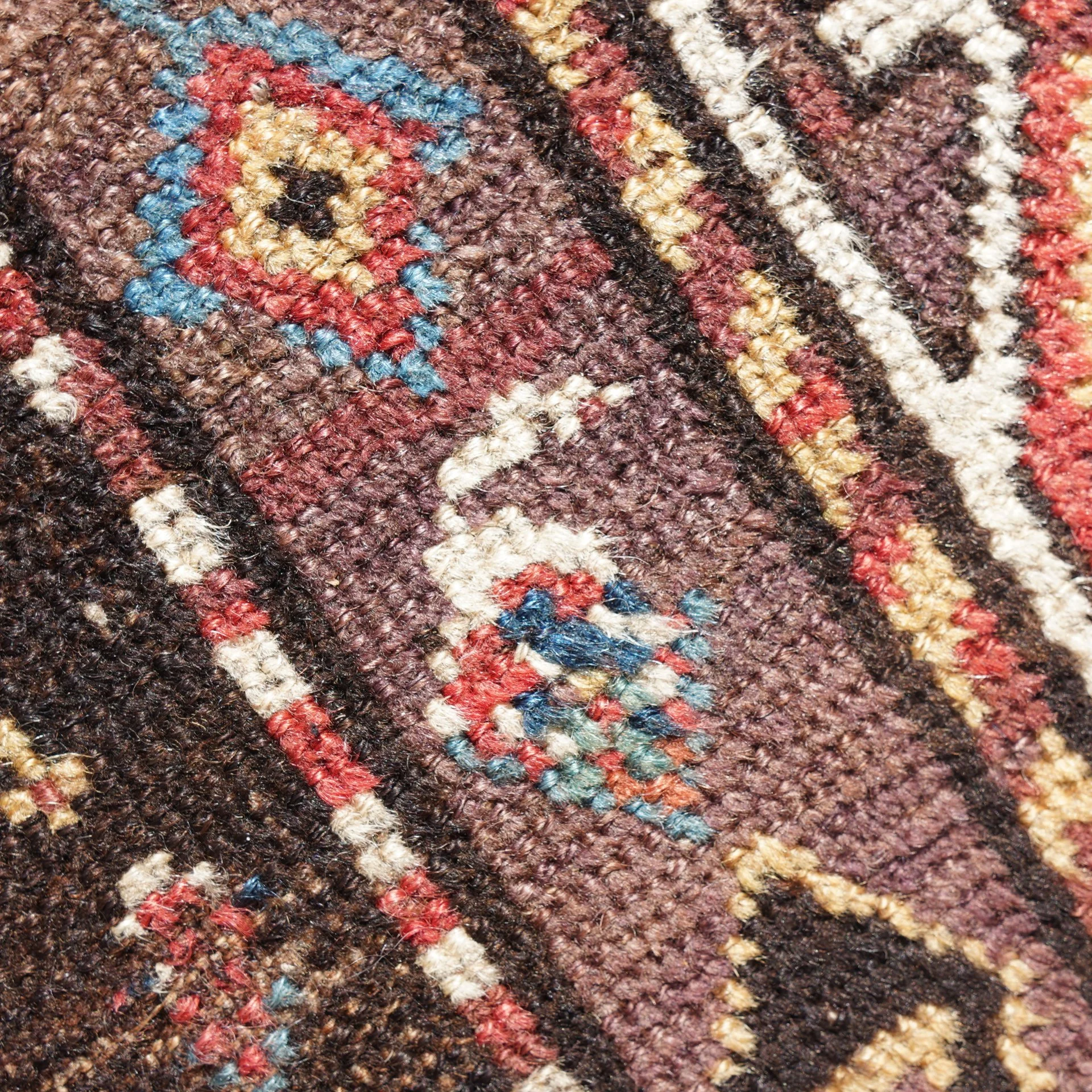 Image 8 of 10
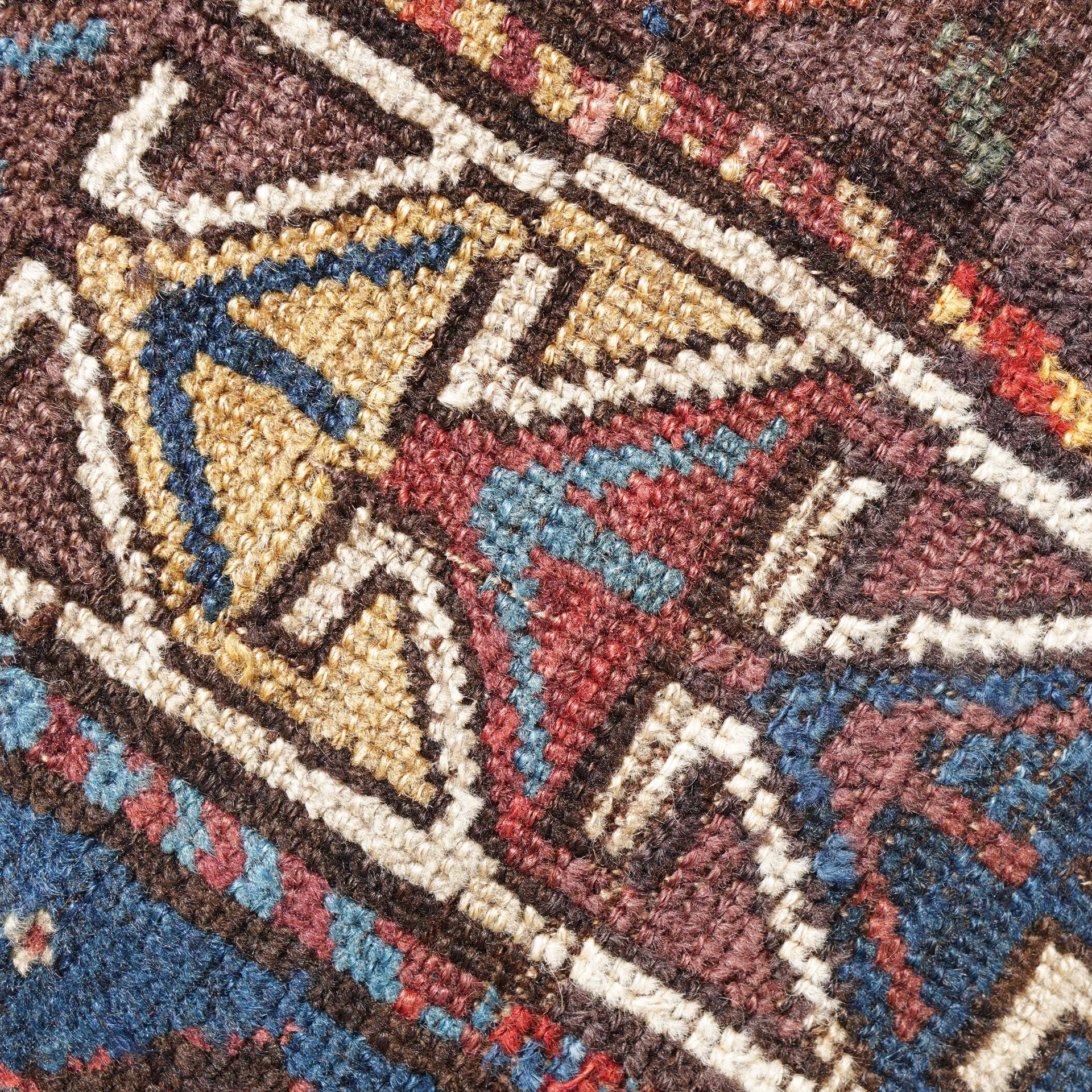 Image 9 of 10
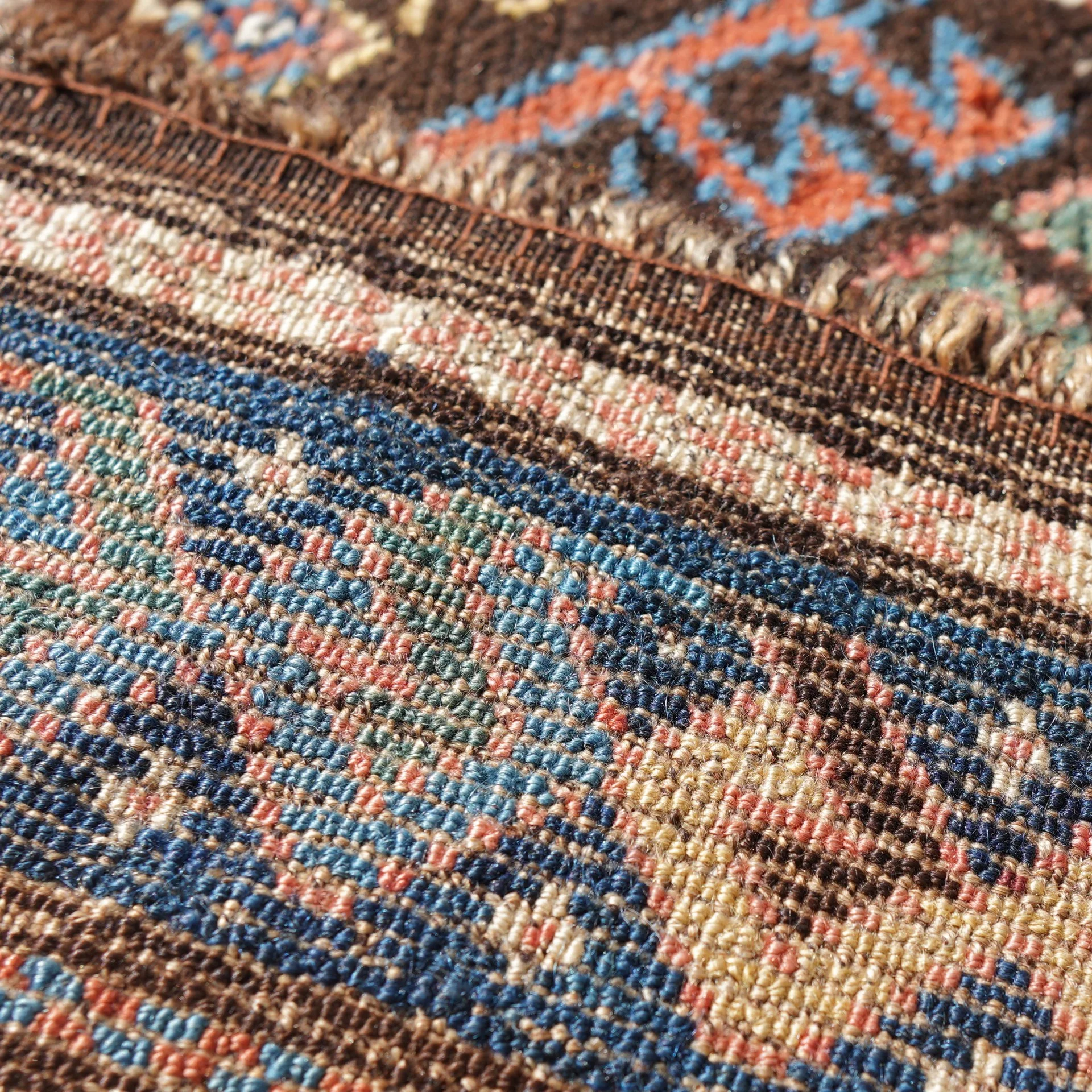 Image 10 of 10