2715
4’-5” x 6’-9”
OVERVIEW:
While the design cues are taken from Turkish prayer rugs, and more specifically Ladik prayer rugs, the highly distinct structure gives this rug away for what it is: a rug woven by inmates of the 19th C. Indian jail system.
While many of these rugs exist, relatively little is known about them. That being said, it may be possible to break them into two groups. The first were the original group that were made in the mid to late 19th C. that are highly detailed and retain a more organic artistic integrity.
The second group is one that began in the late 19th to early 20th C. when the jail labor was more streamlined to create products that would ultimately be made specifically for export (the previous group was made for export, however there was an undeniable loss of quality and craft in the latter group).
I believe this rug to be from the earlier group based on the colors being used and the curvature to the linework. There is great detail in the way the knotting has been done and has created an almost ‘blurry’ effect to the front of the rug. There has also been great care in the way the mihrab and extending candelabra shapes have been drawn.
I would also be remiss if I didn’t mention how incredibly striking the two main colors are. Magenta and radioactive green make up the majority of the colors and are unlike anything I’ve seen before.
I don’t know if this is necessarily a beautiful rug, but it may be beside the point in how remarkable the history and execution are.
CONDITION:
Some floating warps, an old repair to two tears. While the rug is in a complete condition, the original edges are essentially completely gone. This can be quoted for repair upon request.


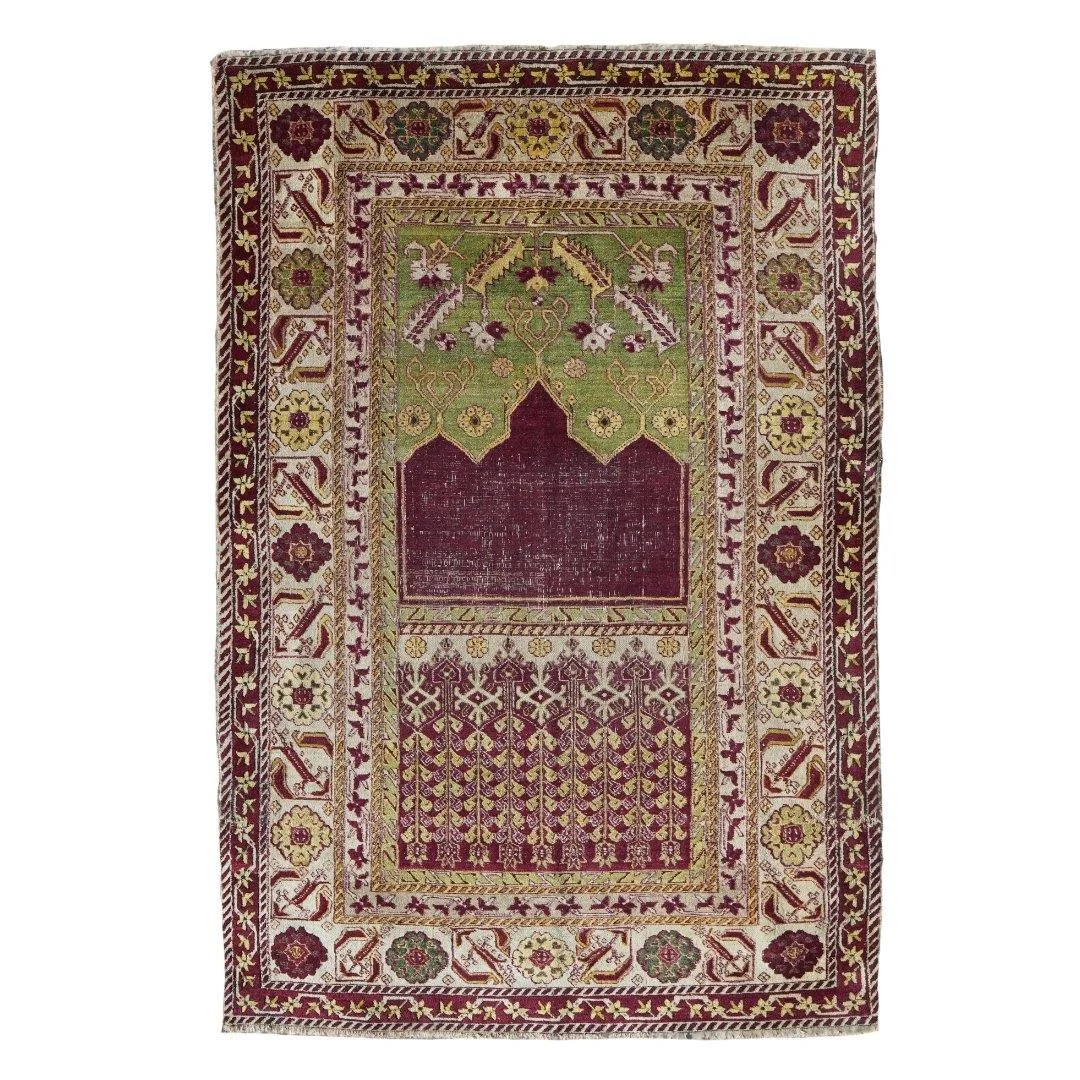 Image 1 of 11
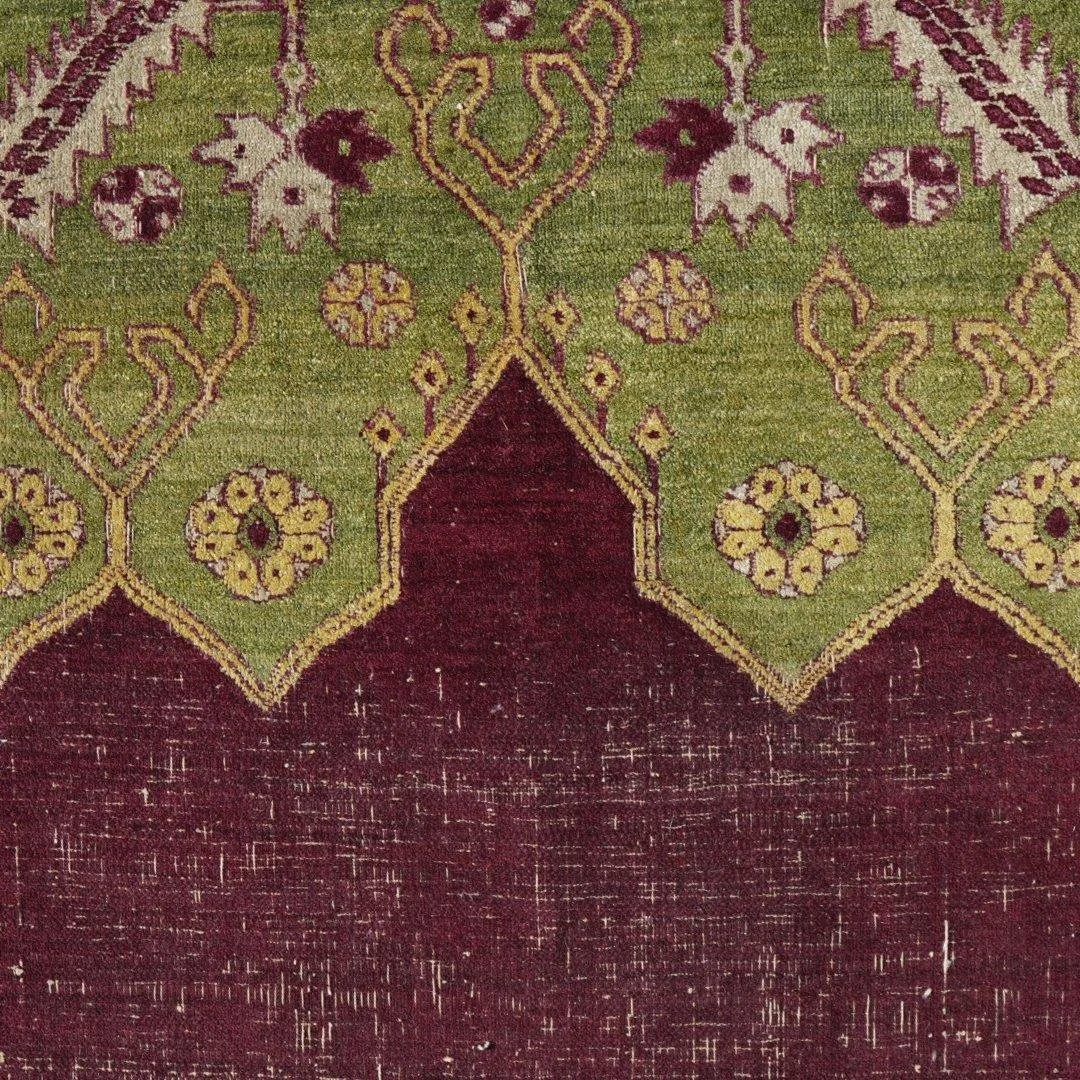 Image 2 of 11
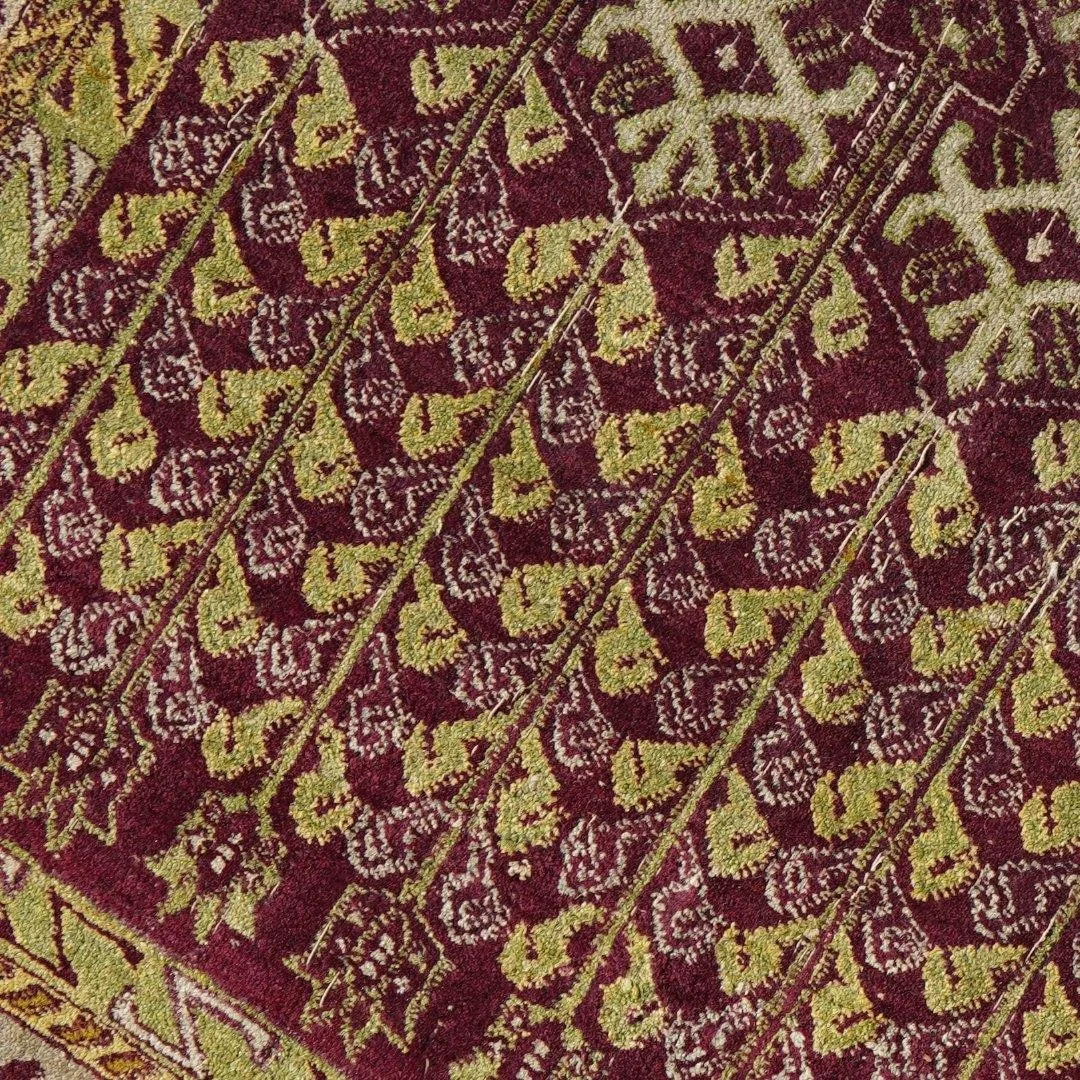 Image 3 of 11
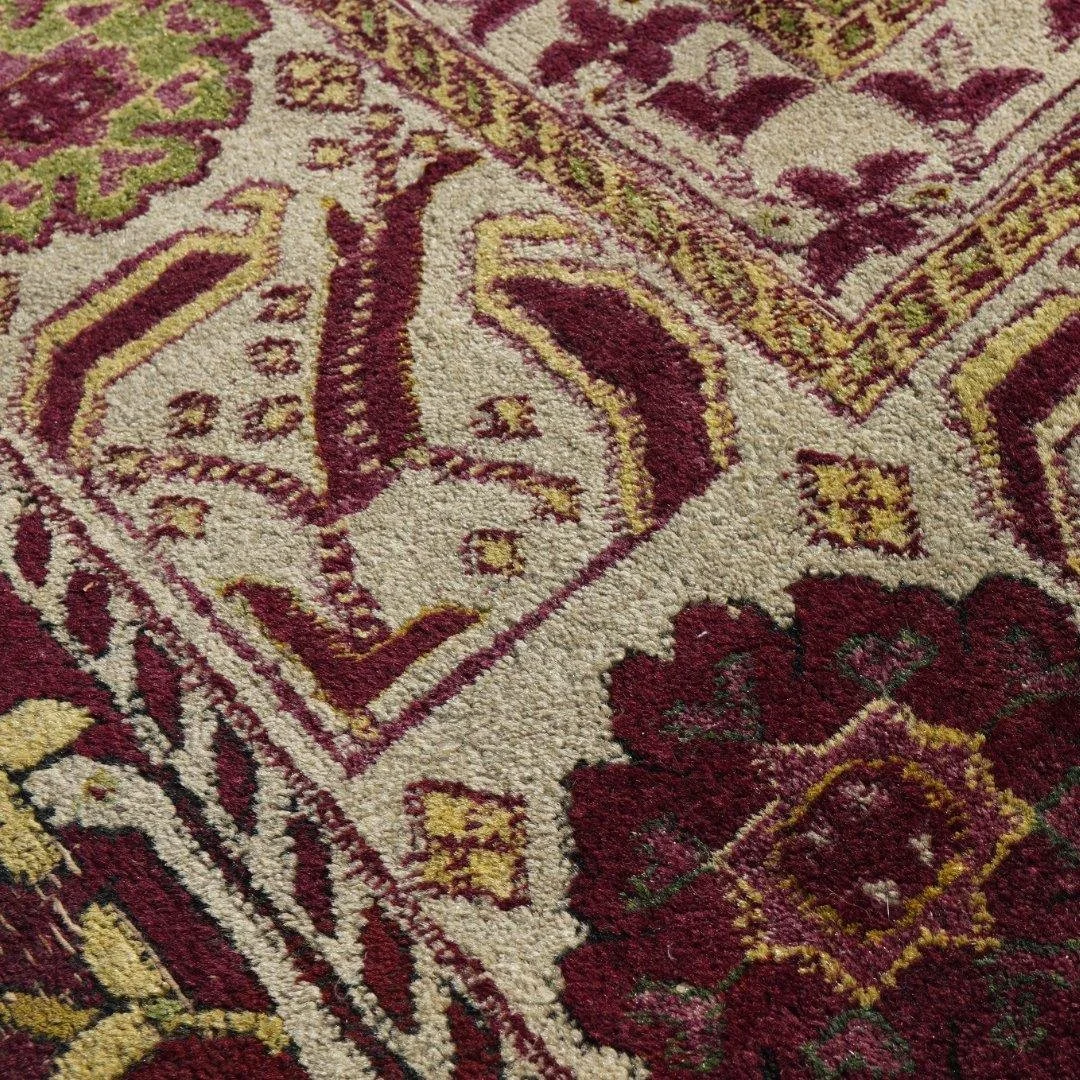 Image 4 of 11
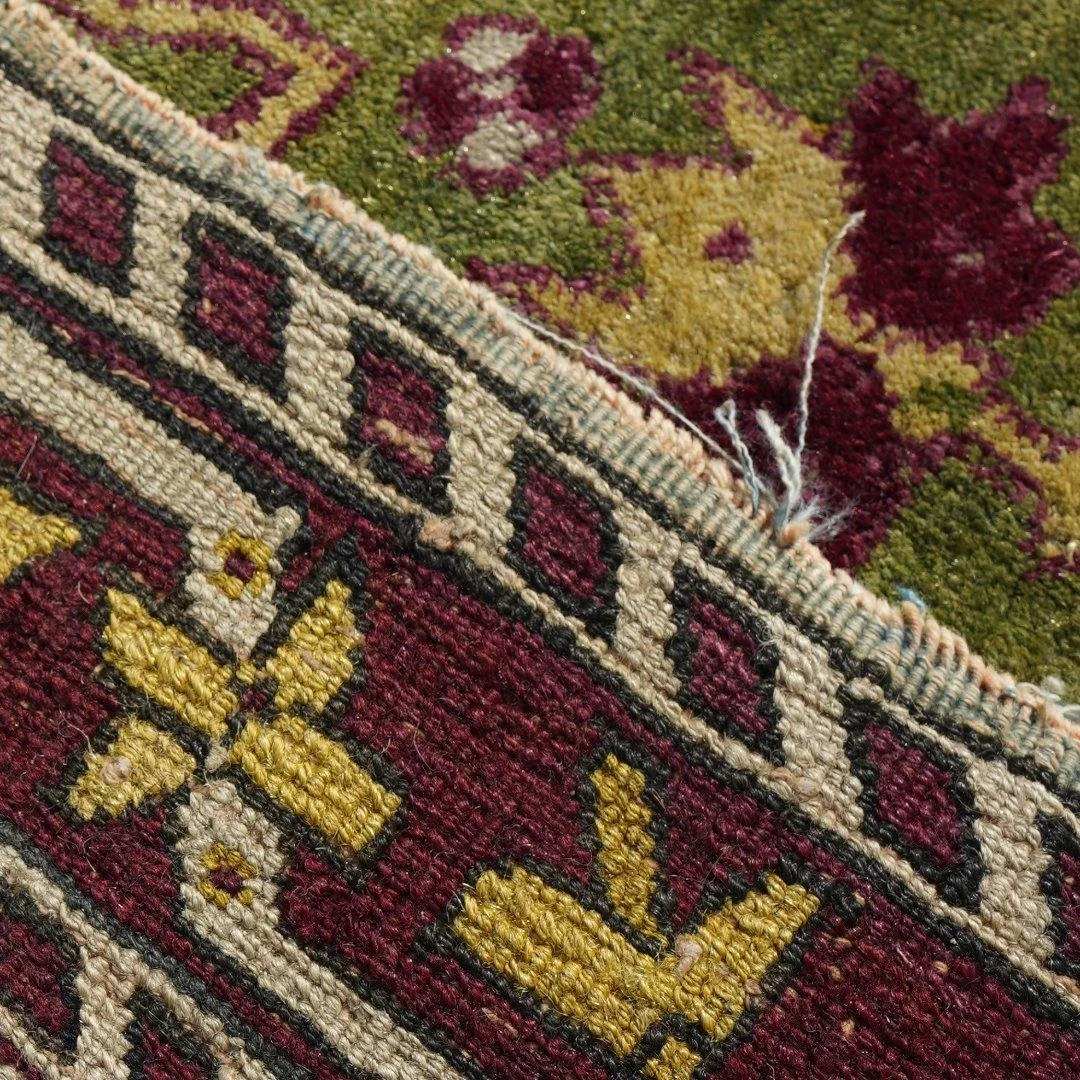 Image 5 of 11
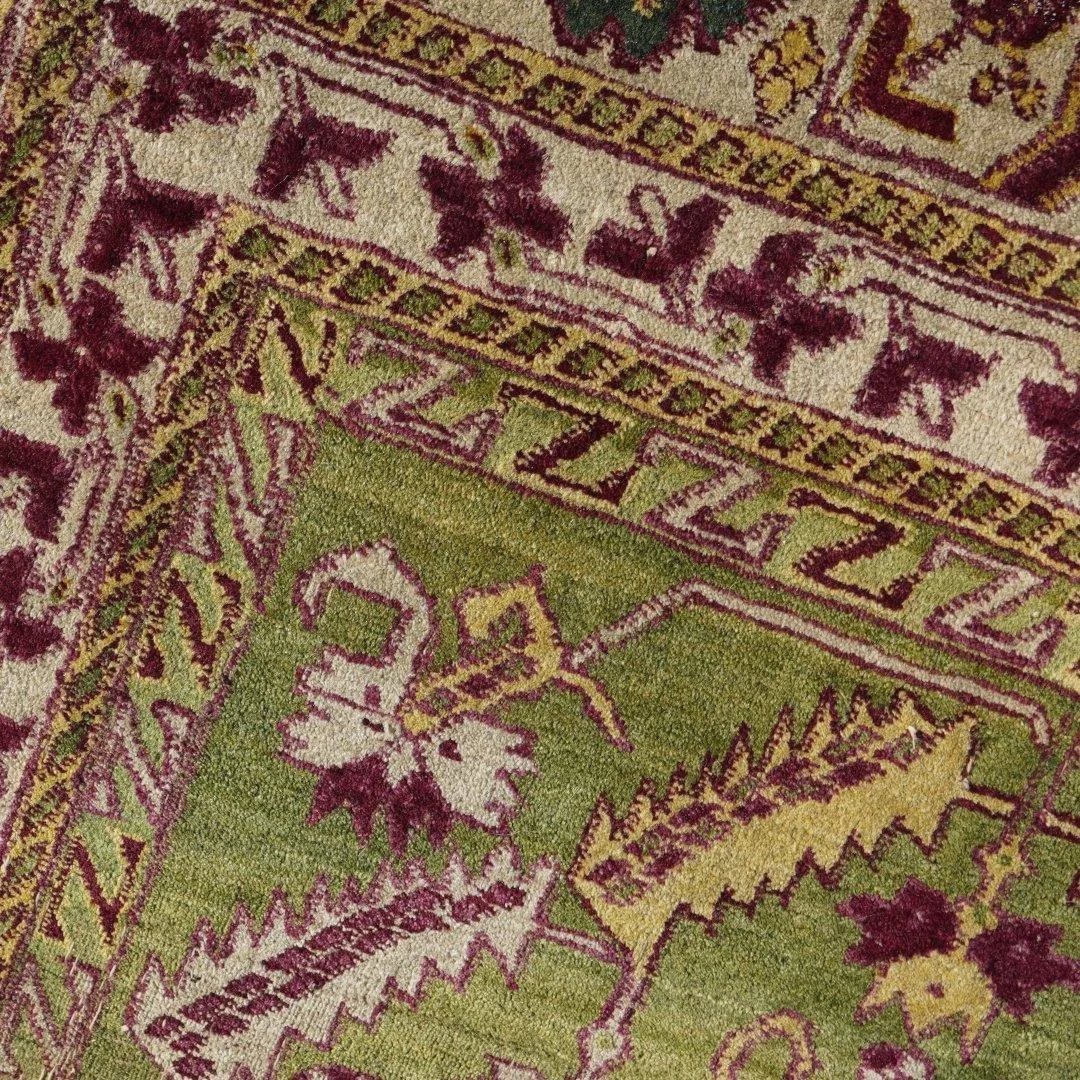 Image 6 of 11
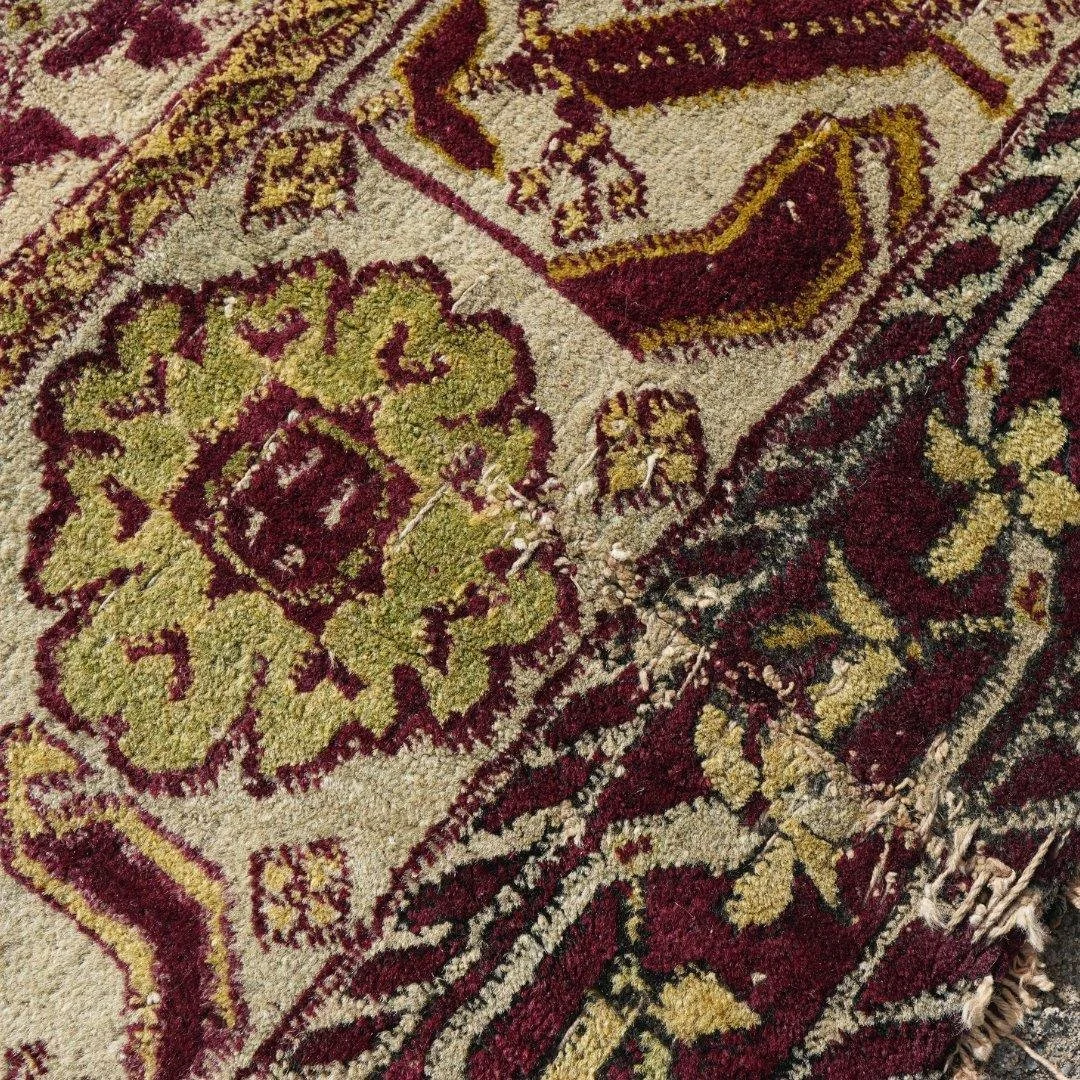 Image 7 of 11
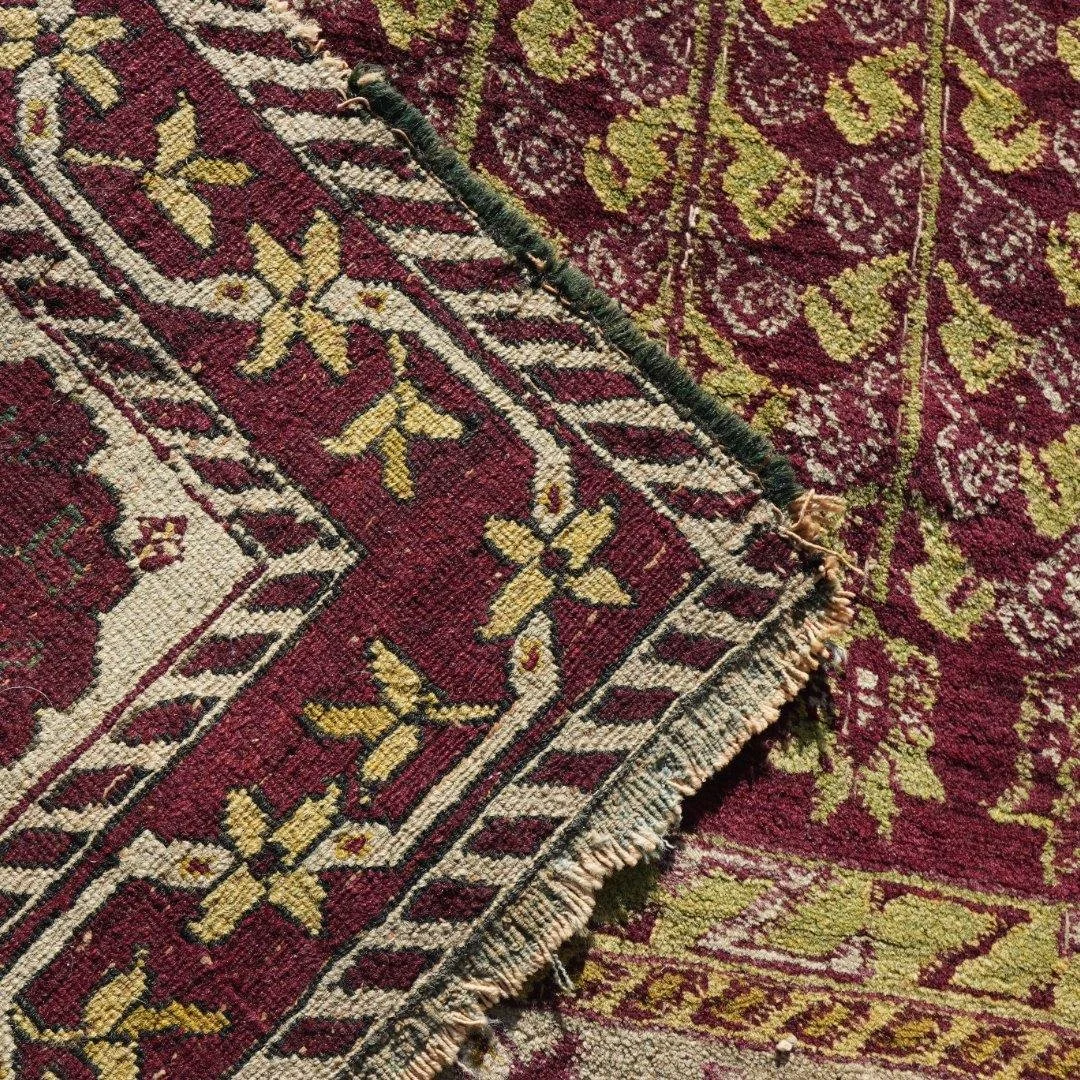 Image 8 of 11
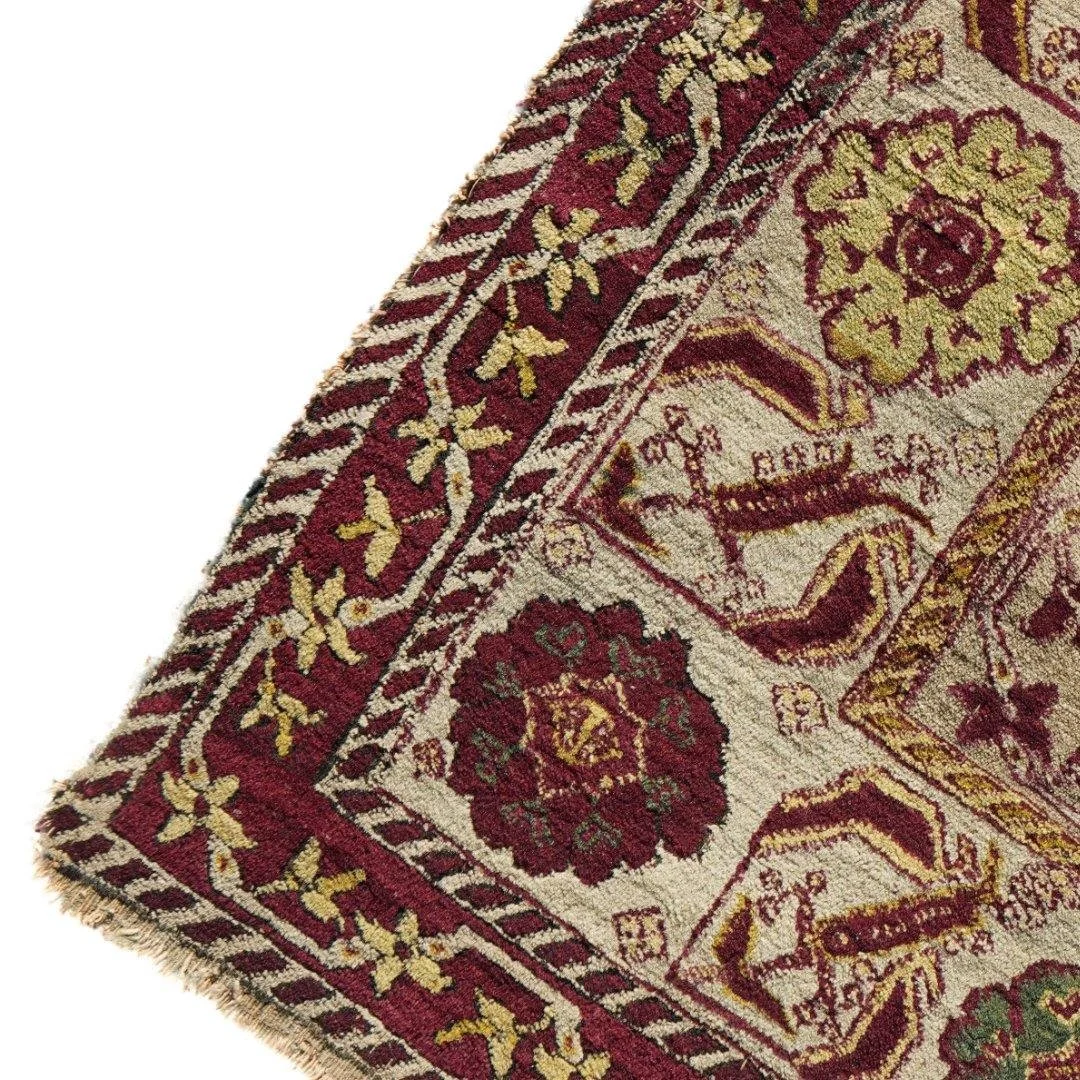 Image 9 of 11
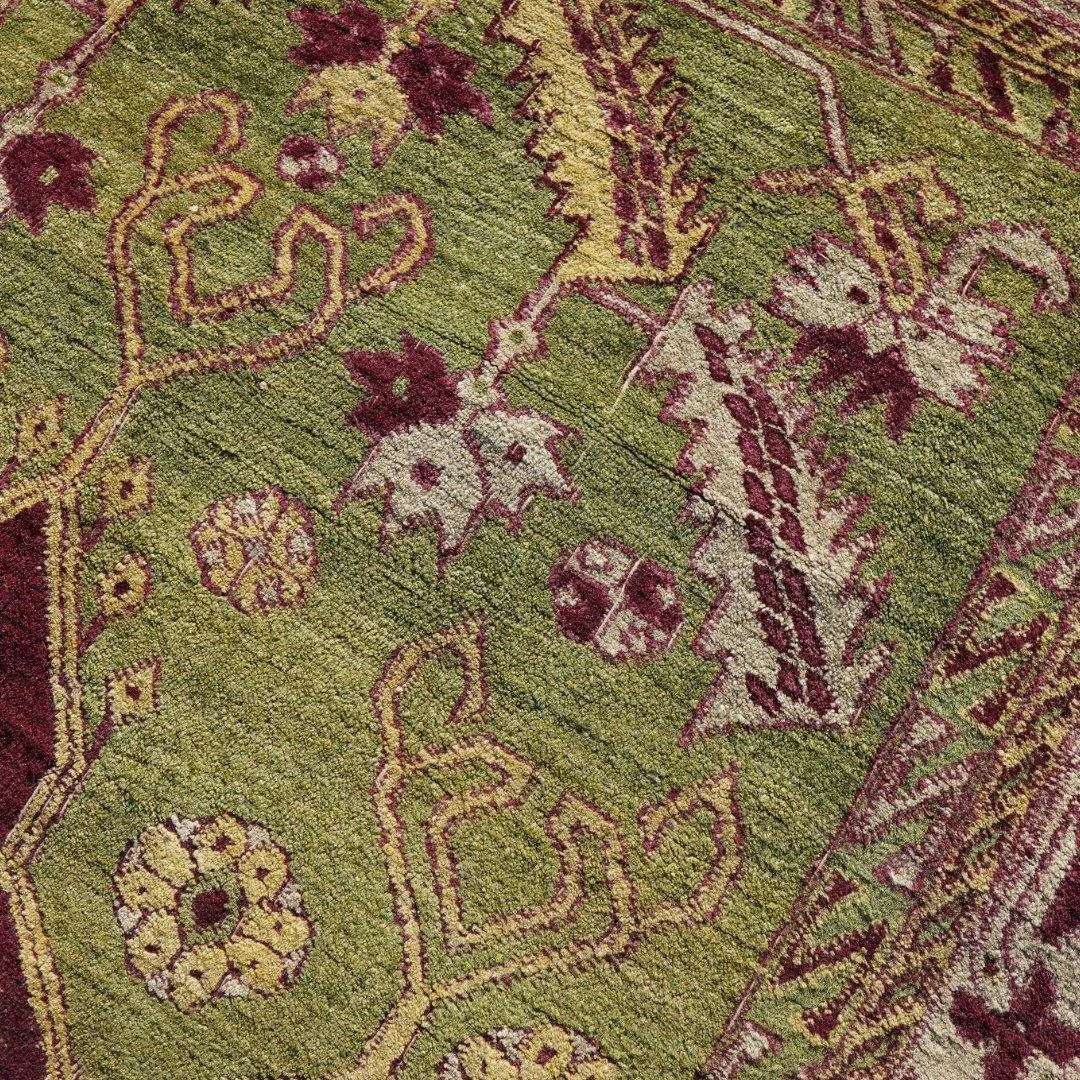 Image 10 of 11
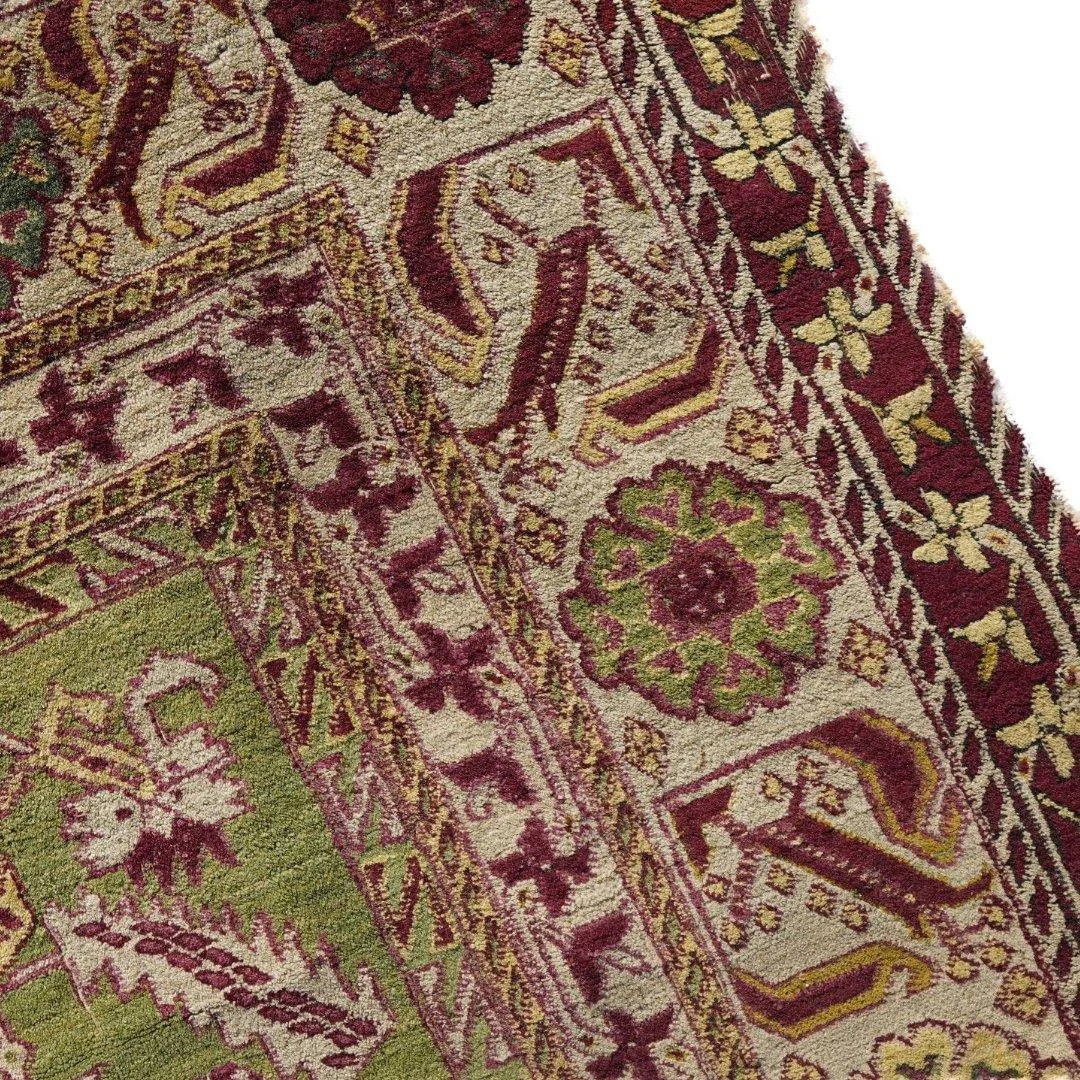 Image 11 of 11