2651
5’-7” x 8’-9”
AGE & ORIGIN:
c. 1900
Persia
OVERVIEW:
A stellar example of tribal art that contains elements of the sophisticated without losing sight of it’s humble roots. Lions borrowed from a regal Persian legacy act as sentries, protecting (or perhaps hunting) a menagerie of avians and unuglates with a single steward of these beasts also portrayed.
Without postulating too much on singular elements, the greatest aspect, to me, of this rug is that while there is a veneer of symmetry in the main medallions, their conjoining trapezoidal offsets, and the borders, when one peers into the details and color usage, that symmetry simply isn’t there.
All these elements play into a fantastic and relatively substantial Khamseh carpet that manages to shake the rigidity of later, more export-focused pieces that also utilize this ‘tribal’ design language to a much lesser degree.
CONDITION & NOTES:
Low pile
Some yellowing of the ivory border, most likely a result of oxidation of the natural wool
Ends have been secured
Several patched areas limited to top third of the rug (see final photo for extent)
2651
5’-7” x 8’-9”
AGE & ORIGIN:
c. 1900
Persia
OVERVIEW:
A stellar example of tribal art that contains elements of the sophisticated without losing sight of it’s humble roots. Lions borrowed from a regal Persian legacy act as sentries, protecting (or perhaps hunting) a menagerie of avians and unuglates with a single steward of these beasts also portrayed.
Without postulating too much on singular elements, the greatest aspect, to me, of this rug is that while there is a veneer of symmetry in the main medallions, their conjoining trapezoidal offsets, and the borders, when one peers into the details and color usage, that symmetry simply isn’t there.
All these elements play into a fantastic and relatively substantial Khamseh carpet that manages to shake the rigidity of later, more export-focused pieces that also utilize this ‘tribal’ design language to a much lesser degree.
CONDITION & NOTES:
Low pile
Some yellowing of the ivory border, most likely a result of oxidation of the natural wool
Ends have been secured
Several patched areas limited to top third of the rug (see final photo for extent)


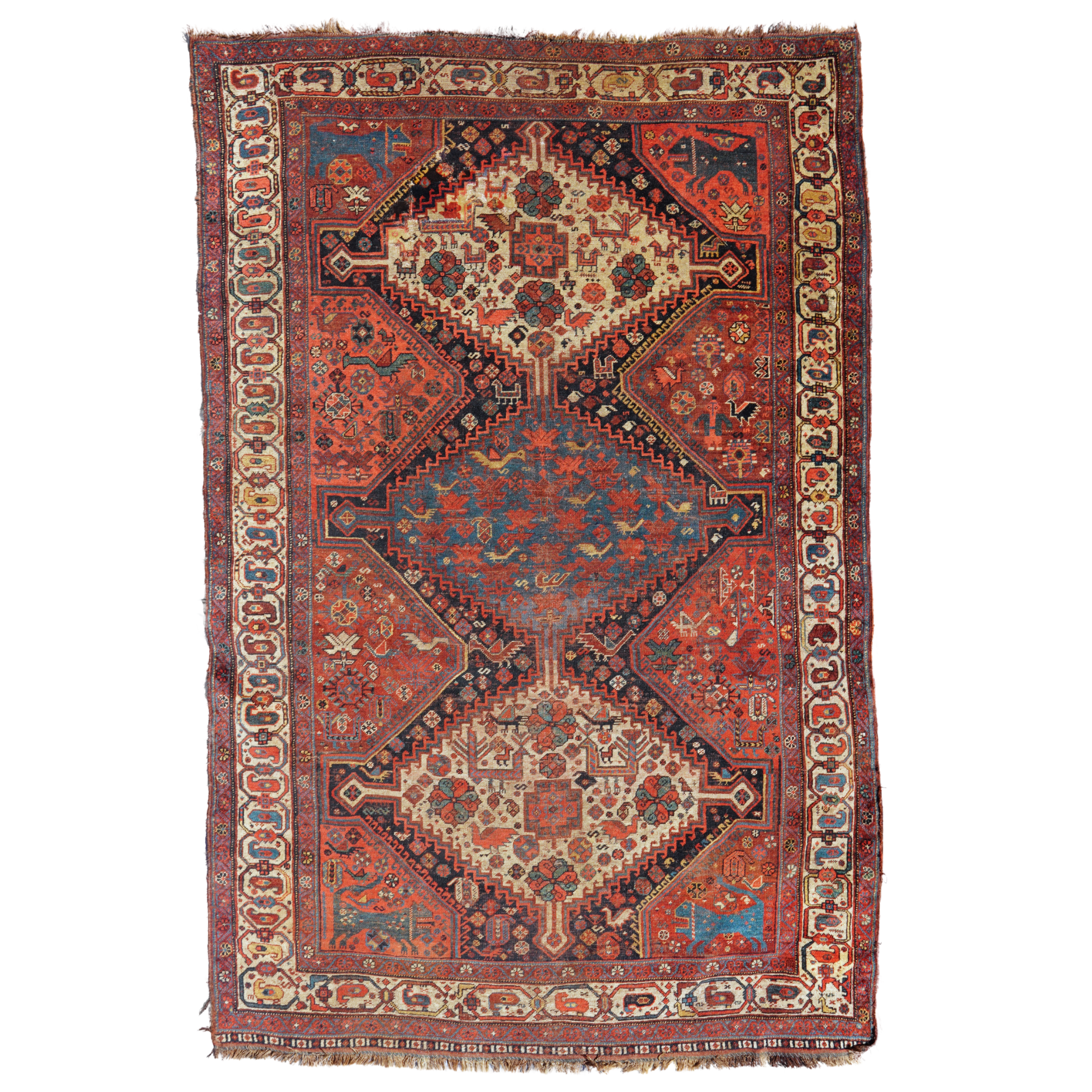 Image 1 of 12
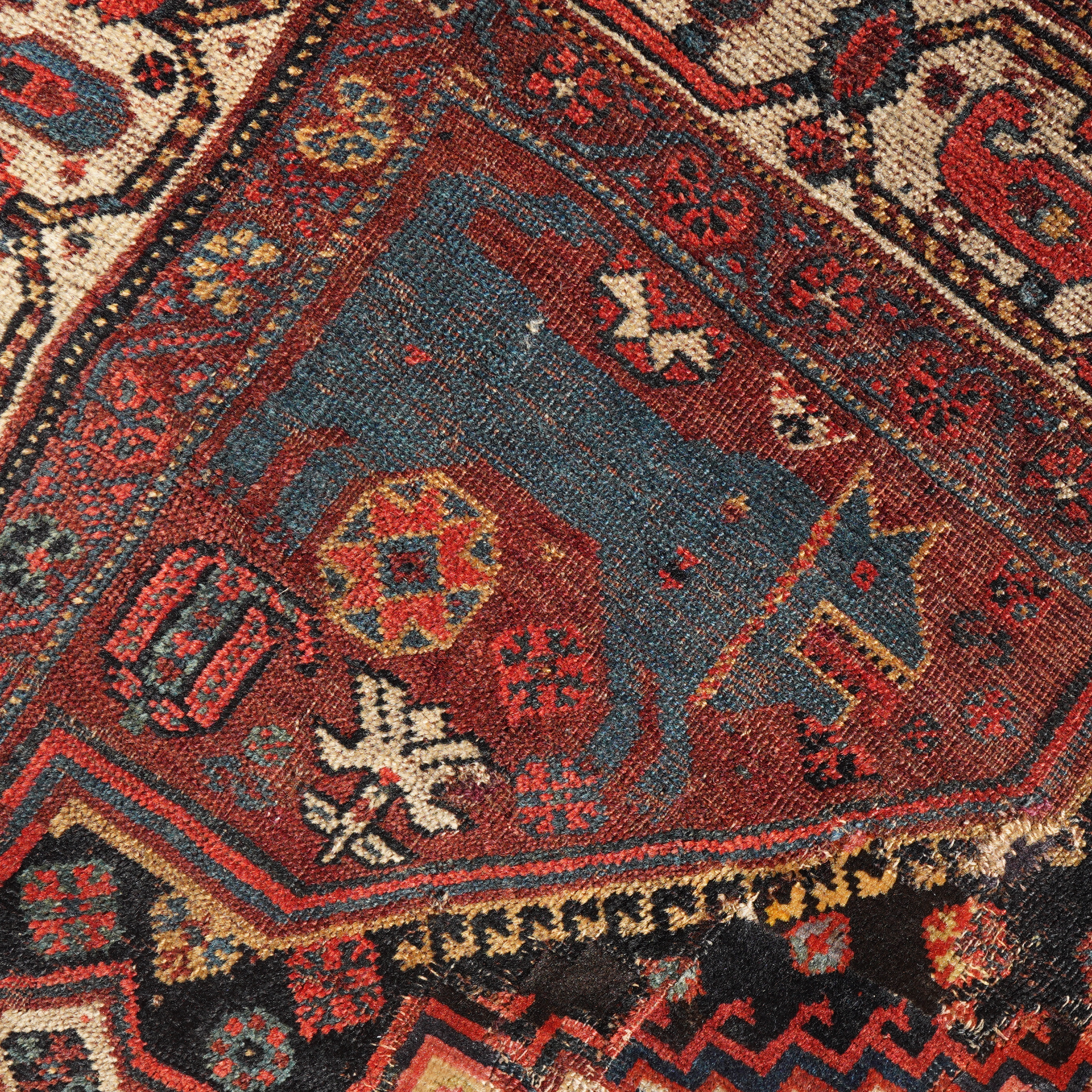 Image 2 of 12
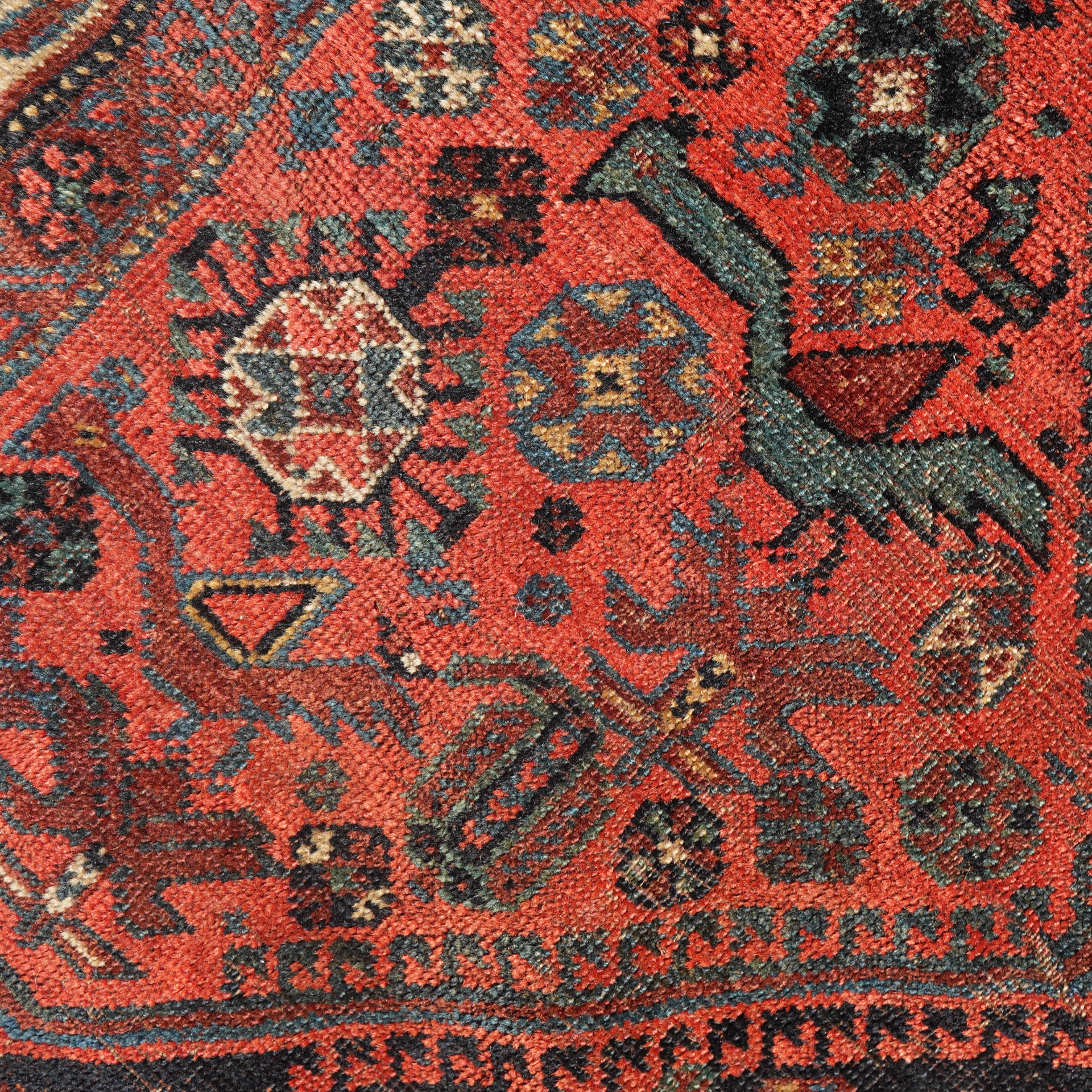 Image 3 of 12
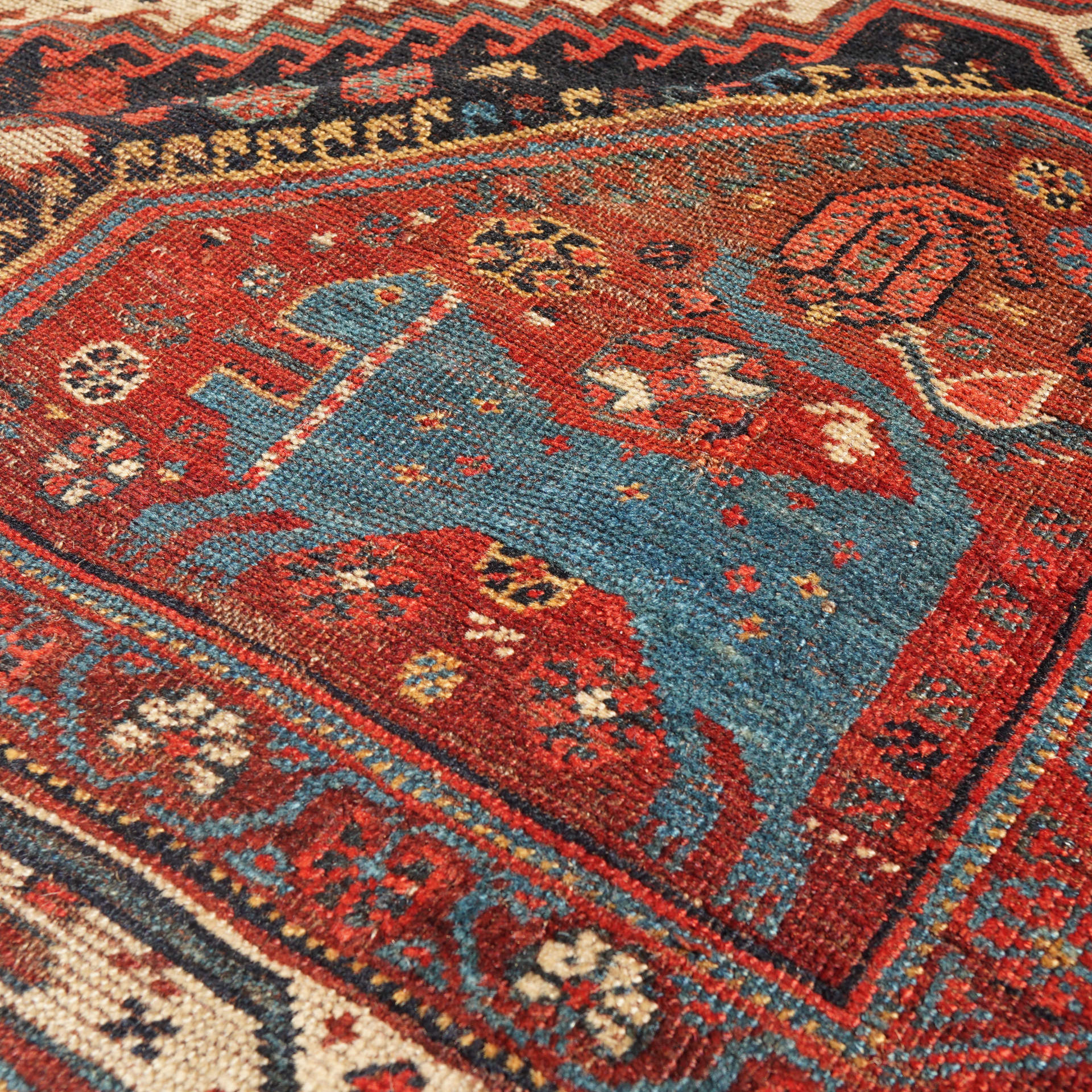 Image 4 of 12
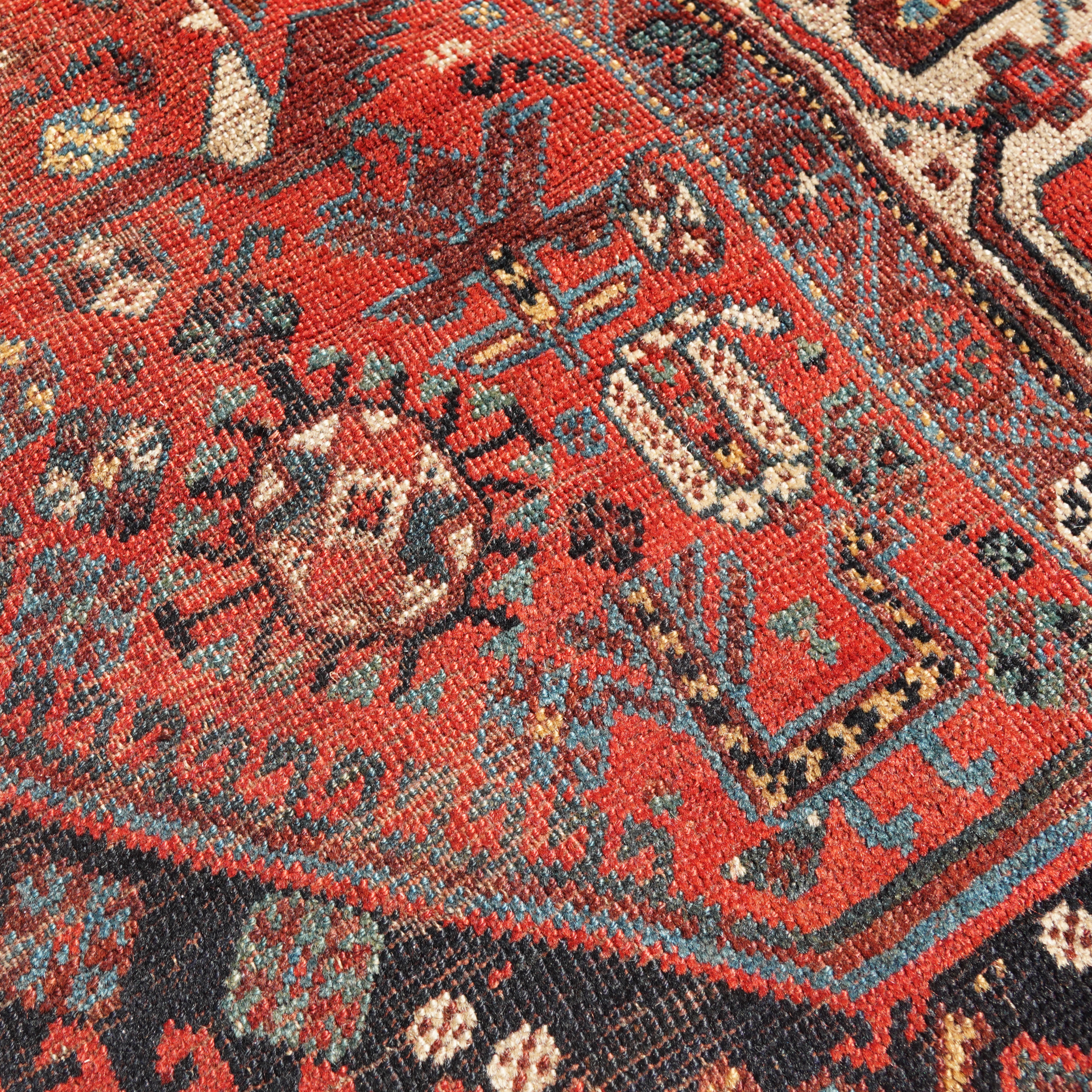 Image 5 of 12
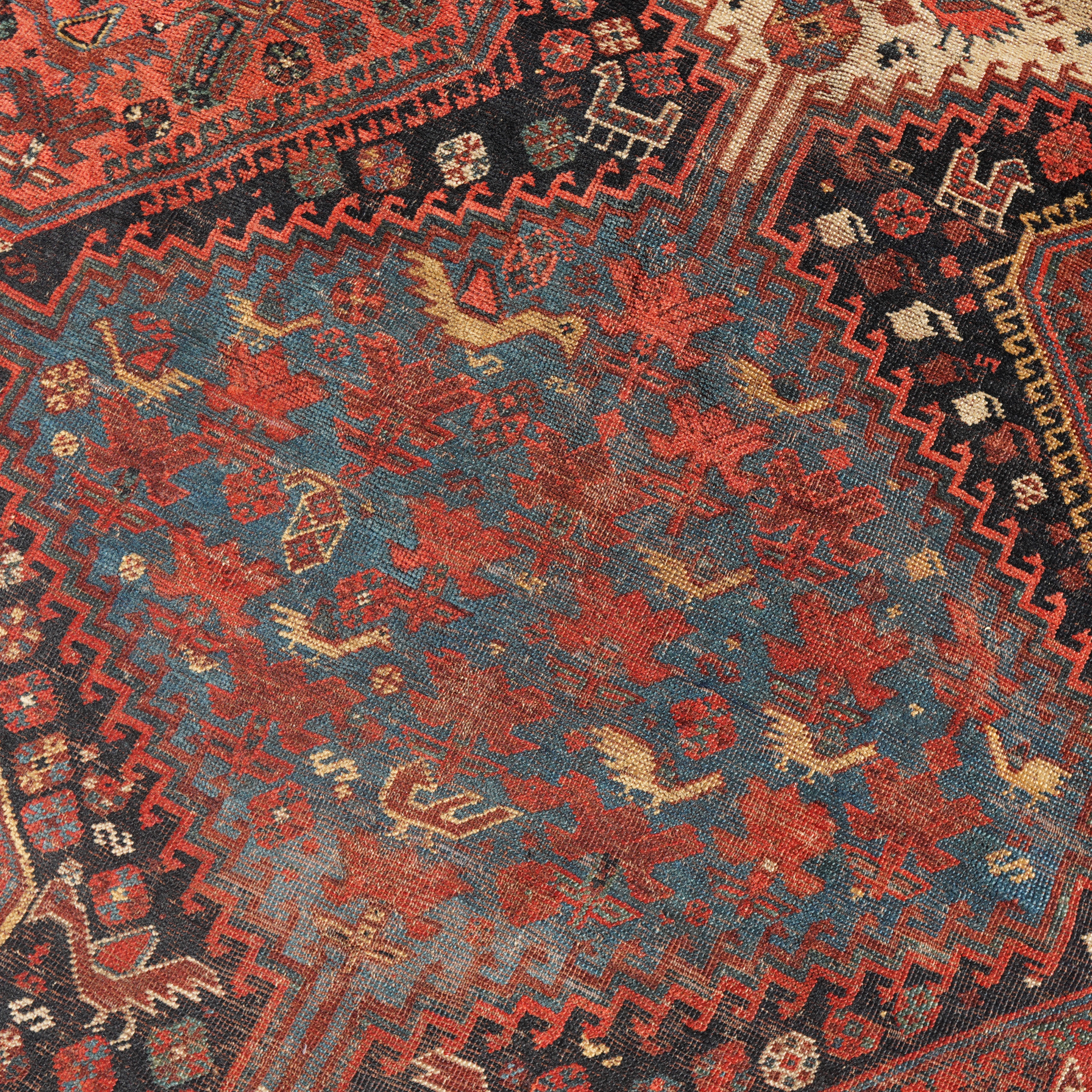 Image 6 of 12
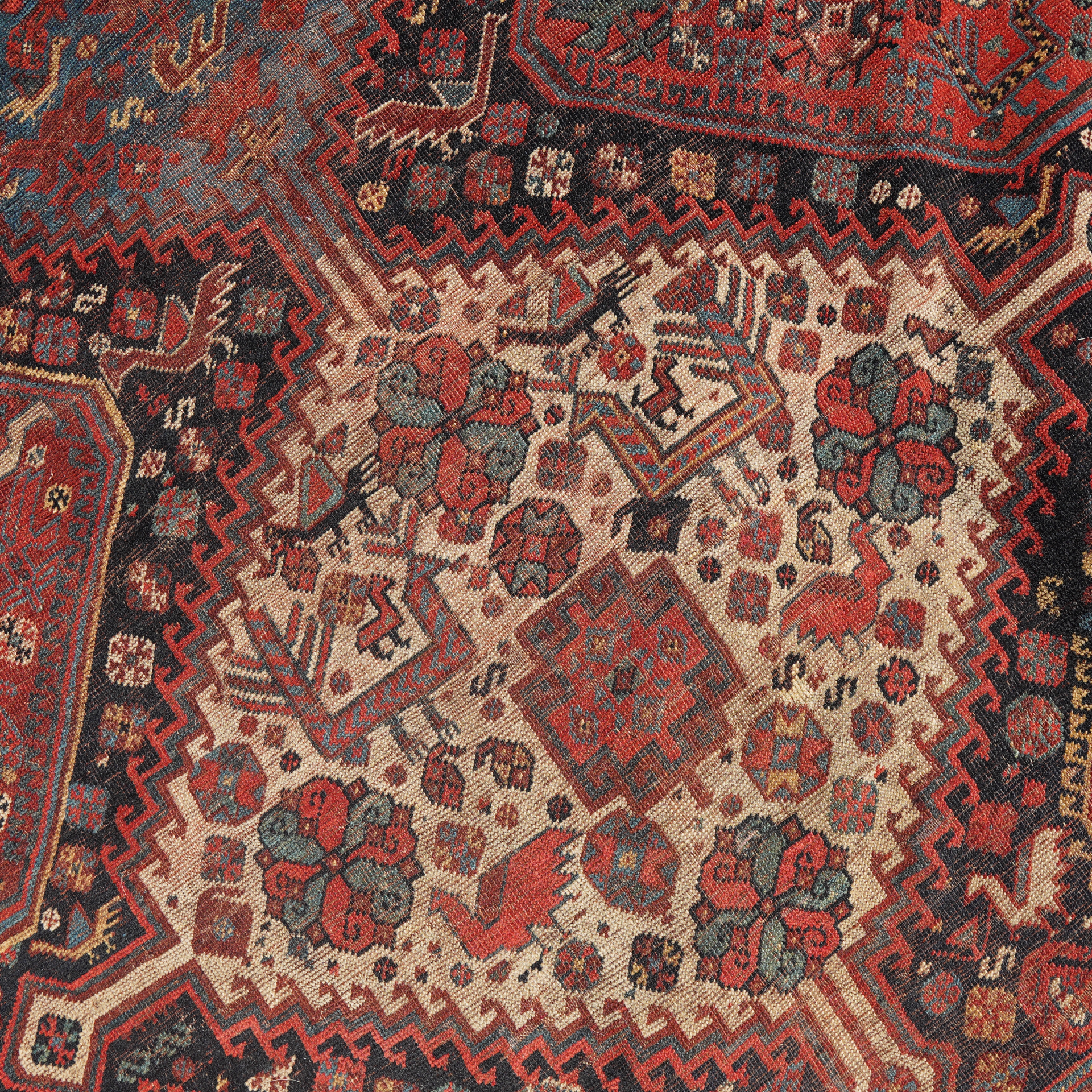 Image 7 of 12
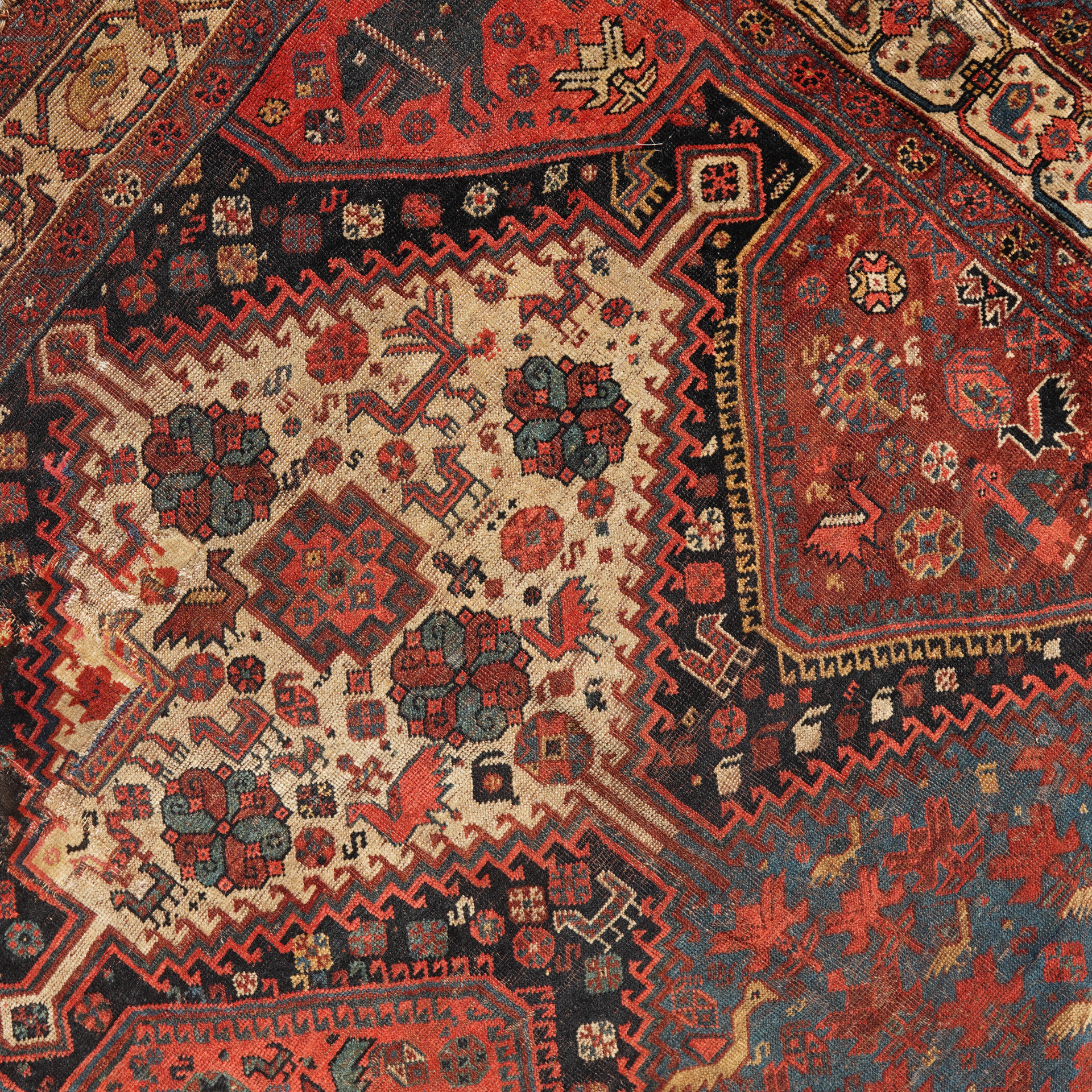 Image 8 of 12
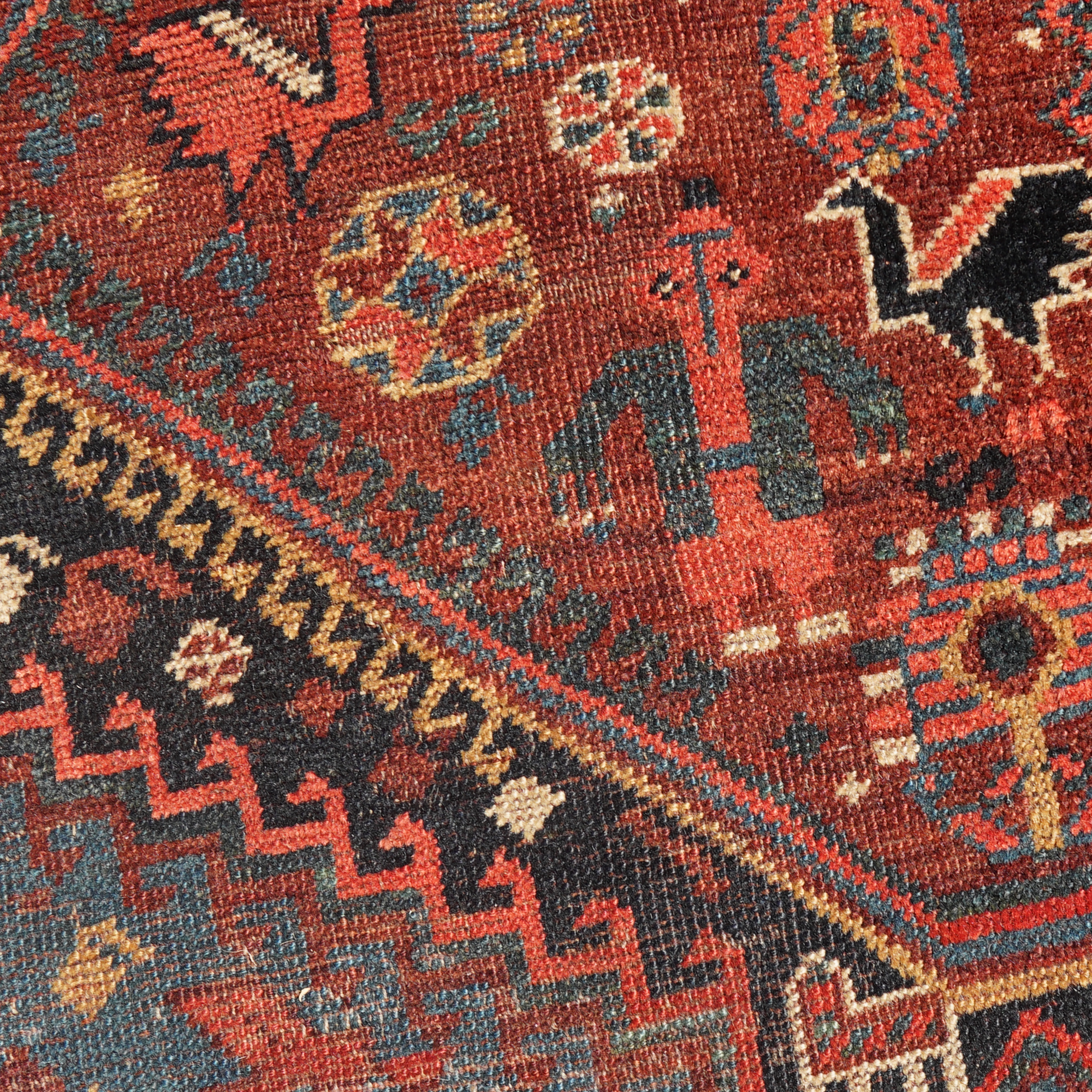 Image 9 of 12
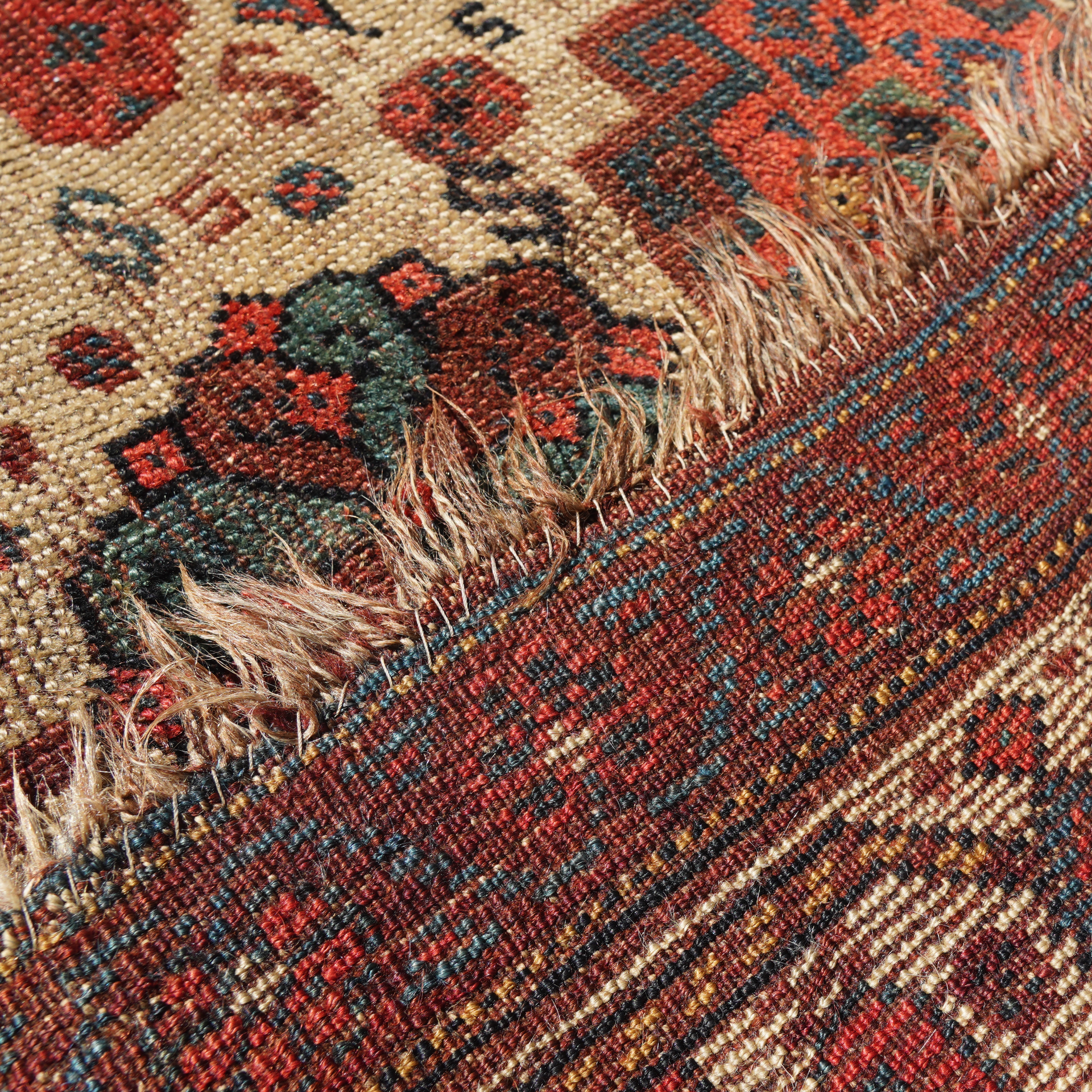 Image 10 of 12
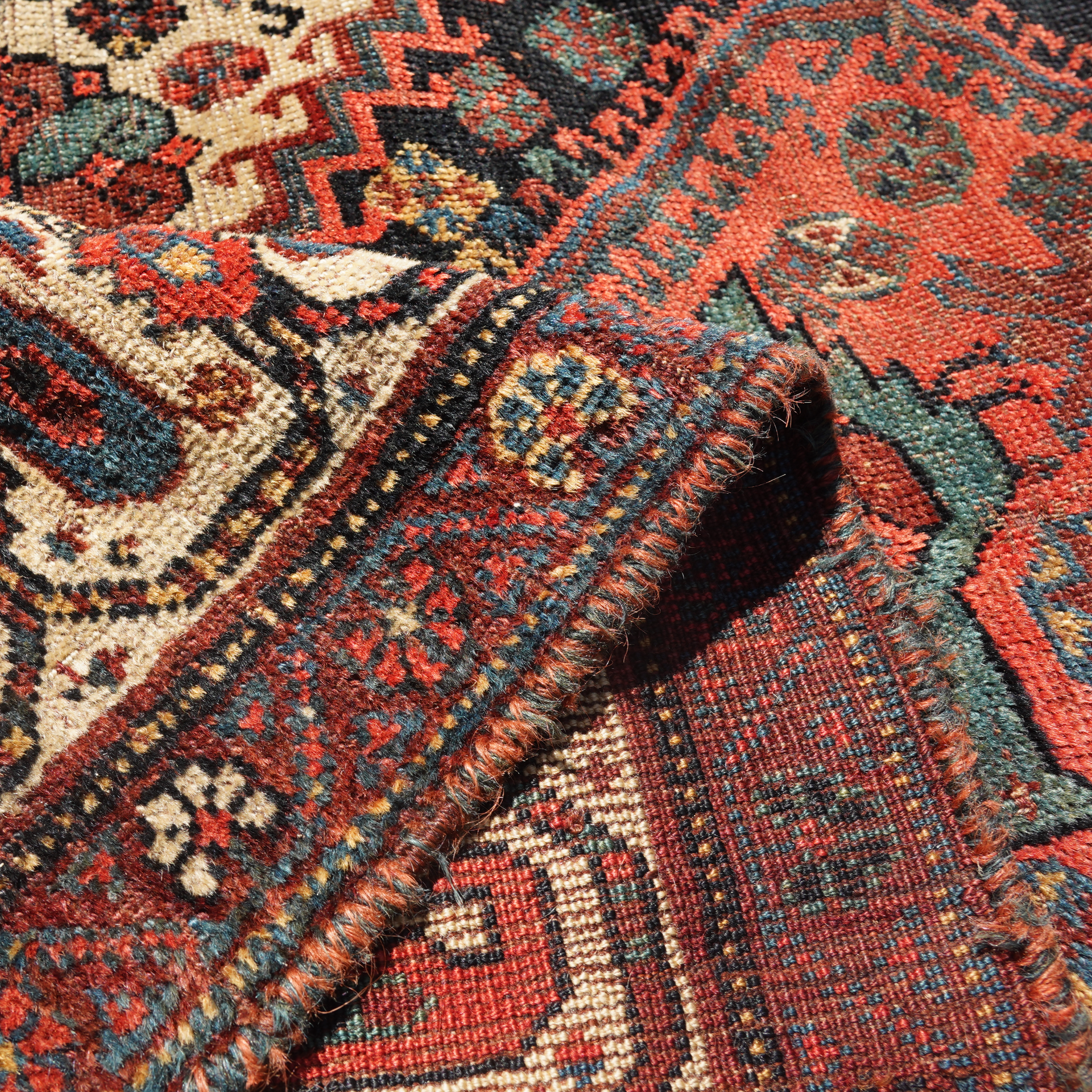 Image 11 of 12
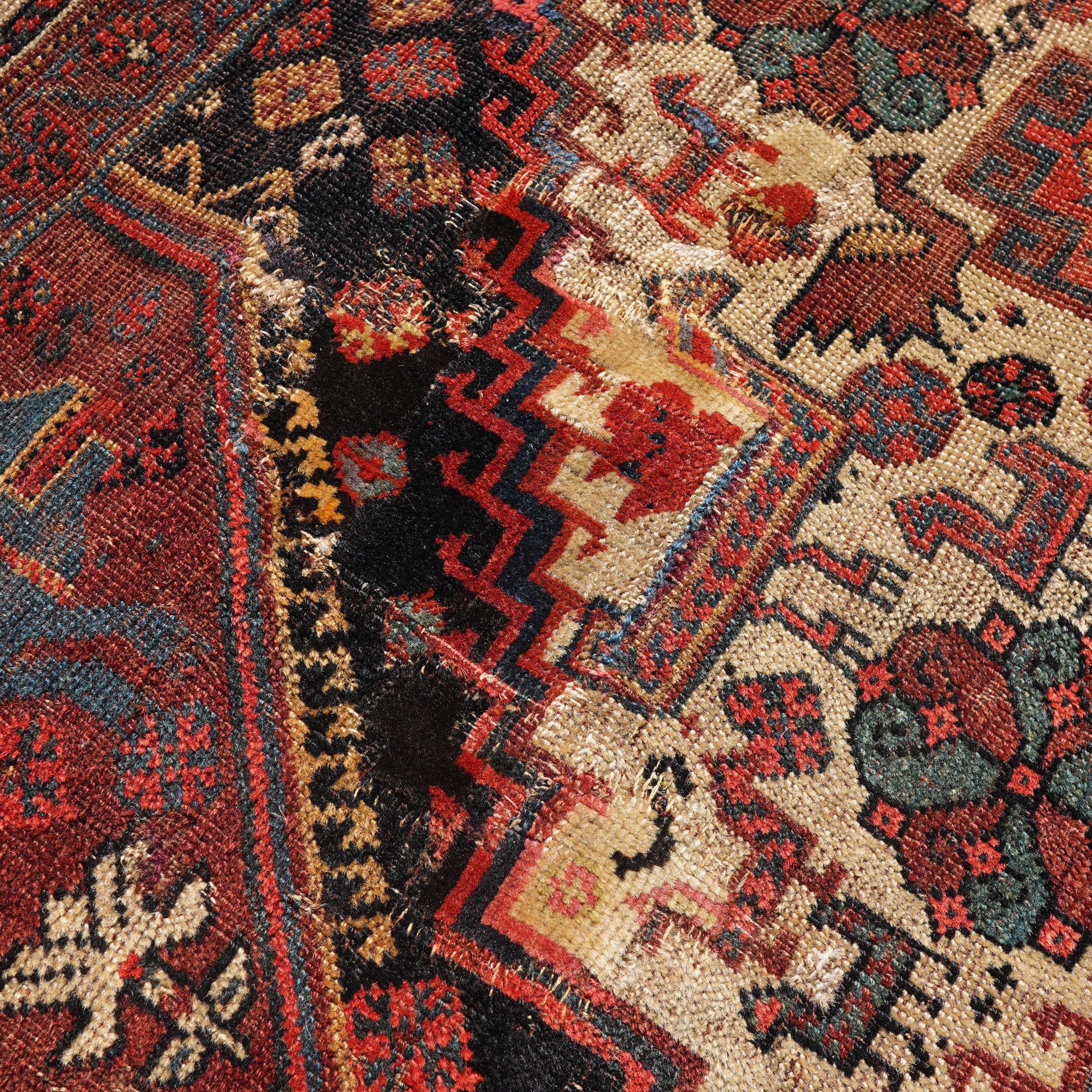 Image 12 of 12