2644
AGE & ORIGIN:
19th C. (?)
Caucuses (?)
OVERVIEW:
There are many questions surrounding this piece (at least from my point of view). There are elements that remind me of Persia and the Caucuses, of Shahsevan and Kurdish pieces, so I’m not quite sure what to think, but it is very pretty, and that’s what I’m focused on here.
There are an arrangement of bright colors that can be achieved by skillful use of dyes, reaching all levels of the spectrum. However, I believe often that it’s the undyed wool which is provided directly from the sheep that gives many pieces the most compelling nature. Here, it has been utilized as the canvas by which all the other colors find themselves, within the repeating diagonal motifs, and the main border, as well as the animals.
It’s possible this was a soffreh; a weaving used for eating on, especially during special occasions. Soffreh are often flatweaves, and the scarce but decorative nature of the piece adds to this theory. This may also (conveniently for the seller) explain the number of stains found across the field, some of which may be quite old. Same goes for the repairs, of which many are also seemingly quite old.
There is something beautiful, compelling and drawing about this piece. The imperfections, in my opinion, add to this nature.
CONDITION:
Repairs, stains and reweaves, all of which may be old
2644
AGE & ORIGIN:
19th C. (?)
Caucuses (?)
OVERVIEW:
There are many questions surrounding this piece (at least from my point of view). There are elements that remind me of Persia and the Caucuses, of Shahsevan and Kurdish pieces, so I’m not quite sure what to think, but it is very pretty, and that’s what I’m focused on here.
There are an arrangement of bright colors that can be achieved by skillful use of dyes, reaching all levels of the spectrum. However, I believe often that it’s the undyed wool which is provided directly from the sheep that gives many pieces the most compelling nature. Here, it has been utilized as the canvas by which all the other colors find themselves, within the repeating diagonal motifs, and the main border, as well as the animals.
It’s possible this was a soffreh; a weaving used for eating on, especially during special occasions. Soffreh are often flatweaves, and the scarce but decorative nature of the piece adds to this theory. This may also (conveniently for the seller) explain the number of stains found across the field, some of which may be quite old. Same goes for the repairs, of which many are also seemingly quite old.
There is something beautiful, compelling and drawing about this piece. The imperfections, in my opinion, add to this nature.
CONDITION:
Repairs, stains and reweaves, all of which may be old


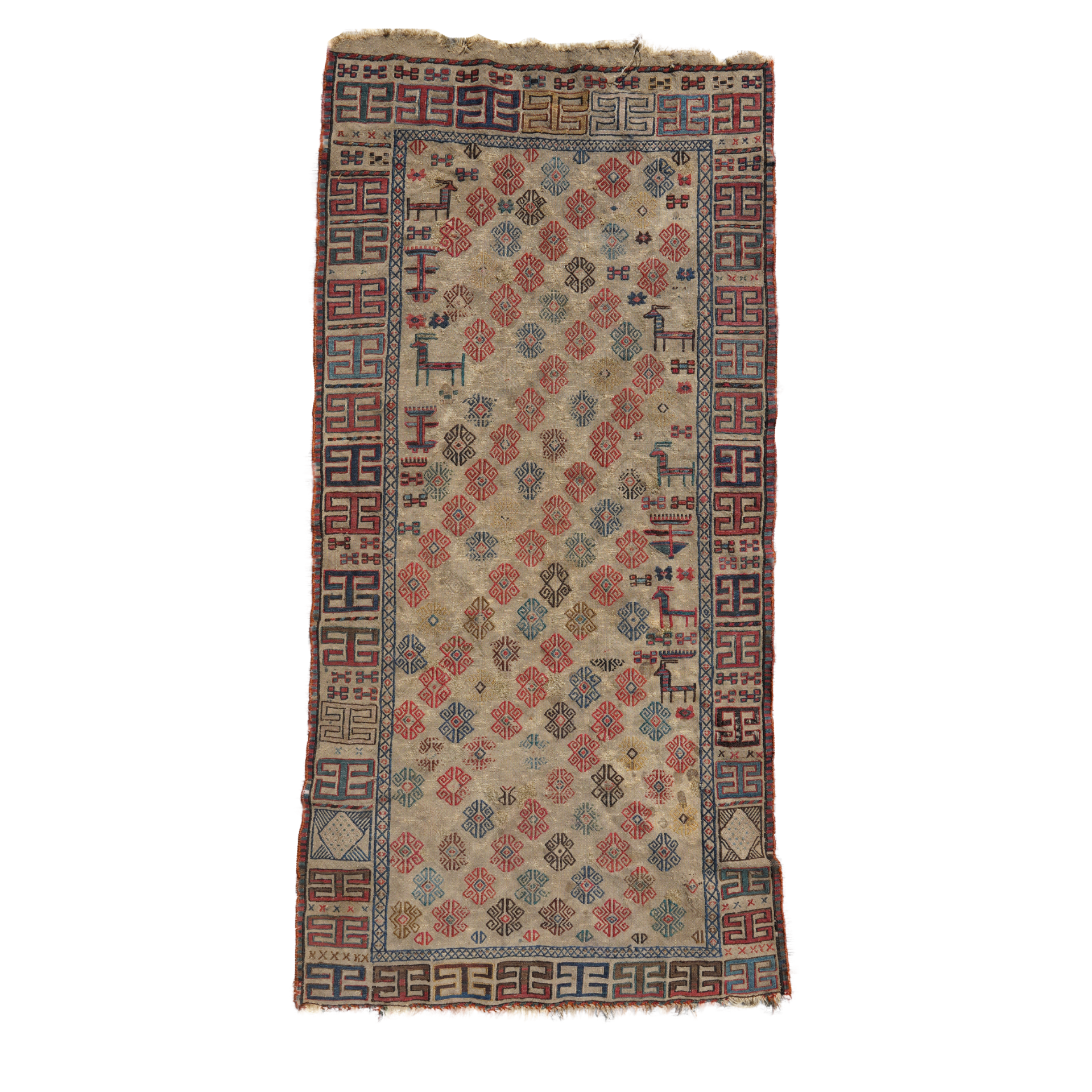 Image 1 of 7
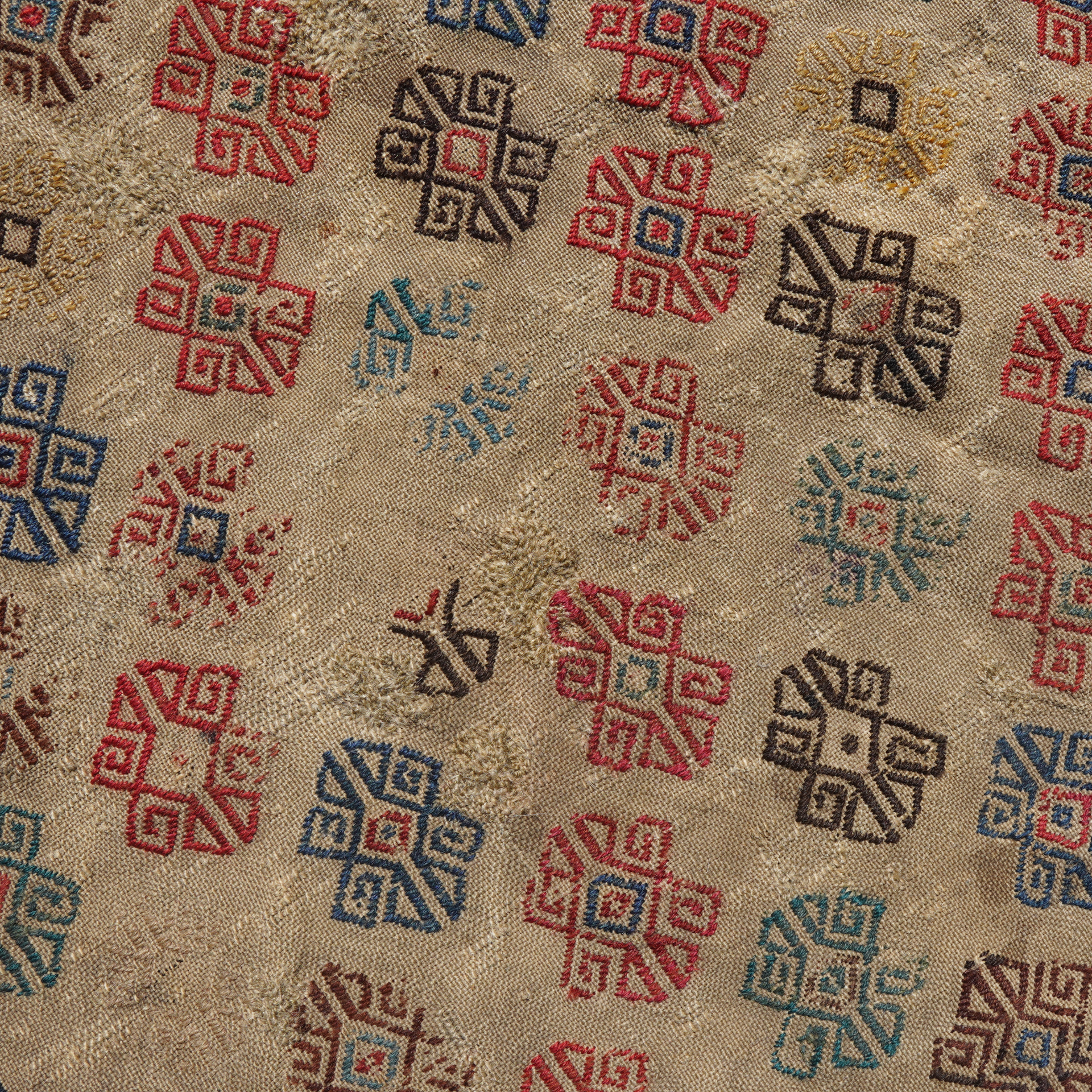 Image 2 of 7
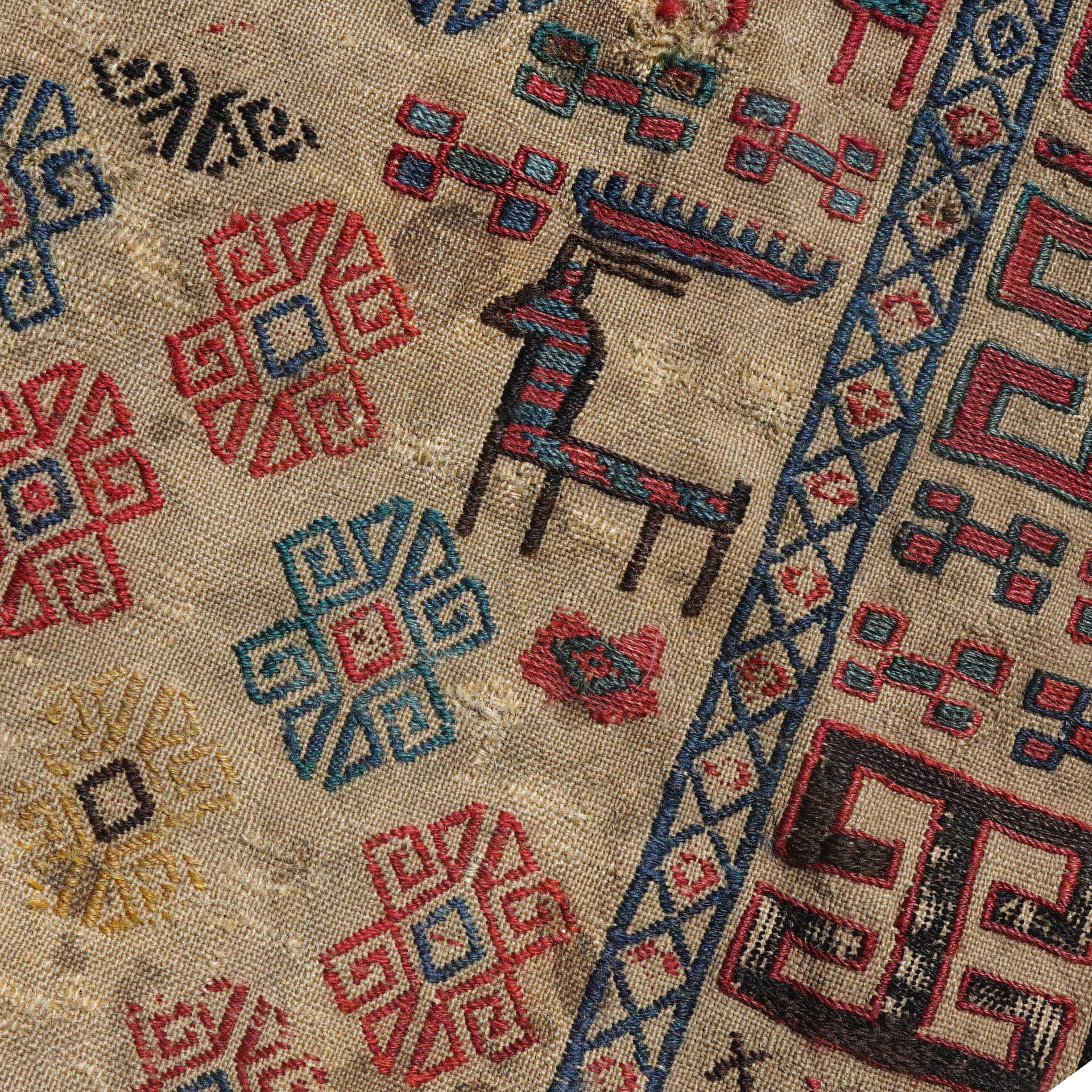 Image 3 of 7
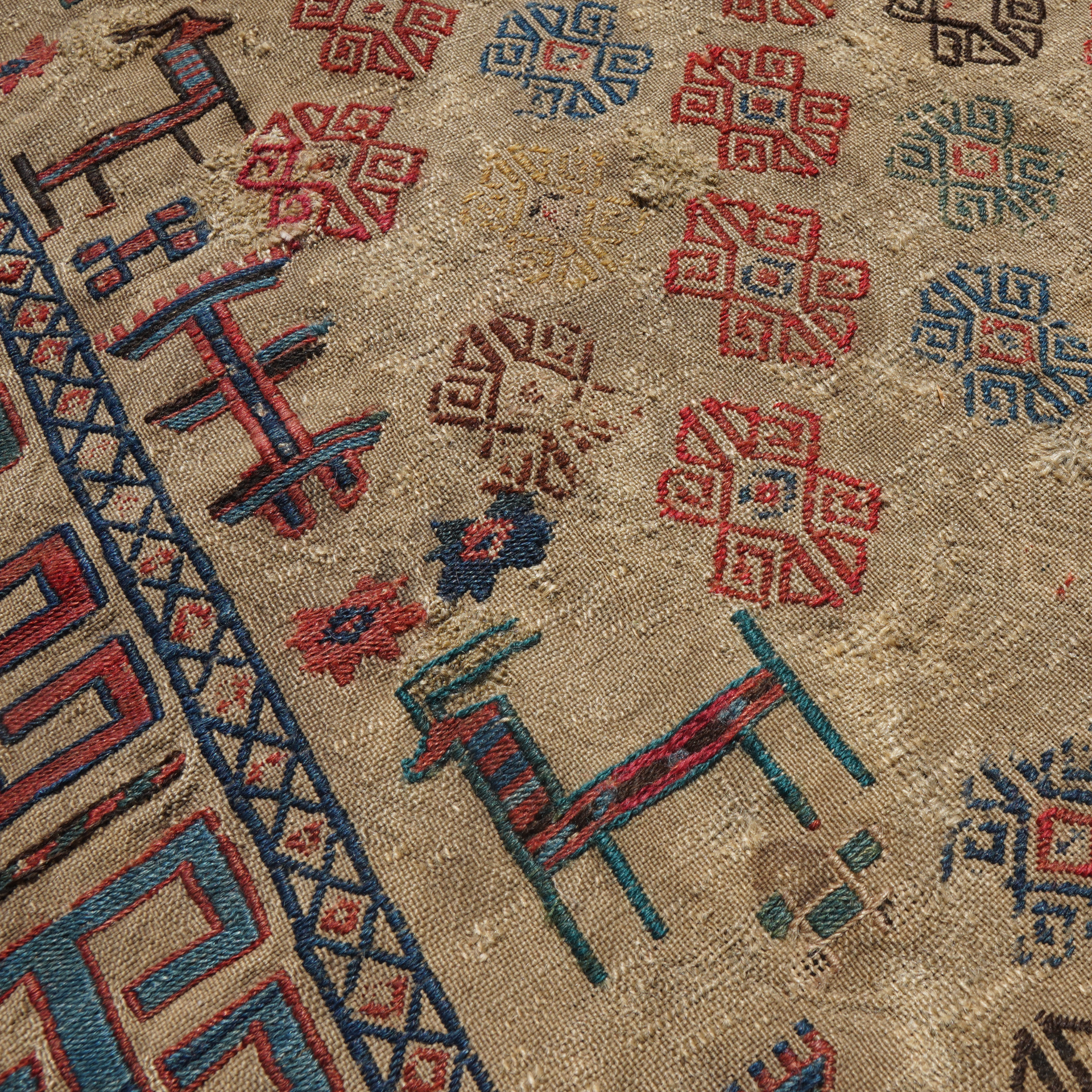 Image 4 of 7
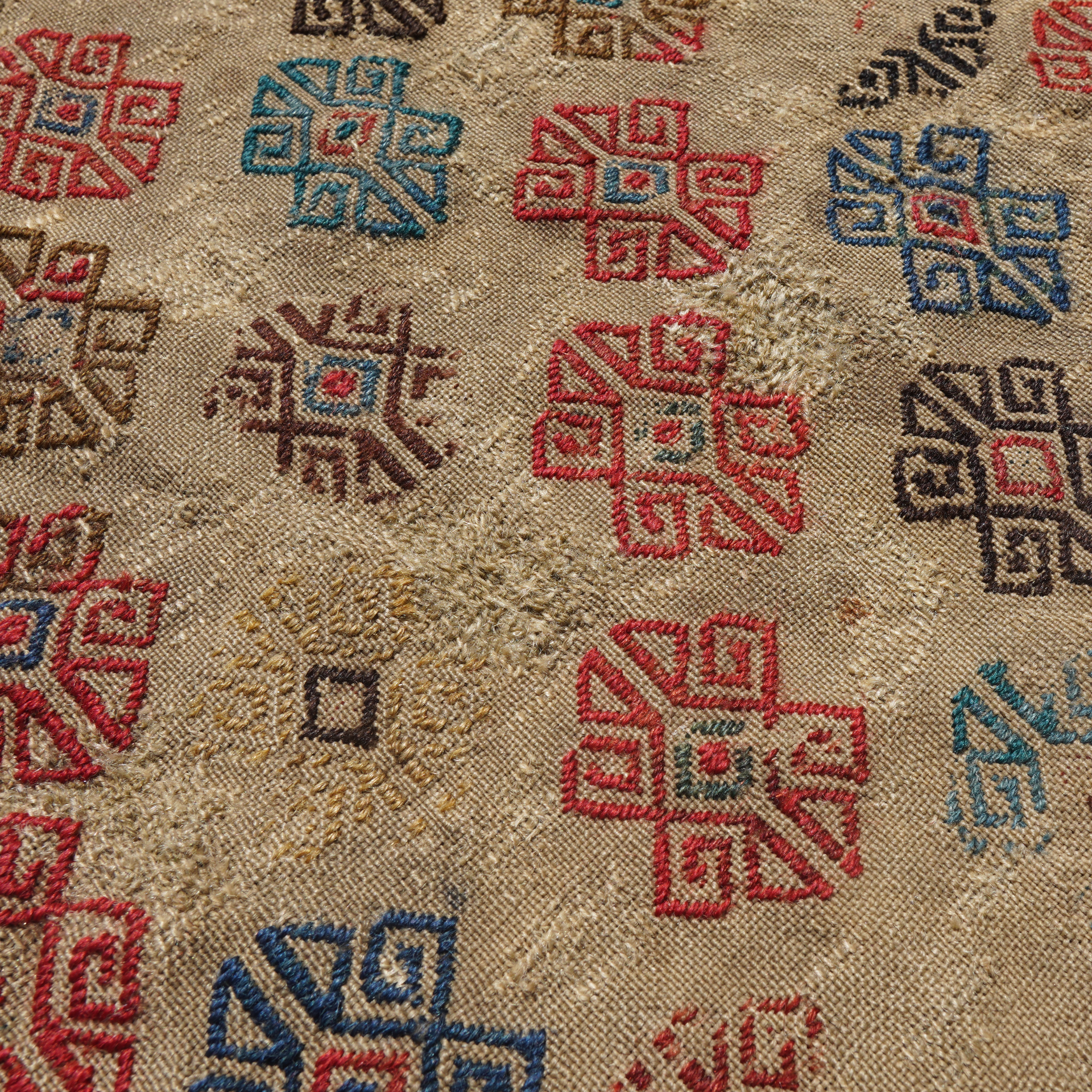 Image 5 of 7
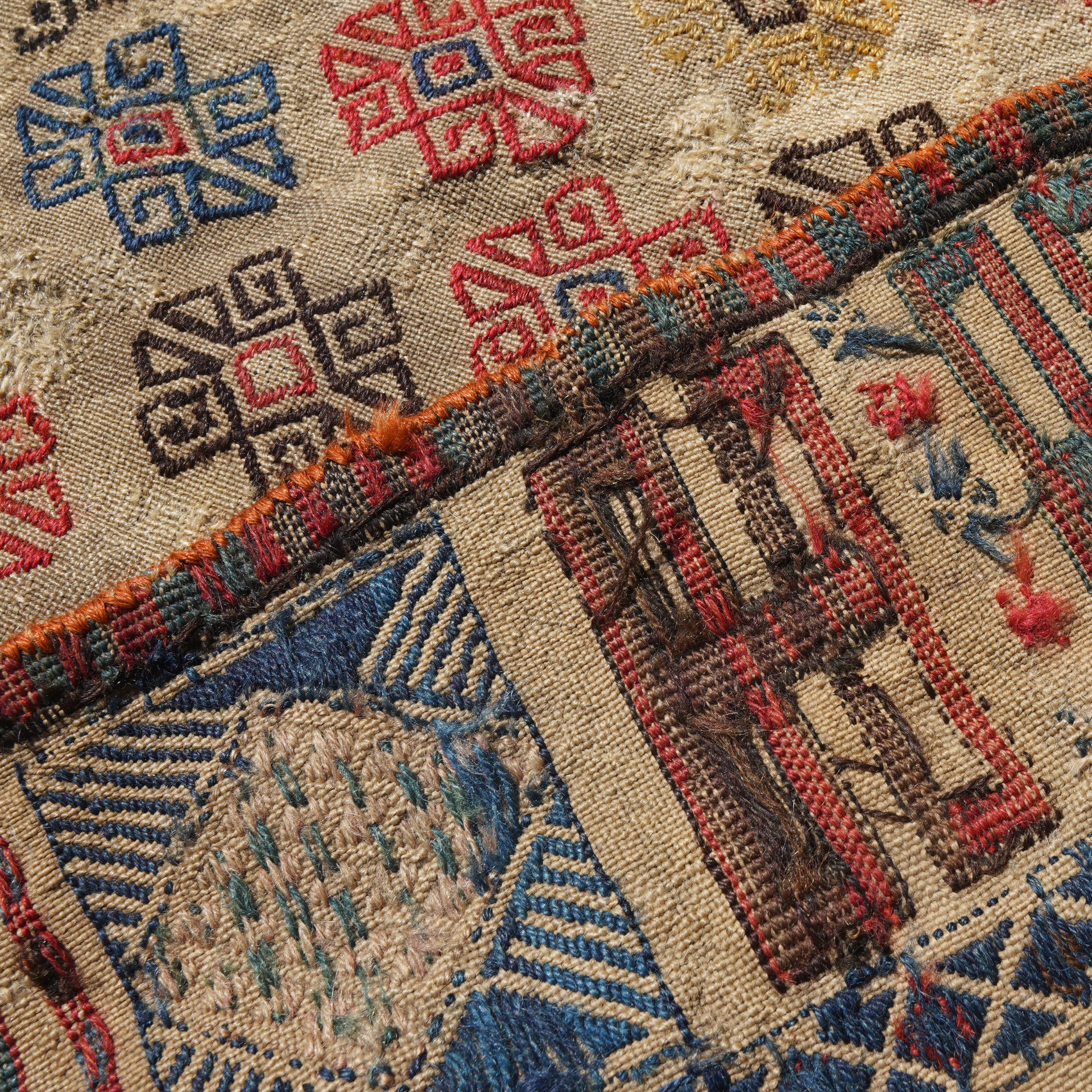 Image 6 of 7
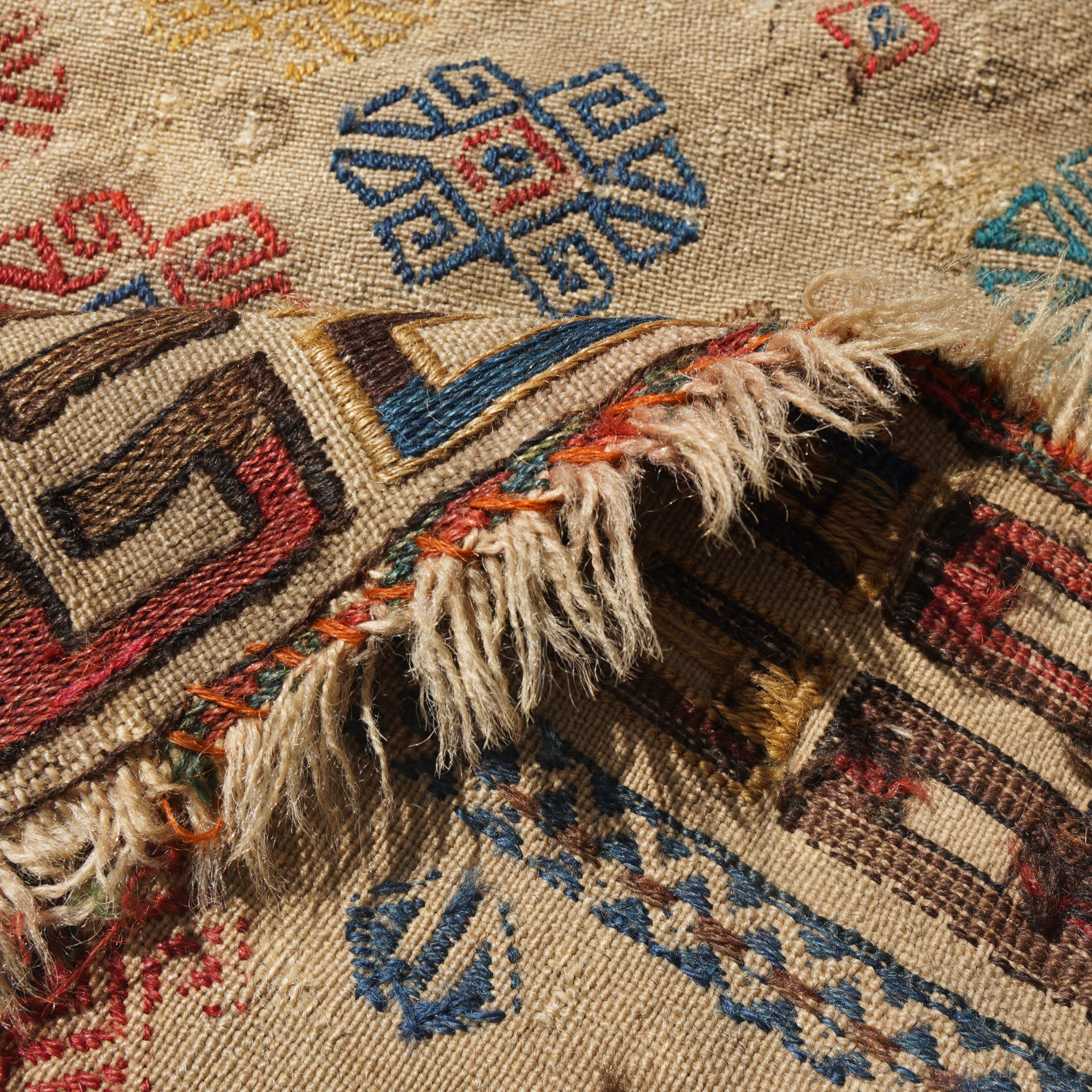 Image 7 of 7