2606
AGE & ORIGIN:
C. 1900
Caucuses
OVERVIEW:
Caucasian rugs and their attribution to whomever wove them have a long, continuing and contentious history. The region of eastern Anatolia, the Caucuses and Northwest Persia has had a long history of conflict between crescent and cross.
While it would be a mistake to rank the level of persecution of different minority groups in this area, there is no doubt Armenian Christians have a long history of severe marginalization within this geographic area. Perhaps equally as long, is their persistence in the art of weaving rugs.
It is widely believed that the Armenian Christian weavers would utilize hidden symbols of their faith within the peripherals of their rugs (those who watch our content, as well as those with vested interest in prayer rugs will recognize a certain shared ingenuity from so-called ‘Latent Prayer Rugs’).
A crucifix, or at least the geometry that they incorporate, are quite common within any avenue of design, intentional or not. This raises the obvious question: how does one really know if a rug with crucifix forms comes from an Armenian weaver? The answer: we don’t, at least not really. We derive this conclusion through the observations of others, as is the case with this rug. For this, we turn to Ulrich Schurmann’s ‘Caucasian Rugs’ page 75, plate 10 where we see a very similar design with a similarly revealing description.
A modest sunset coloring with an almost ‘medieval’ aesthetic, rich history and uniform design all culminate in an incredible snapshot of a group of weavers attempting to capture their own history and culture despite persecution.
CONDITION:
Excellent with low pile
2606
AGE & ORIGIN:
C. 1900
Caucuses
OVERVIEW:
Caucasian rugs and their attribution to whomever wove them have a long, continuing and contentious history. The region of eastern Anatolia, the Caucuses and Northwest Persia has had a long history of conflict between crescent and cross.
While it would be a mistake to rank the level of persecution of different minority groups in this area, there is no doubt Armenian Christians have a long history of severe marginalization within this geographic area. Perhaps equally as long, is their persistence in the art of weaving rugs.
It is widely believed that the Armenian Christian weavers would utilize hidden symbols of their faith within the peripherals of their rugs (those who watch our content, as well as those with vested interest in prayer rugs will recognize a certain shared ingenuity from so-called ‘Latent Prayer Rugs’).
A crucifix, or at least the geometry that they incorporate, are quite common within any avenue of design, intentional or not. This raises the obvious question: how does one really know if a rug with crucifix forms comes from an Armenian weaver? The answer: we don’t, at least not really. We derive this conclusion through the observations of others, as is the case with this rug. For this, we turn to Ulrich Schurmann’s ‘Caucasian Rugs’ page 75, plate 10 where we see a very similar design with a similarly revealing description.
A modest sunset coloring with an almost ‘medieval’ aesthetic, rich history and uniform design all culminate in an incredible snapshot of a group of weavers attempting to capture their own history and culture despite persecution.
CONDITION:
Excellent with low pile


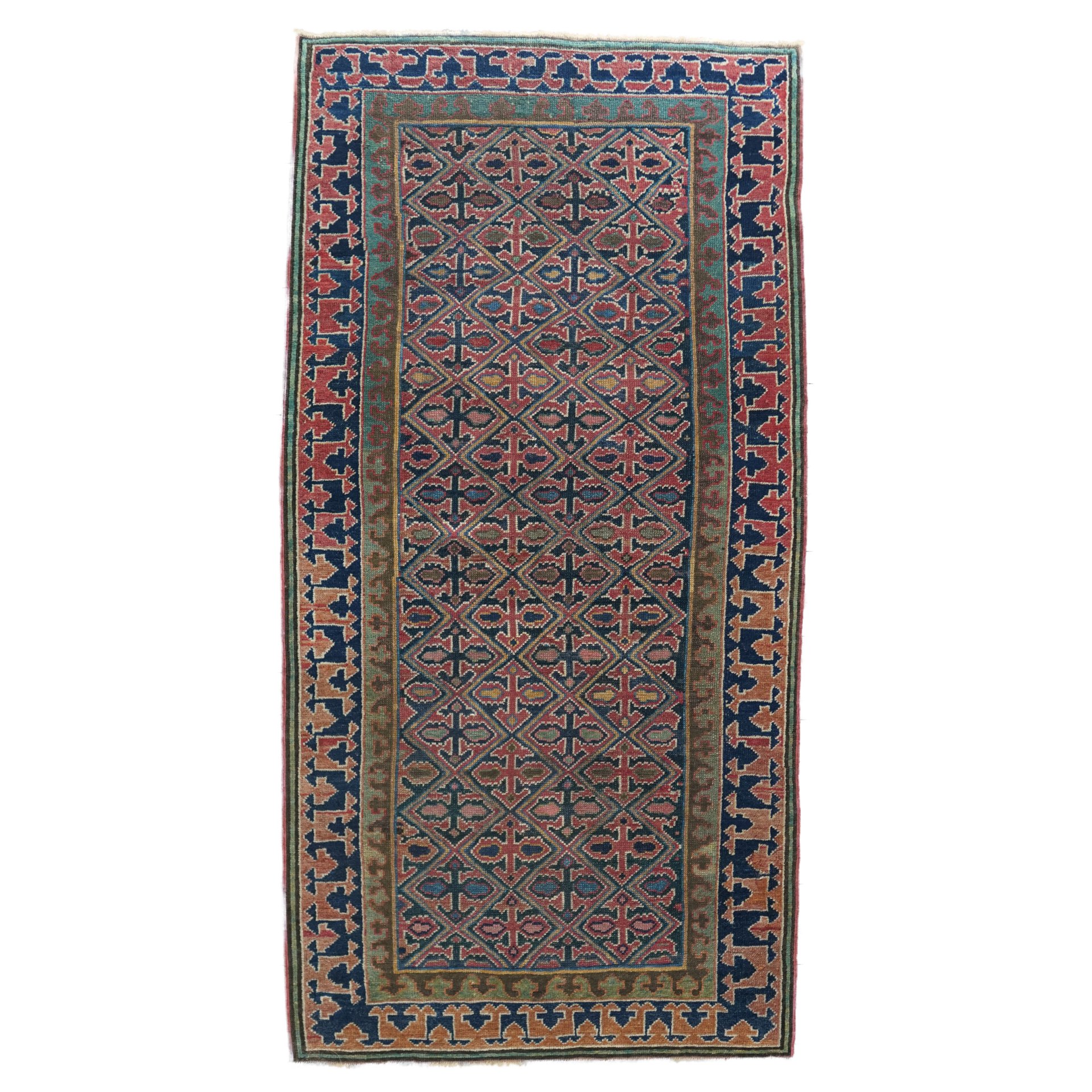 Image 1 of 9
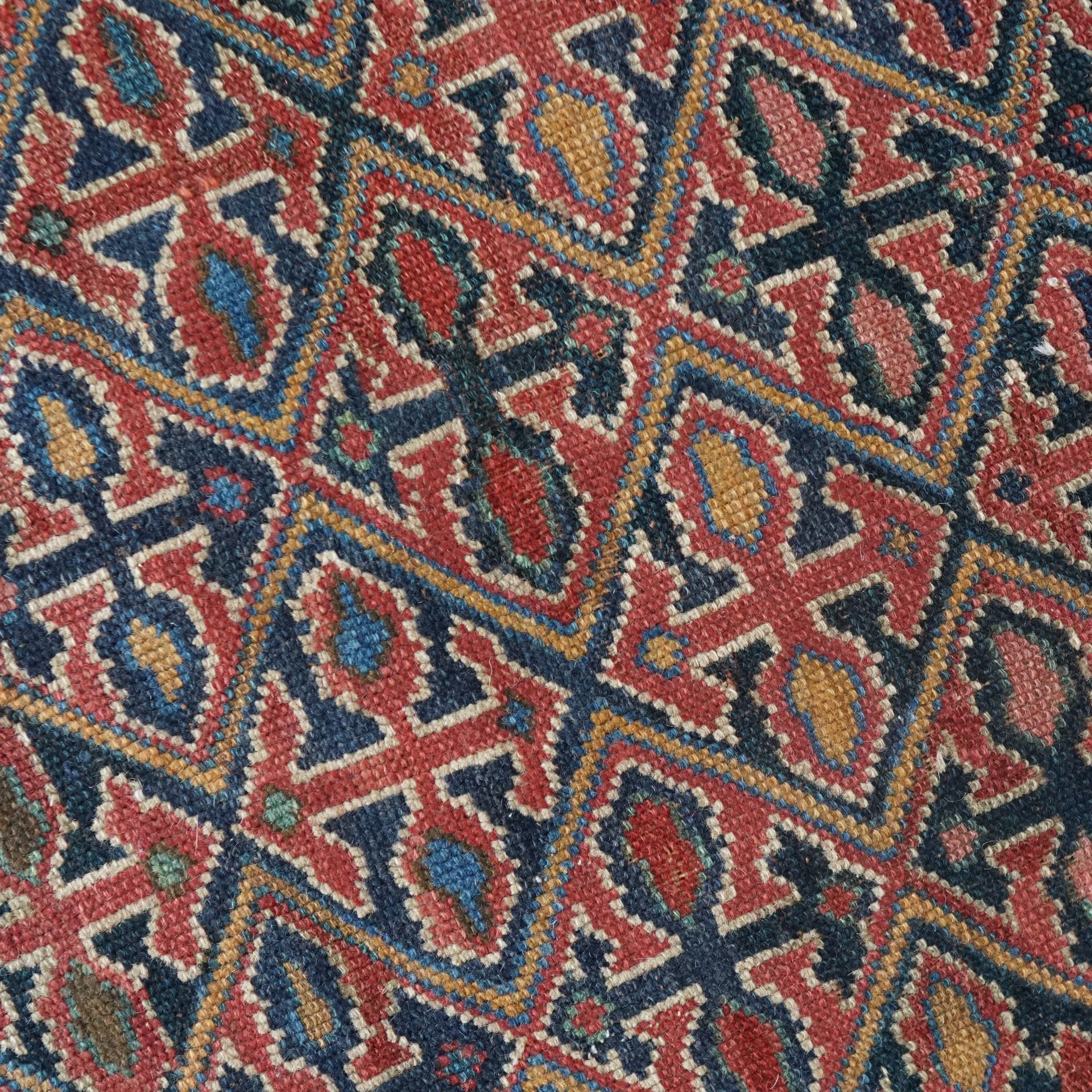 Image 2 of 9
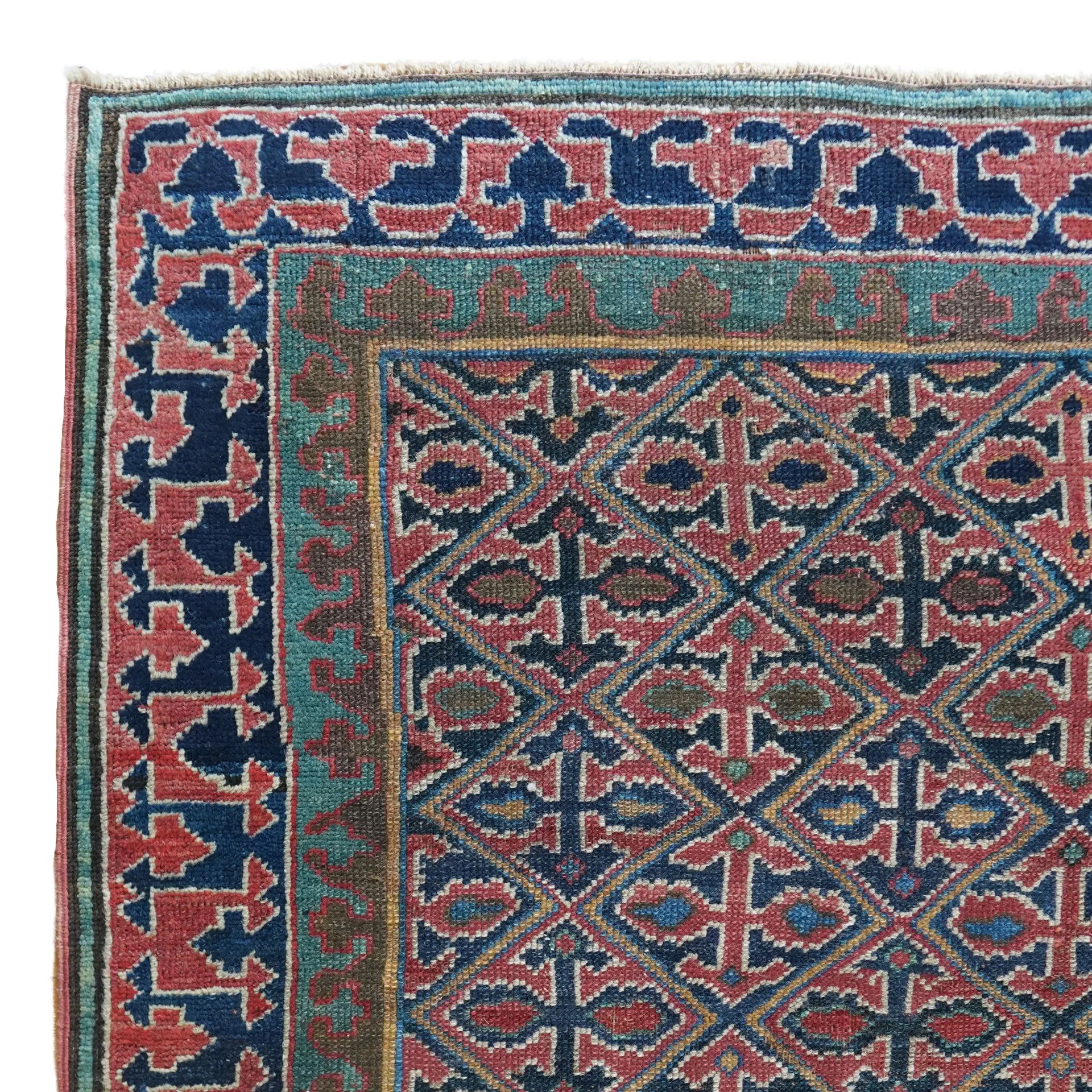 Image 3 of 9
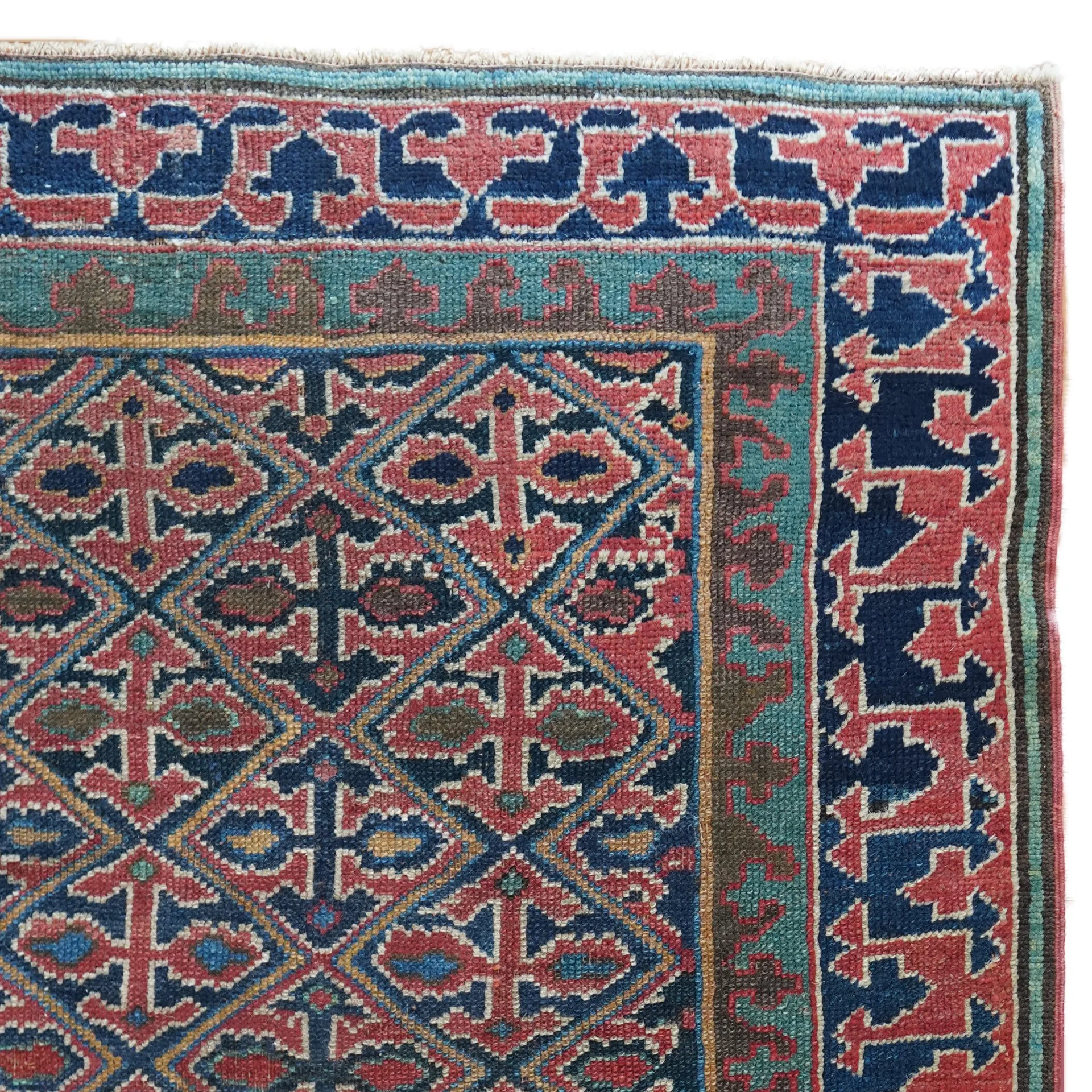 Image 4 of 9
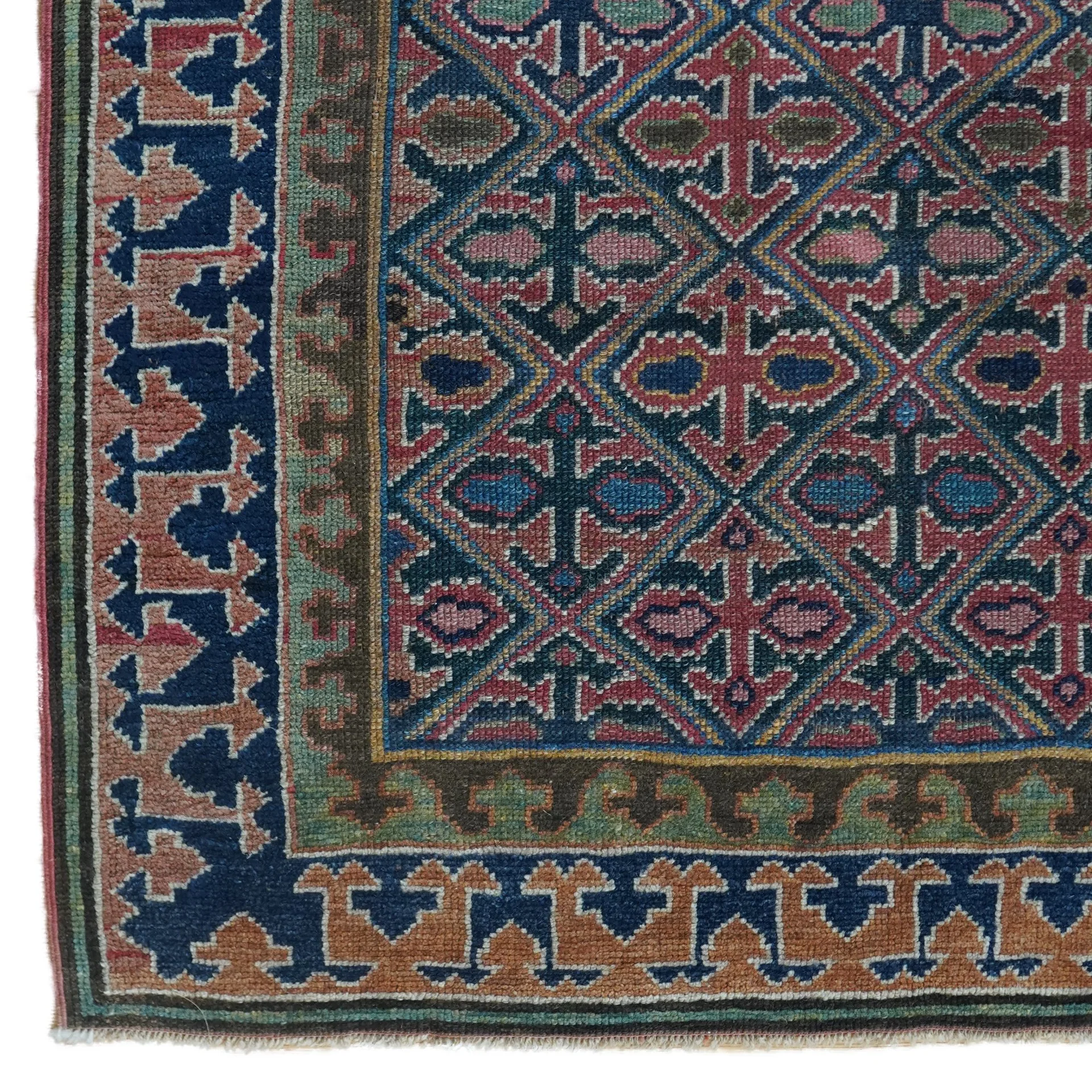 Image 5 of 9
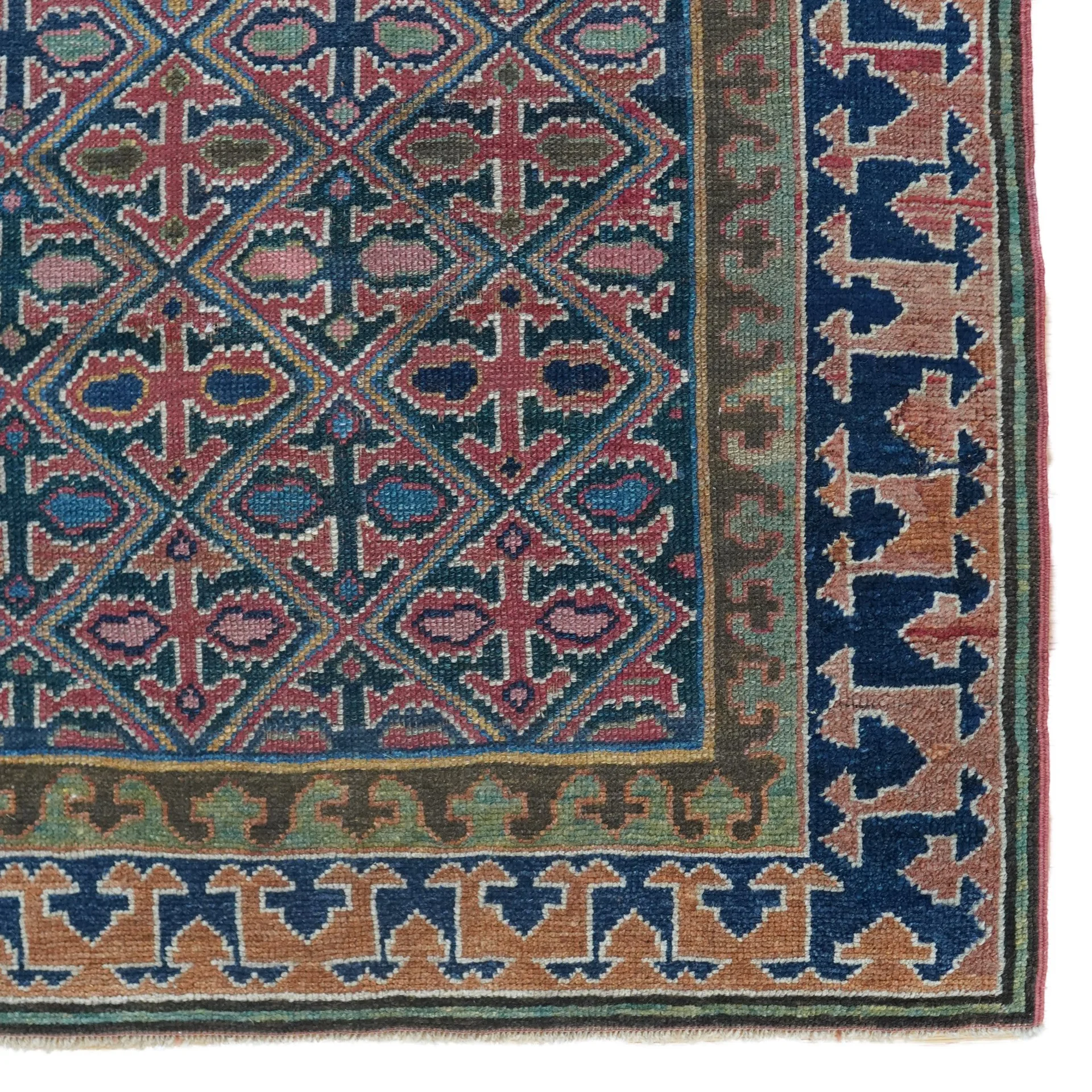 Image 6 of 9
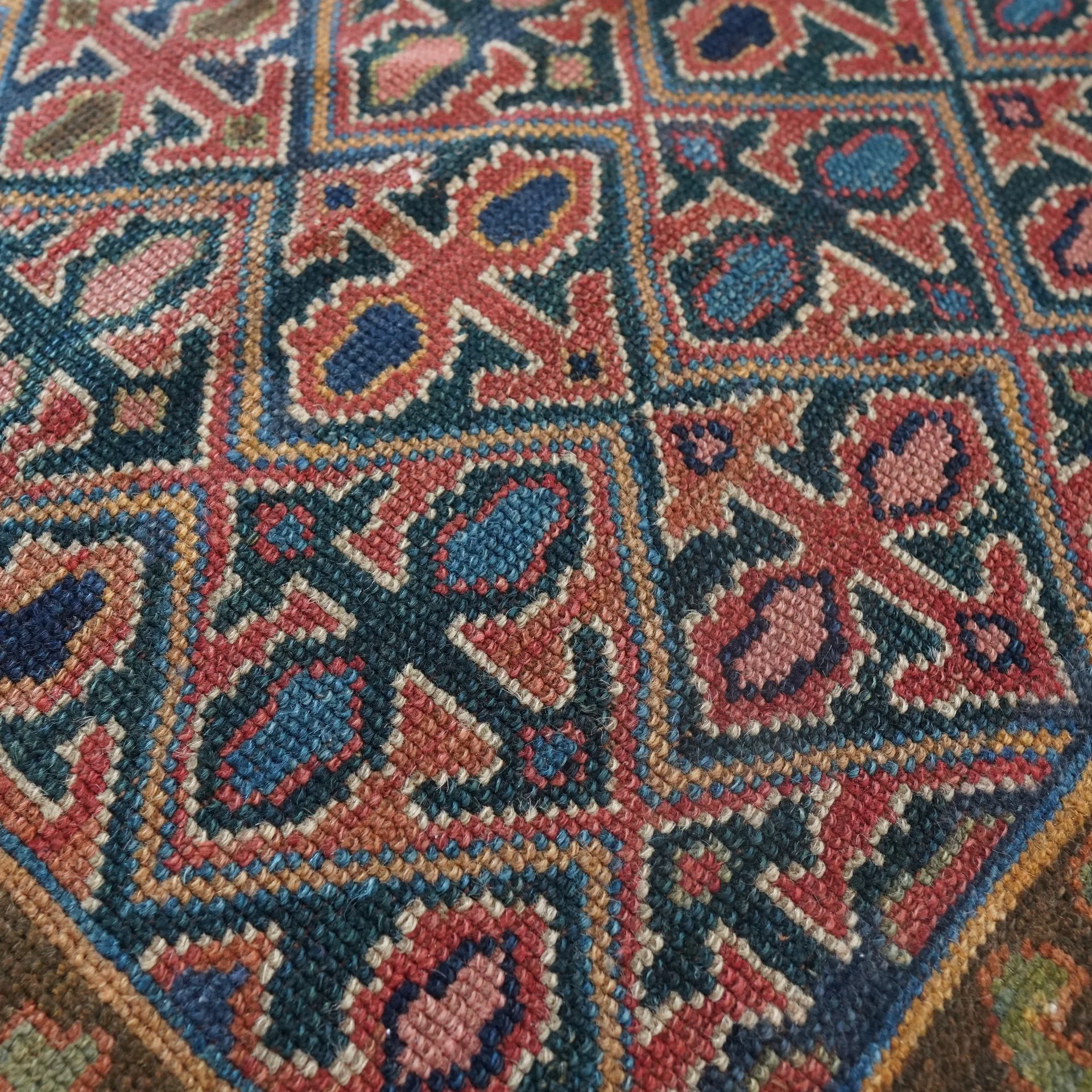 Image 7 of 9
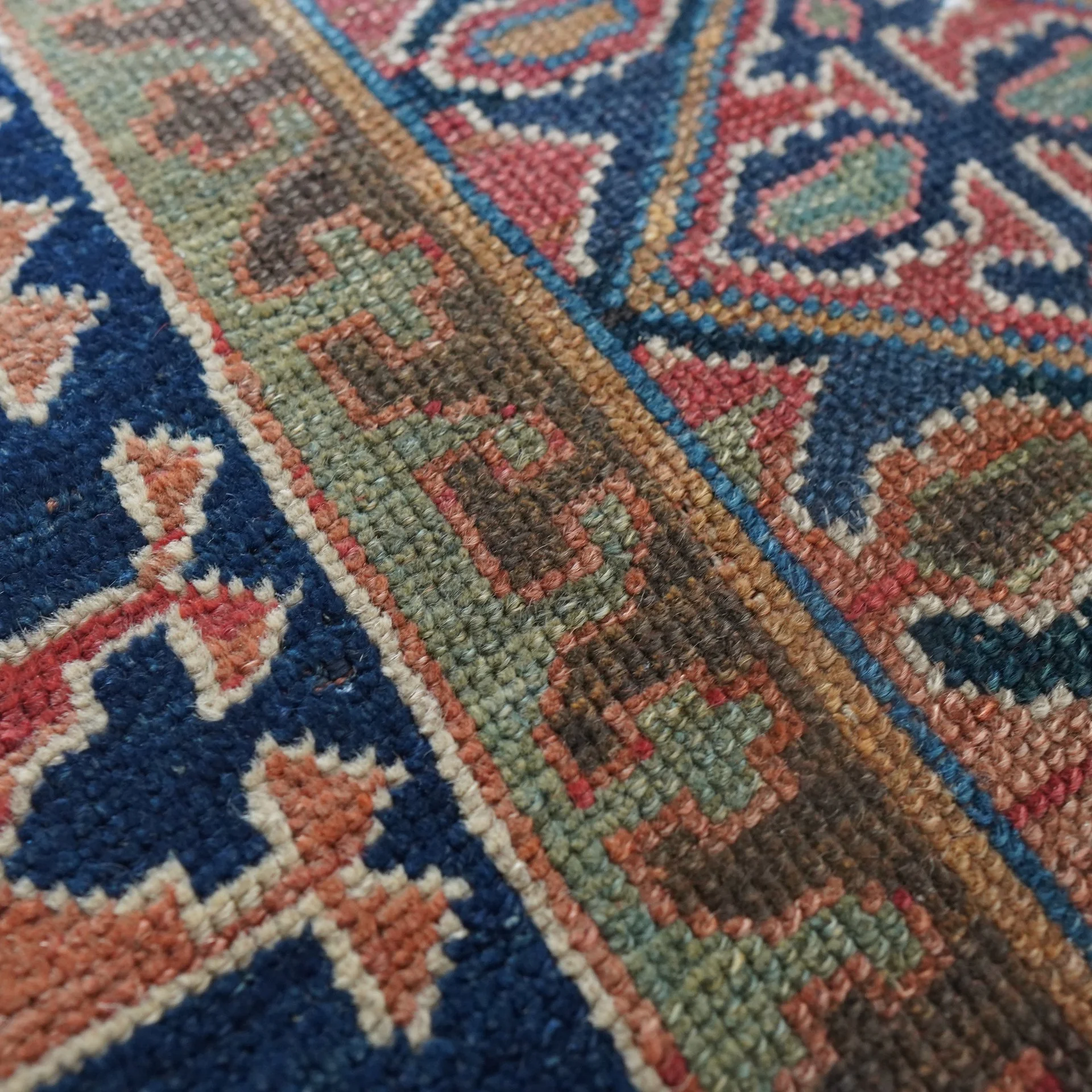 Image 8 of 9
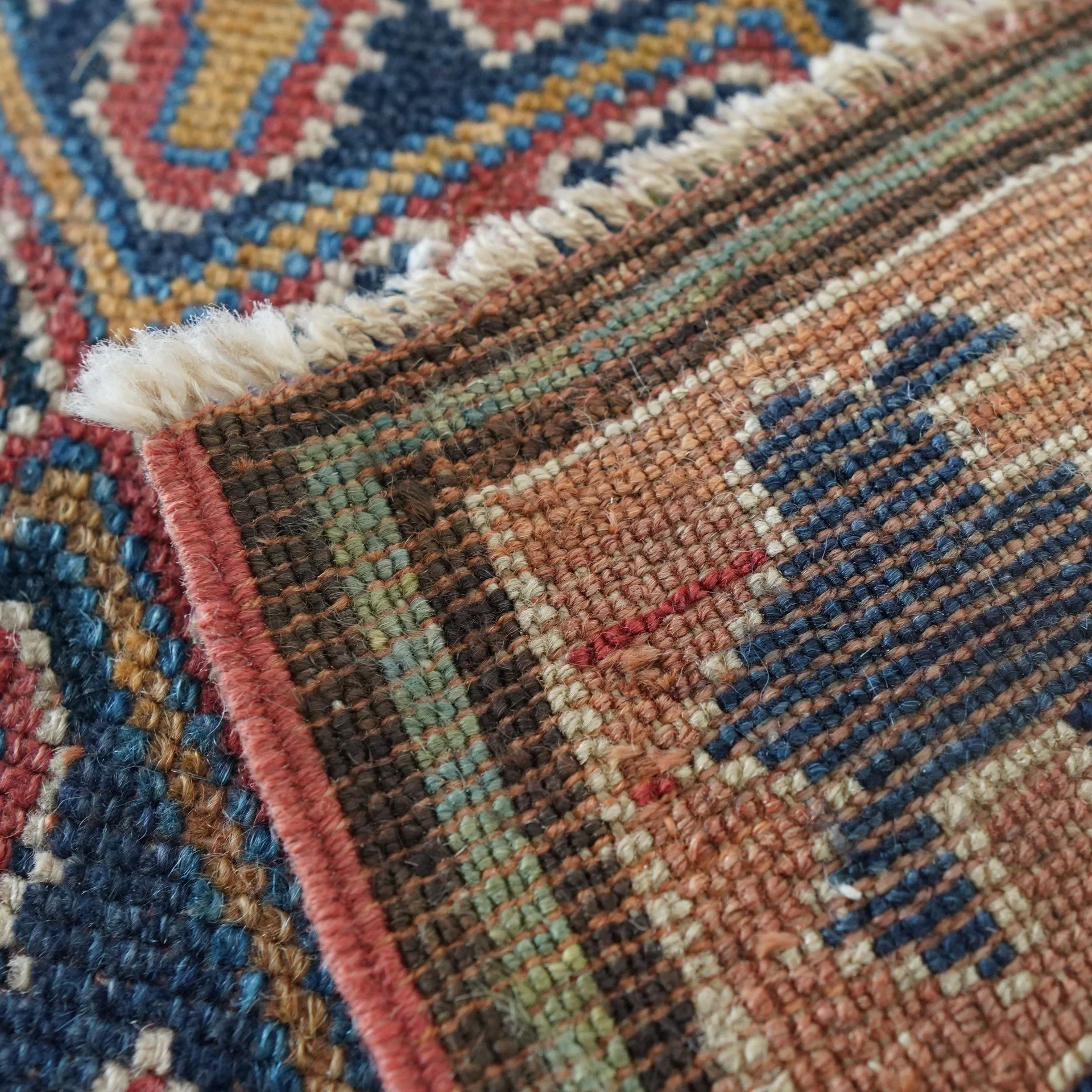 Image 9 of 9