2611
3'-6" x 6'-0"
AGE & ORIGIN:
19th C.
Caucasus
OVERVIEW:
In the world of Caucasian rugs, fewer rugs capture the imagination of the viewer as Kuba rugs. Their color schemes, occasional designed asymmetry, and distinct visual language help firmly set them apart.
Bidjov (sometimes Bijov) designs may be traced back to some of the earliest embroidered weavings to come out of the Caucuses. Normally, these designs feature so-called ‘croissant’ shapes stretching across the field in a manner similar to pincers. Here though, the scale is direct, large, almost ‘front facing’ as if looking directly down the snout of an imposing animal. I’m not entirely sure what the design here would be referred to. The larger of the main medallions might be a Harshang, although the somewhat nebulous nature of Kuba rugs in general might be what makes this piece so compelling to begin with, all of which are softer shades of the Caucasian primaries backed by an aquatuc field that could be deemed almost contemporary in its composition.
Of personal interest are the small ‘S’ shapes within the flanking medallions. The ‘S’ may be indicative of a number of designs. Some may say dragons or other zoomorphic origins. There is an argument to be made that these may also be very simplified swatikas. This derivation comes from simplified versions of the ‘Pinwheel’ Kazak design seen sometimes on prayer rugs. To see this shape so prominently and not in a derivative sideways version (also seen on this rug) is very interesting.
CONDITION:
Good with some selvedge wrapping loss and a professionally sewn area at the bottom of the rug to help with uniformity
NOTES:
2611
3'-6" x 6'-0"
AGE & ORIGIN:
19th C.
Caucasus
OVERVIEW:
In the world of Caucasian rugs, fewer rugs capture the imagination of the viewer as Kuba rugs. Their color schemes, occasional designed asymmetry, and distinct visual language help firmly set them apart.
Bidjov (sometimes Bijov) designs may be traced back to some of the earliest embroidered weavings to come out of the Caucuses. Normally, these designs feature so-called ‘croissant’ shapes stretching across the field in a manner similar to pincers. Here though, the scale is direct, large, almost ‘front facing’ as if looking directly down the snout of an imposing animal. I’m not entirely sure what the design here would be referred to. The larger of the main medallions might be a Harshang, although the somewhat nebulous nature of Kuba rugs in general might be what makes this piece so compelling to begin with, all of which are softer shades of the Caucasian primaries backed by an aquatuc field that could be deemed almost contemporary in its composition.
Of personal interest are the small ‘S’ shapes within the flanking medallions. The ‘S’ may be indicative of a number of designs. Some may say dragons or other zoomorphic origins. There is an argument to be made that these may also be very simplified swatikas. This derivation comes from simplified versions of the ‘Pinwheel’ Kazak design seen sometimes on prayer rugs. To see this shape so prominently and not in a derivative sideways version (also seen on this rug) is very interesting.
CONDITION:
Good with some selvedge wrapping loss and a professionally sewn area at the bottom of the rug to help with uniformity
NOTES:


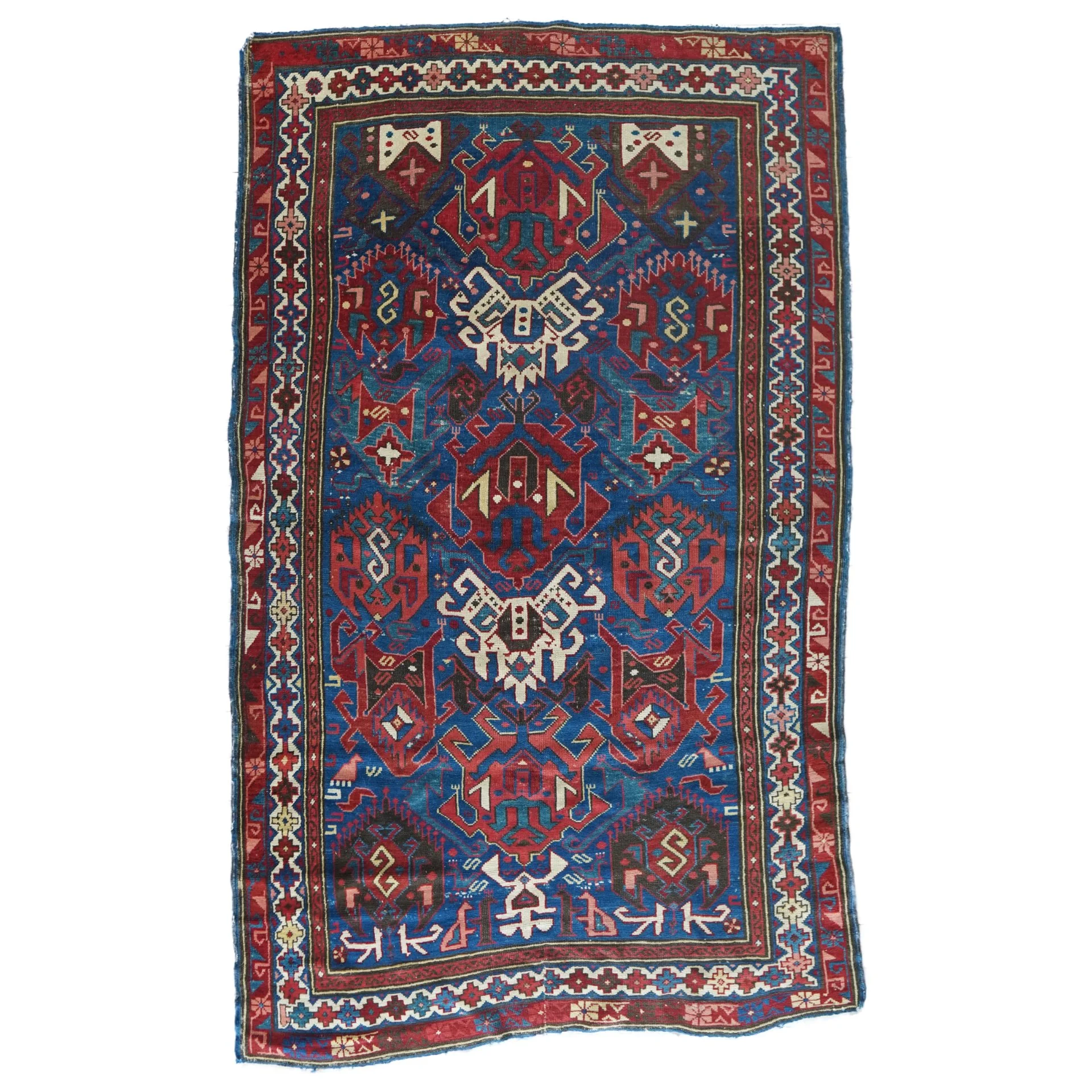 Image 1 of 13
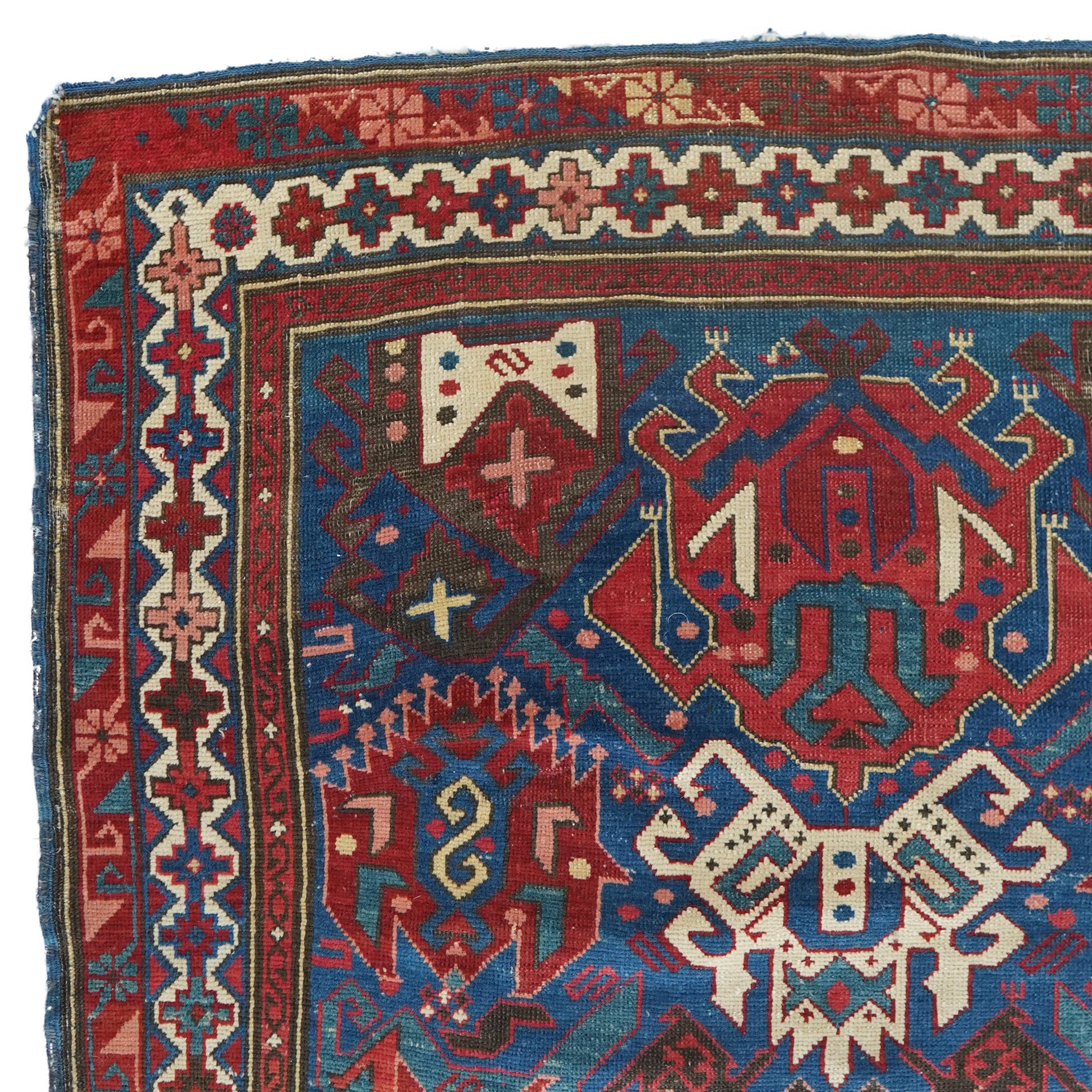 Image 2 of 13
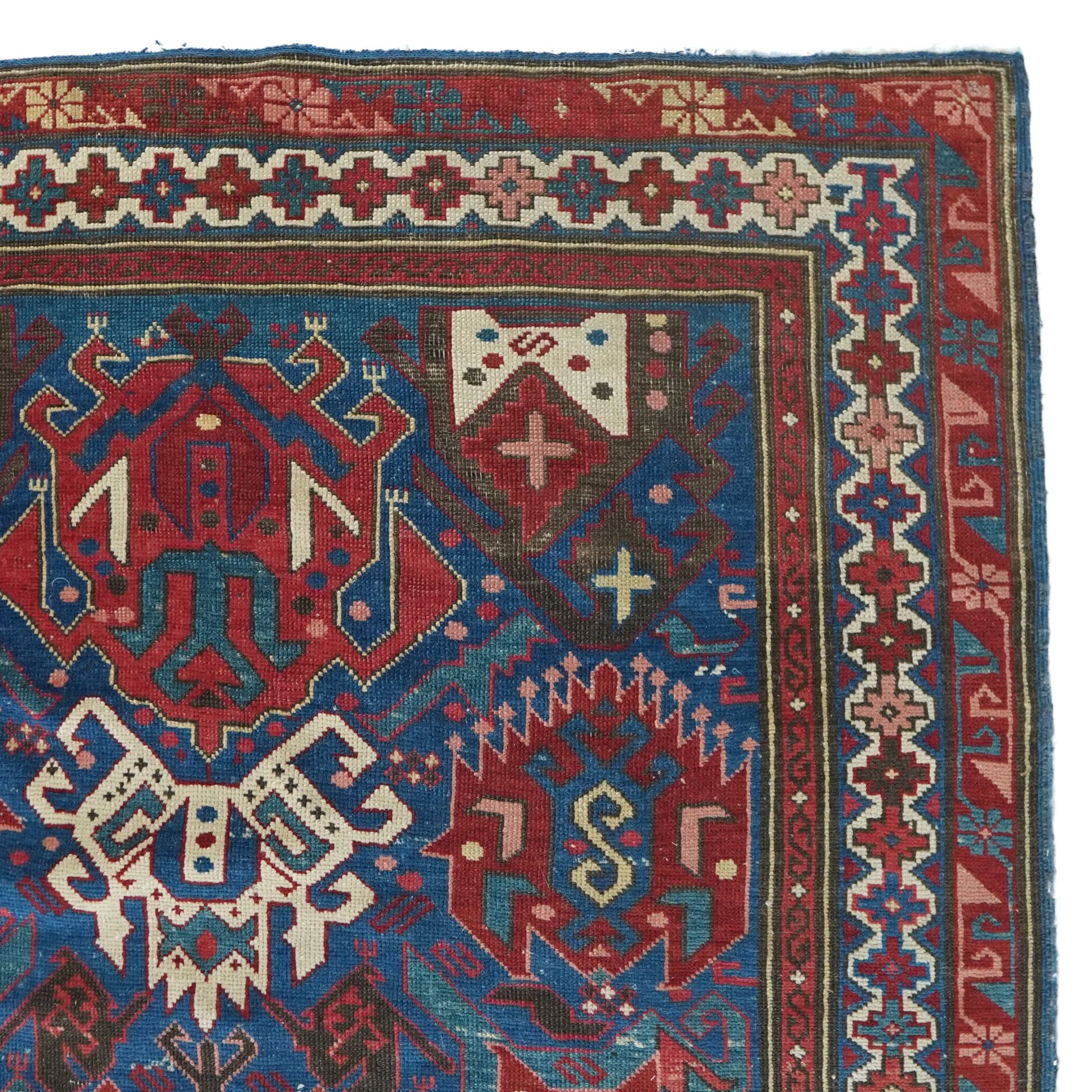 Image 3 of 13
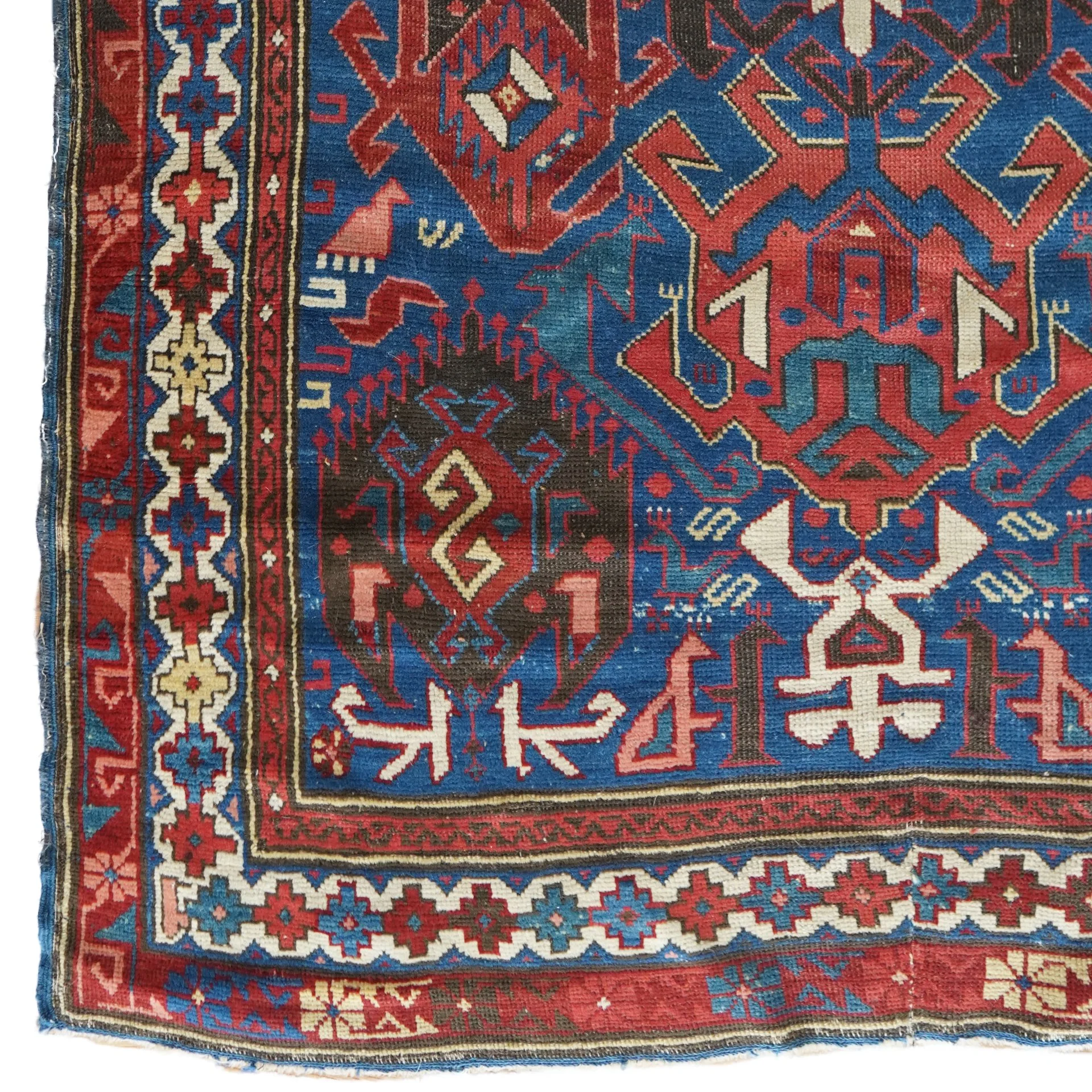 Image 4 of 13
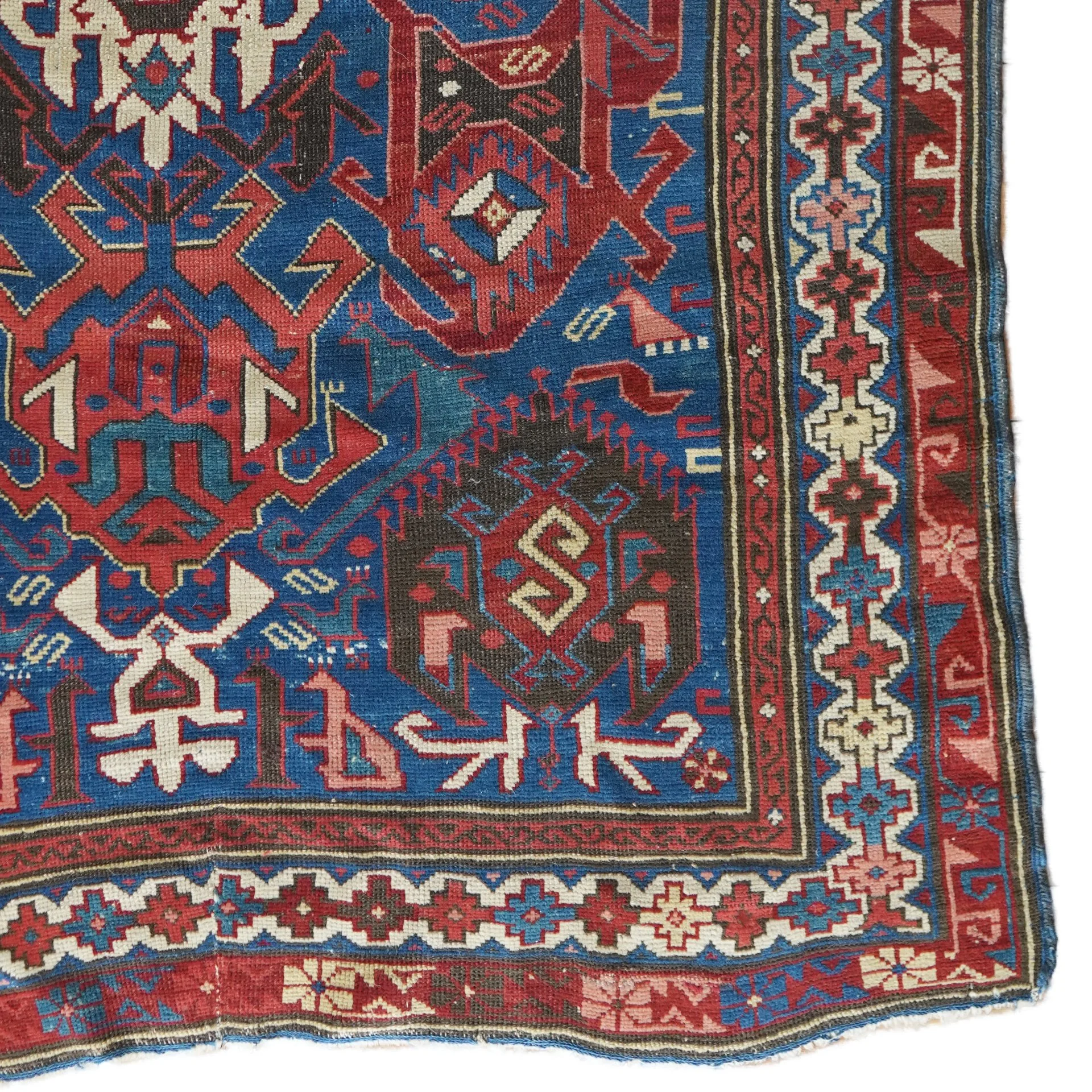 Image 5 of 13
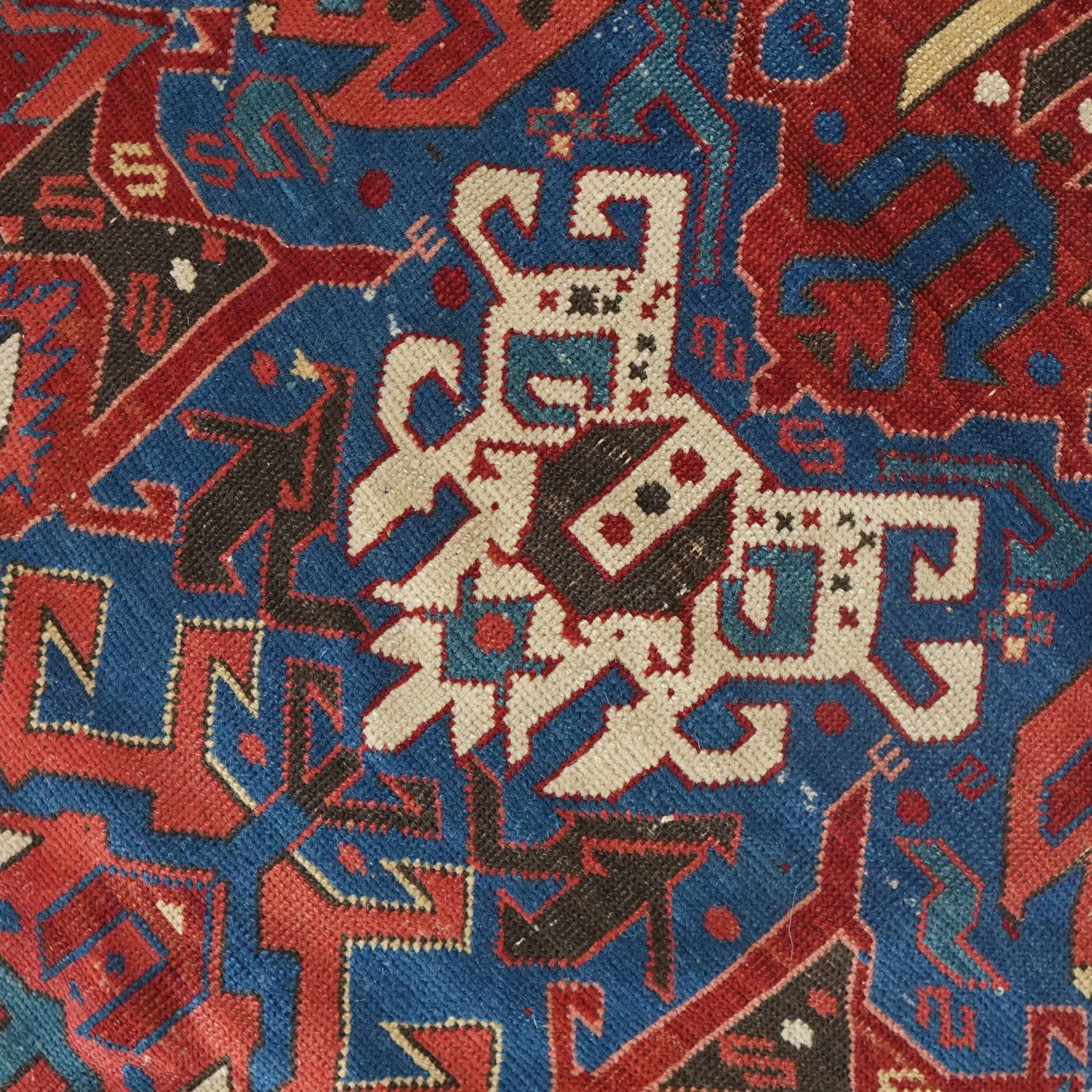 Image 6 of 13
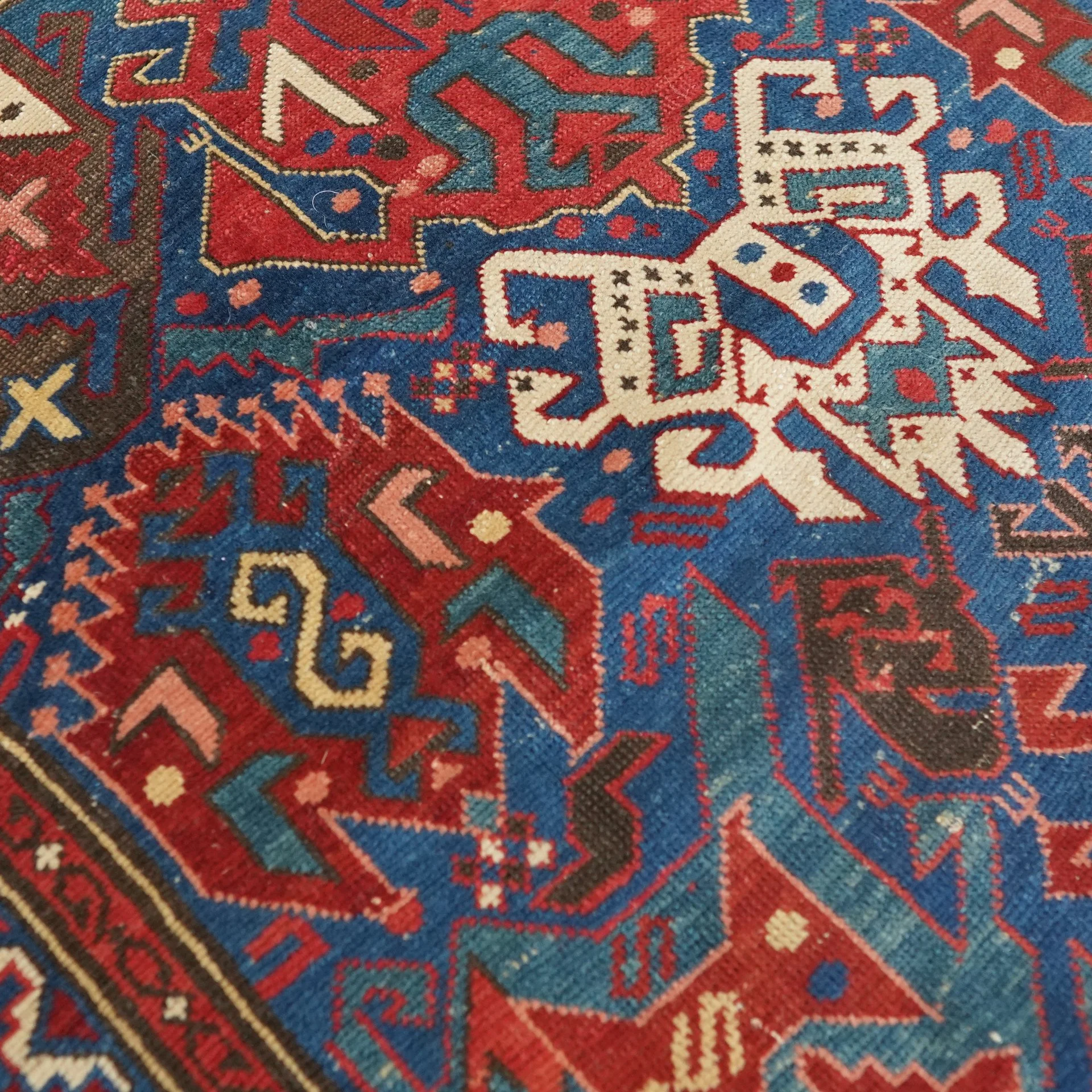 Image 7 of 13
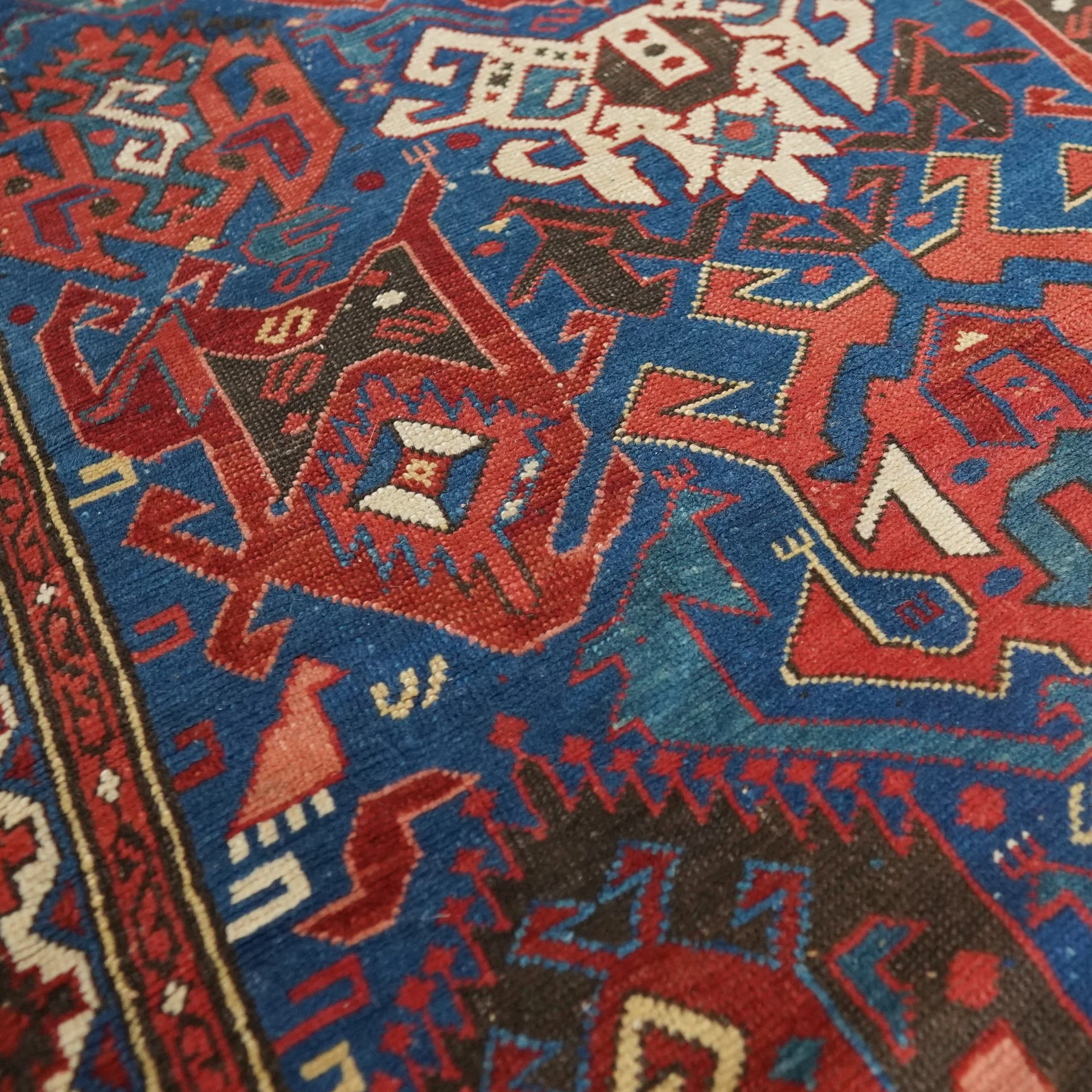 Image 8 of 13
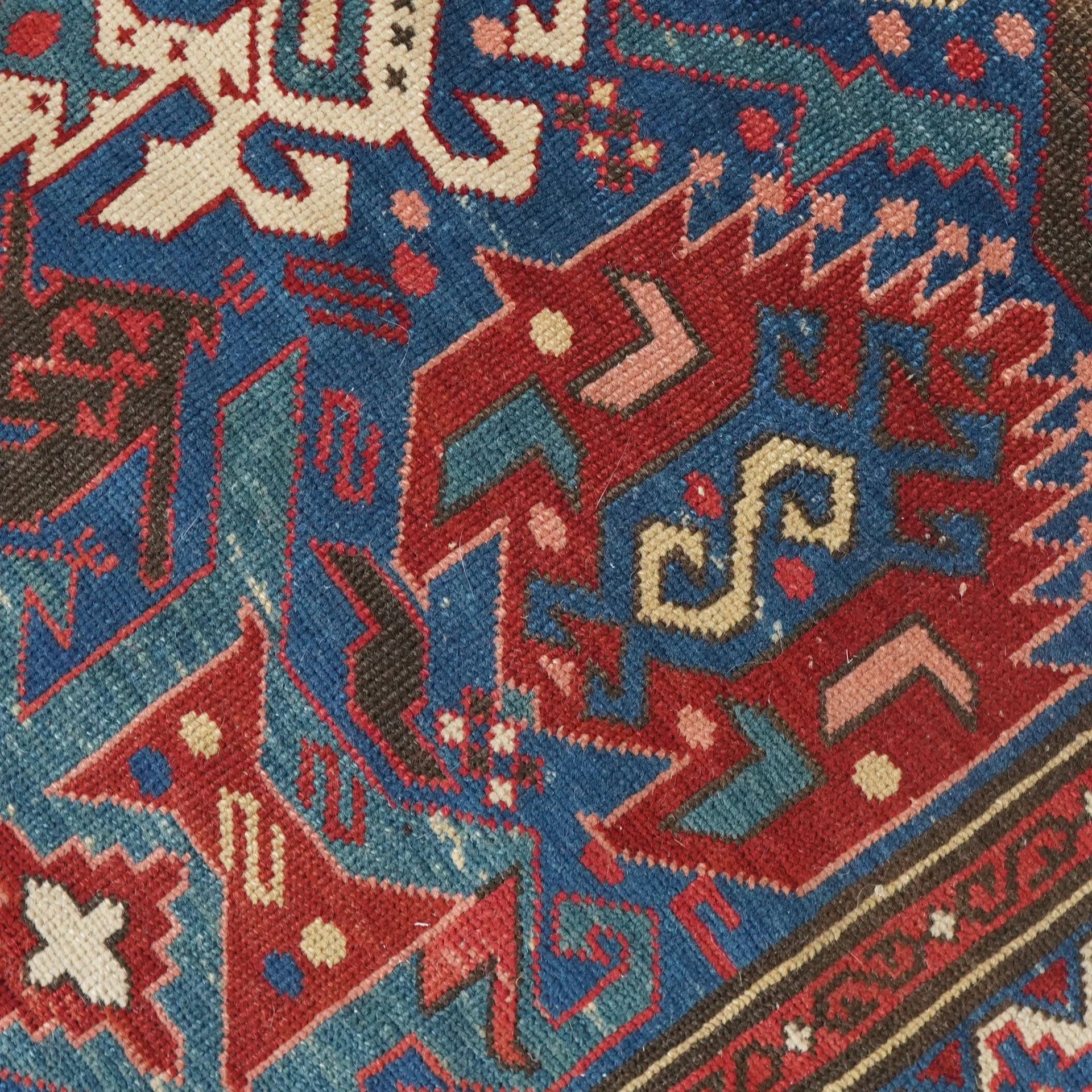 Image 9 of 13
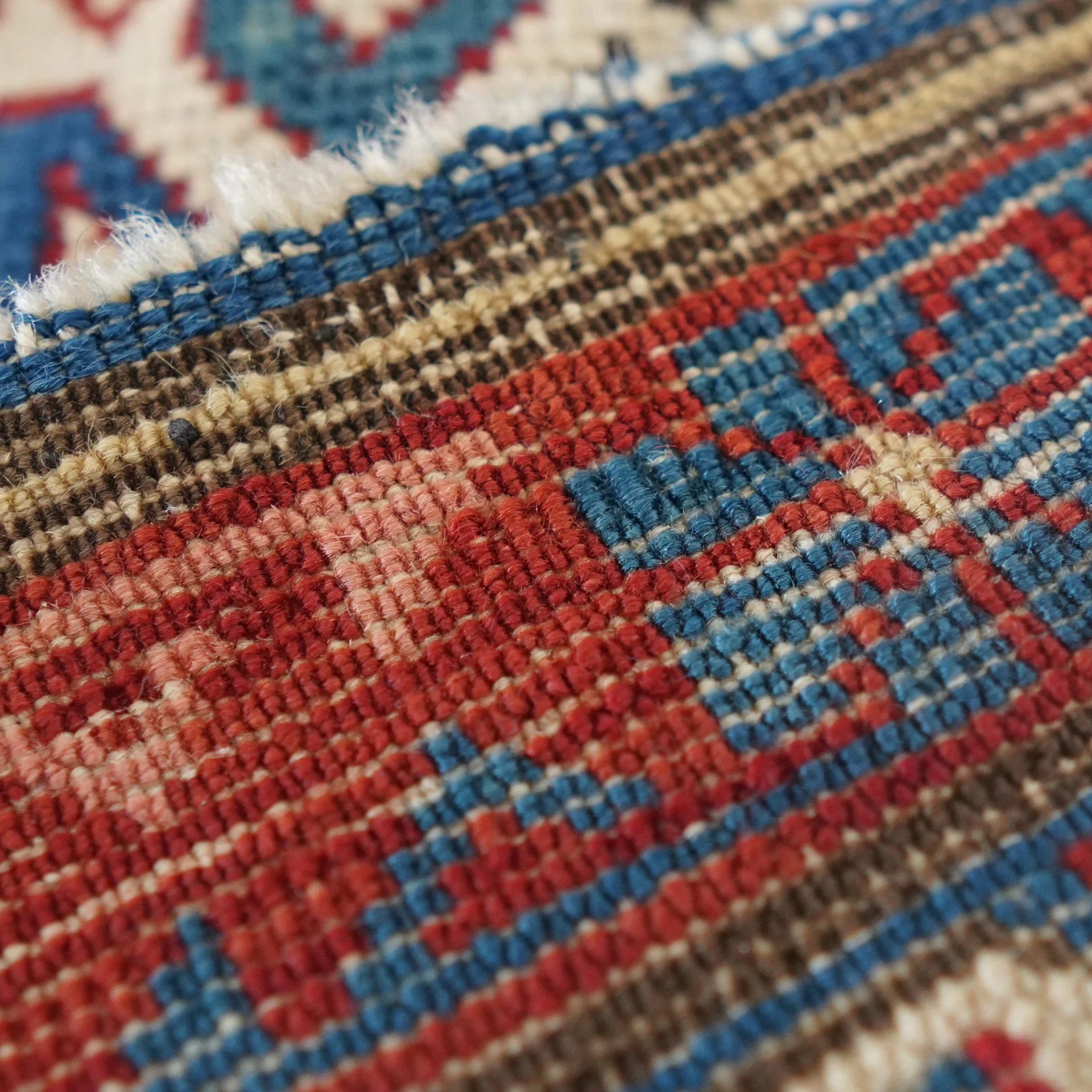 Image 10 of 13
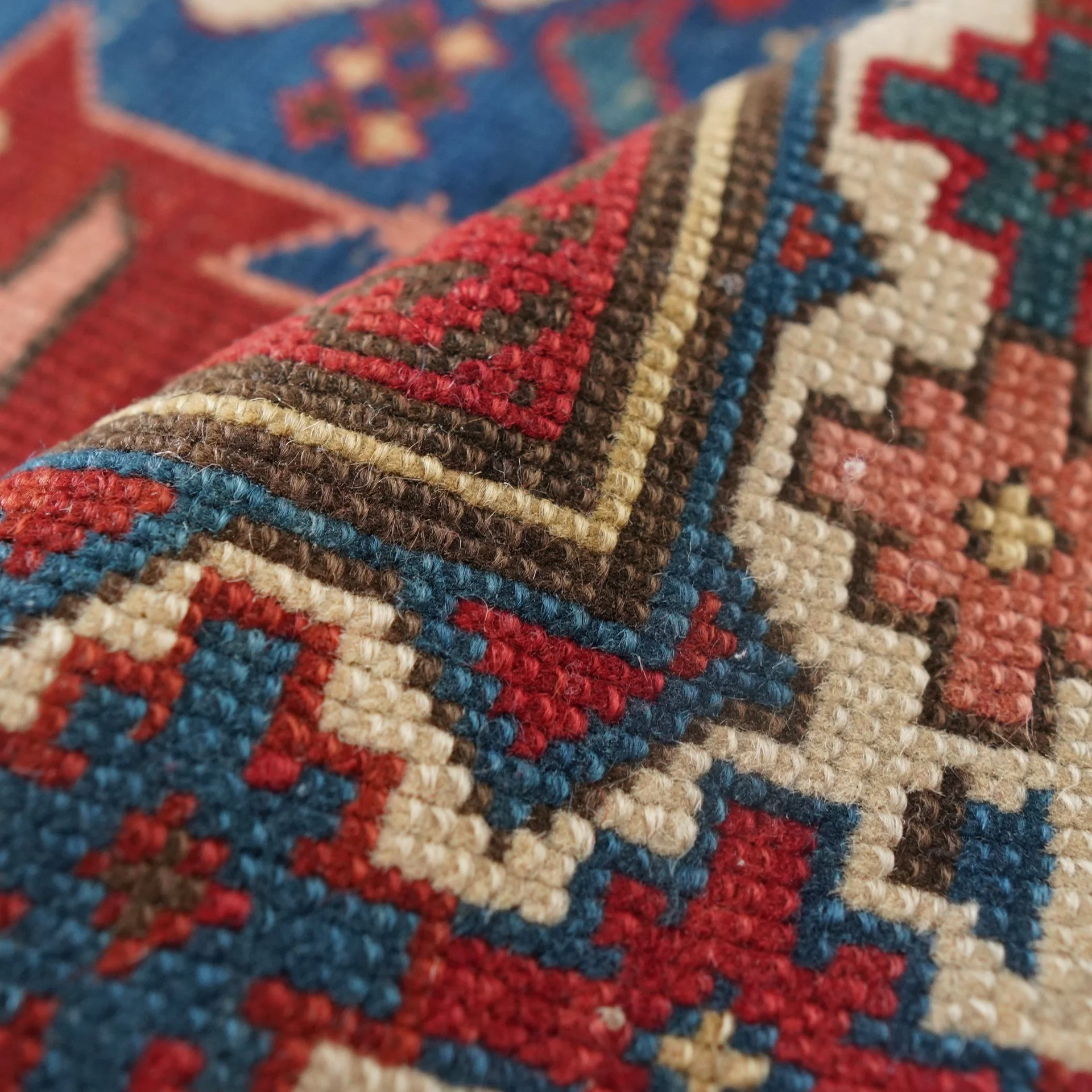 Image 11 of 13
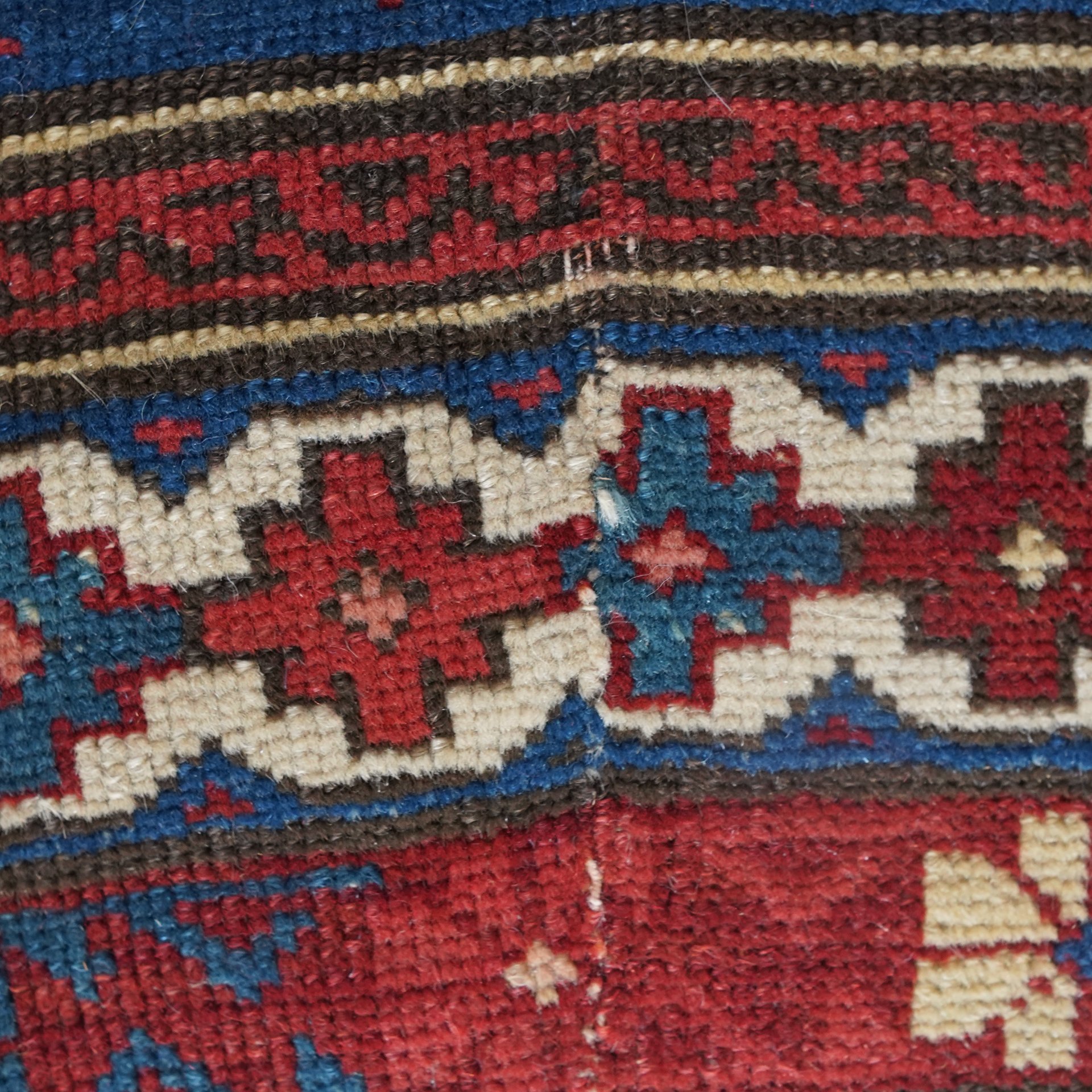 Image 12 of 13
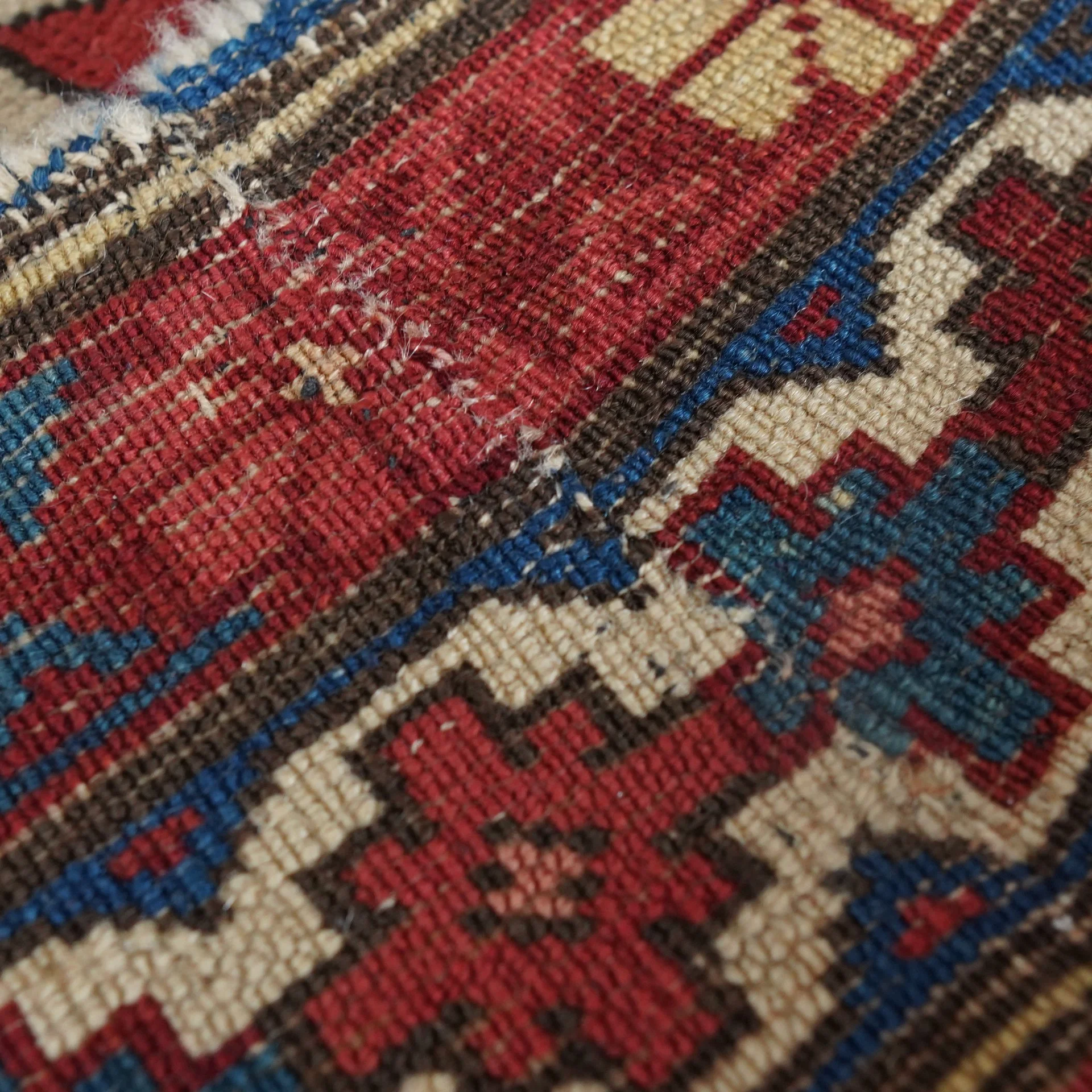 Image 13 of 13