2668
1’-9” x 4’-3”
AGE & ORIGIN:
c. 1900
Persia
OVERVIEW:
Mafrash were cubic storage and moving bags typically woven with the four side panels intricately decorated, often with different weaving styles. Often, these panels would be separated and we today often find them in this state; removed from their original purpose and appreciated in the decorative form they were woven in.
Mafrash are typically woven using flatweave techniques including soumak and kilim, however less common are the piled versions, which is what we have here.
Masterful use of color and a welcome preference for often less-visited hues and tones; chartreuse and mauve are the standouts here, both grounded by a prevailing oxblood red. Of course, complementary dusty aubergine, mustard and slime-green make their home throughout creating a compelling palette for the precise drawing.
CONDITION/NOTES:
There are several red tones found on the piece, but one in particular seems to have bled its color to the surrounding pile and foundation. I personally do not believe this to be synthetic but rather the result of an imbalance of the mordant used to keep natural dyes from bleeding. This is supported by the fact that the red (to my eyes) does not seem electric, nor has the color faded from the actual wool, which is what one would expect from a synthetic dye.
Full pile
Several small re-woven areas
2668
1’-9” x 4’-3”
AGE & ORIGIN:
c. 1900
Persia
OVERVIEW:
Mafrash were cubic storage and moving bags typically woven with the four side panels intricately decorated, often with different weaving styles. Often, these panels would be separated and we today often find them in this state; removed from their original purpose and appreciated in the decorative form they were woven in.
Mafrash are typically woven using flatweave techniques including soumak and kilim, however less common are the piled versions, which is what we have here.
Masterful use of color and a welcome preference for often less-visited hues and tones; chartreuse and mauve are the standouts here, both grounded by a prevailing oxblood red. Of course, complementary dusty aubergine, mustard and slime-green make their home throughout creating a compelling palette for the precise drawing.
CONDITION/NOTES:
There are several red tones found on the piece, but one in particular seems to have bled its color to the surrounding pile and foundation. I personally do not believe this to be synthetic but rather the result of an imbalance of the mordant used to keep natural dyes from bleeding. This is supported by the fact that the red (to my eyes) does not seem electric, nor has the color faded from the actual wool, which is what one would expect from a synthetic dye.
Full pile
Several small re-woven areas


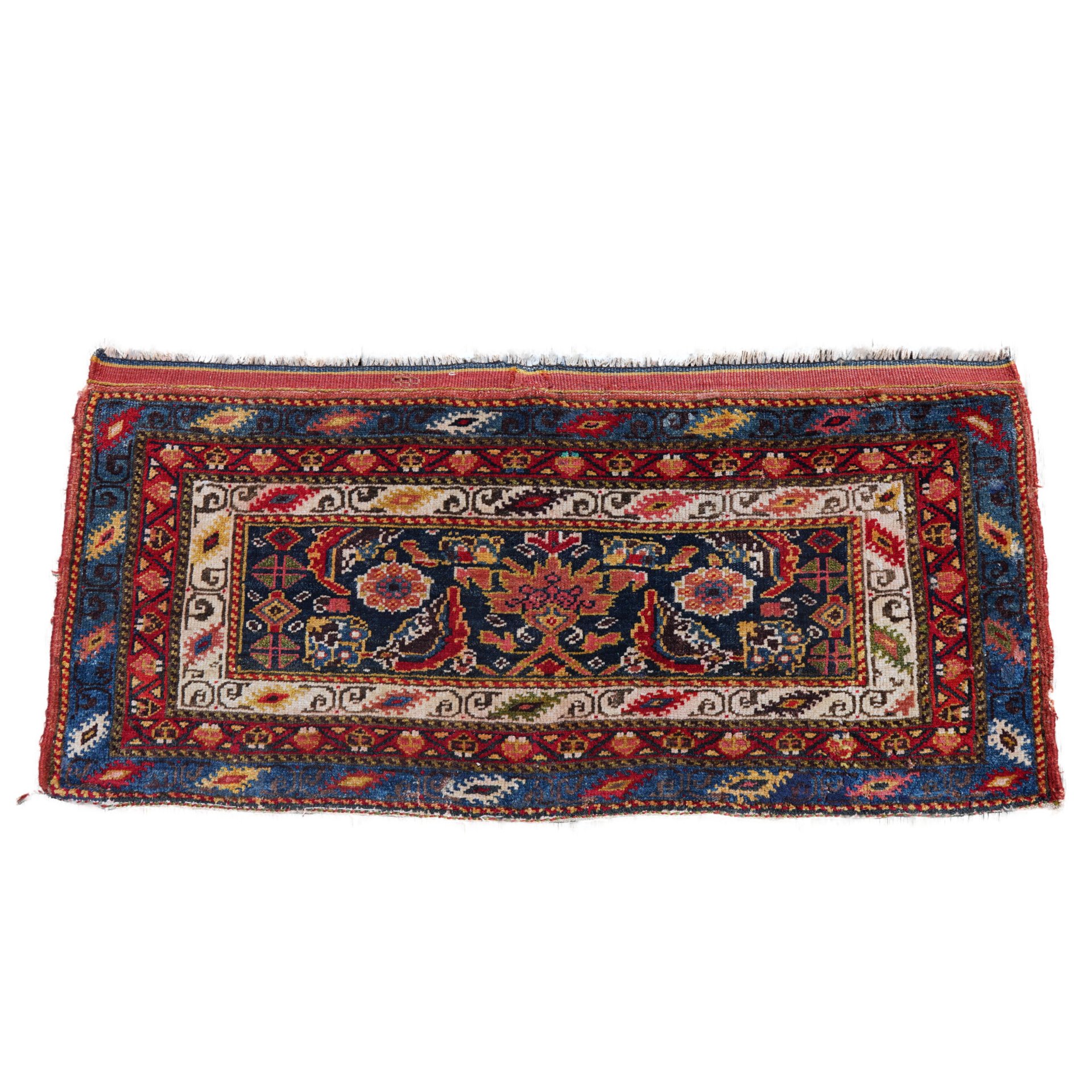 Image 1 of 8
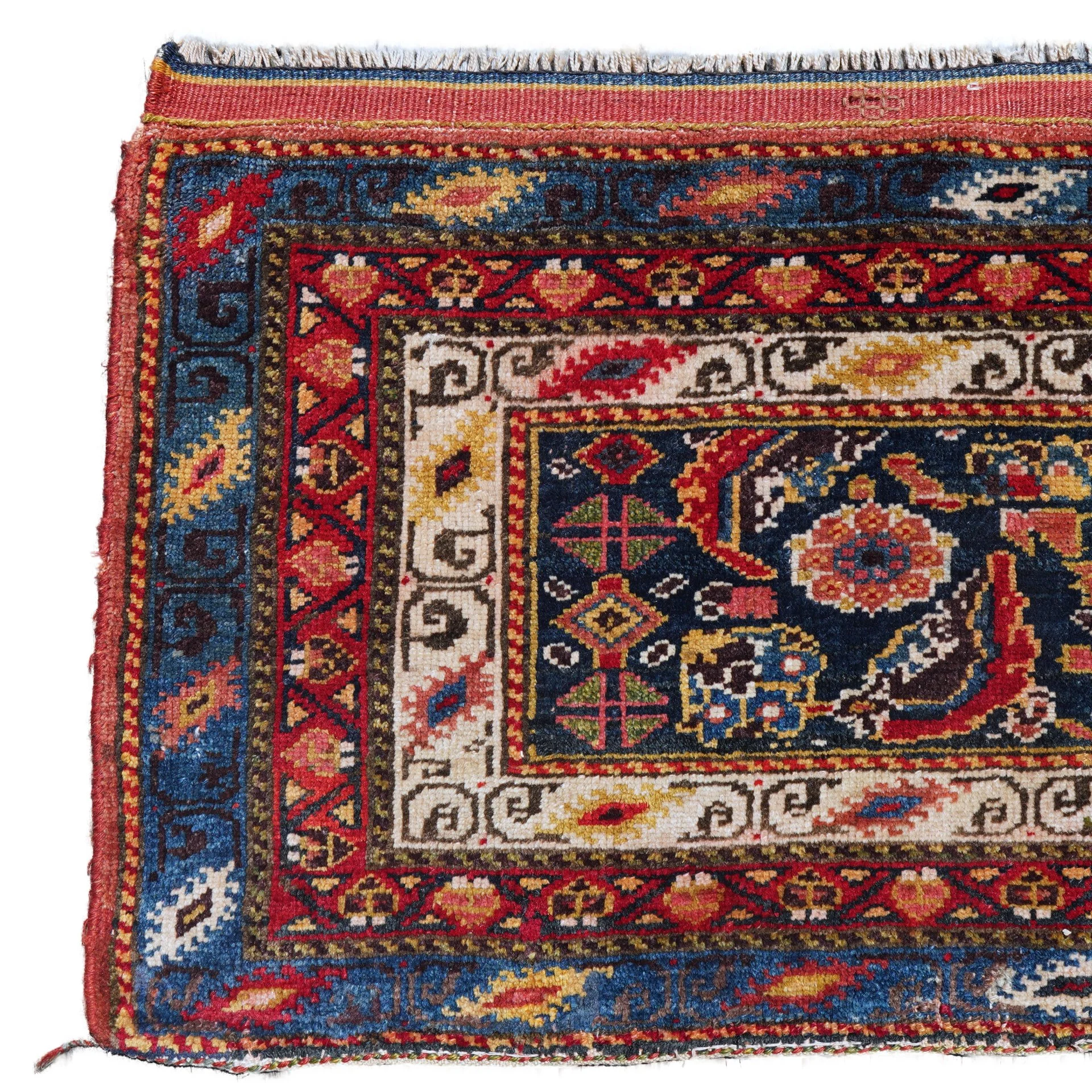 Image 2 of 8
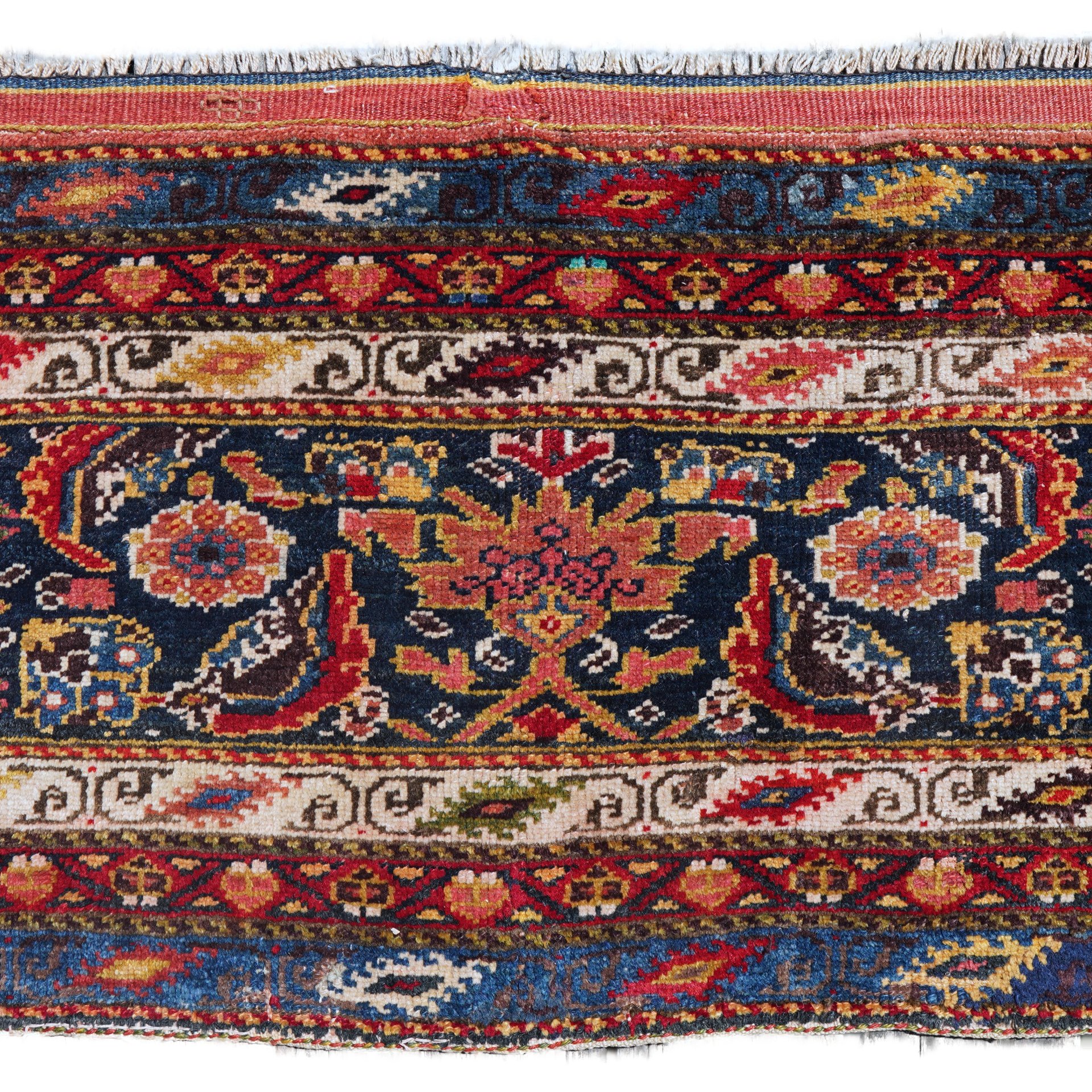 Image 3 of 8
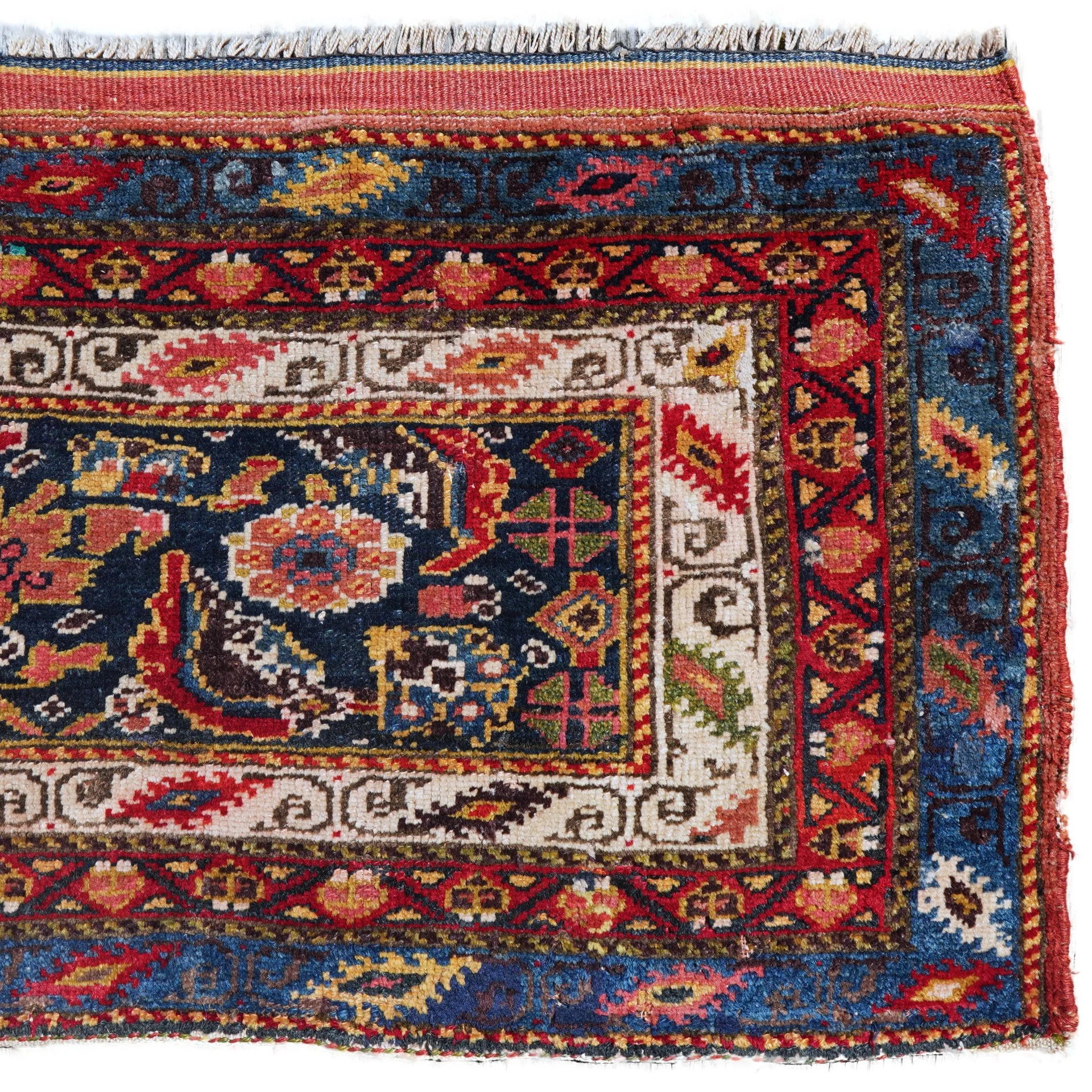 Image 4 of 8
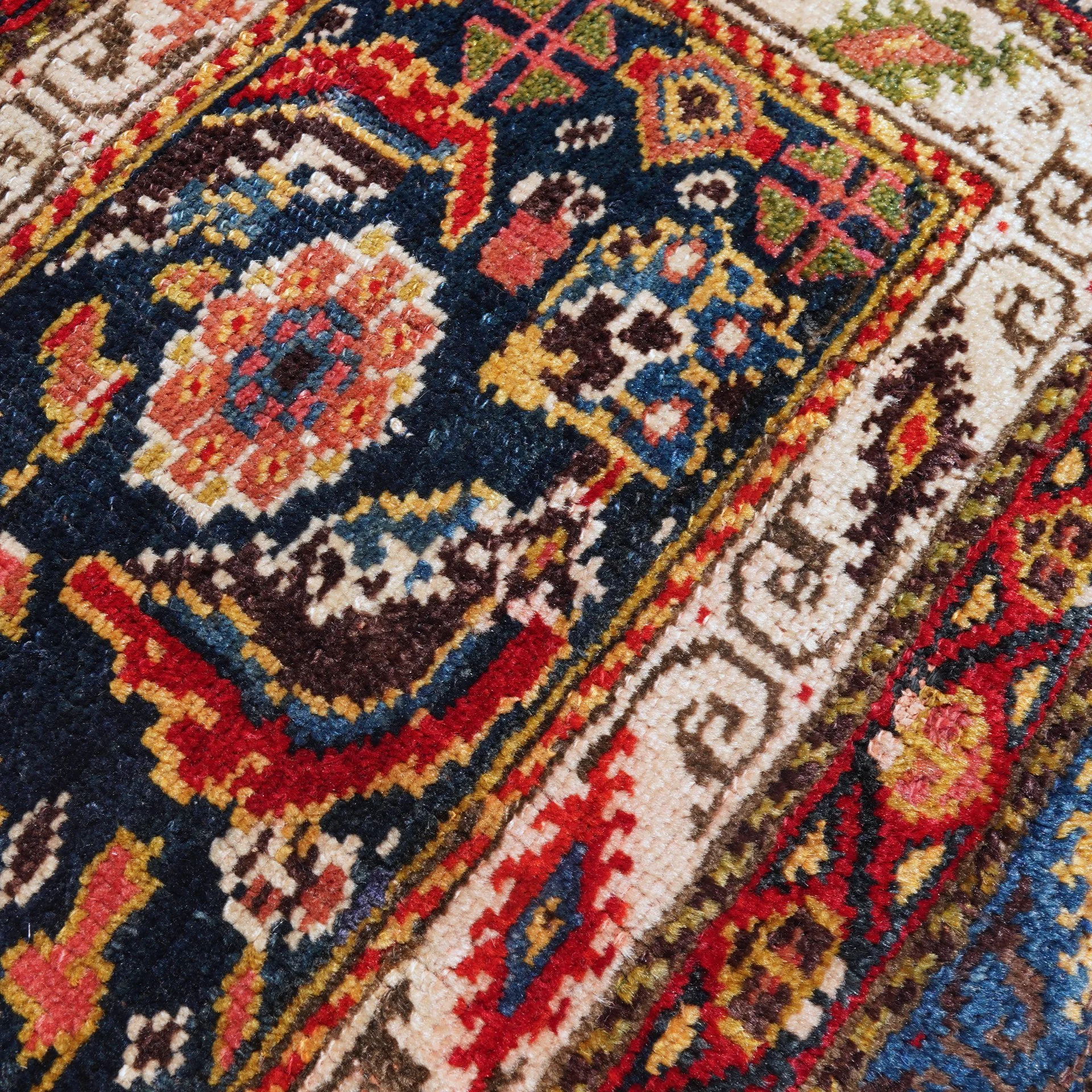 Image 5 of 8
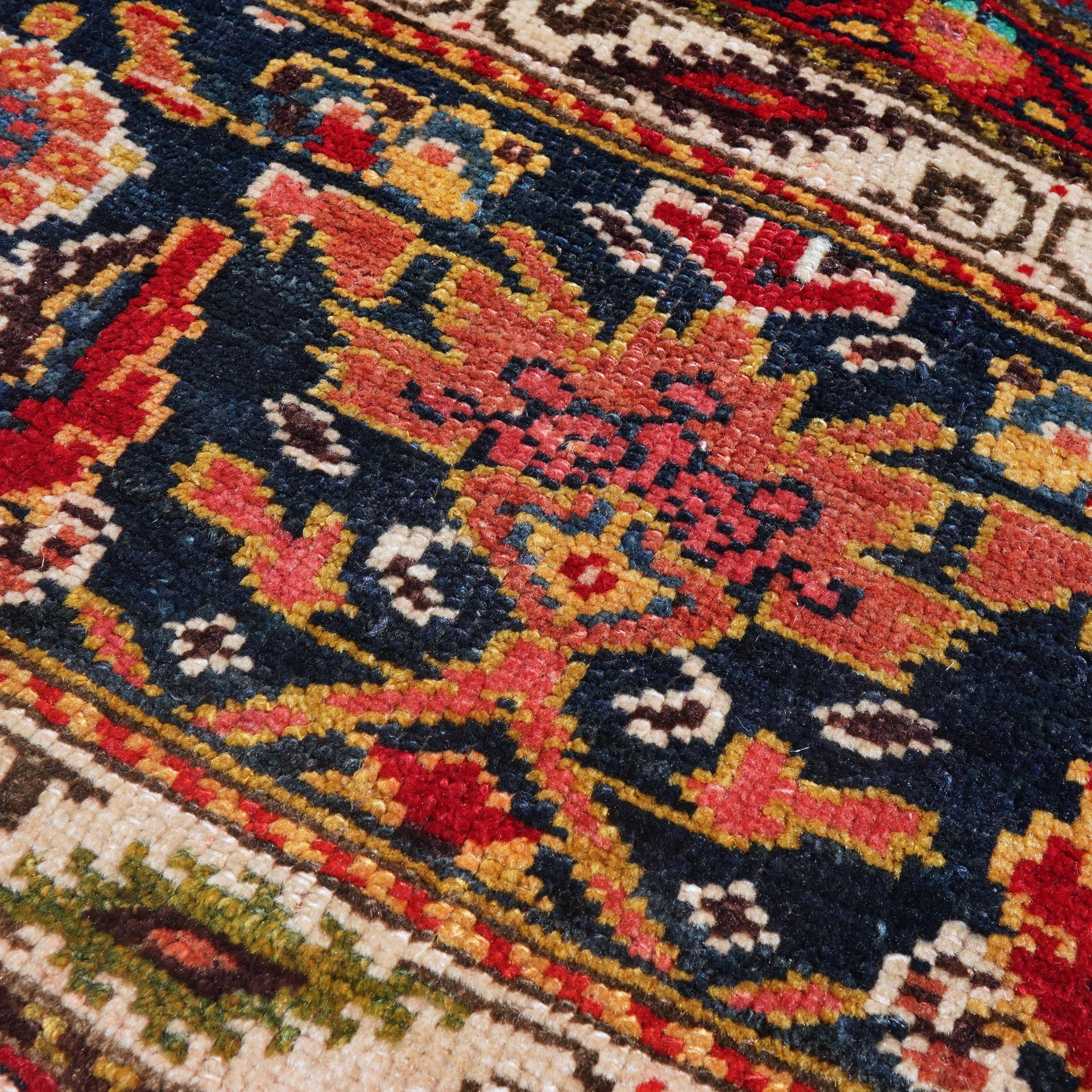 Image 6 of 8
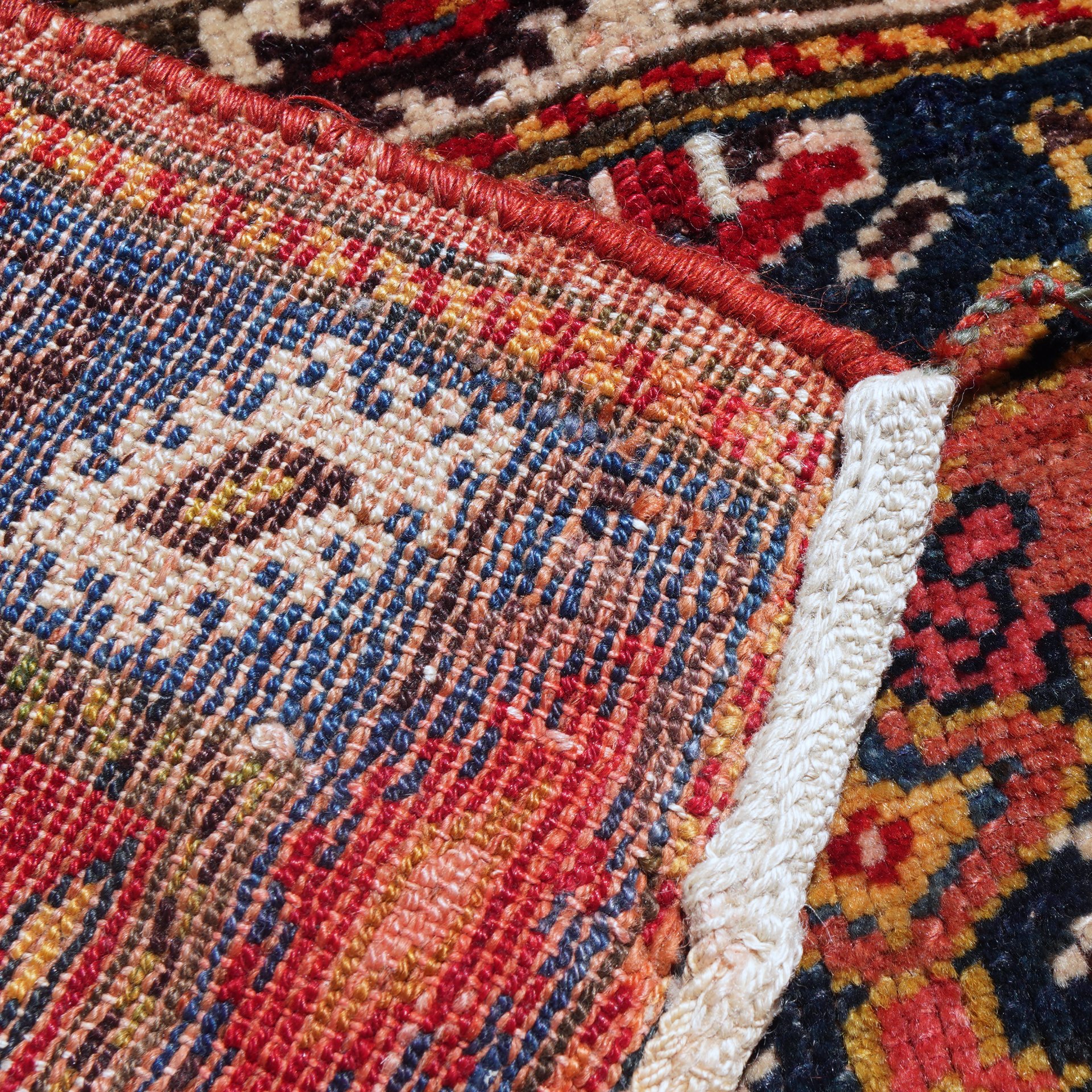 Image 7 of 8
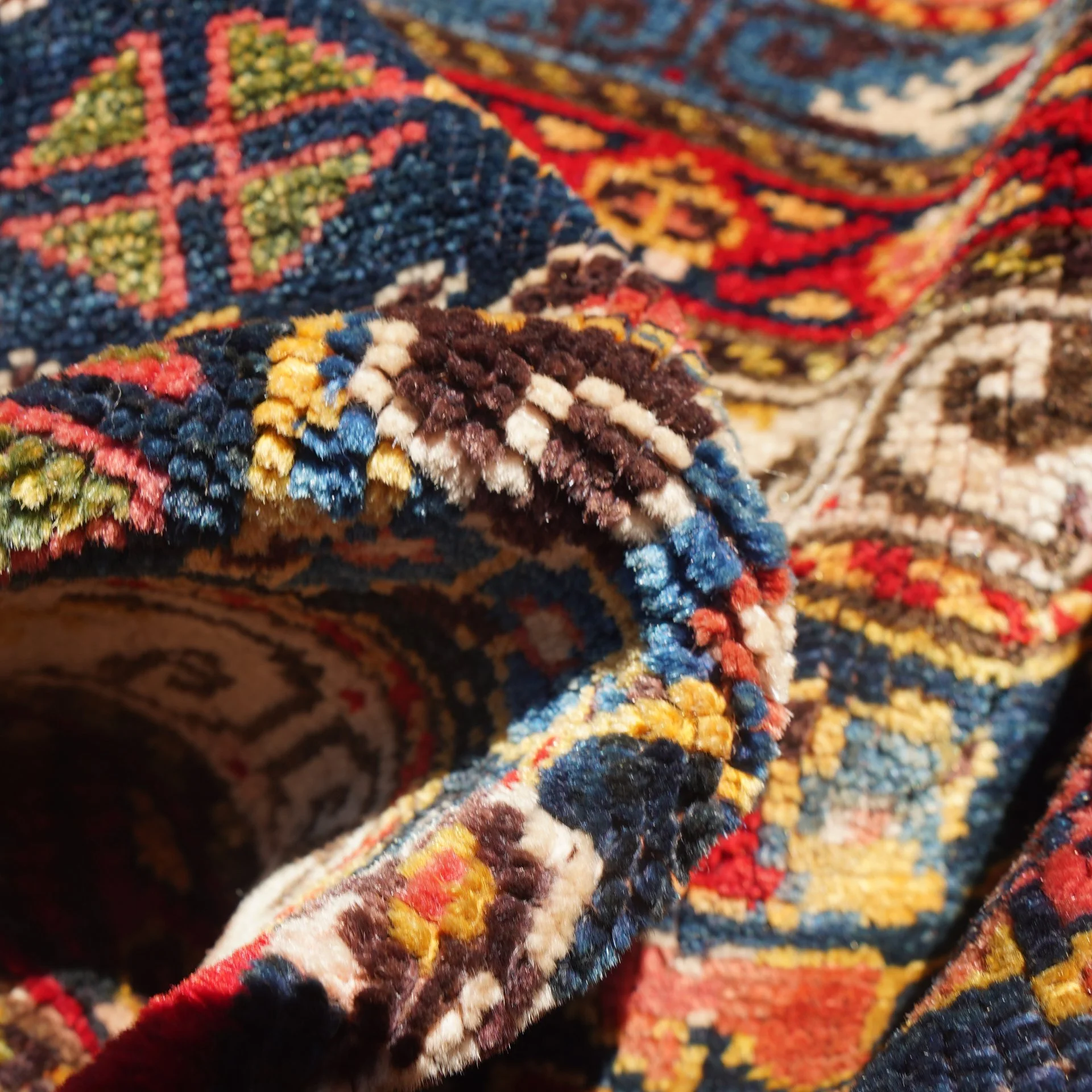 Image 8 of 8