2602
4'-2" x 6'-10”
AGE & ORIGIN:
19th C.
Caucases
OVERVIEW:
There are a certain series of, especially Kazak rugs, that illuminate the craft of the village weaves but with attention to detail and exactness of something less folky. Of the utmost quality with uniformity in their design, and the use of high quality materials including wool and dyes.
The dyes, in general on this piece and with the best Kazaks, are fantastic. Playful and bright, sort of a crayon-core palette, which is exceptionally clear within the harshang motif on the main border, given that the kaleidoscope of dyes is set against a light cream. All that being said, there is quite a lot of aubergine in the mix within the borders, the field and main motifs, which is a slightly rarer color to see.
Finally, we’re brought to main motif on the field. What is it? What do you see? It’s somewhat up for interpretation, and it’s part of what makes this Kazak more visually interesting that many of its counterparts. Kazaks generally don’t have a lot knots to work with, going back to Kazaks being known for big, bold designs. With this design though, there is an attempt at displaying more detail. The beginning of the design seems to show a more traditional vase motif being flanked by abstracted flowers. The tree or plant then extends up the length of the field with branching motifs including what look to be boteh.
This is only one interpretation, which again makes for a more visually interesting piece. Regardless of what might really be being shown, the craft, dyes and condition are all undeniable in this most likely mid-19th c. Kazak.
CONDITION:
Excellent
NOTES:
Both fringe ends were professionally re-woven
Small areas of re-piling
Areas of lower pile
One discolored line of red in bottom right corner of field
There is one seemingly fugitive dye, although we think it also may be an especially fragile dye of natural origin (see the bottom left and right cross-shaped centers of the Harshang border motif. The dye is a light-blue)
Rug was hung from a wall at some point in its history. The professionally installed loops remain installed for future use
2602
4'-2" x 6'-10”
AGE & ORIGIN:
19th C.
Caucases
OVERVIEW:
There are a certain series of, especially Kazak rugs, that illuminate the craft of the village weaves but with attention to detail and exactness of something less folky. Of the utmost quality with uniformity in their design, and the use of high quality materials including wool and dyes.
The dyes, in general on this piece and with the best Kazaks, are fantastic. Playful and bright, sort of a crayon-core palette, which is exceptionally clear within the harshang motif on the main border, given that the kaleidoscope of dyes is set against a light cream. All that being said, there is quite a lot of aubergine in the mix within the borders, the field and main motifs, which is a slightly rarer color to see.
Finally, we’re brought to main motif on the field. What is it? What do you see? It’s somewhat up for interpretation, and it’s part of what makes this Kazak more visually interesting that many of its counterparts. Kazaks generally don’t have a lot knots to work with, going back to Kazaks being known for big, bold designs. With this design though, there is an attempt at displaying more detail. The beginning of the design seems to show a more traditional vase motif being flanked by abstracted flowers. The tree or plant then extends up the length of the field with branching motifs including what look to be boteh.
This is only one interpretation, which again makes for a more visually interesting piece. Regardless of what might really be being shown, the craft, dyes and condition are all undeniable in this most likely mid-19th c. Kazak.
CONDITION:
Excellent
NOTES:
Both fringe ends were professionally re-woven
Small areas of re-piling
Areas of lower pile
One discolored line of red in bottom right corner of field
There is one seemingly fugitive dye, although we think it also may be an especially fragile dye of natural origin (see the bottom left and right cross-shaped centers of the Harshang border motif. The dye is a light-blue)
Rug was hung from a wall at some point in its history. The professionally installed loops remain installed for future use


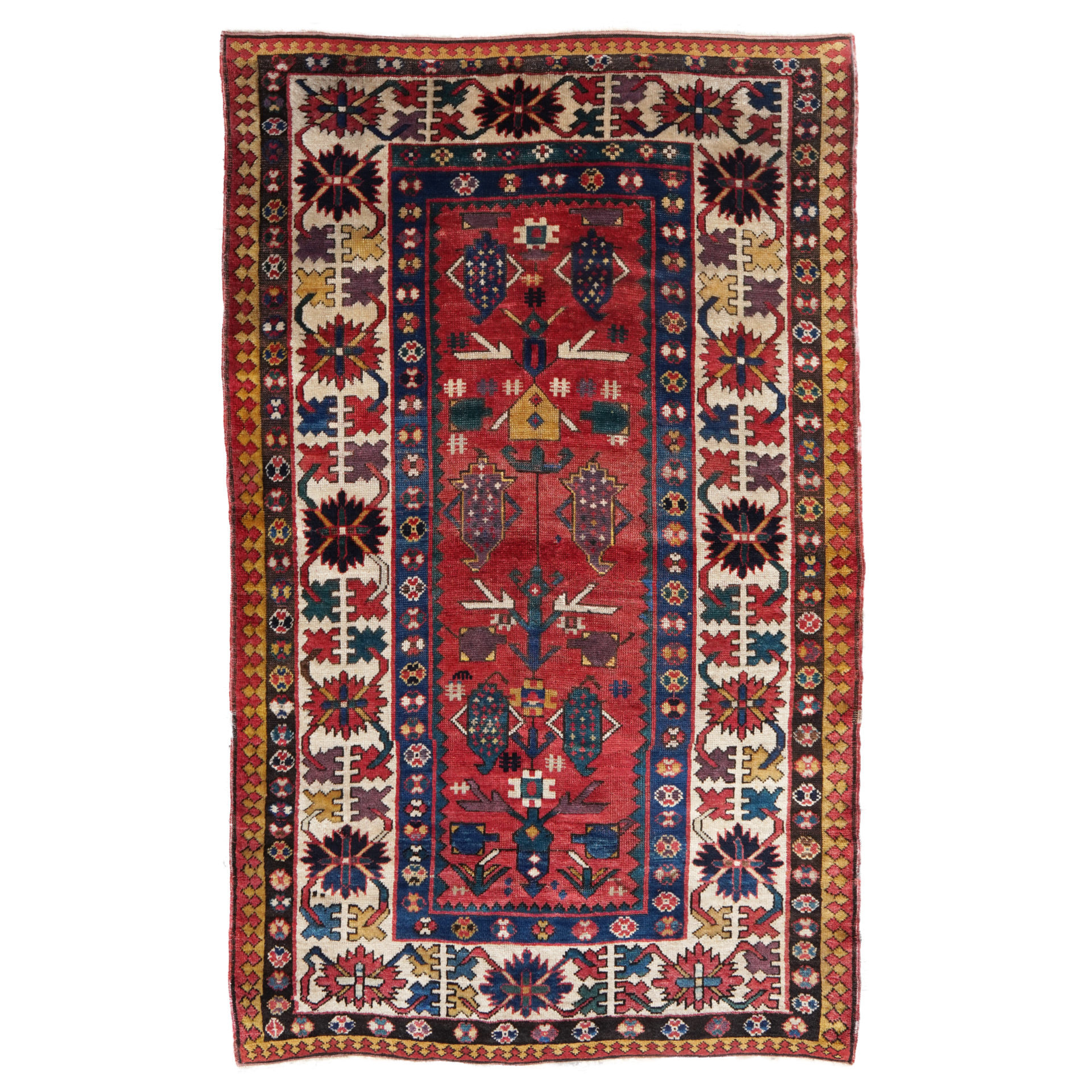 Image 1 of 11
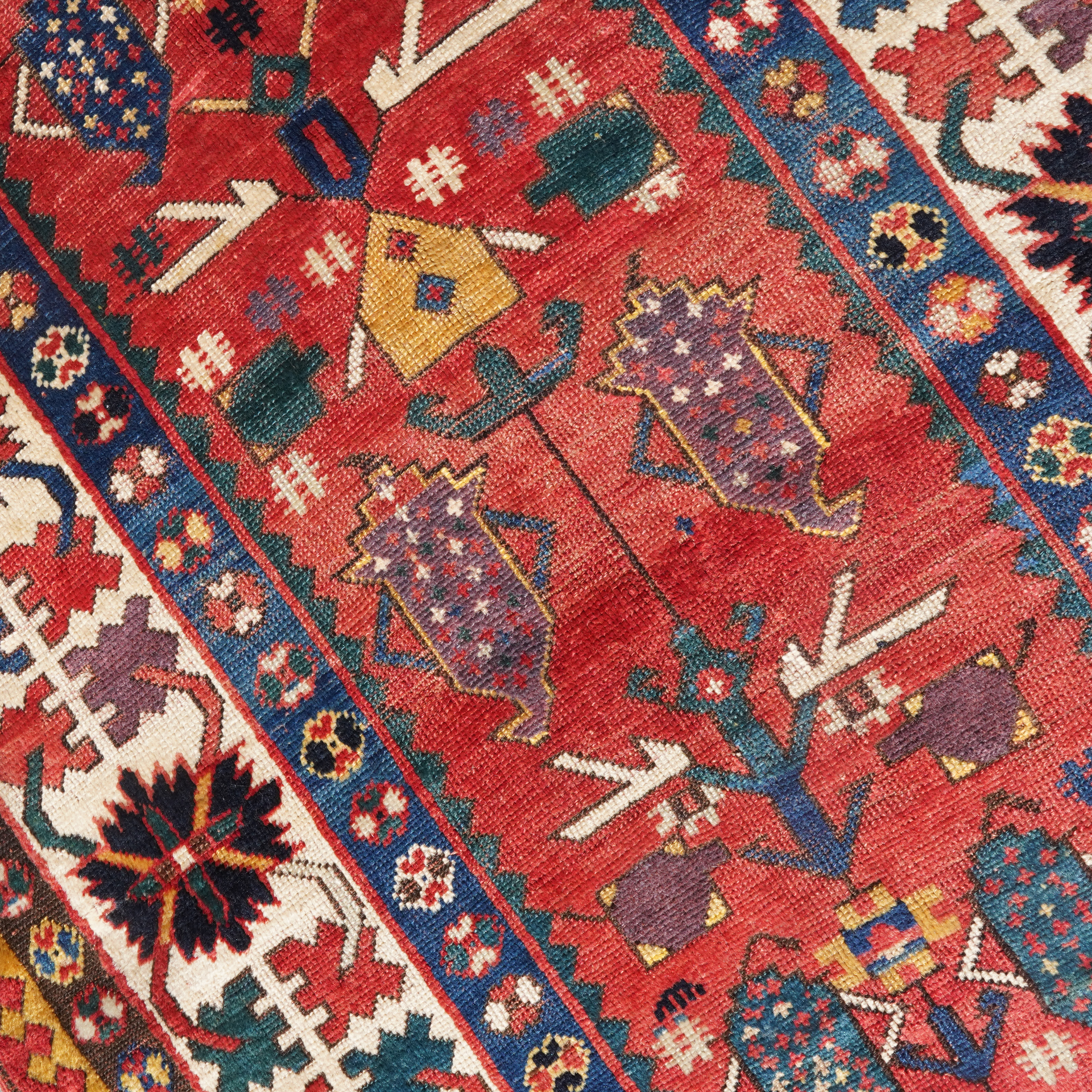 Image 2 of 11
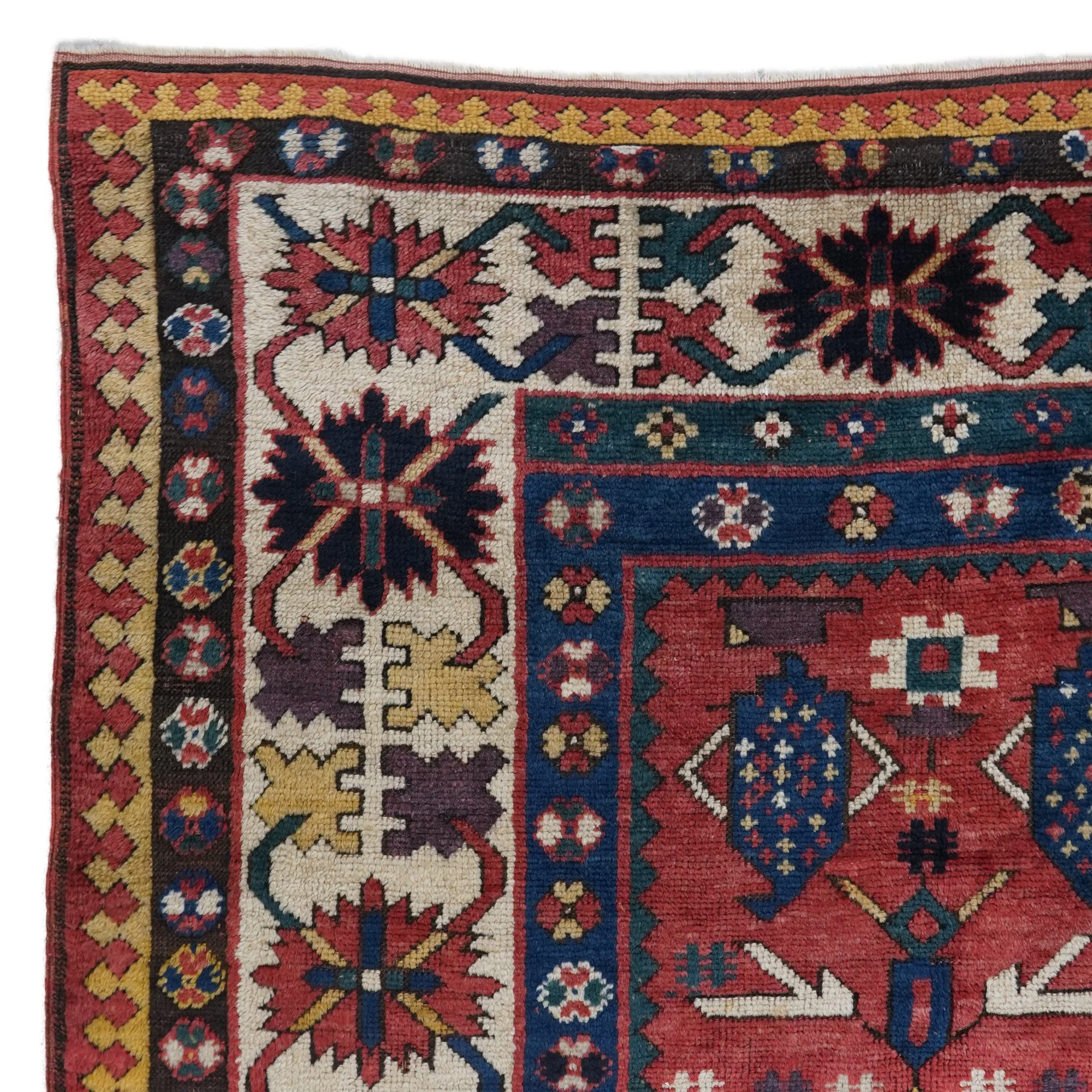 Image 3 of 11
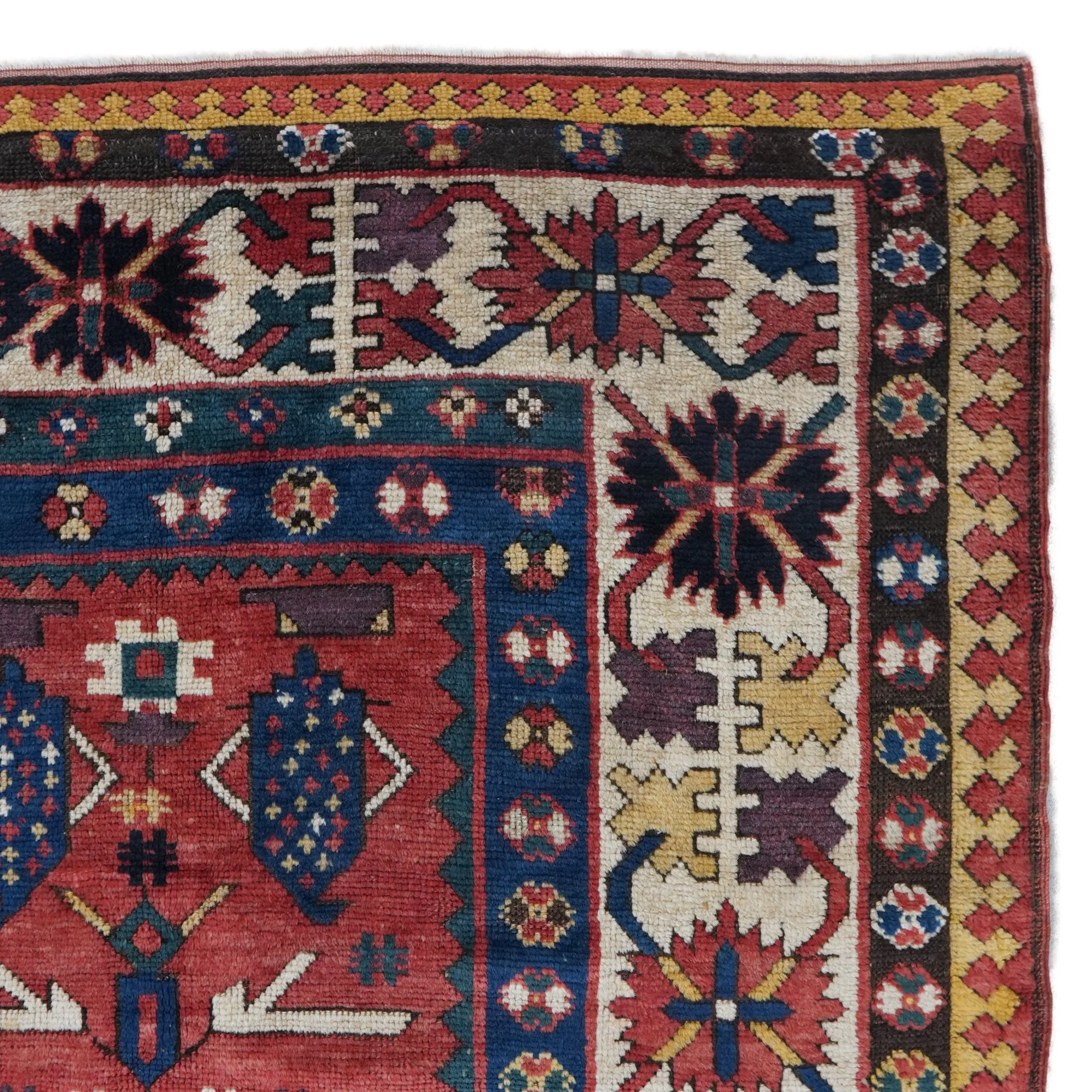 Image 4 of 11
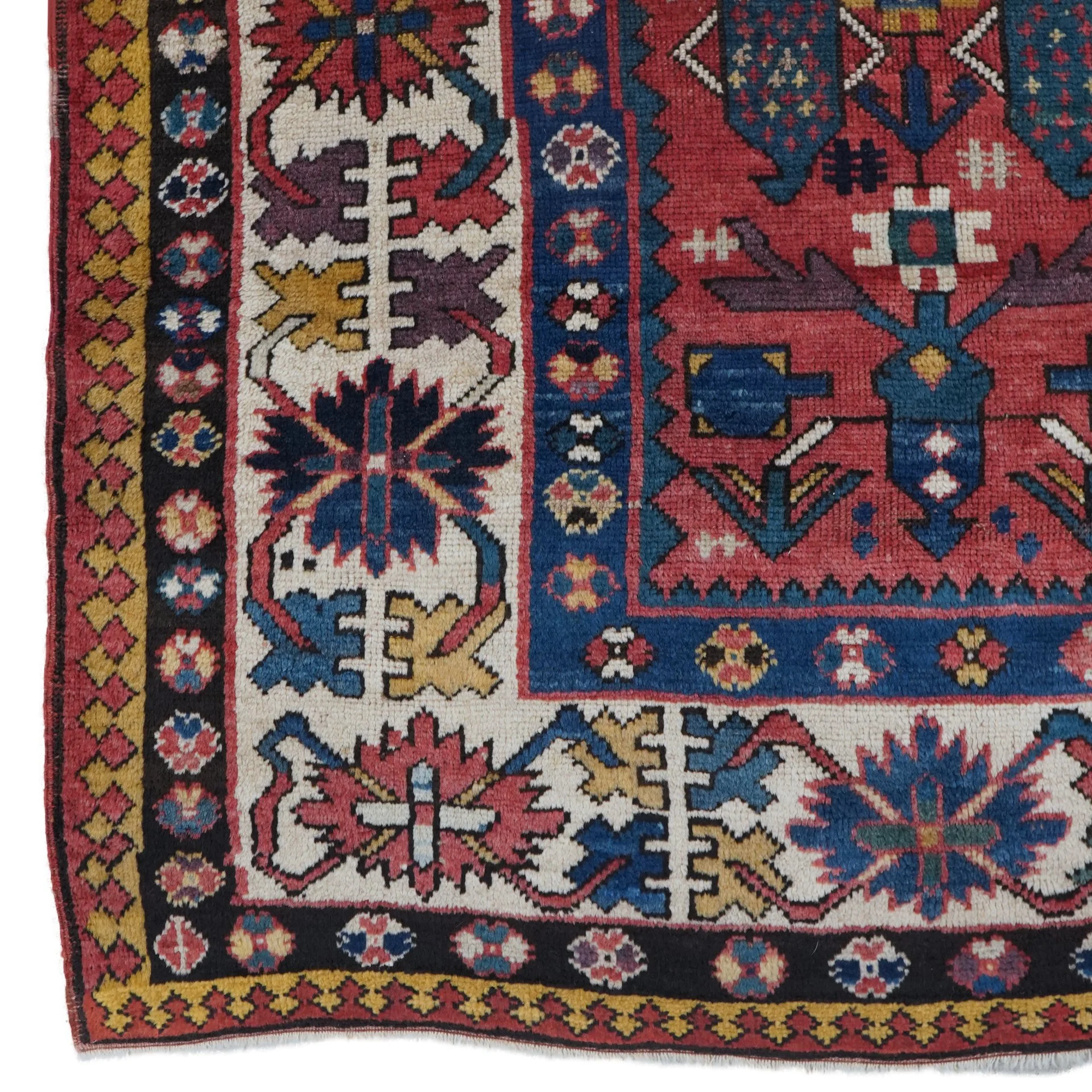 Image 5 of 11
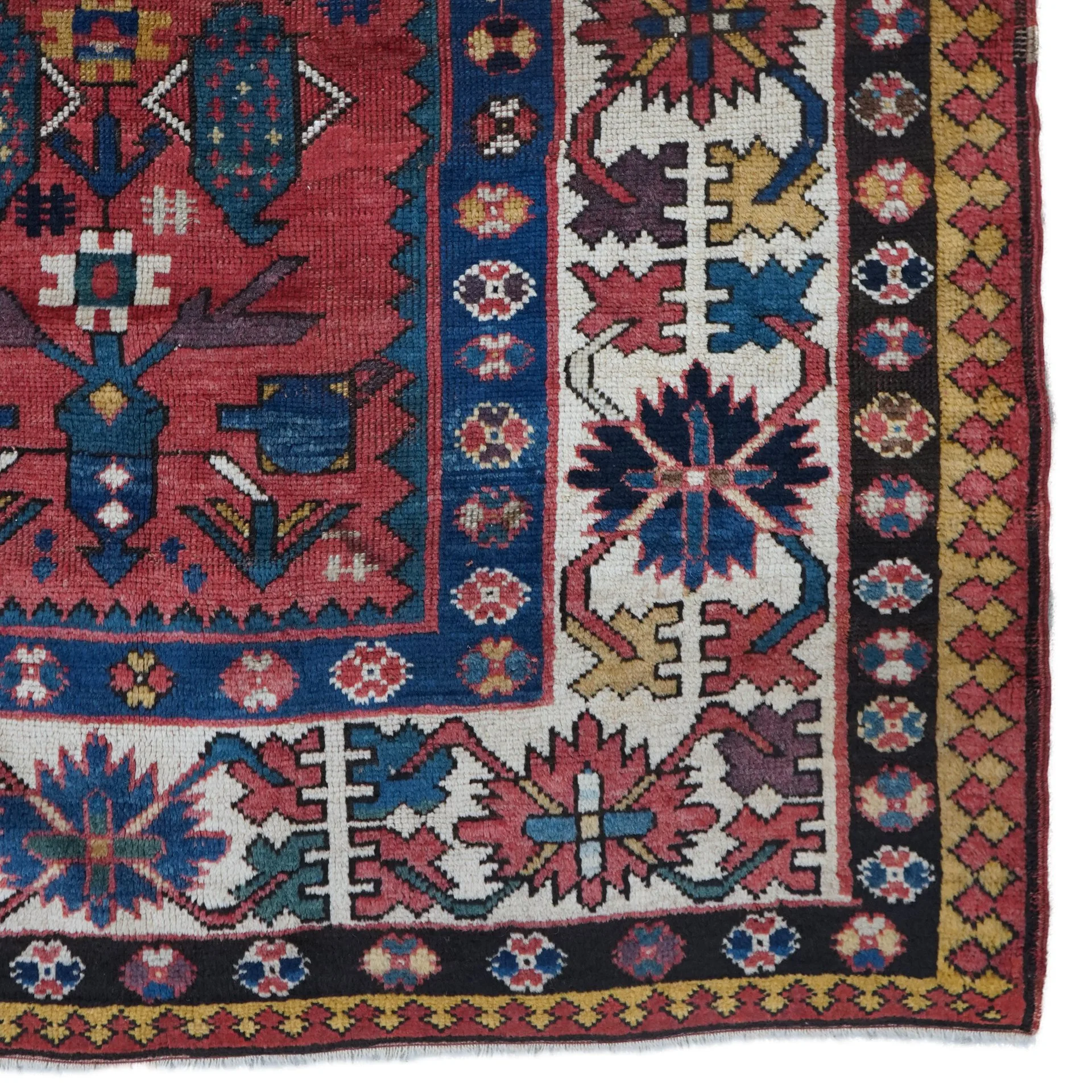 Image 6 of 11
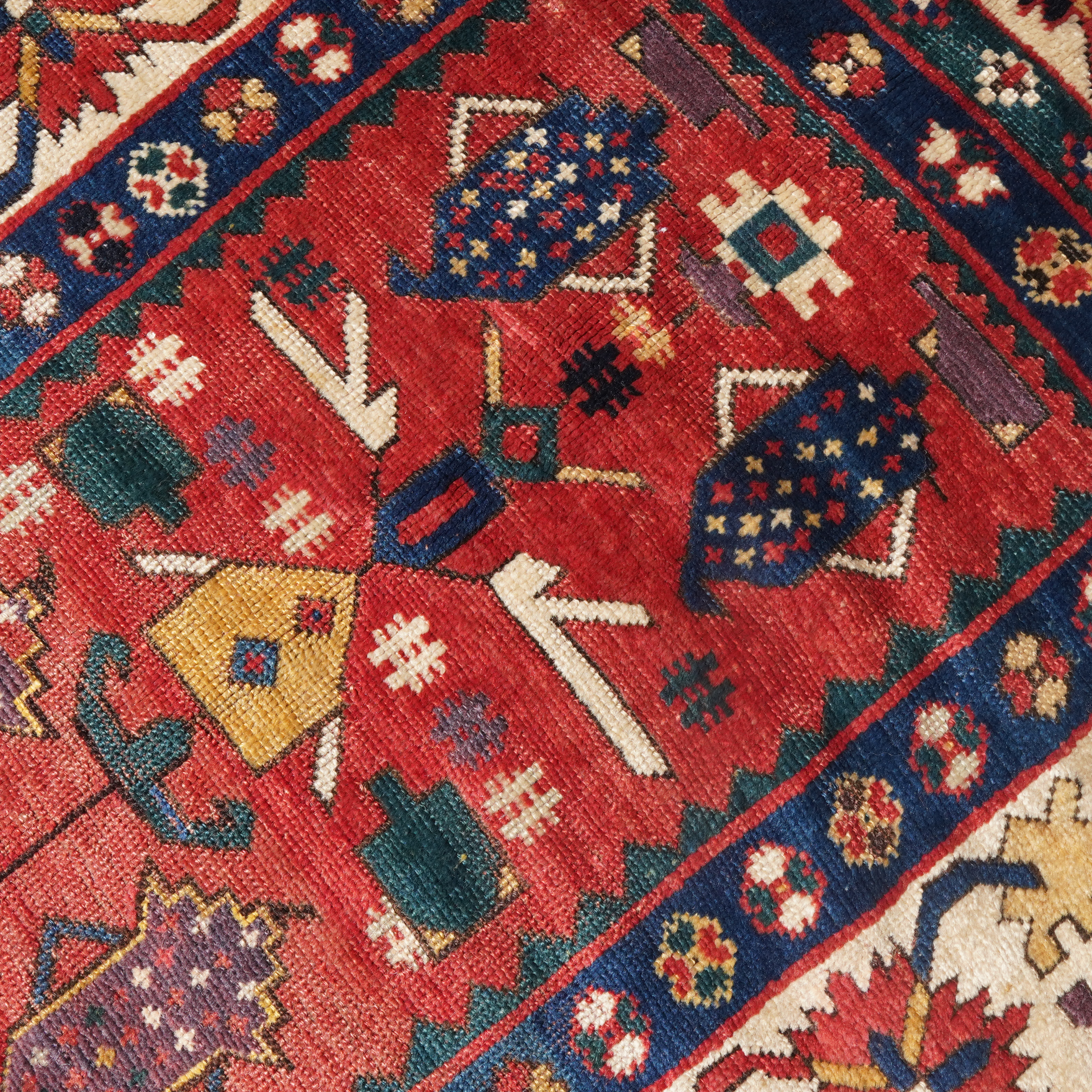 Image 7 of 11
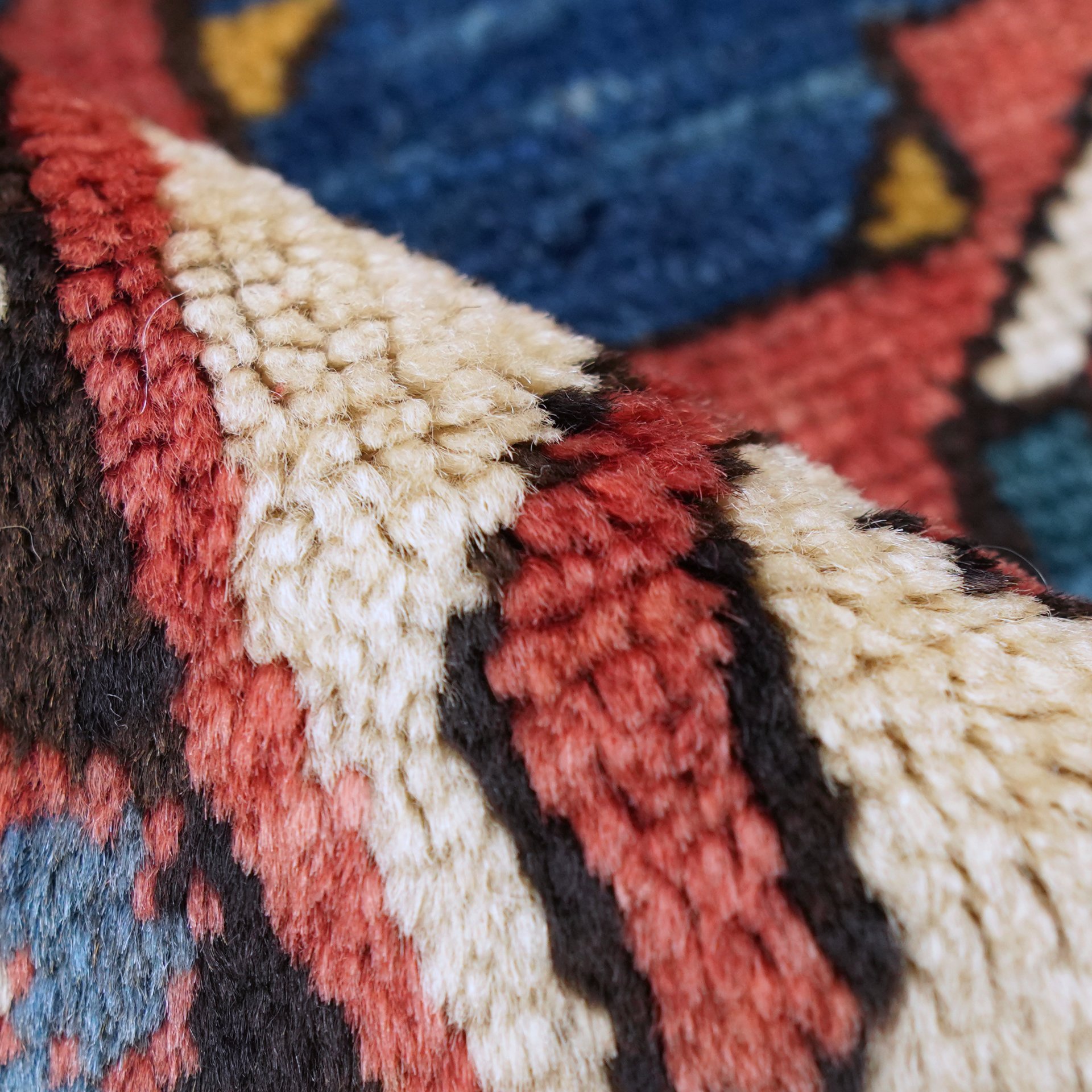 Image 8 of 11
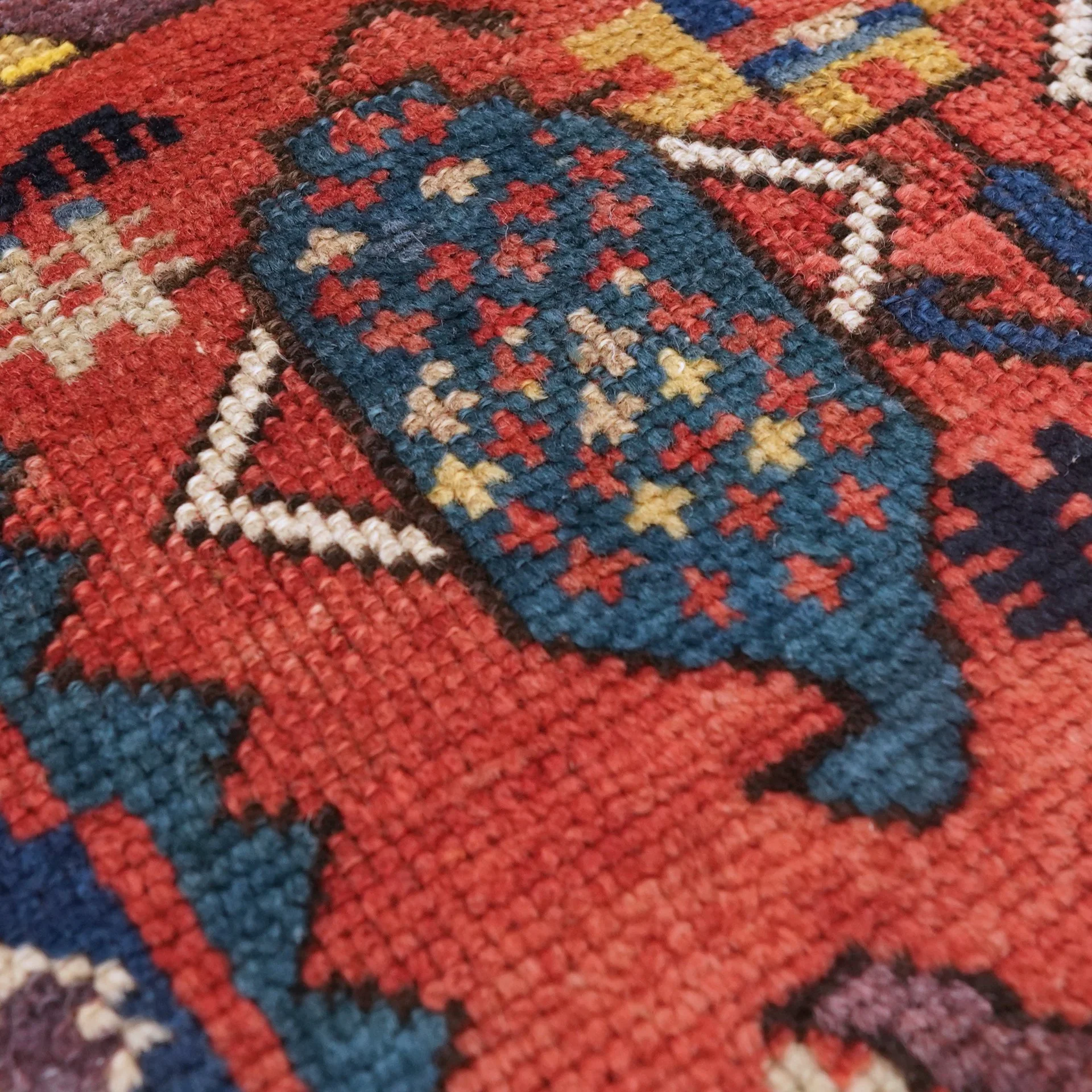 Image 9 of 11
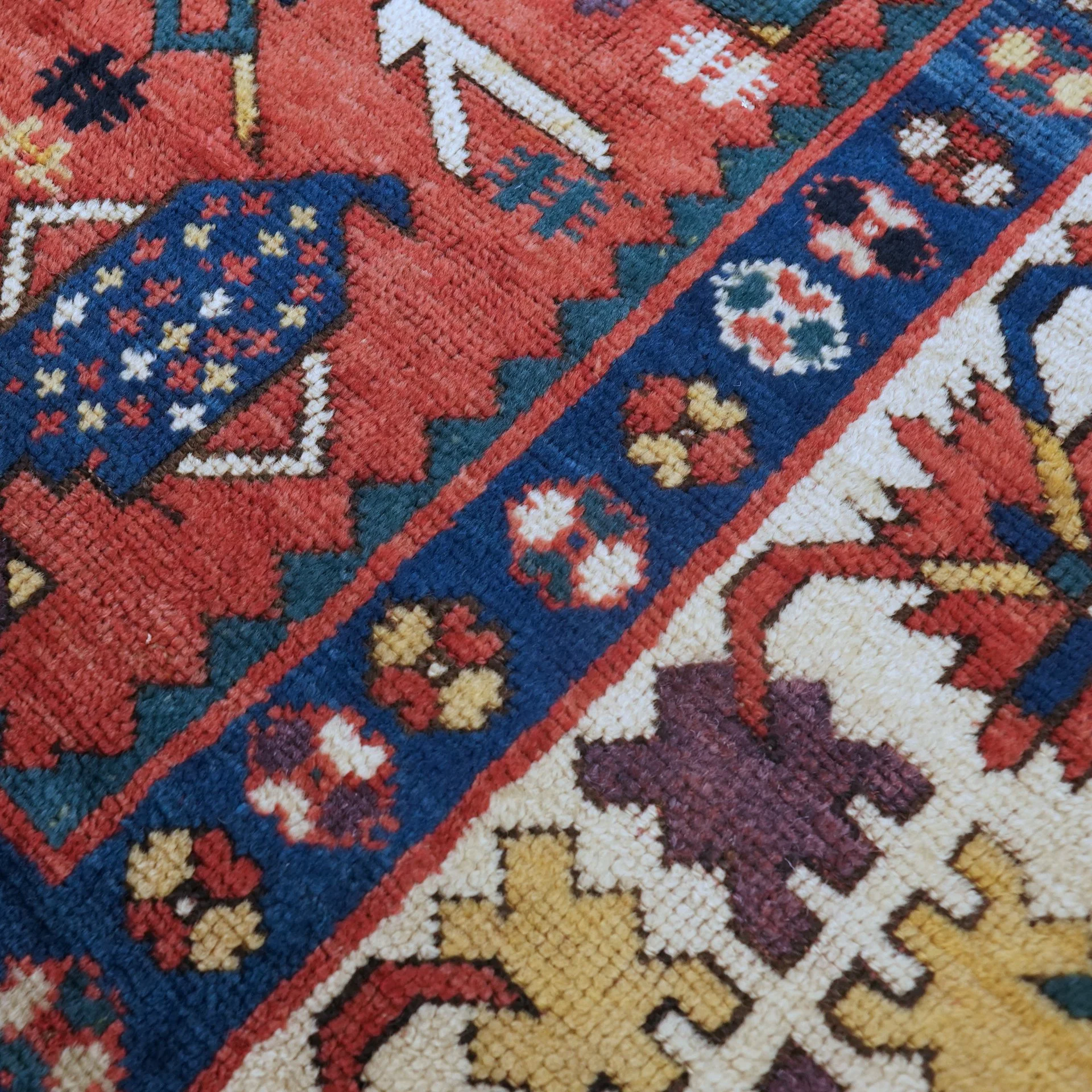 Image 10 of 11
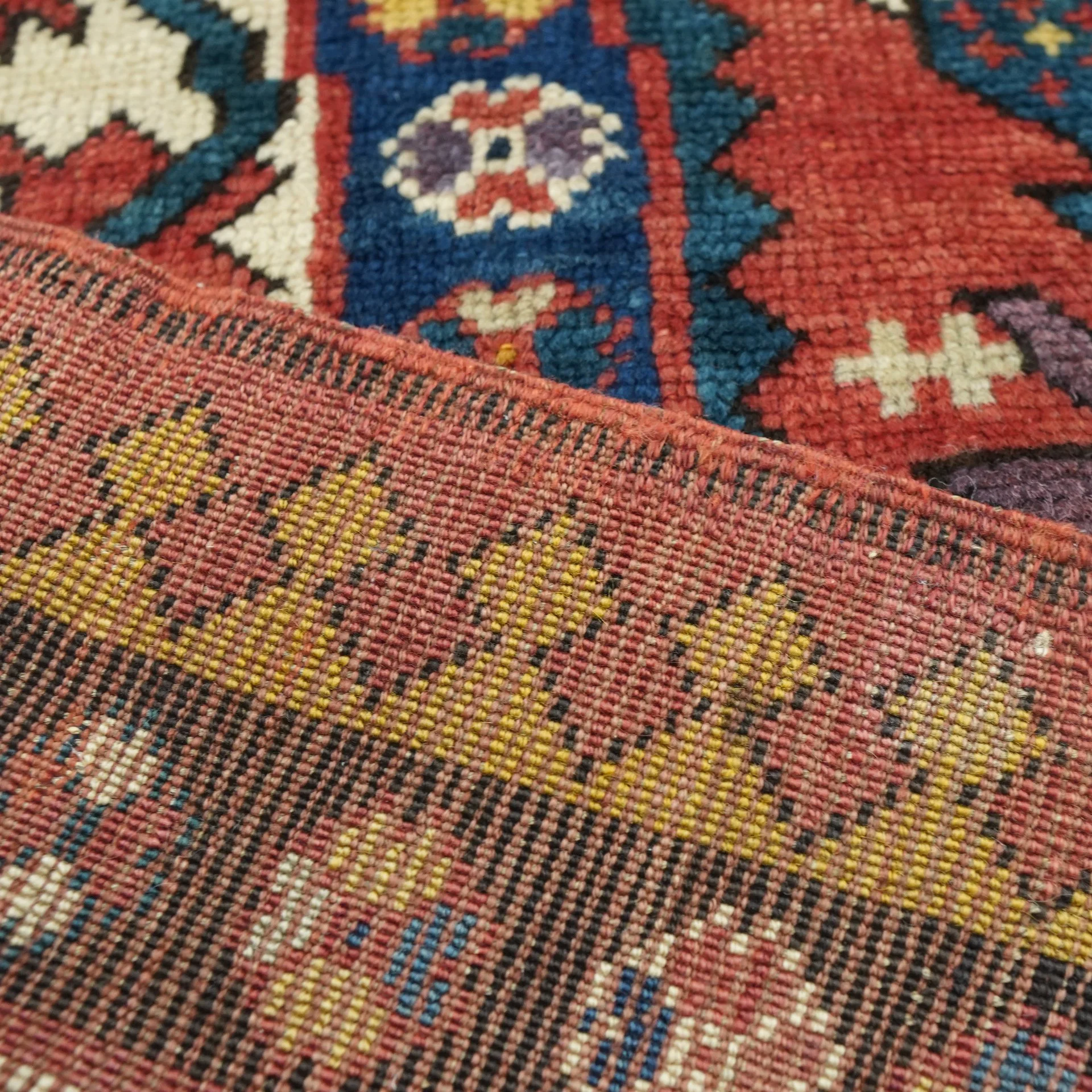 Image 11 of 11