2600
3'-8" x 9'-3"
AGE & ORIGIN:
c. 1900
Persia
OVERVIEW:
Let me level with you here. The designation of rugs being from Northwest Persia is probably one of the biggest cop-outs for rug dealers out there. Whenever you see this label, you might be able to safely assume that the rug could be from Eastern Anatolia, the Southern Caucuses or perhaps, yes, Northwest Persia; but there’s a reason for this confusion, and one simply needs to look at rugs like the one we present here to understand why the uncertainty exists. That being said, when rugs look this good, many tend to put aside esoteric attribution.
This is an incredibly captivating rug. The main design motif centers on seven large-scale medallions. There are two curious things about these medallions though. The first is that these seven medallions are split into three different design types, creating a sustained visual interest through the alternating geometry. The second curiosity comes from the medallions themselves. The field is bookended by two diminutive medallions with simple, if not slightly Kurdish, features. The second type of medallion populate three of the seven, and are punctuated by a cream background. It can be noted that the center of these three also holds a slightly different color palette than the other two. The main design inspiration, I believe, is a type of X-shaped medallion that comes from the Heriz area, however the scale and use of negative space on the cream makes these highly distinct. Finally, the last two, and perhaps most conspicuous of the seven, are the coral tendrillar medallions. Origins may vary, but to this writer, they either represent something similar to the abstracted Harshang motif sometimes seen in Kurdish and NE Caucasian rugs, or the so-called forward-facing zoomorphic medallion, sometimes thought to be the form of a bull looking forward.
With character, natural dyes, good condition and arresting, if not unusual, design elements, this rug certainly plays into the lack of designation we mentioned at the top.
CONDITION:
Low pile with minor repairs and areas of reweaving. Edges not original
NOTES:
2600
3'-8" x 9'-3"
AGE & ORIGIN:
c. 1900
Persia
OVERVIEW:
Let me level with you here. The designation of rugs being from Northwest Persia is probably one of the biggest cop-outs for rug dealers out there. Whenever you see this label, you might be able to safely assume that the rug could be from Eastern Anatolia, the Southern Caucuses or perhaps, yes, Northwest Persia; but there’s a reason for this confusion, and one simply needs to look at rugs like the one we present here to understand why the uncertainty exists. That being said, when rugs look this good, many tend to put aside esoteric attribution.
This is an incredibly captivating rug. The main design motif centers on seven large-scale medallions. There are two curious things about these medallions though. The first is that these seven medallions are split into three different design types, creating a sustained visual interest through the alternating geometry. The second curiosity comes from the medallions themselves. The field is bookended by two diminutive medallions with simple, if not slightly Kurdish, features. The second type of medallion populate three of the seven, and are punctuated by a cream background. It can be noted that the center of these three also holds a slightly different color palette than the other two. The main design inspiration, I believe, is a type of X-shaped medallion that comes from the Heriz area, however the scale and use of negative space on the cream makes these highly distinct. Finally, the last two, and perhaps most conspicuous of the seven, are the coral tendrillar medallions. Origins may vary, but to this writer, they either represent something similar to the abstracted Harshang motif sometimes seen in Kurdish and NE Caucasian rugs, or the so-called forward-facing zoomorphic medallion, sometimes thought to be the form of a bull looking forward.
With character, natural dyes, good condition and arresting, if not unusual, design elements, this rug certainly plays into the lack of designation we mentioned at the top.
CONDITION:
Low pile with minor repairs and areas of reweaving. Edges not original
NOTES:


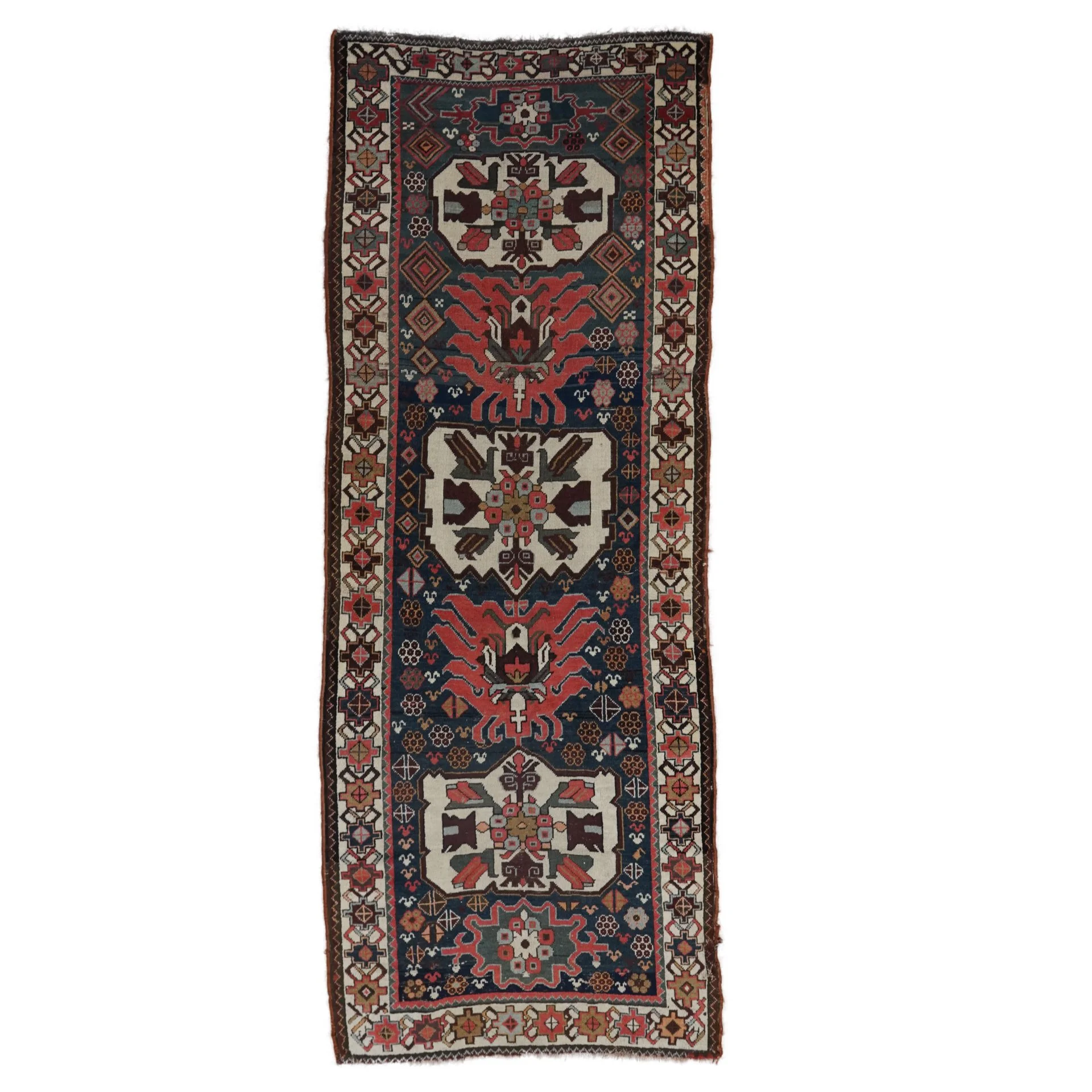 Image 1 of 14
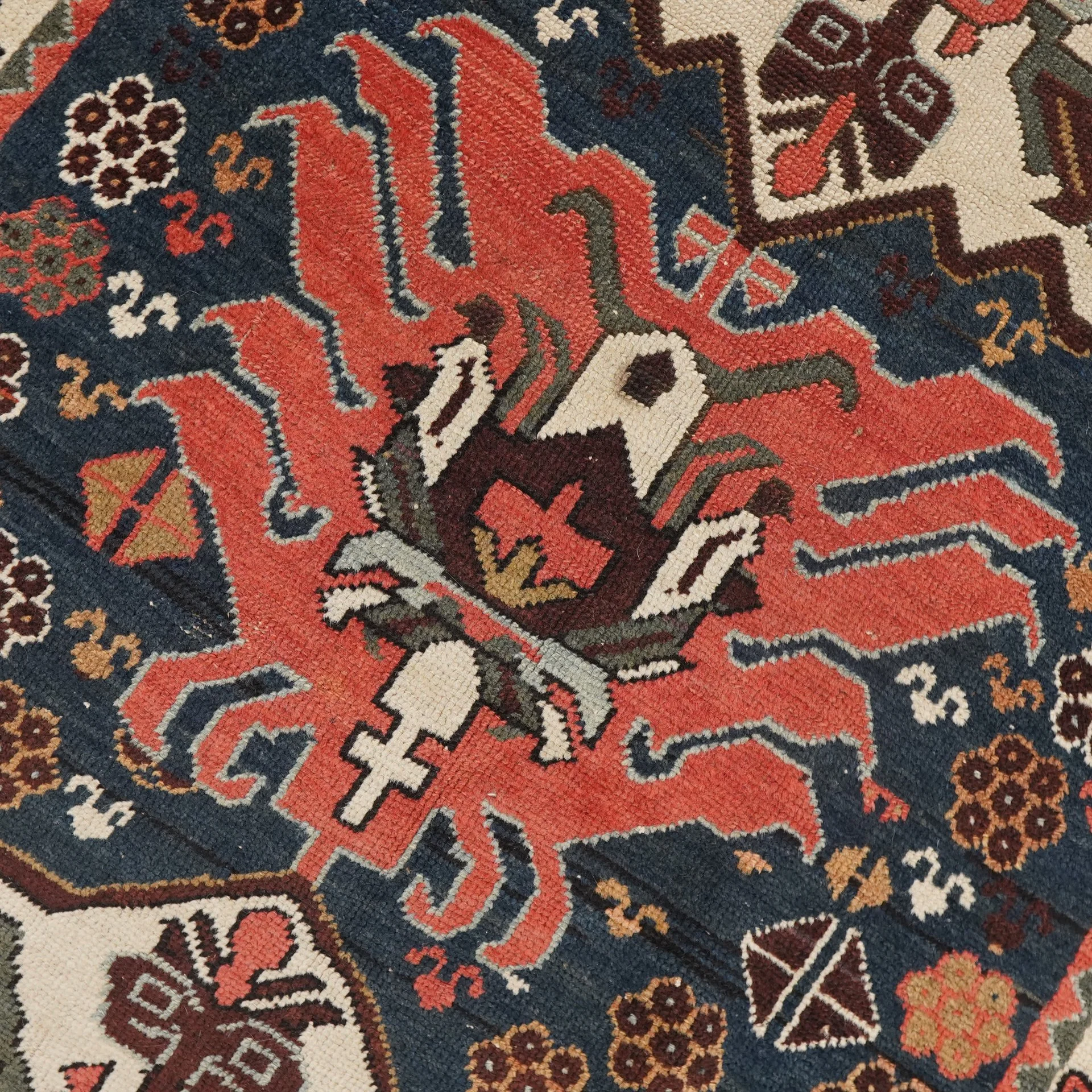 Image 2 of 14
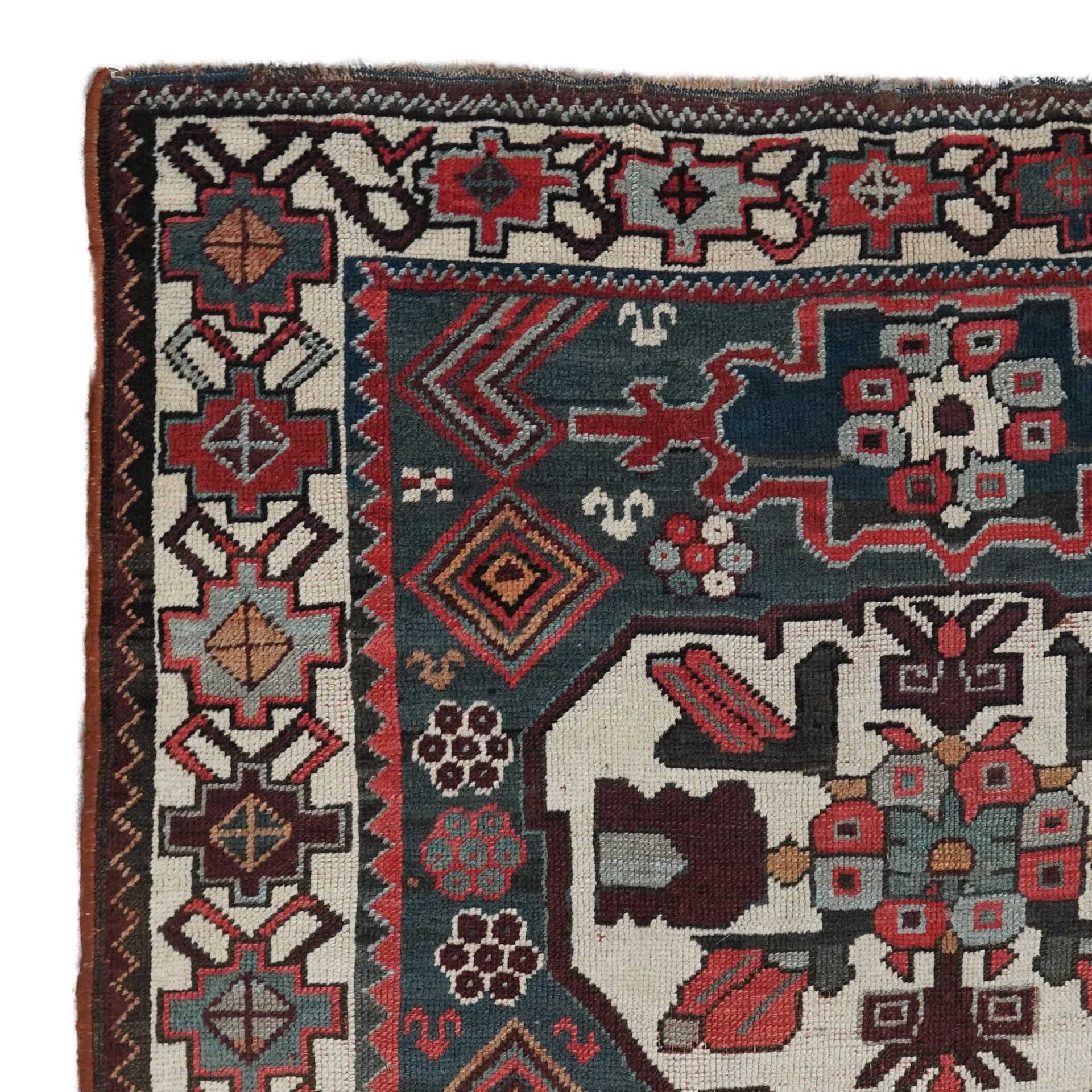 Image 3 of 14
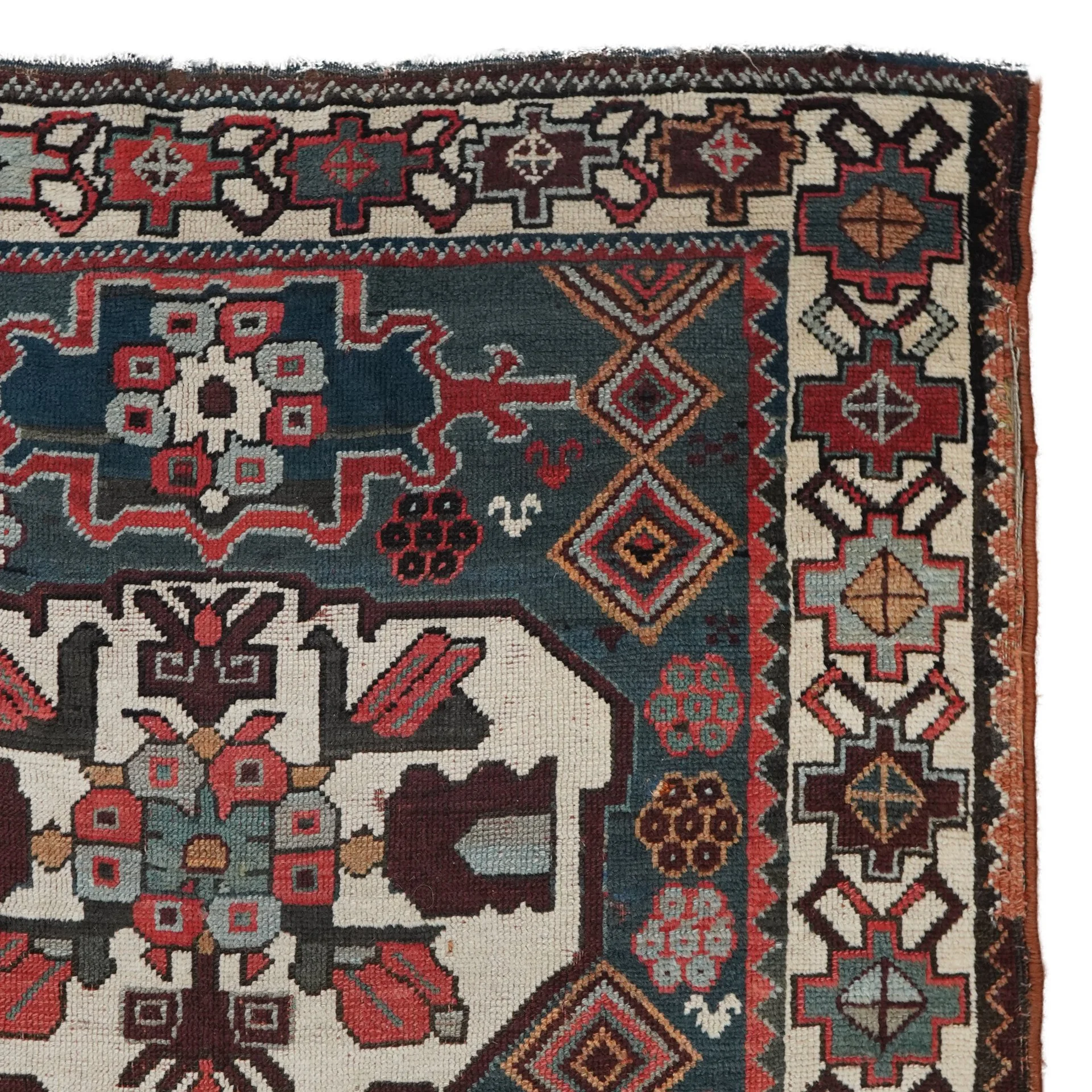 Image 4 of 14
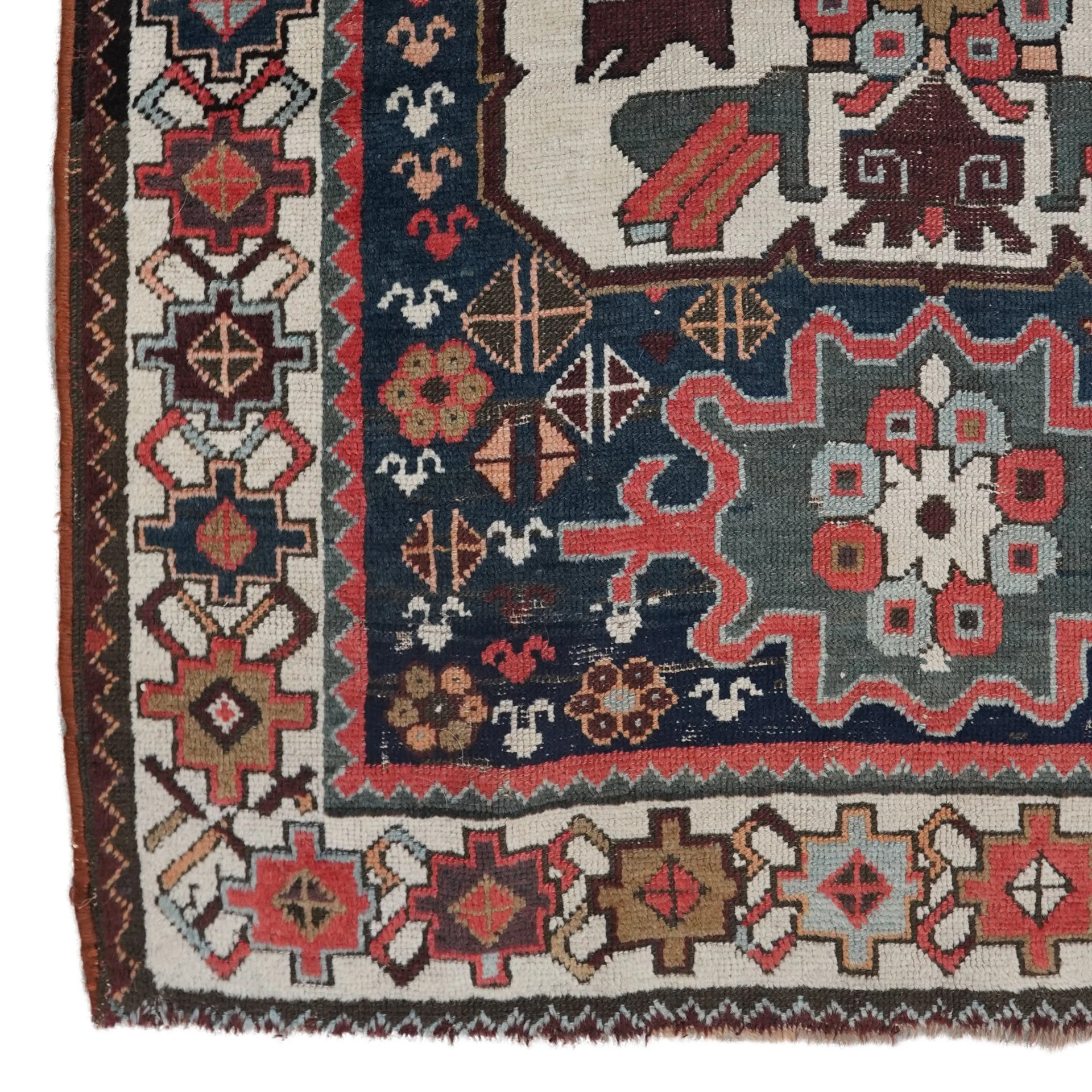 Image 5 of 14
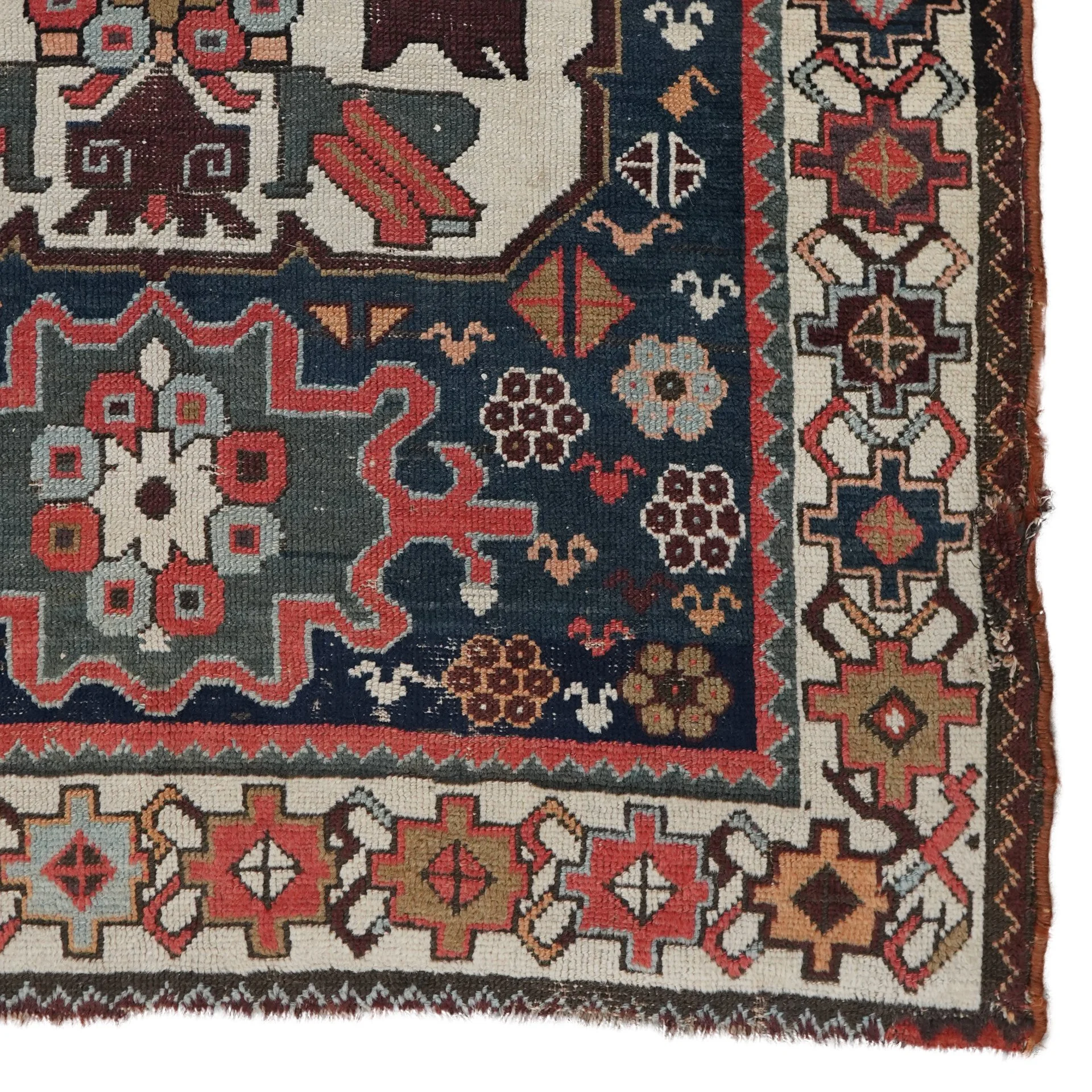 Image 6 of 14
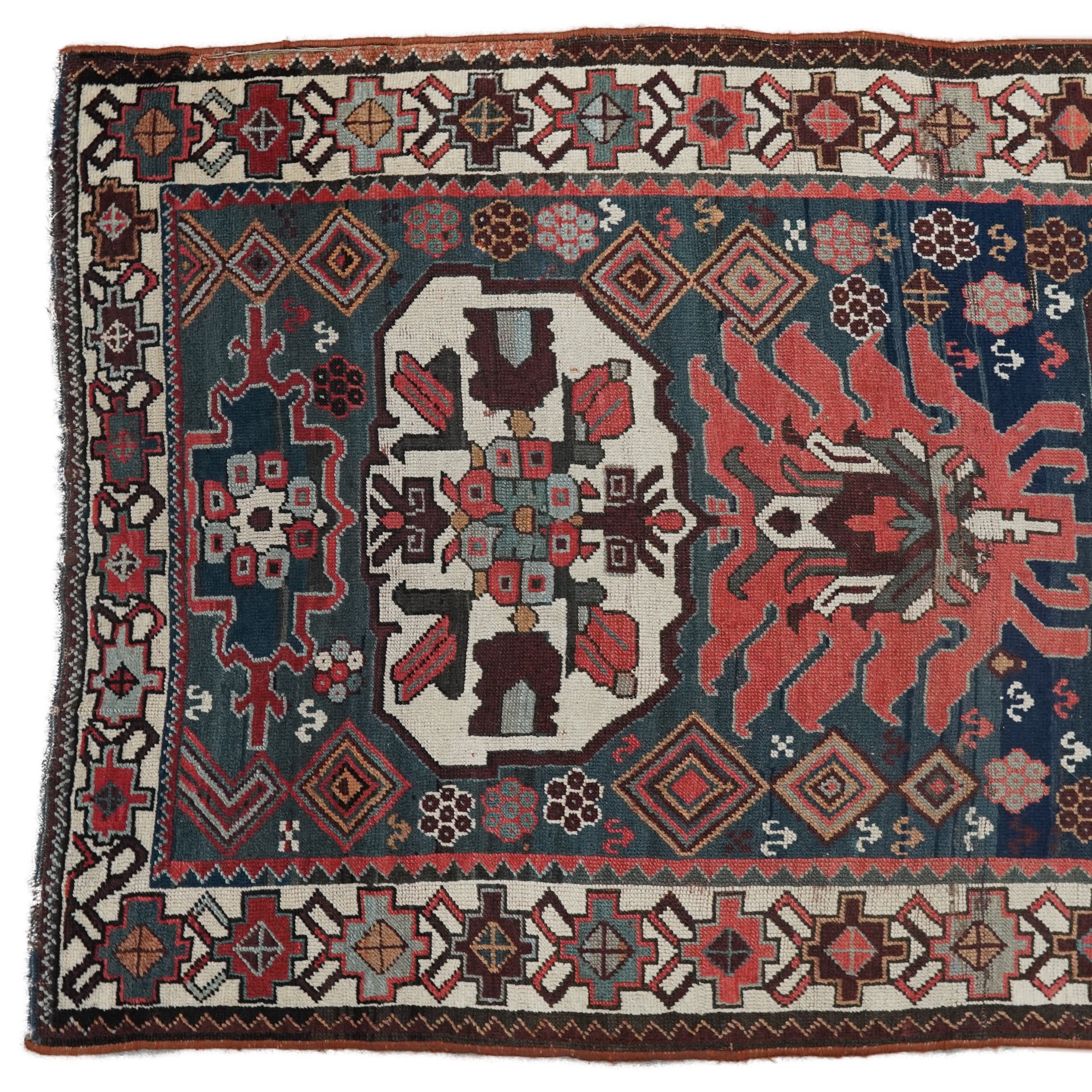 Image 7 of 14
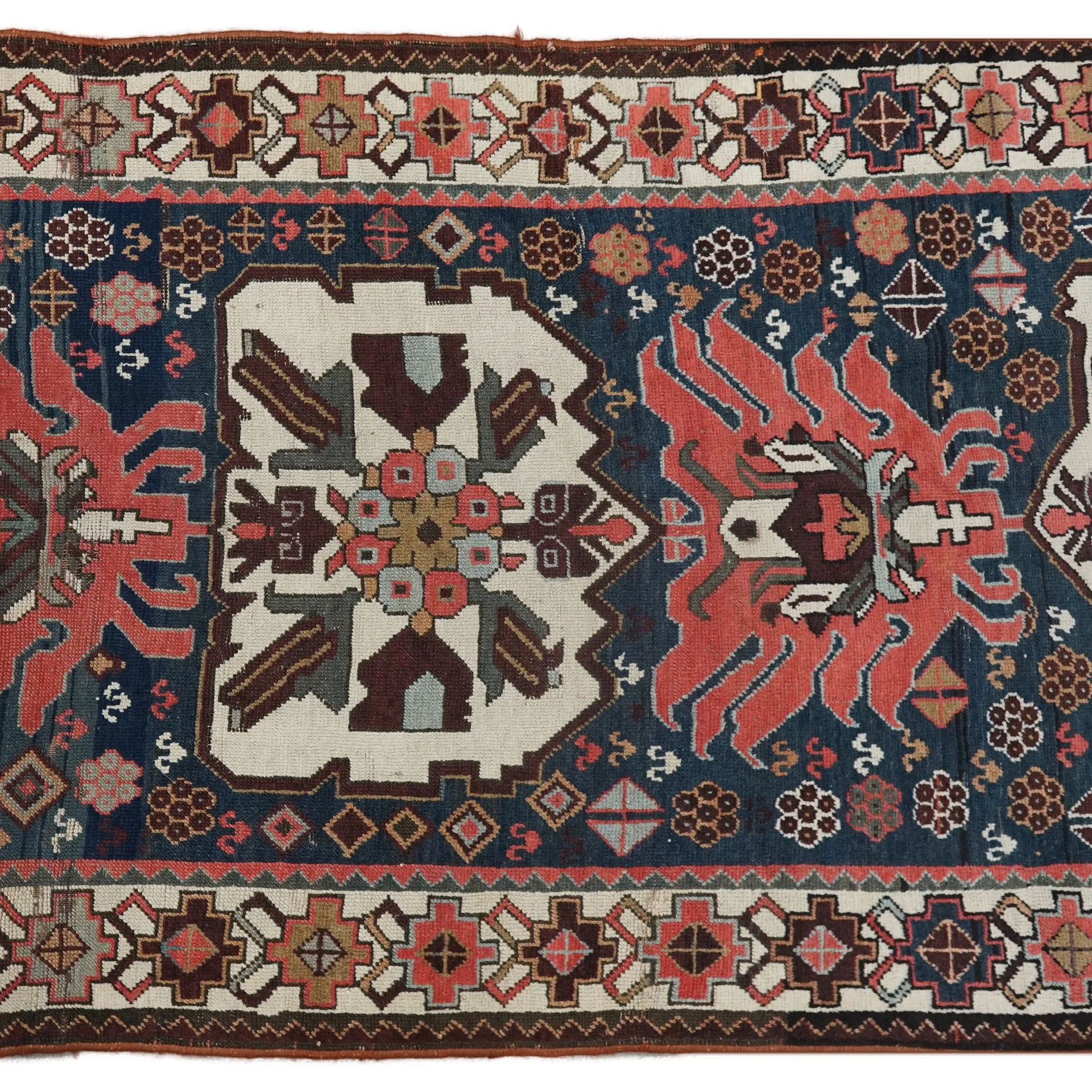 Image 8 of 14
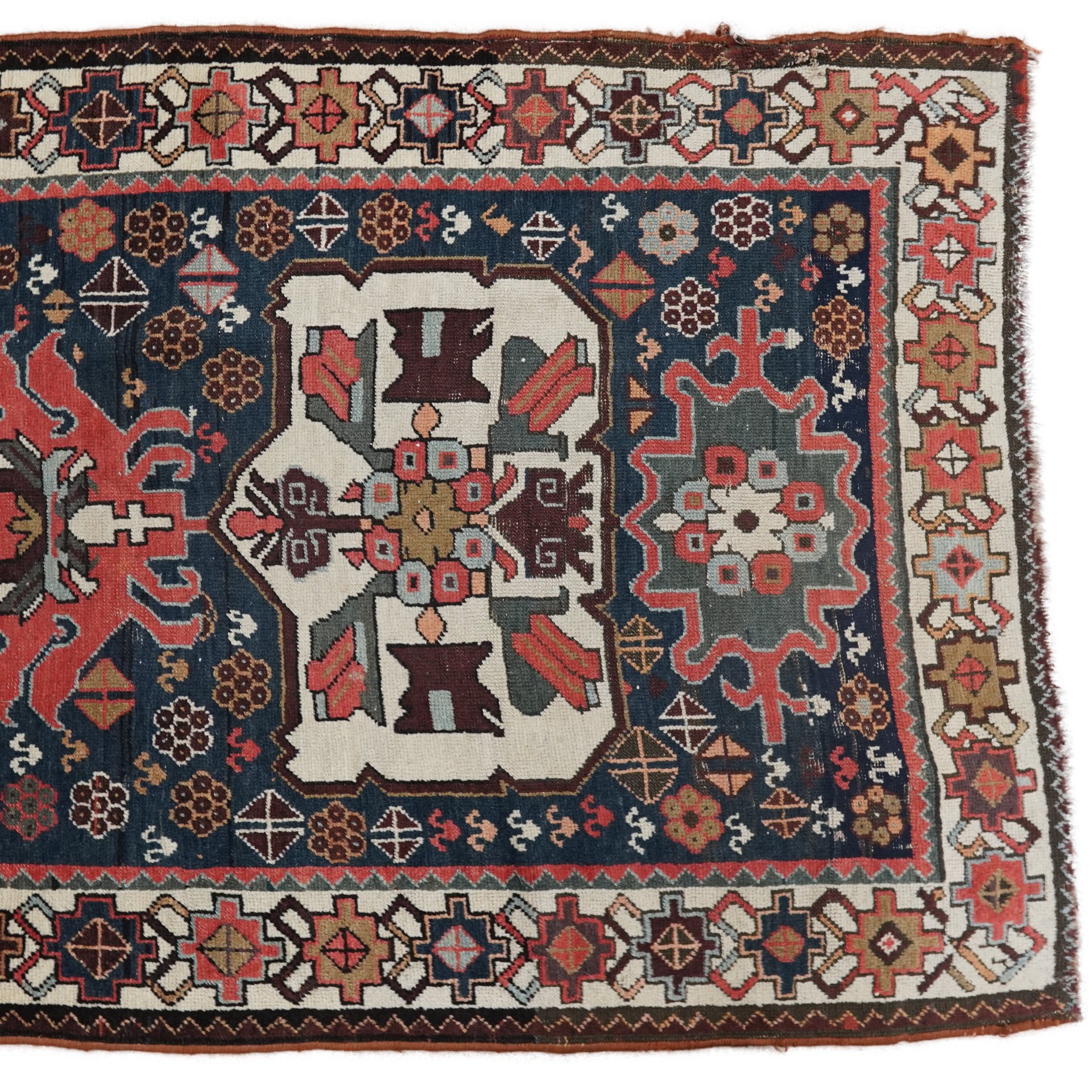 Image 9 of 14
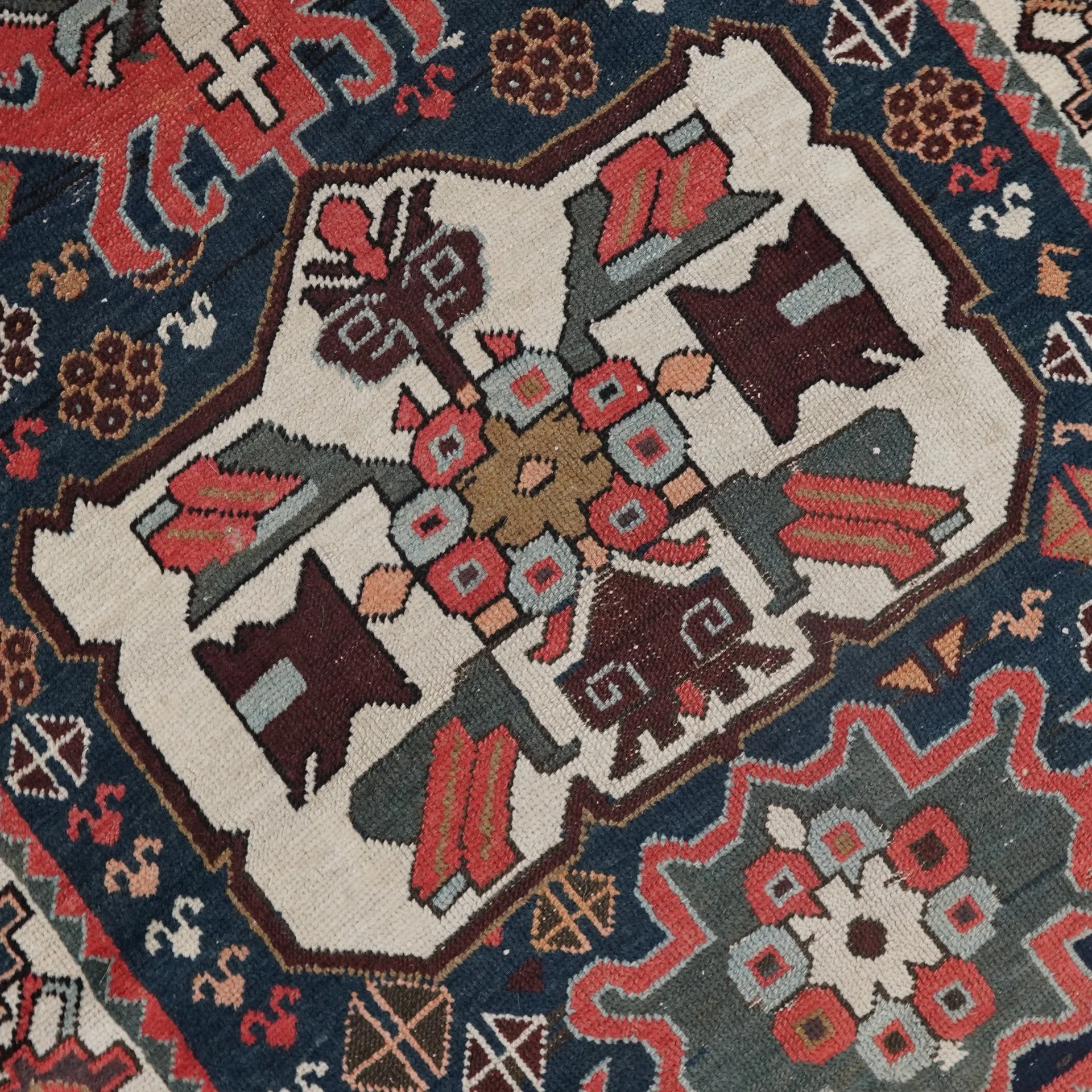 Image 10 of 14
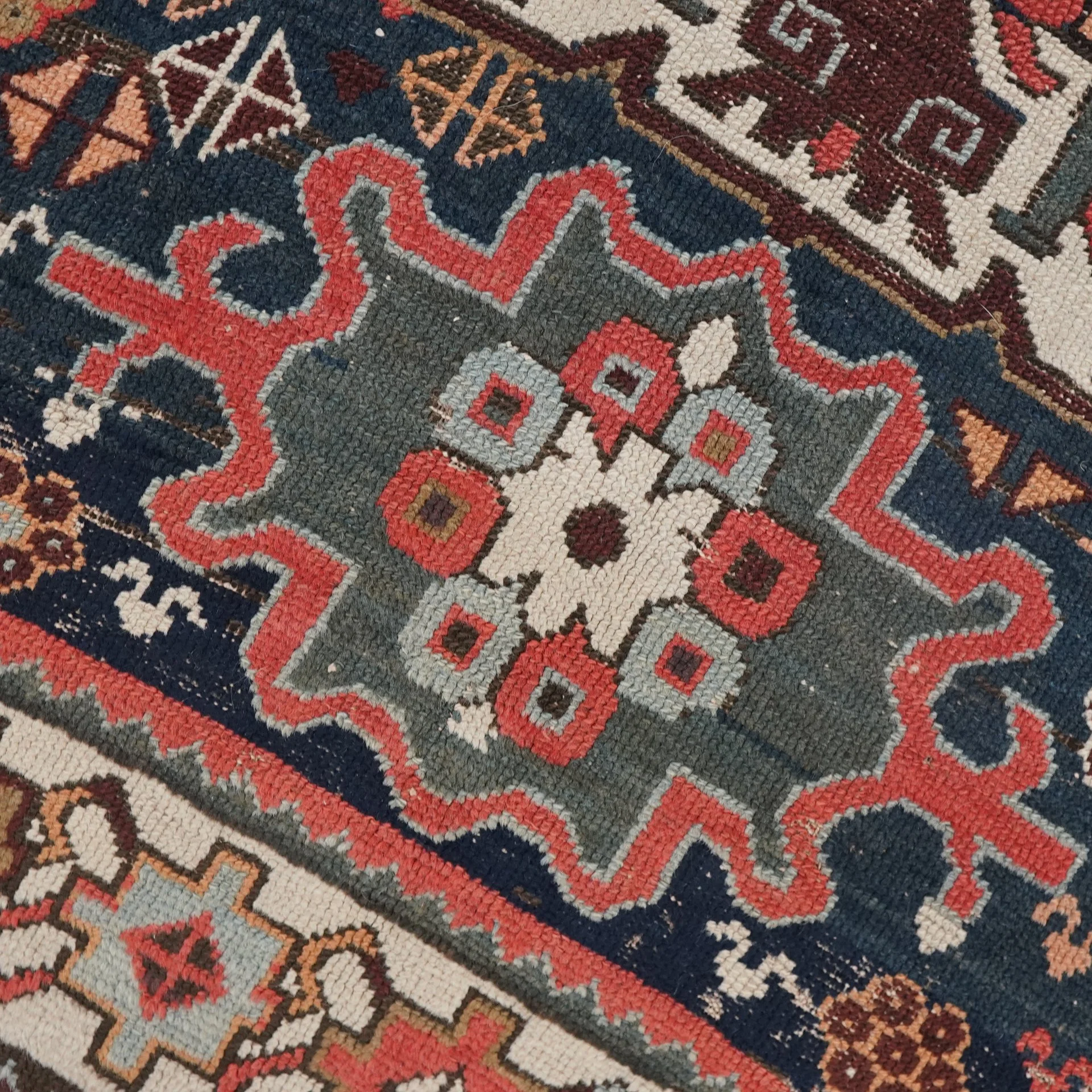 Image 11 of 14
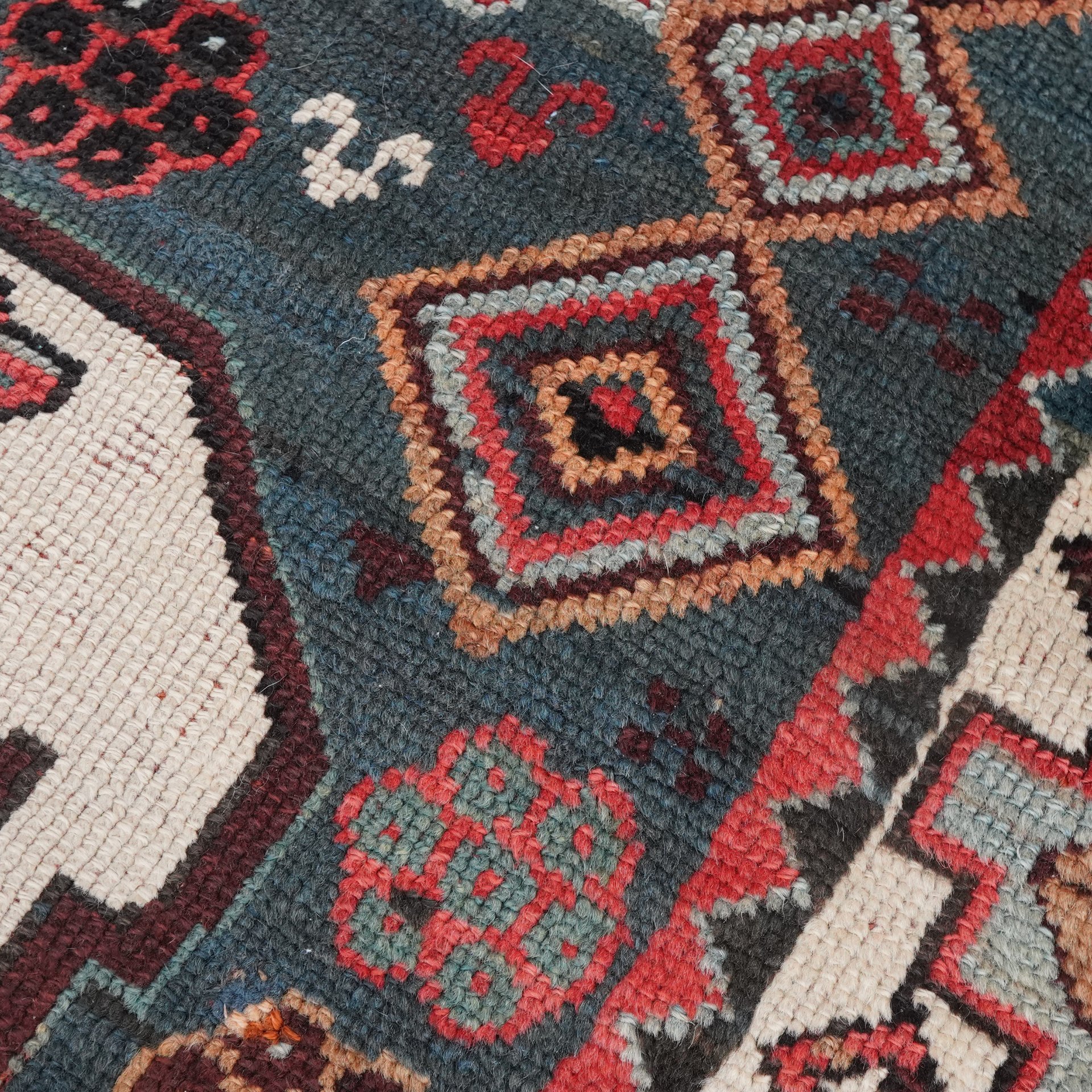 Image 12 of 14
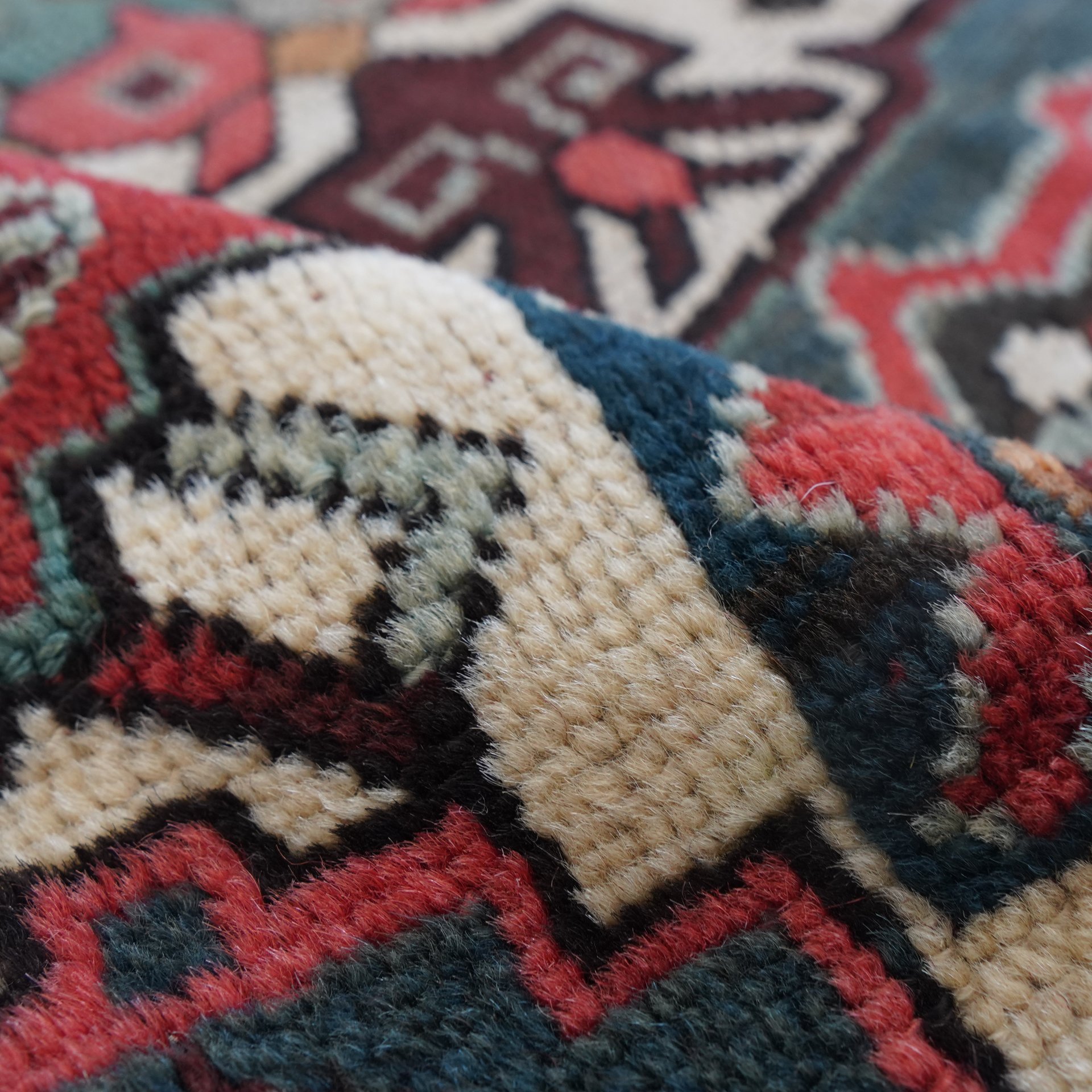 Image 13 of 14
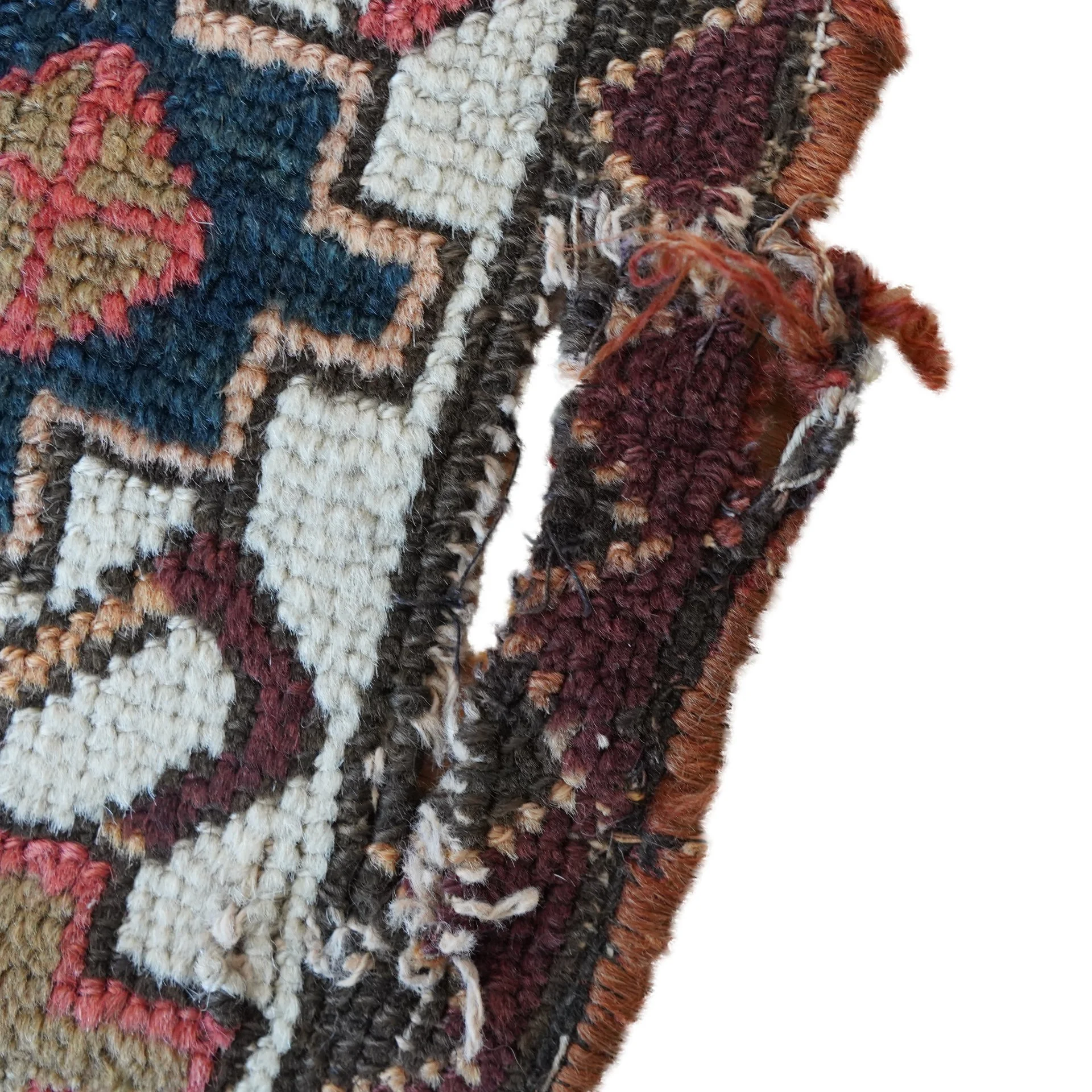 Image 14 of 14