2638
6’-4” x 5’-7”
AGE & ORIGIN:
c. 1900
China
OVERVIEW:
A visually distinct, landscape format Chinese pictorial rug. There are aspects that paradoxically point-to and obscure its specific origins, with the options being Pao Tao (Bou Tou) or possibly Ningxia based on the fineness of the weave. However, what is more interesting are the decorative aspects, which we will explore.
Of what is most notable to me is a distinct lack of design fatigue. With the exception of the three inner minor borders, there is actually very little reiteration throughout the rug. This may be in part to its curiously diminutive format and regardless, serves the rug better overall (in my opinion).
The pictorial scene is a small menagerie of east-Asian fauna and those popularly found within Chinese arts; two stags, auspicious bats, butterflies, a crane and potentially a phoenix, skirt a central, imposing Huangshan Pine, posted as a sentry atop a tiered stone outcropping. Within just this central window, a crucial attention to color may be found upon inspection of the pile, as the rug, seemingly dichromatic, is, in fact, made up of a small orchestra of varying shades.
This scene by itself would be enough to generate interest, however the rug is cemented in its status by the employment of 8 distinct border cartouches that exemplify the diverse patterns found within Chinese textiles.
NOTES:
At least one end has been most likely, evenly conserved.
One area of repair in and around an area of old dry rot.
Relatively high pile
Rug spent most of its life on a wall
2 slits (~1”±), see photo, most likely an old area of rot
2638
6’-4” x 5’-7”
AGE & ORIGIN:
c. 1900
China
OVERVIEW:
A visually distinct, landscape format Chinese pictorial rug. There are aspects that paradoxically point-to and obscure its specific origins, with the options being Pao Tao (Bou Tou) or possibly Ningxia based on the fineness of the weave. However, what is more interesting are the decorative aspects, which we will explore.
Of what is most notable to me is a distinct lack of design fatigue. With the exception of the three inner minor borders, there is actually very little reiteration throughout the rug. This may be in part to its curiously diminutive format and regardless, serves the rug better overall (in my opinion).
The pictorial scene is a small menagerie of east-Asian fauna and those popularly found within Chinese arts; two stags, auspicious bats, butterflies, a crane and potentially a phoenix, skirt a central, imposing Huangshan Pine, posted as a sentry atop a tiered stone outcropping. Within just this central window, a crucial attention to color may be found upon inspection of the pile, as the rug, seemingly dichromatic, is, in fact, made up of a small orchestra of varying shades.
This scene by itself would be enough to generate interest, however the rug is cemented in its status by the employment of 8 distinct border cartouches that exemplify the diverse patterns found within Chinese textiles.
NOTES:
At least one end has been most likely, evenly conserved.
One area of repair in and around an area of old dry rot.
Relatively high pile
Rug spent most of its life on a wall
2 slits (~1”±), see photo, most likely an old area of rot


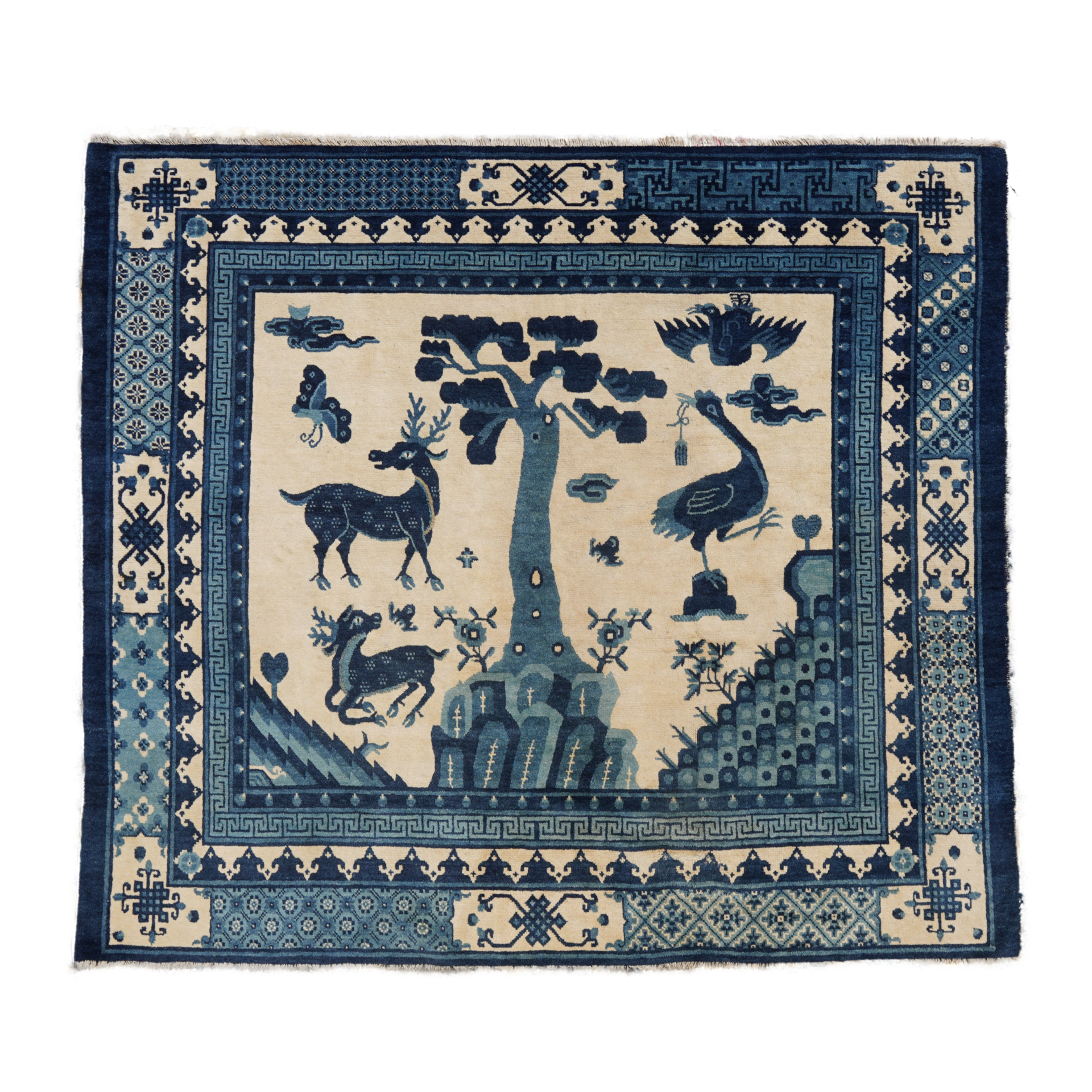 Image 1 of 18
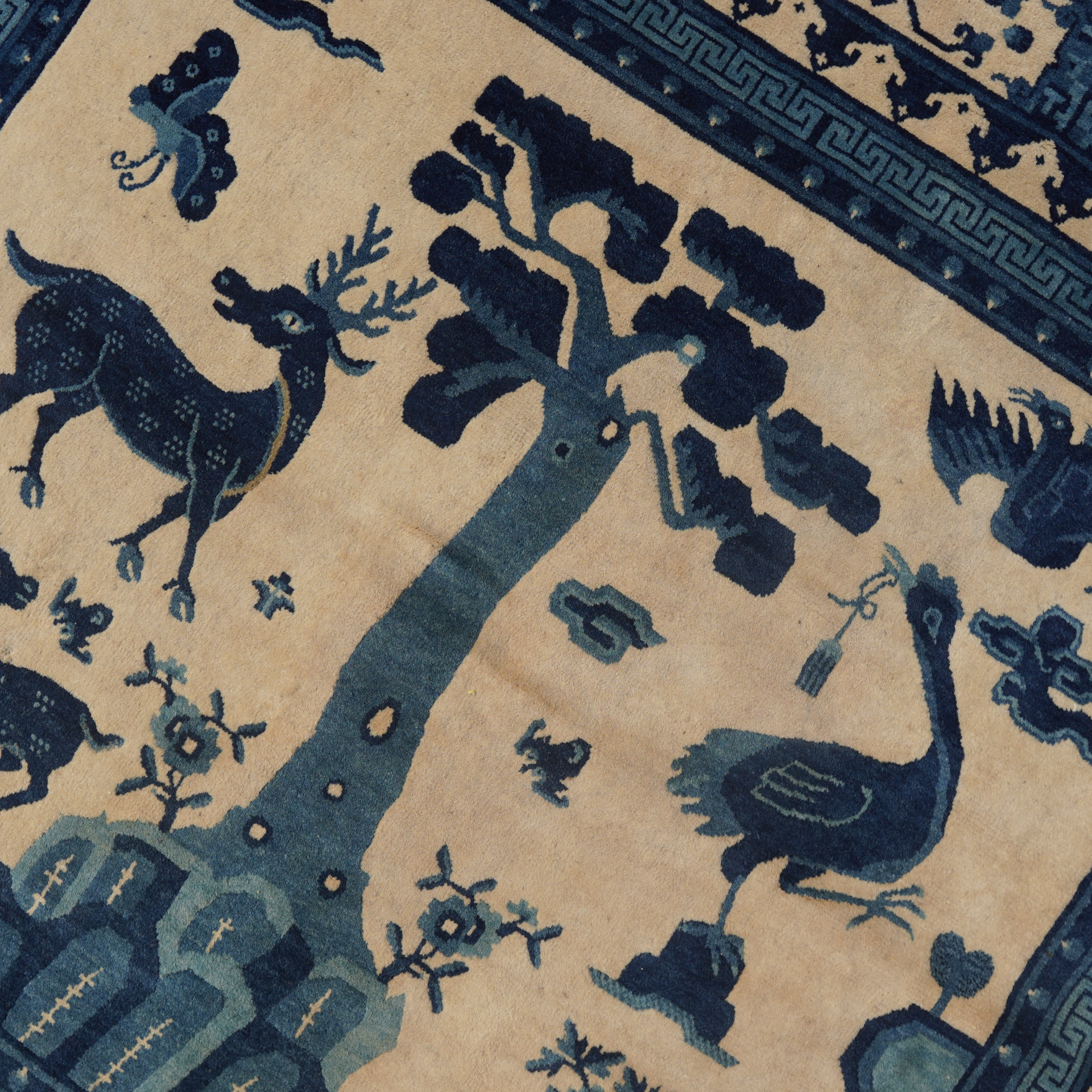 Image 2 of 18
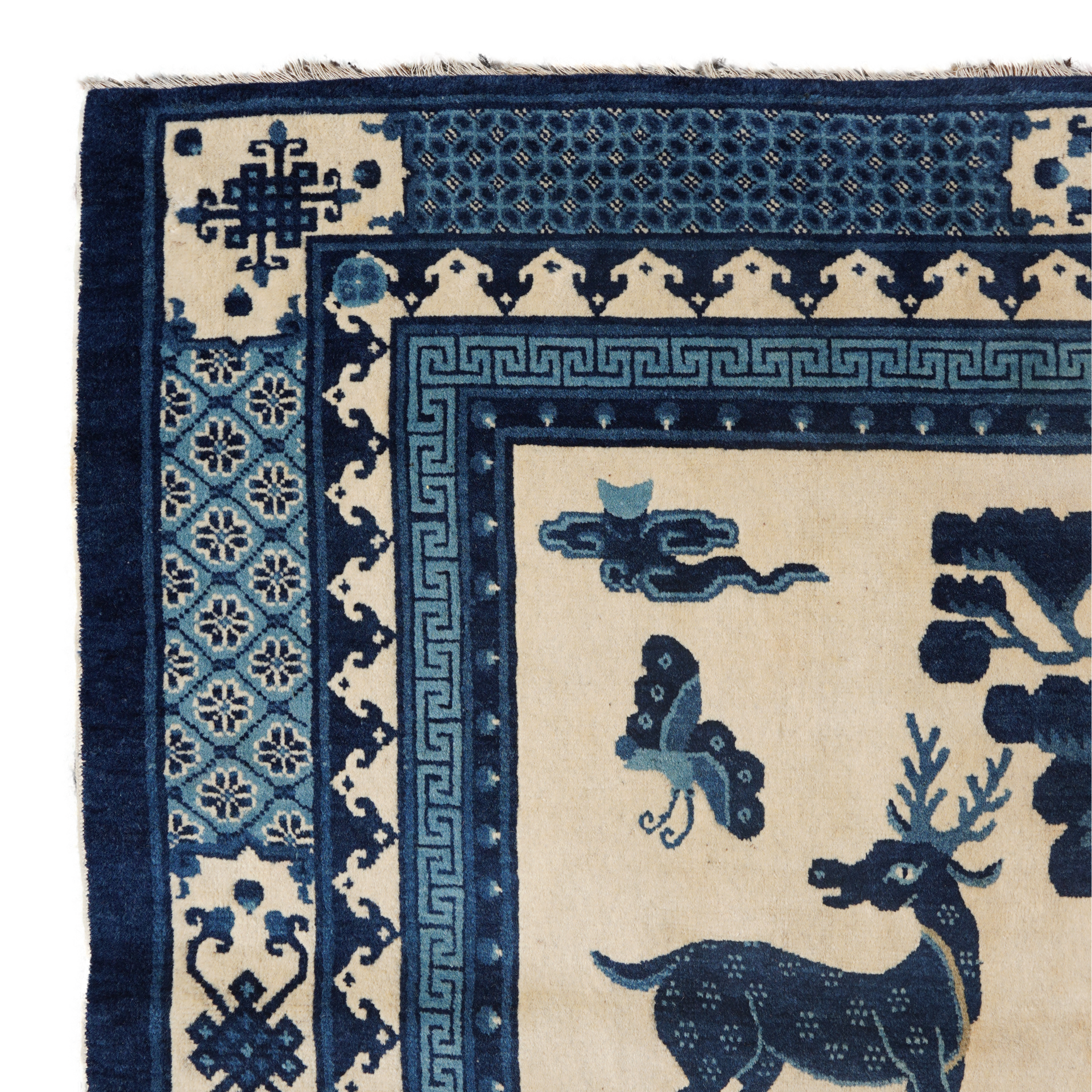 Image 3 of 18
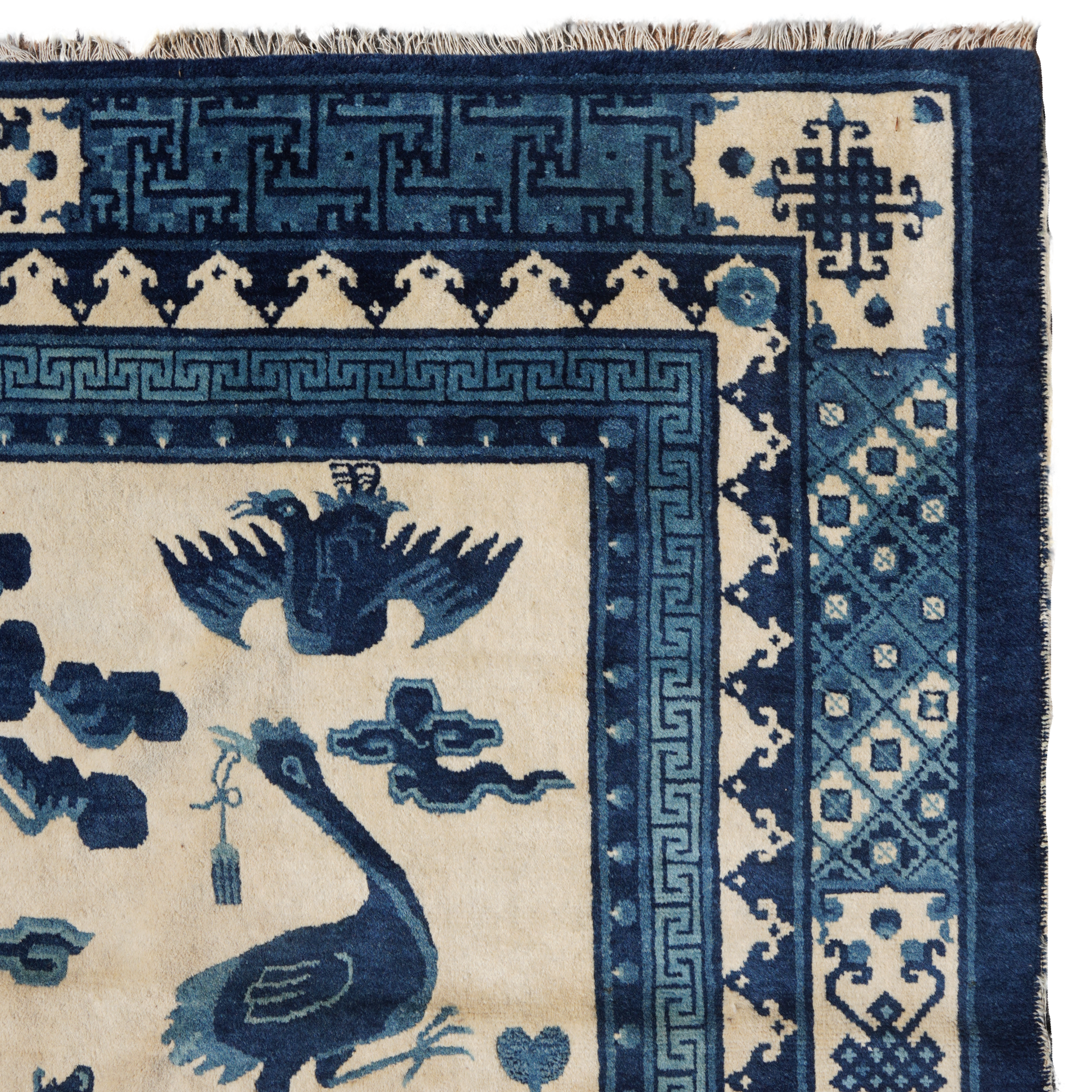 Image 4 of 18
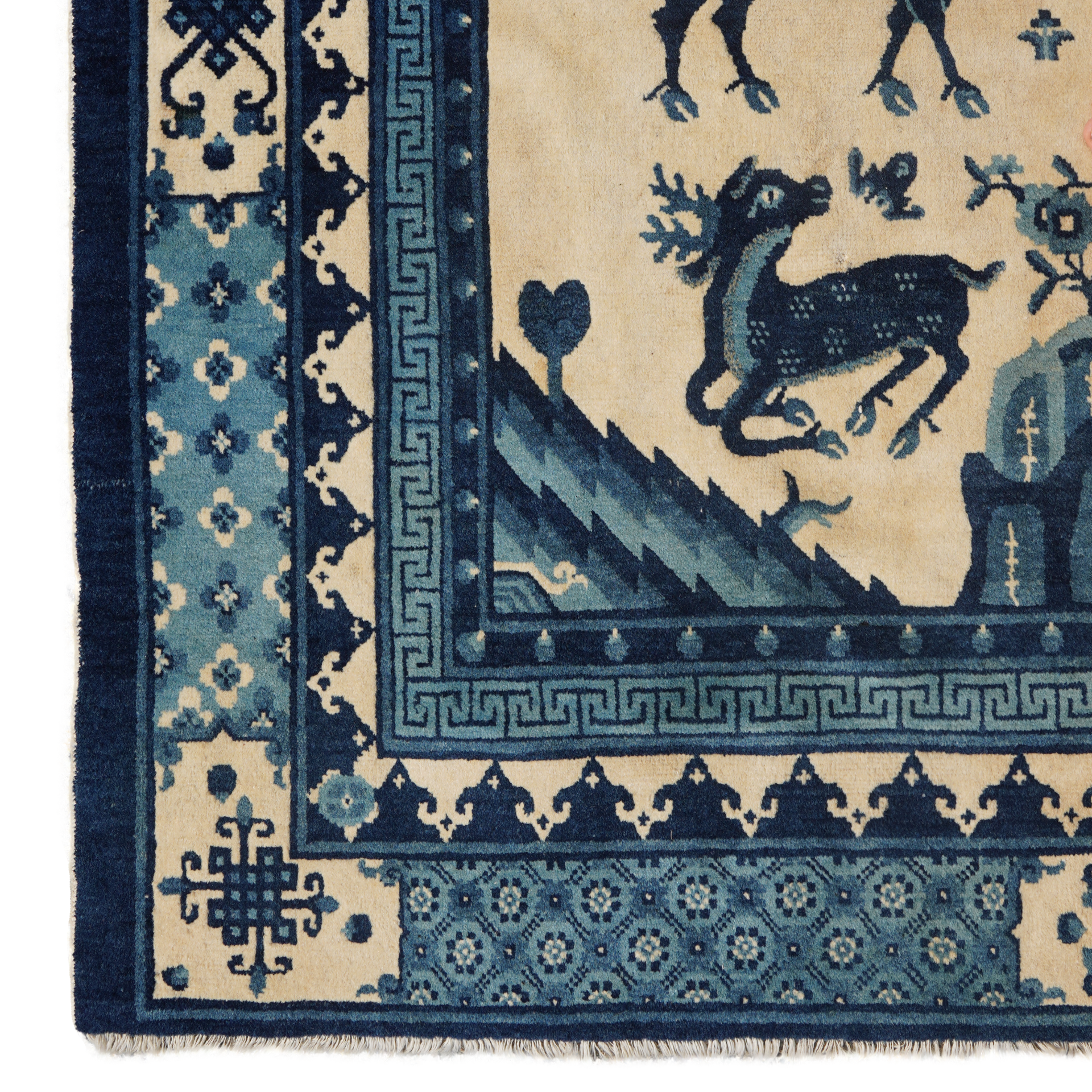 Image 5 of 18
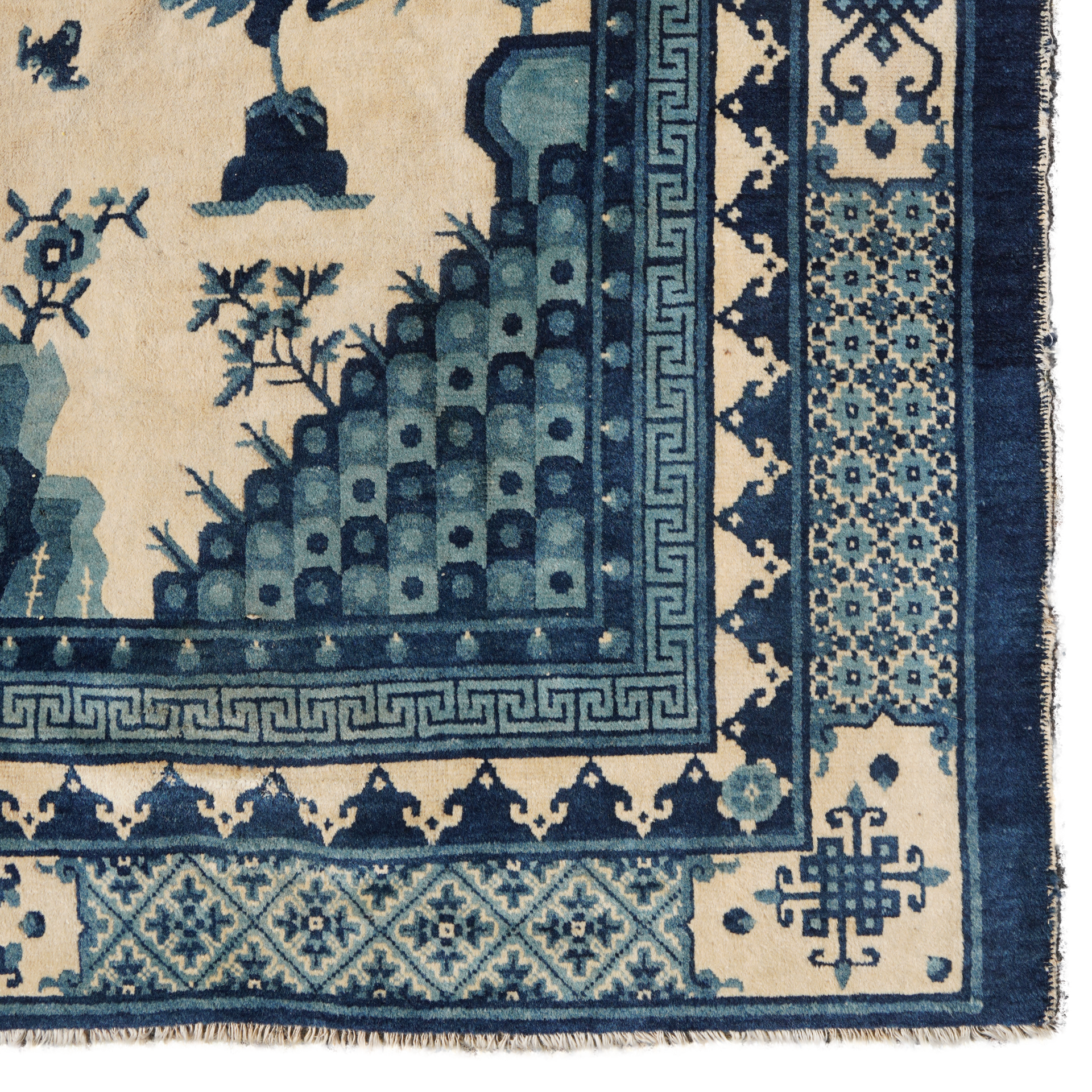 Image 6 of 18
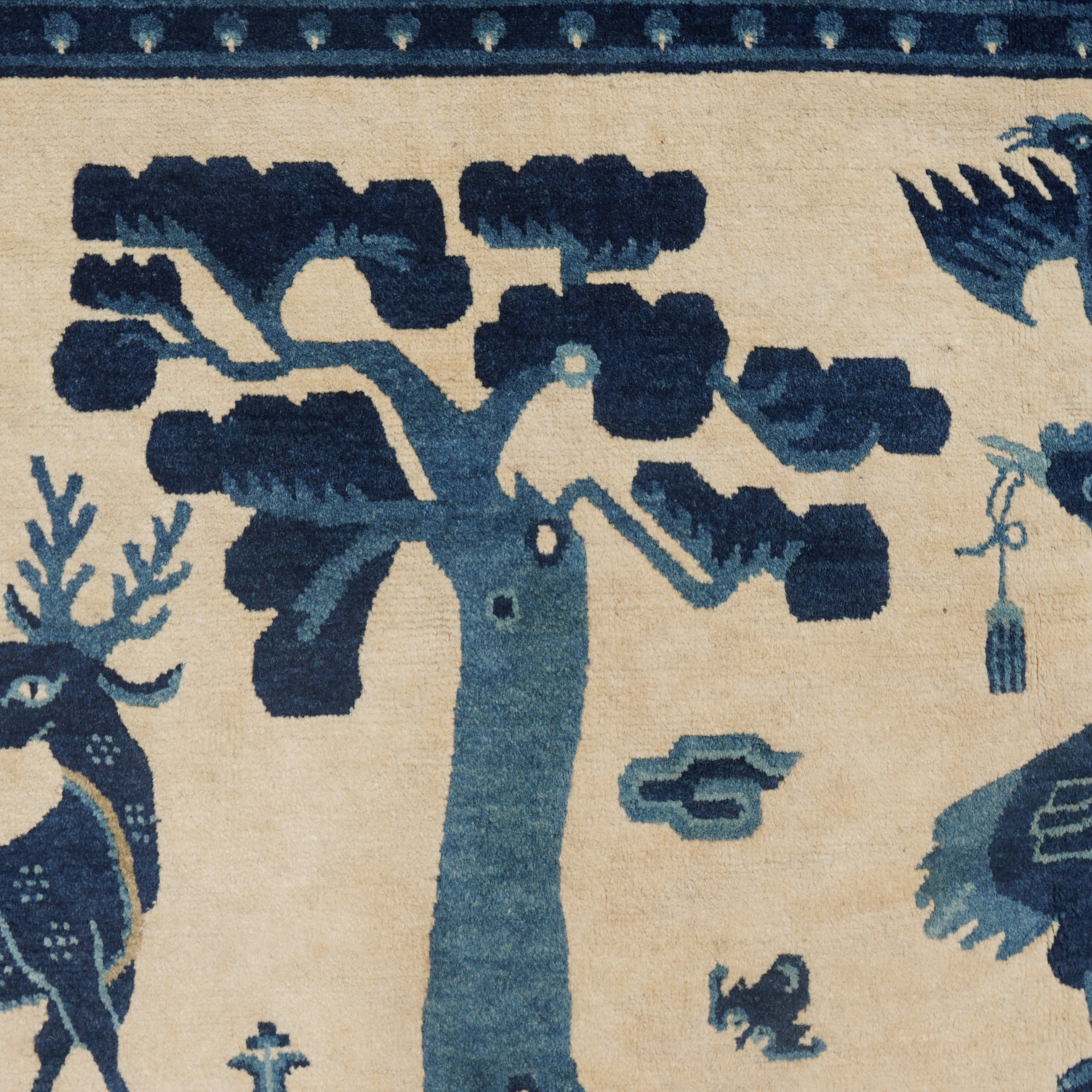 Image 7 of 18
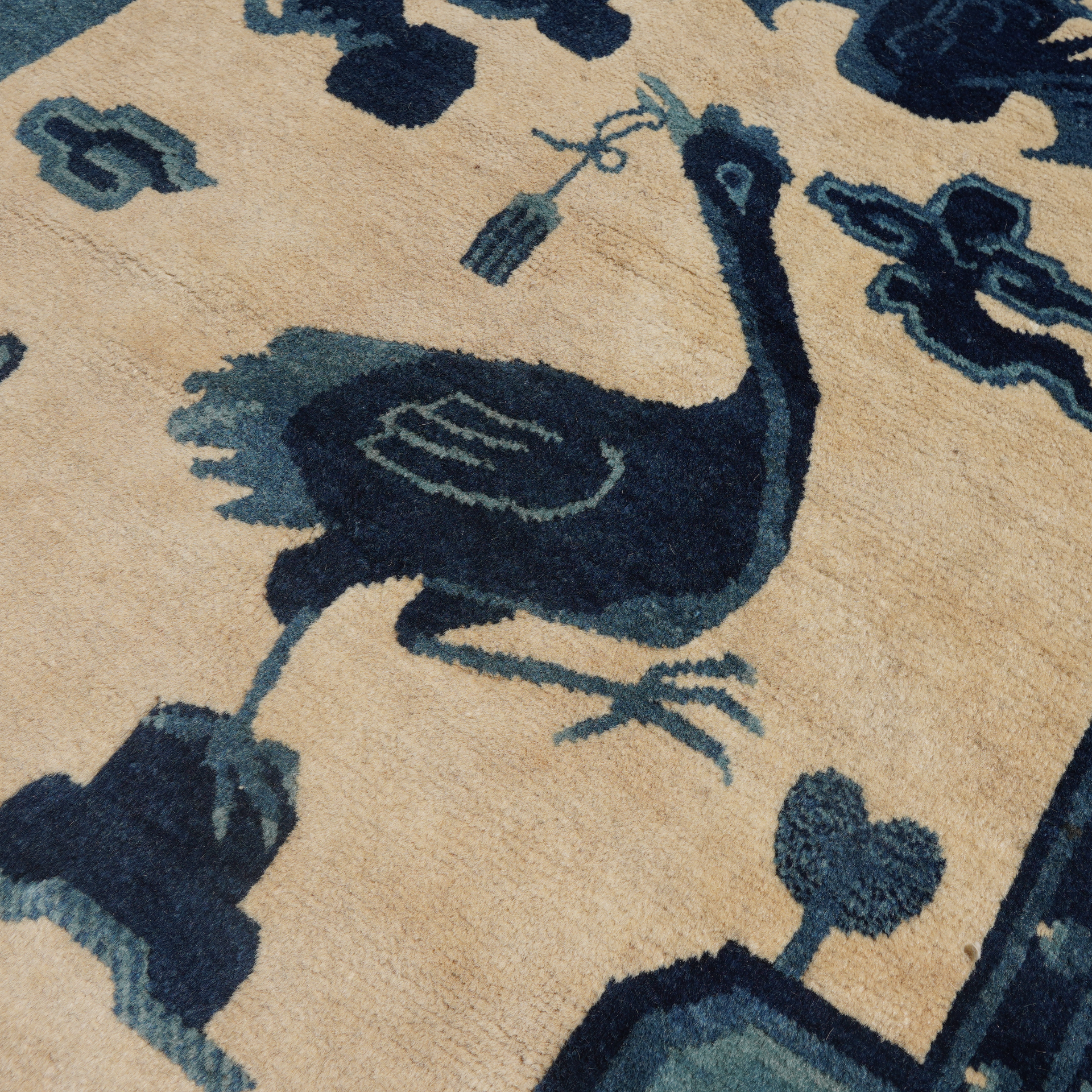 Image 8 of 18
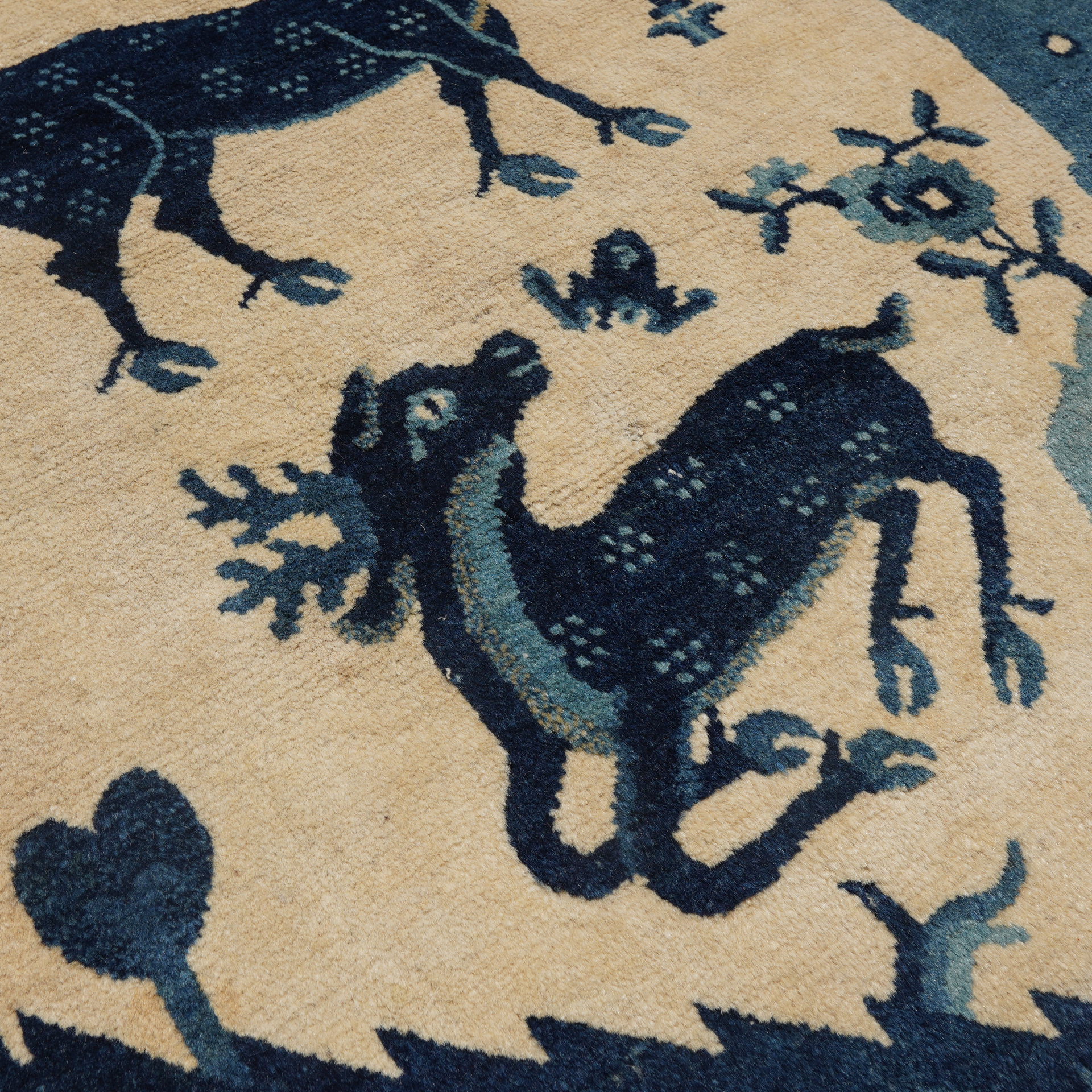 Image 9 of 18
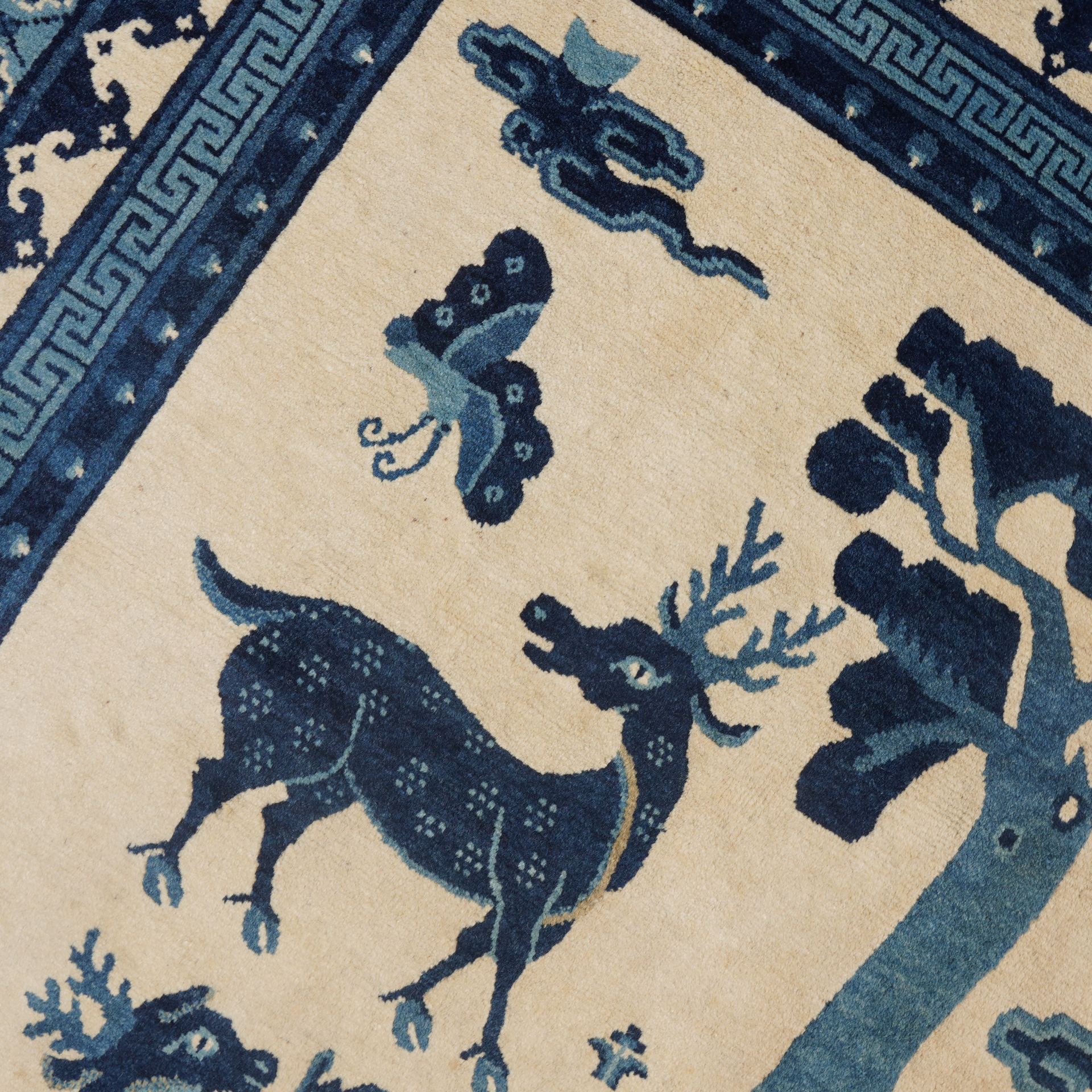 Image 10 of 18
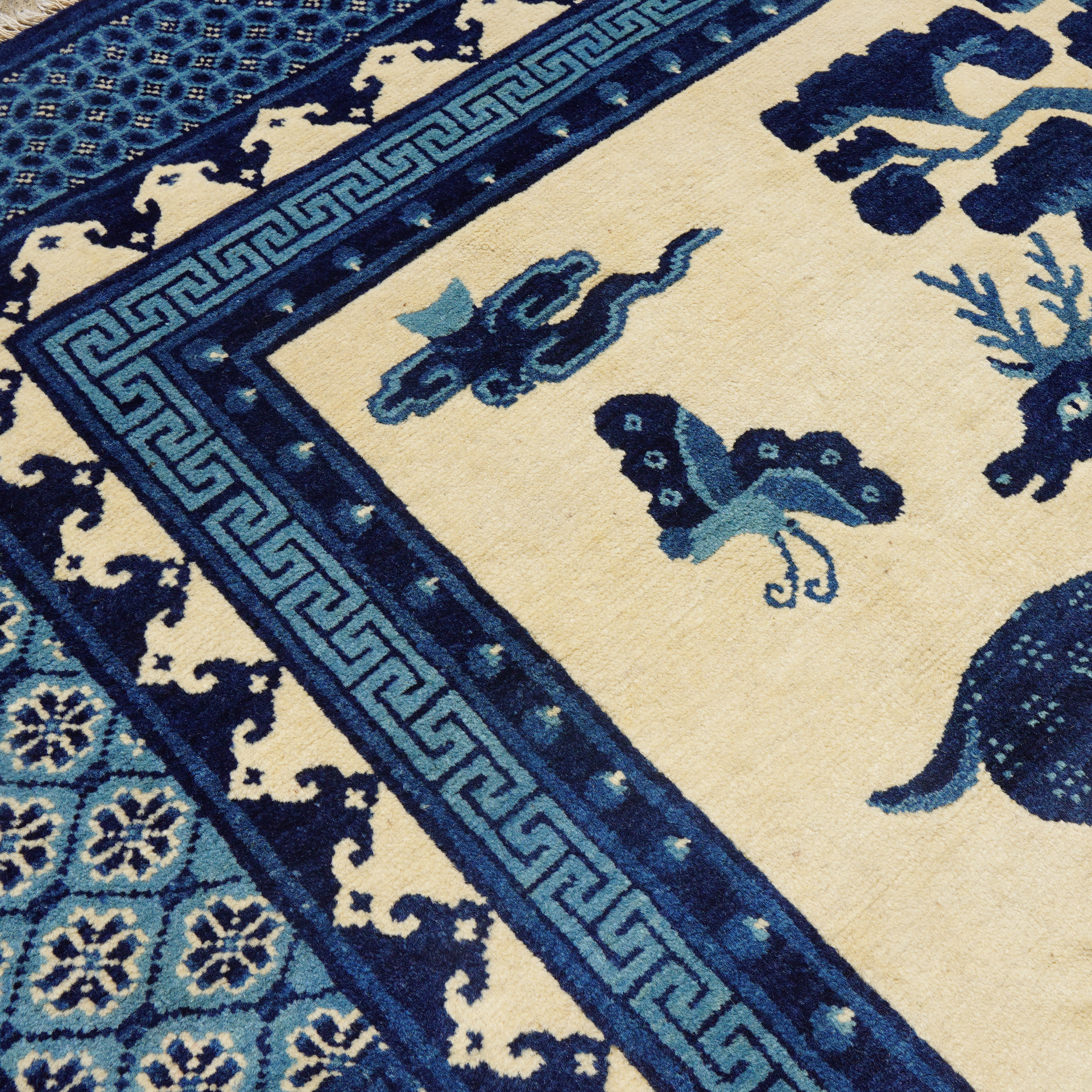 Image 11 of 18
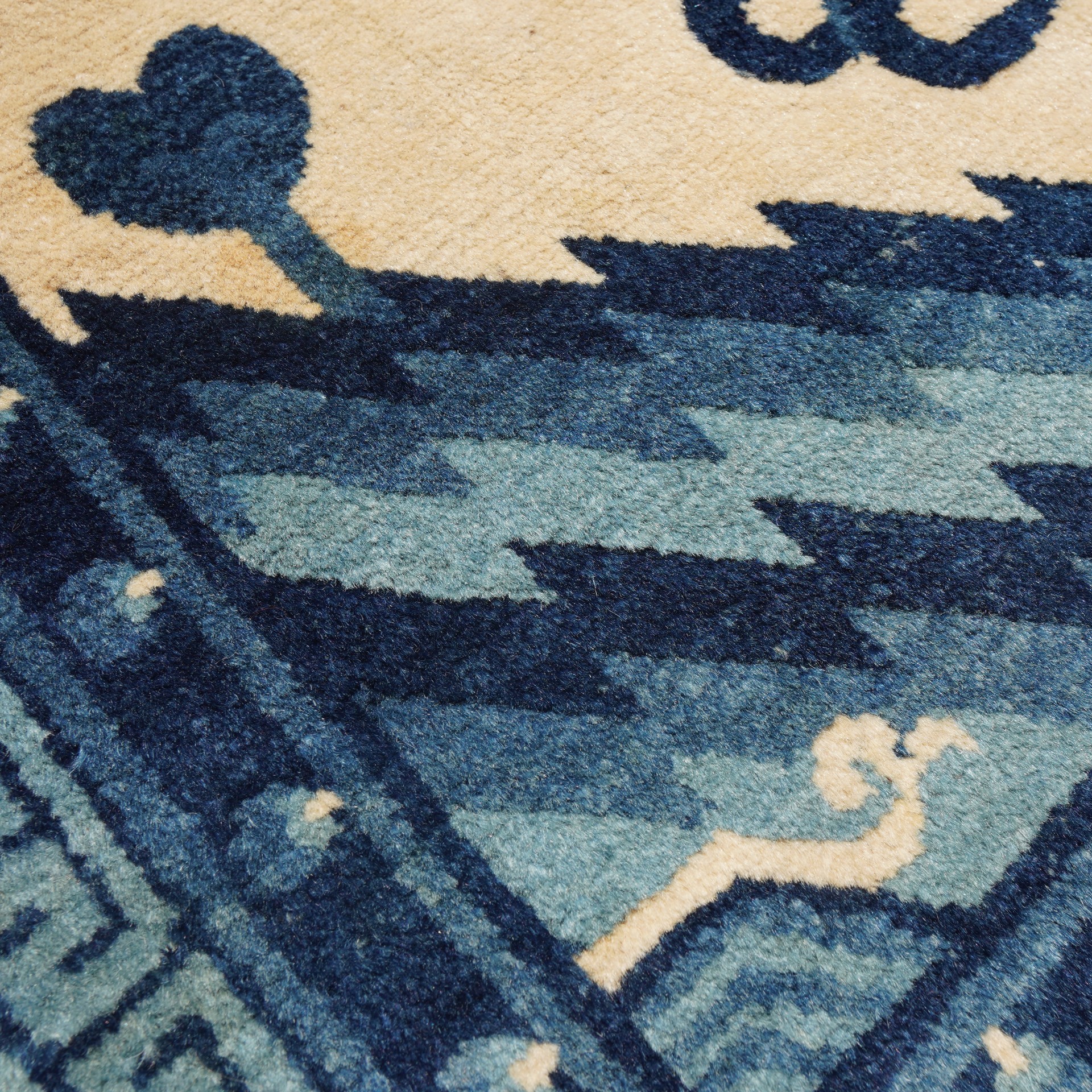 Image 12 of 18
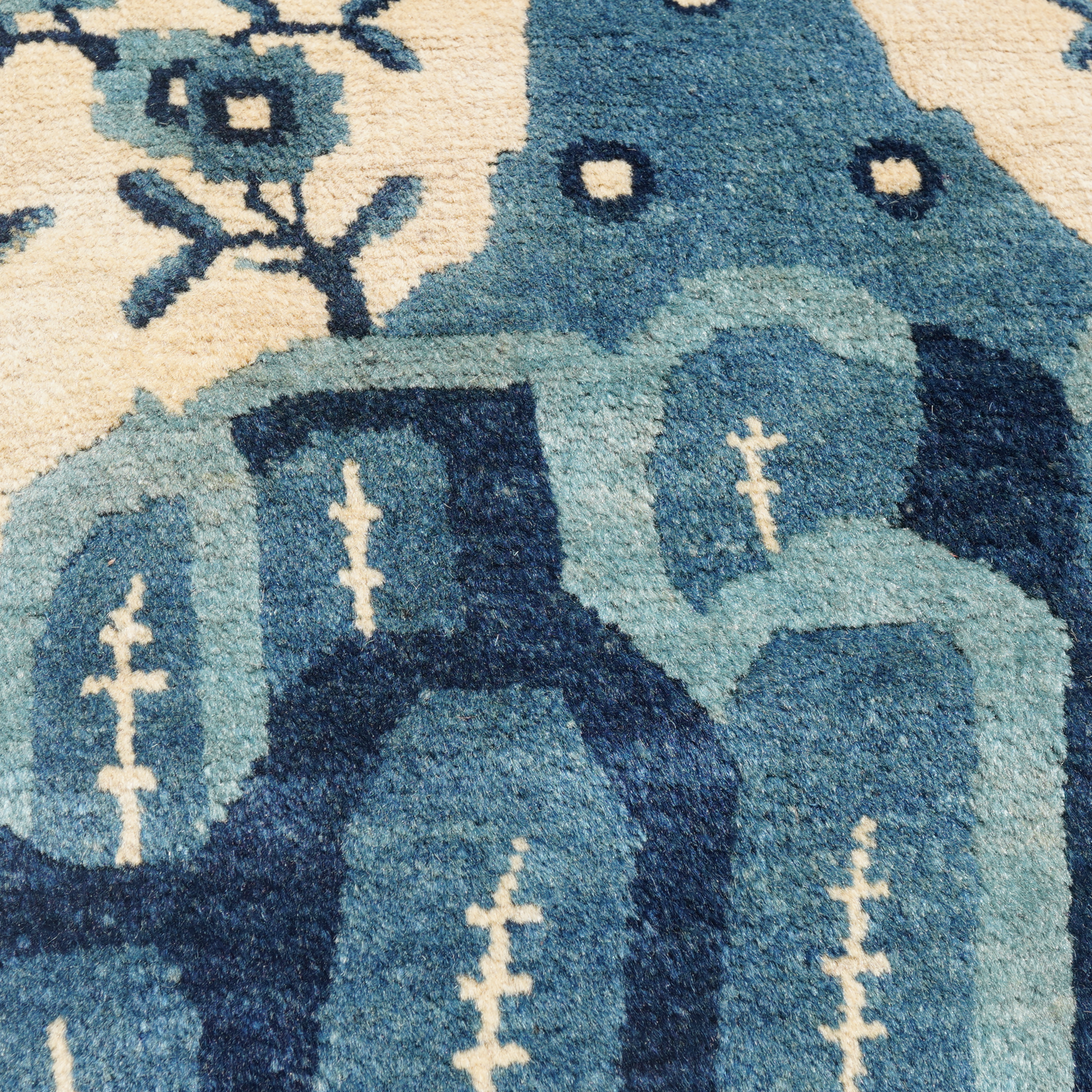 Image 13 of 18
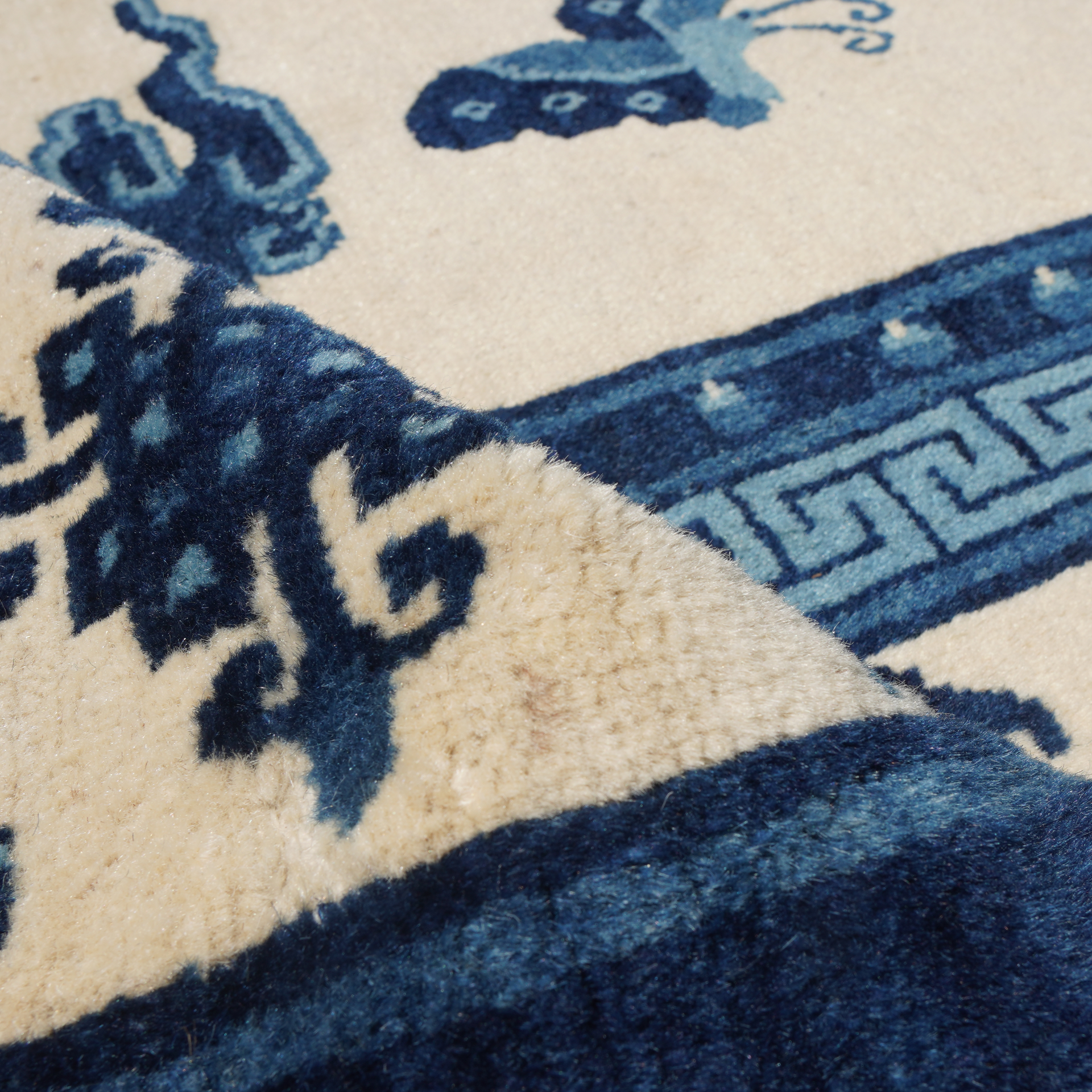 Image 14 of 18
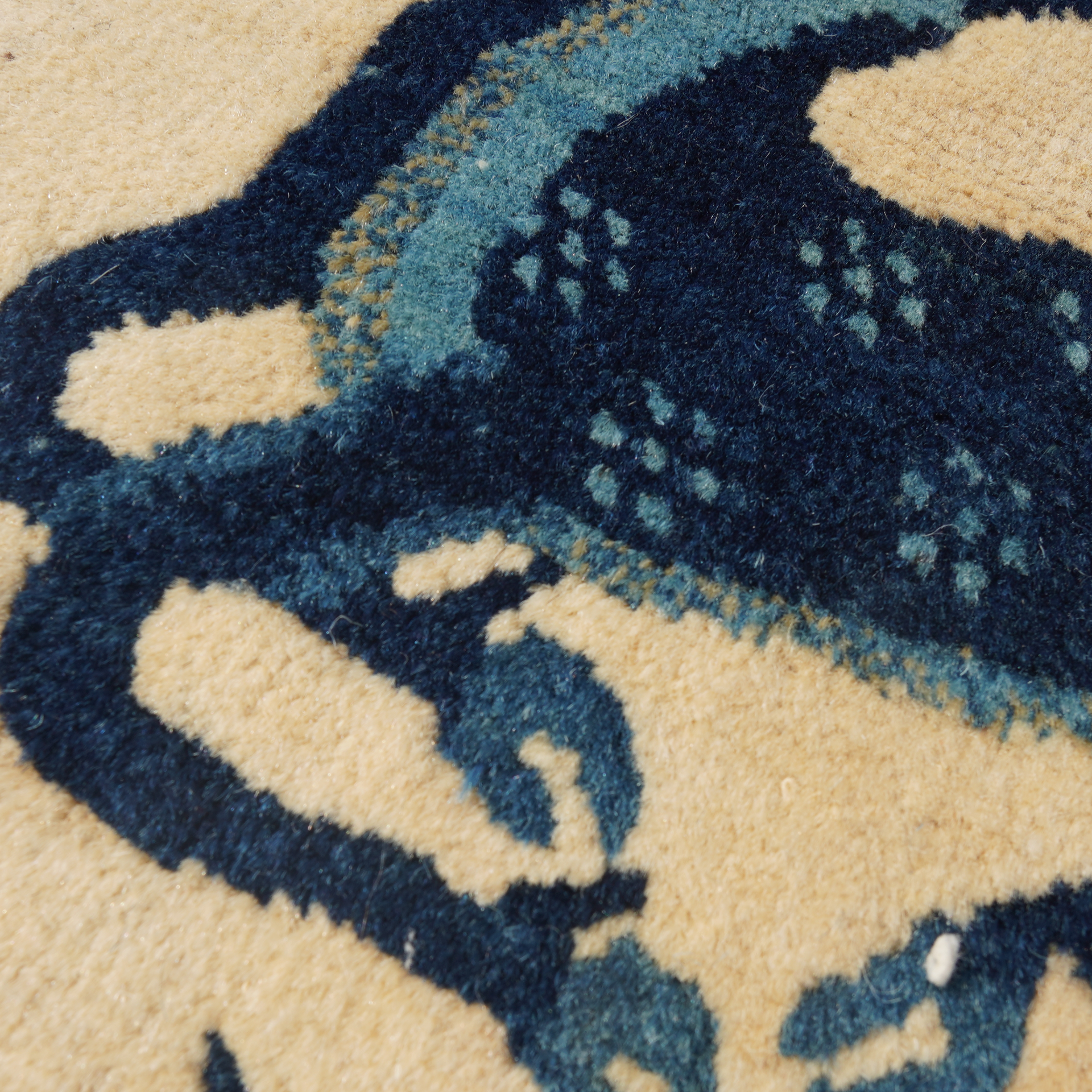 Image 15 of 18
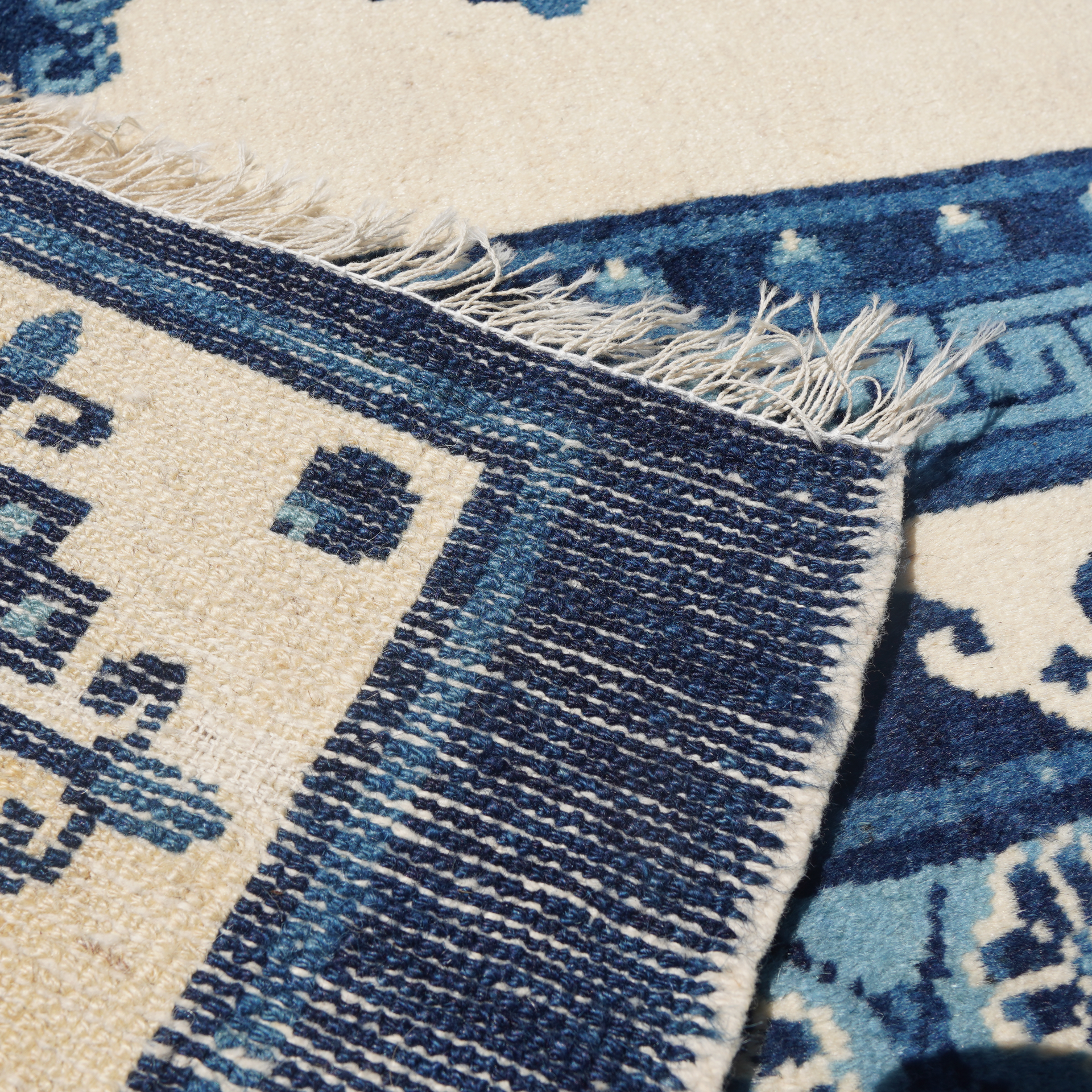 Image 16 of 18
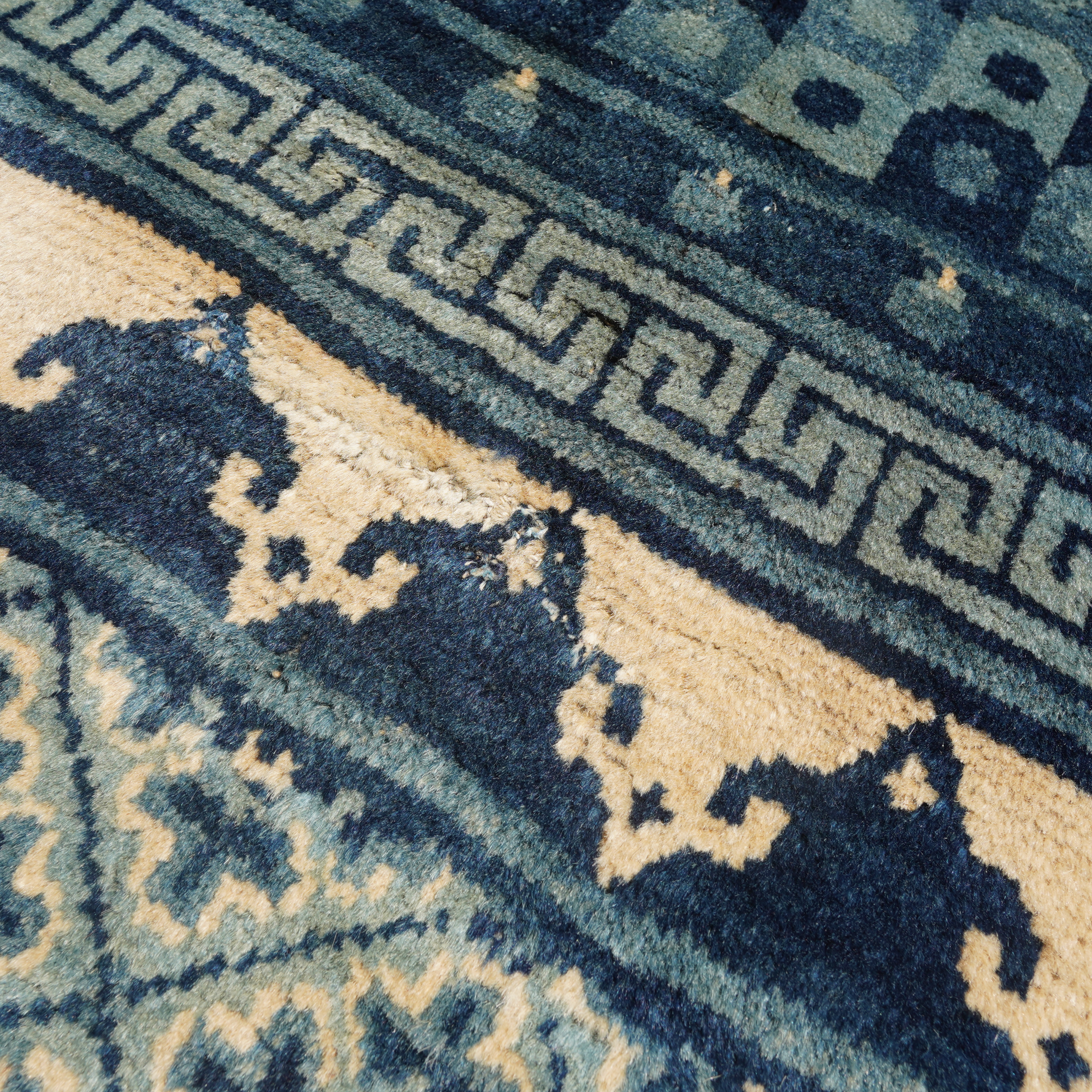 Image 17 of 18
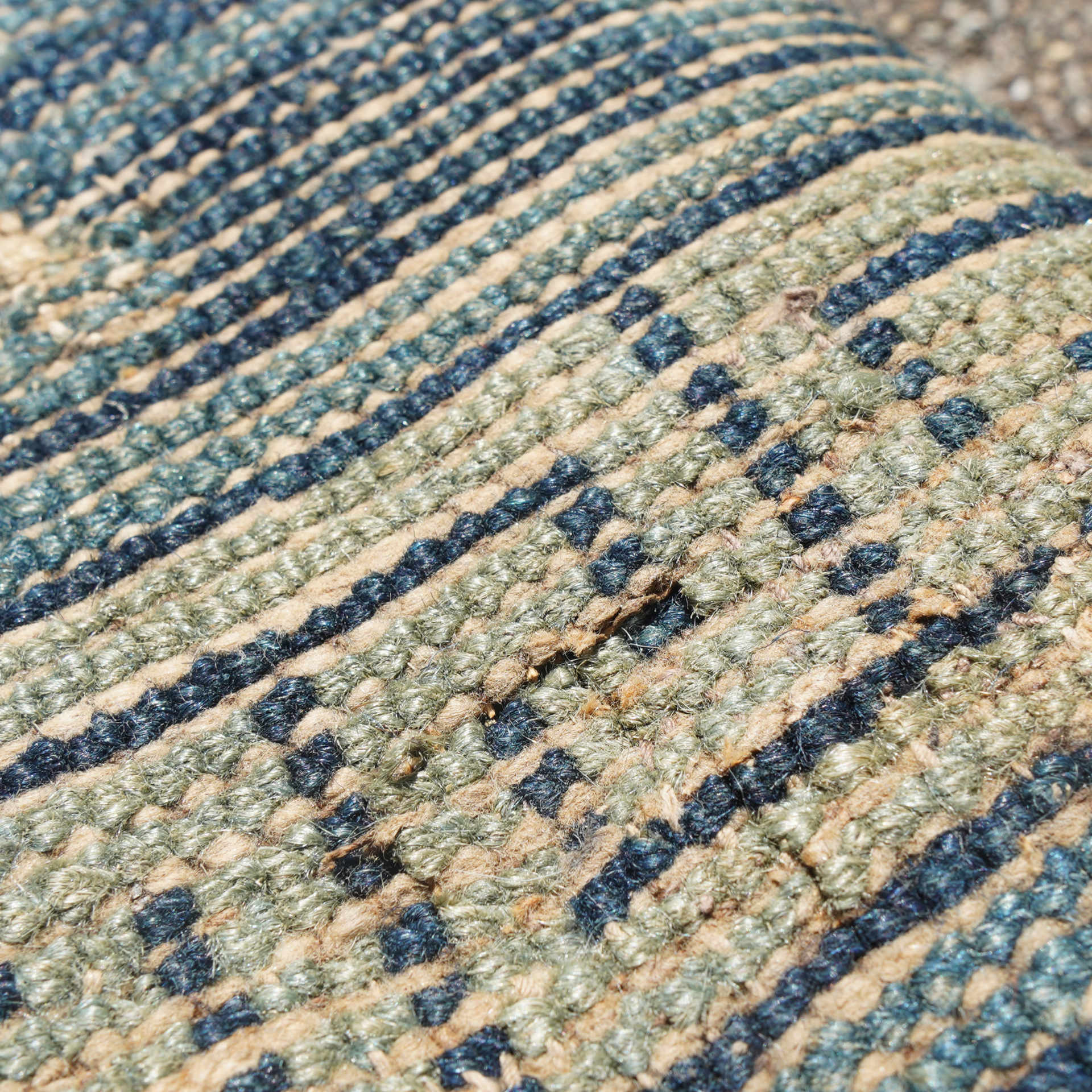 Image 18 of 18