2611
5'-0" x 6'-11"
AGE & ORIGIN:
19th C.
Caucuses
OVERVIEW:
An incredibly curious and visually distinct production of what we know to be the ‘Lori Pambak’ type of Kazak, a design distinguished by its use of three medallions. The production of these rugs is fascinating, as there is thought to be a mix of Kurdish weavers that were displaced Lurs (Lori), and the geographic location is, of course, intrinsically linked to Armenians. Of course, Armenian Kurds are not unheard of (Lilihan for ex.)
Whomever wove this rug though, had a penchant for creativity, and the reason I even bring up the weavers of this area is to say, this is either a very Kurdish Lori Pambak, or the result of a true village weave (maybe both). The devolved version of the typical Pambak tri-medallion into 8-pointed stars is visually stunning, clicking the cylinders (in my brain) of the ‘simple shapes' = neuron activation. The unpretentiousness and unbridled creativity of the weavers to use animals and scarabs and other minor motifs across the field is also very ‘village’.
The liberal use of purple and khaki dyes is also very unusual, a combination not often seen, but one that manages to straddle the line between antiquity and modernity.
All this is to say, I think this is a very cool rug.
CONDTION:
Areas of significant wear mostly localized in bottom right-hand side
2611
5'-0" x 6'-11"
AGE & ORIGIN:
19th C.
Caucuses
OVERVIEW:
An incredibly curious and visually distinct production of what we know to be the ‘Lori Pambak’ type of Kazak, a design distinguished by its use of three medallions. The production of these rugs is fascinating, as there is thought to be a mix of Kurdish weavers that were displaced Lurs (Lori), and the geographic location is, of course, intrinsically linked to Armenians. Of course, Armenian Kurds are not unheard of (Lilihan for ex.)
Whomever wove this rug though, had a penchant for creativity, and the reason I even bring up the weavers of this area is to say, this is either a very Kurdish Lori Pambak, or the result of a true village weave (maybe both). The devolved version of the typical Pambak tri-medallion into 8-pointed stars is visually stunning, clicking the cylinders (in my brain) of the ‘simple shapes' = neuron activation. The unpretentiousness and unbridled creativity of the weavers to use animals and scarabs and other minor motifs across the field is also very ‘village’.
The liberal use of purple and khaki dyes is also very unusual, a combination not often seen, but one that manages to straddle the line between antiquity and modernity.
All this is to say, I think this is a very cool rug.
CONDTION:
Areas of significant wear mostly localized in bottom right-hand side


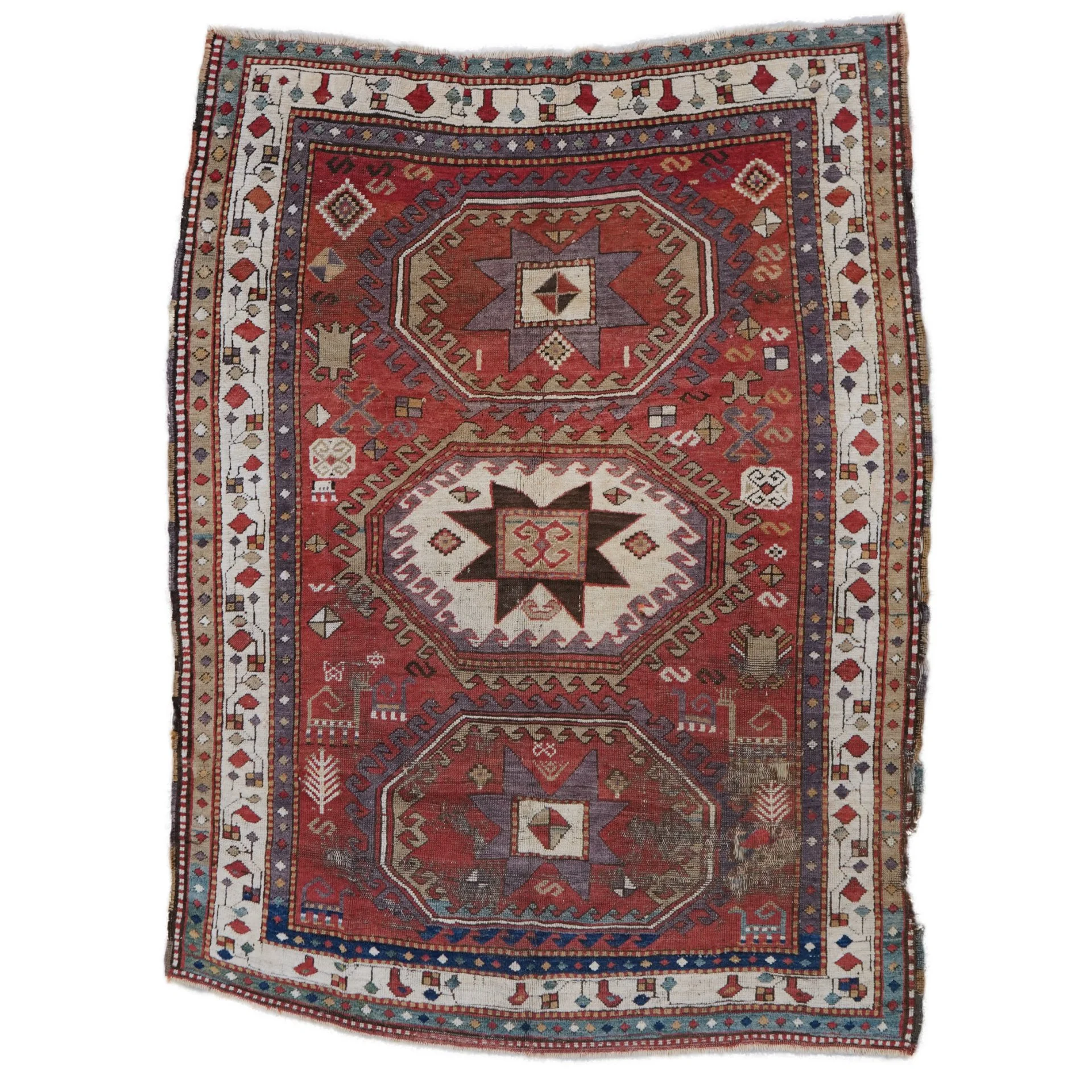 Image 1 of 11
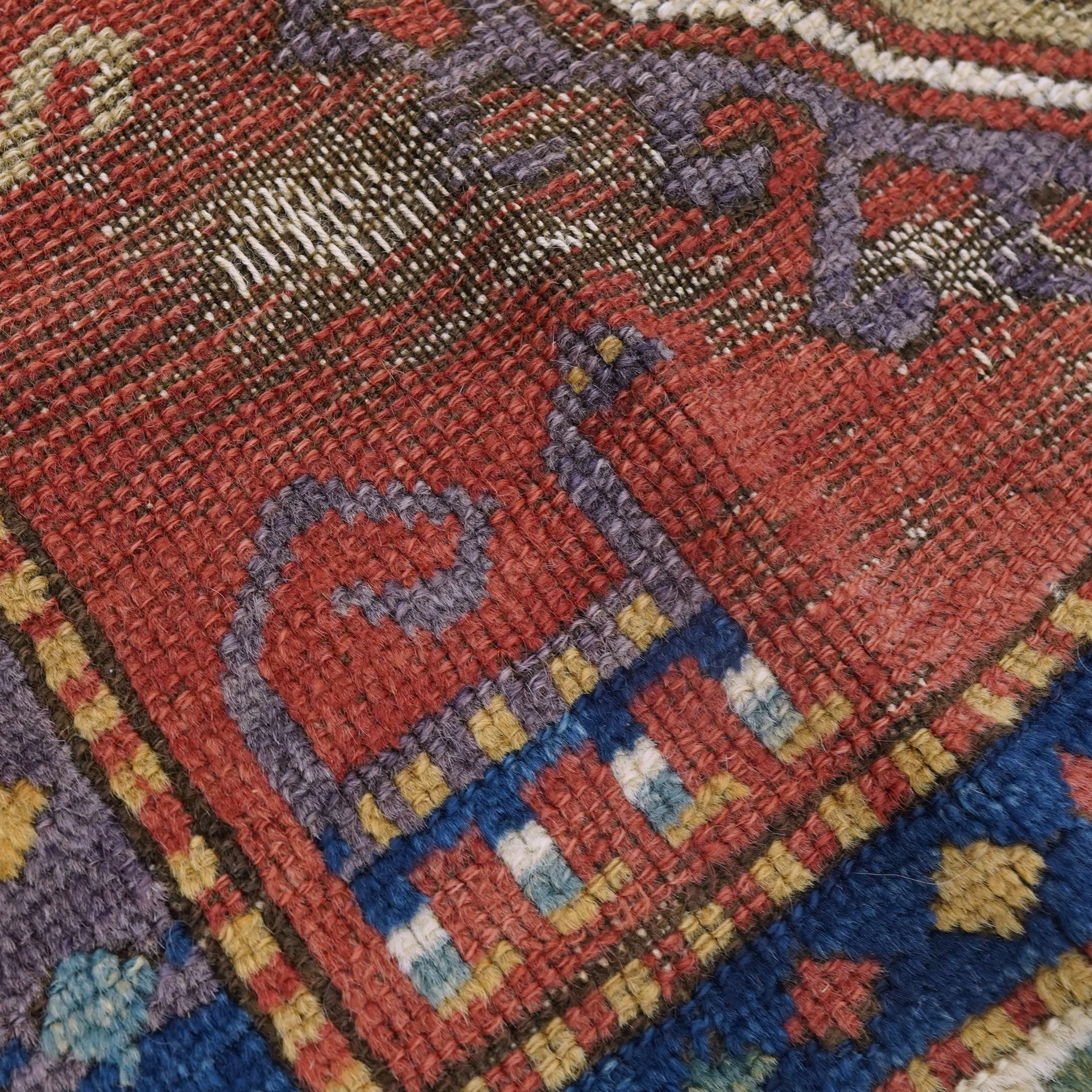 Image 2 of 11
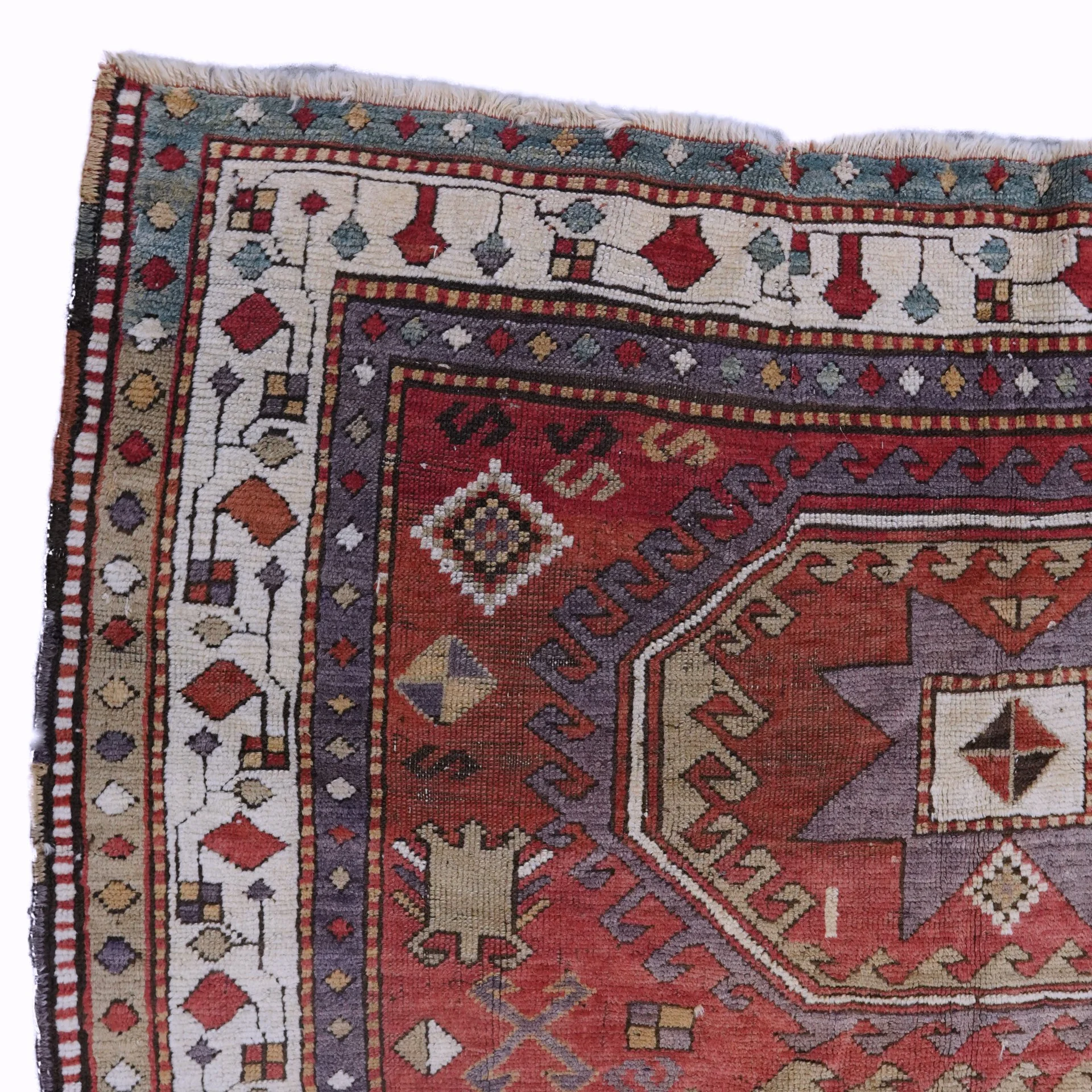 Image 3 of 11
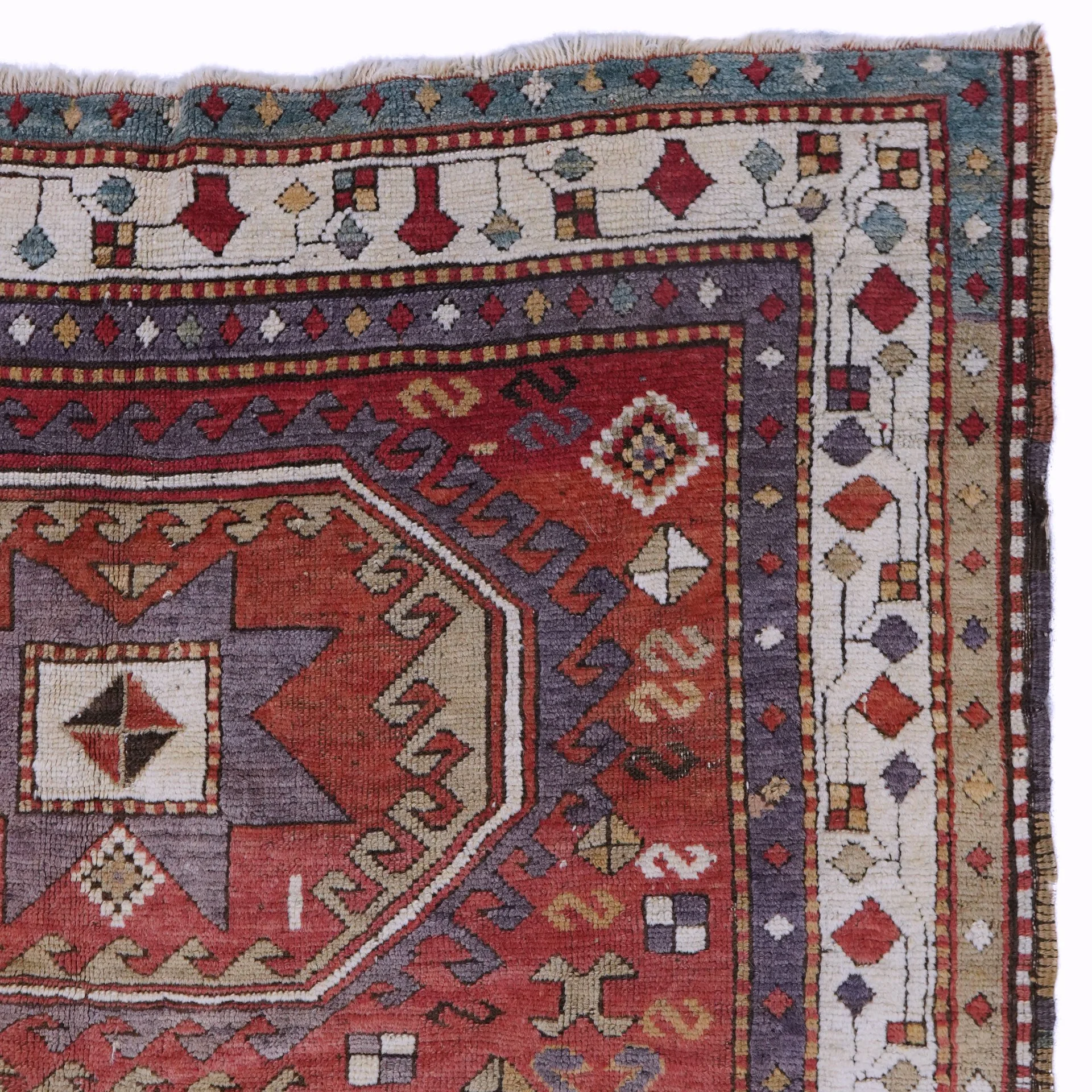 Image 4 of 11
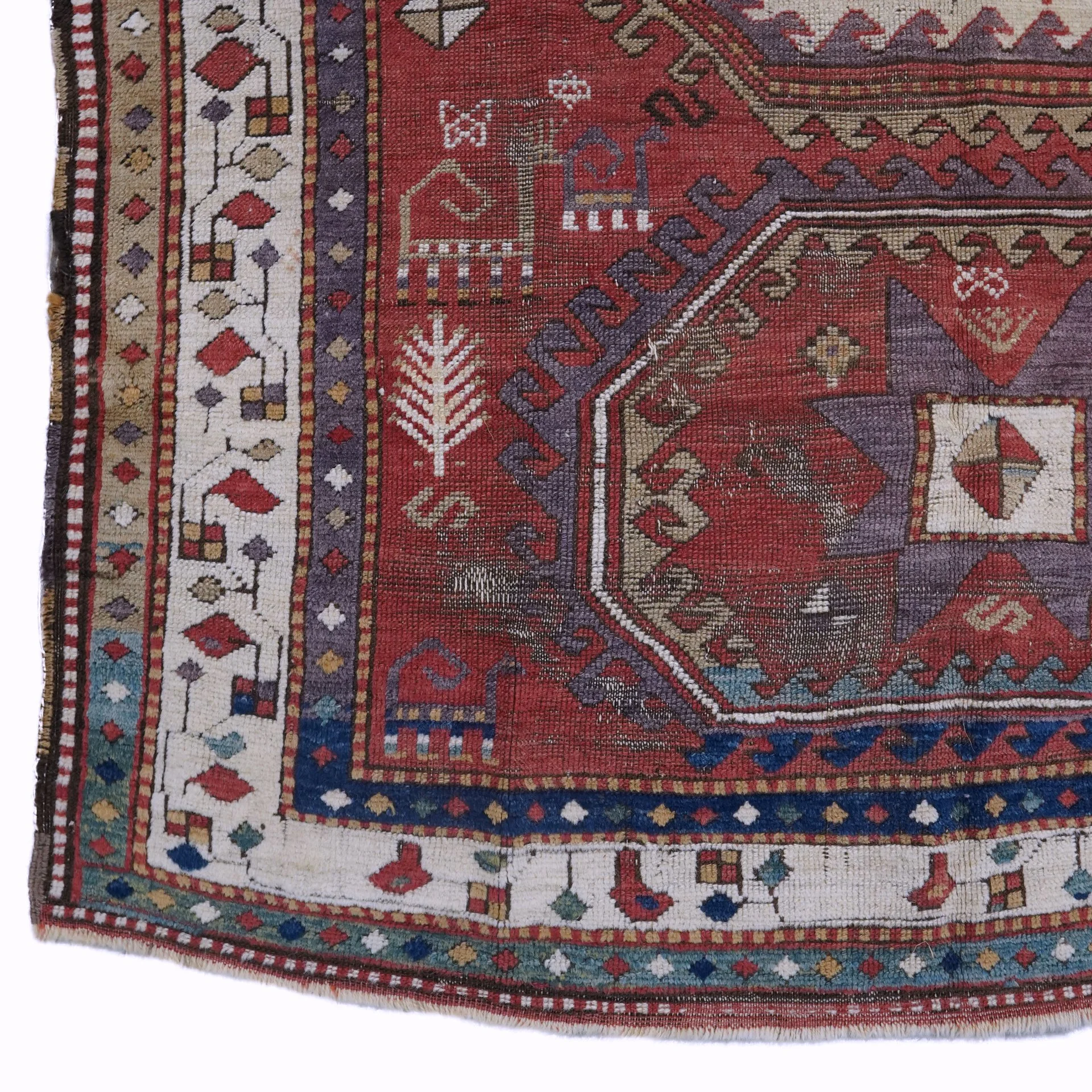 Image 5 of 11
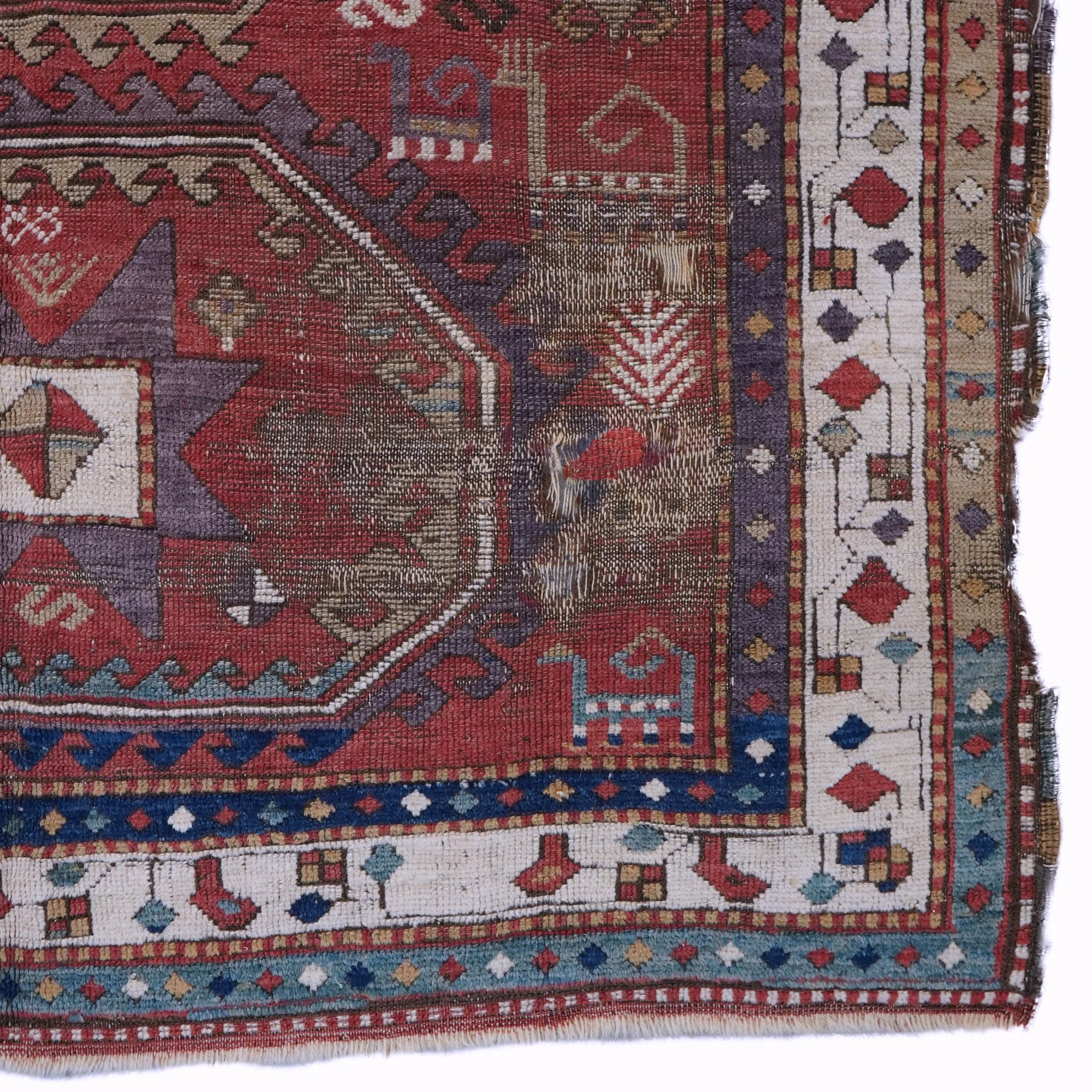 Image 6 of 11
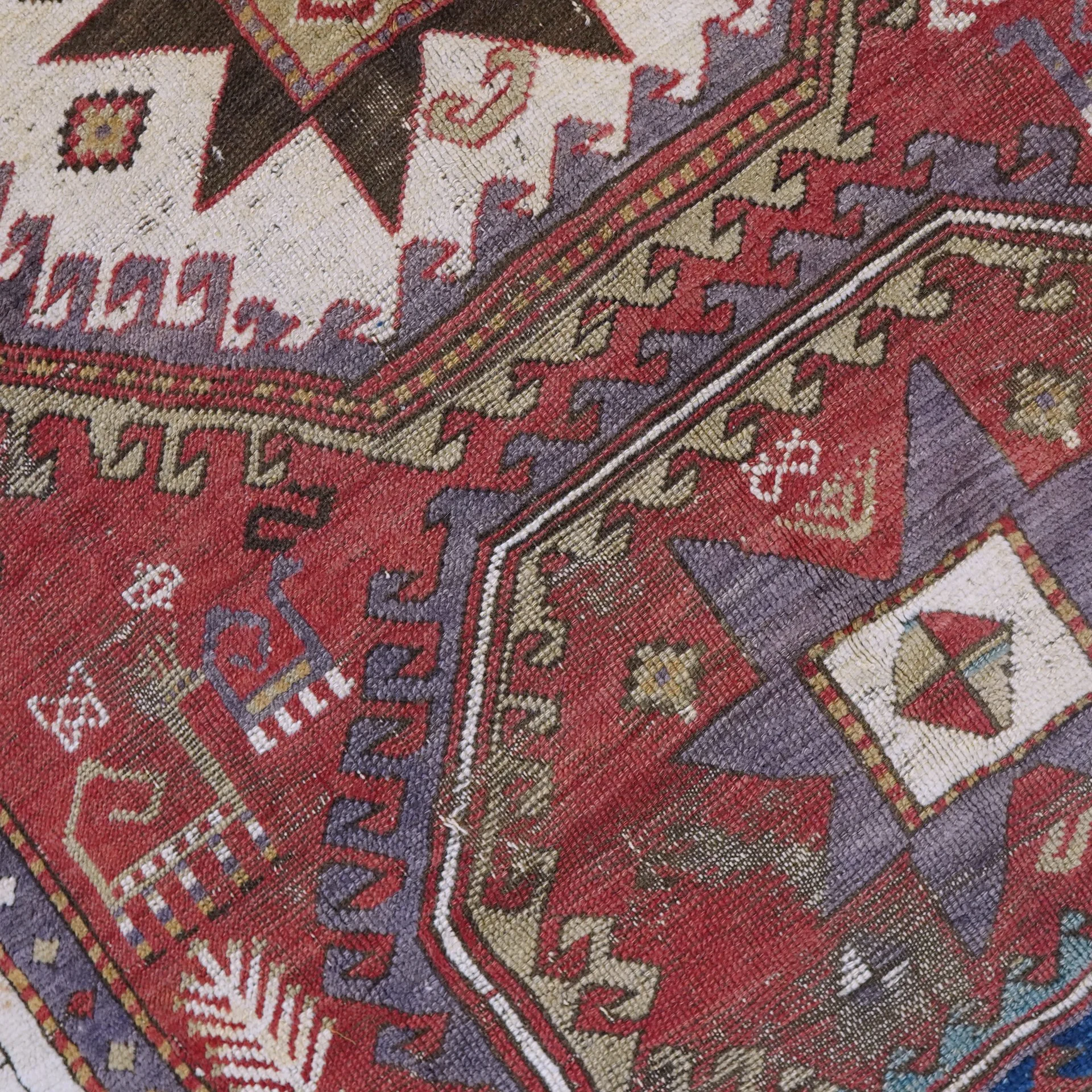 Image 7 of 11
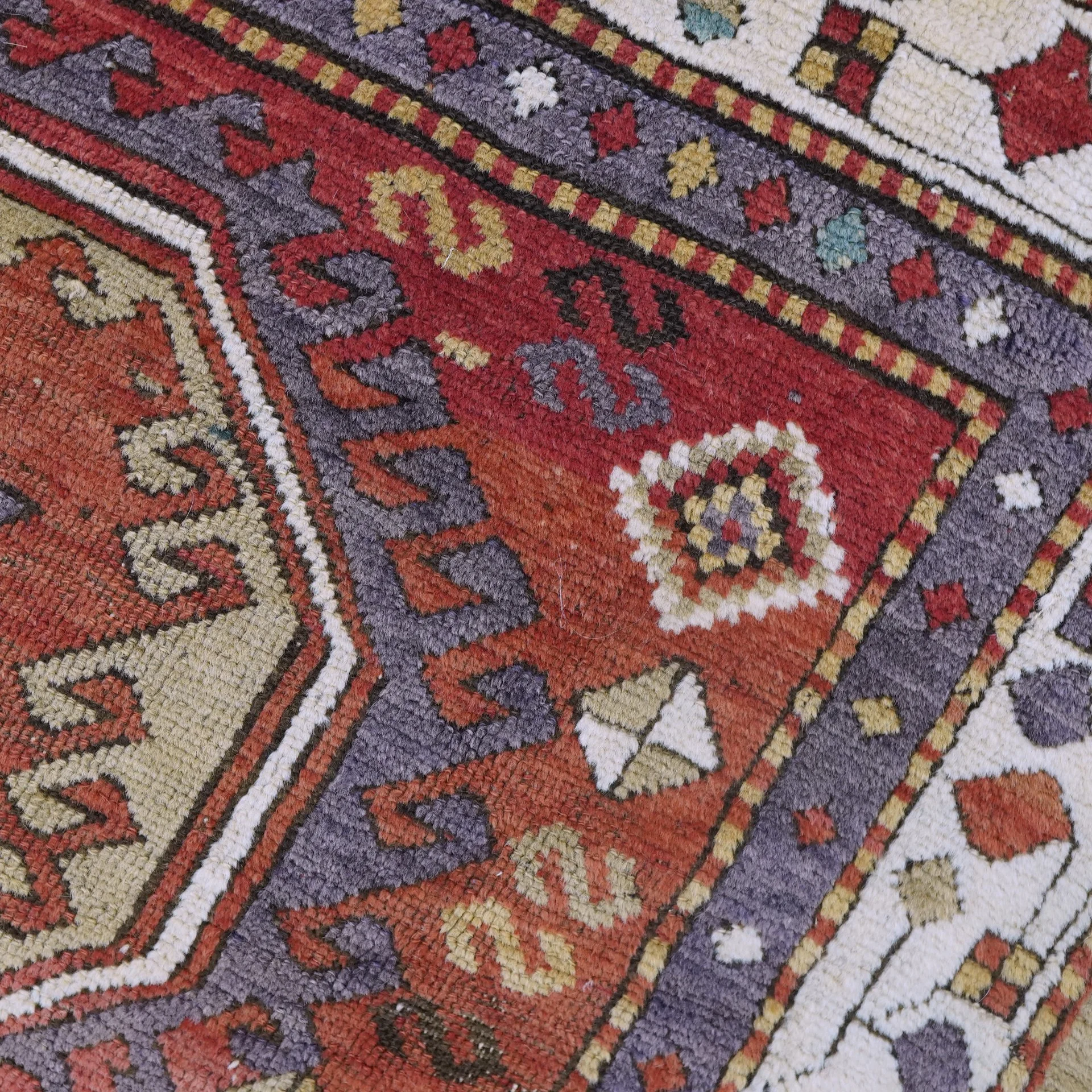 Image 8 of 11
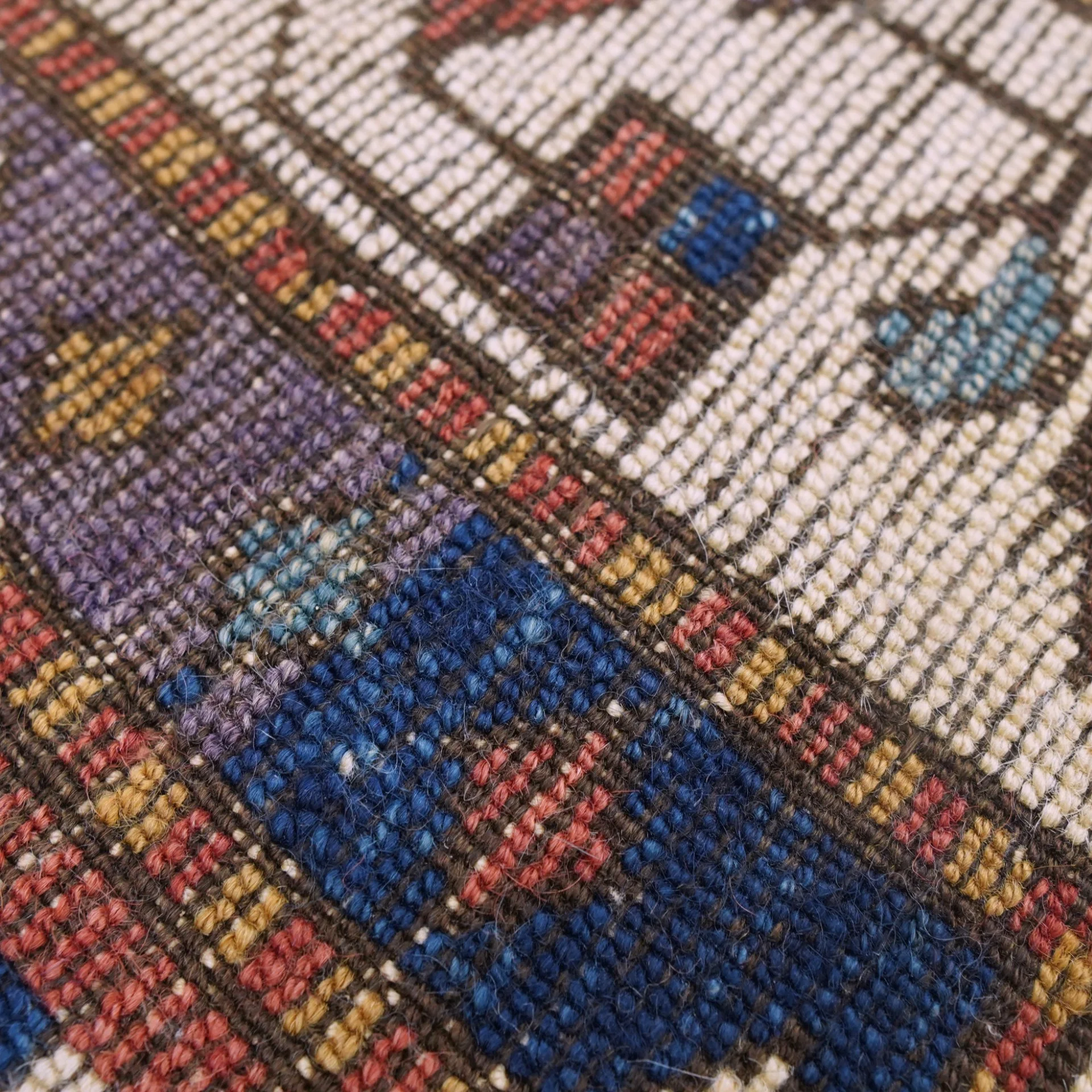 Image 9 of 11
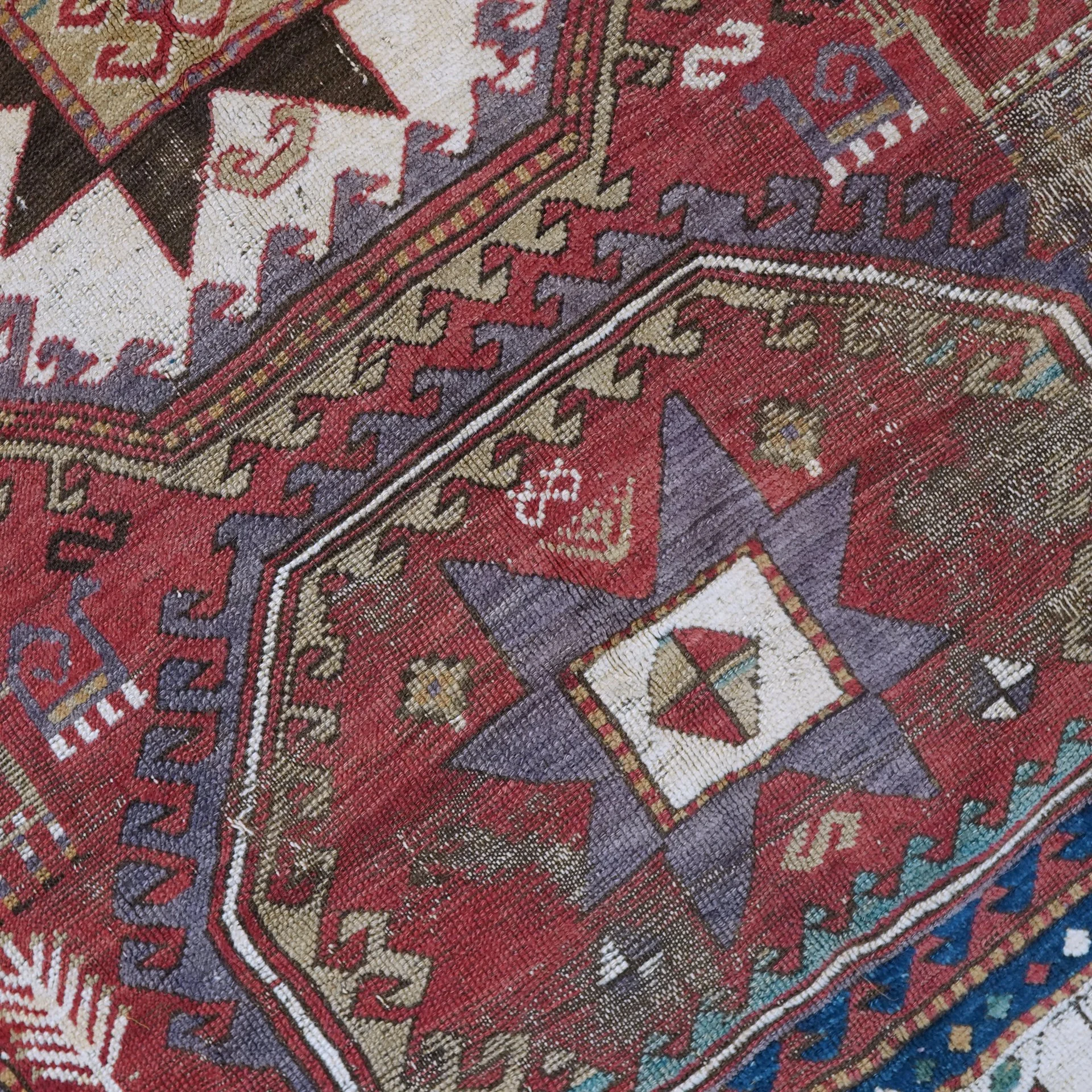 Image 10 of 11
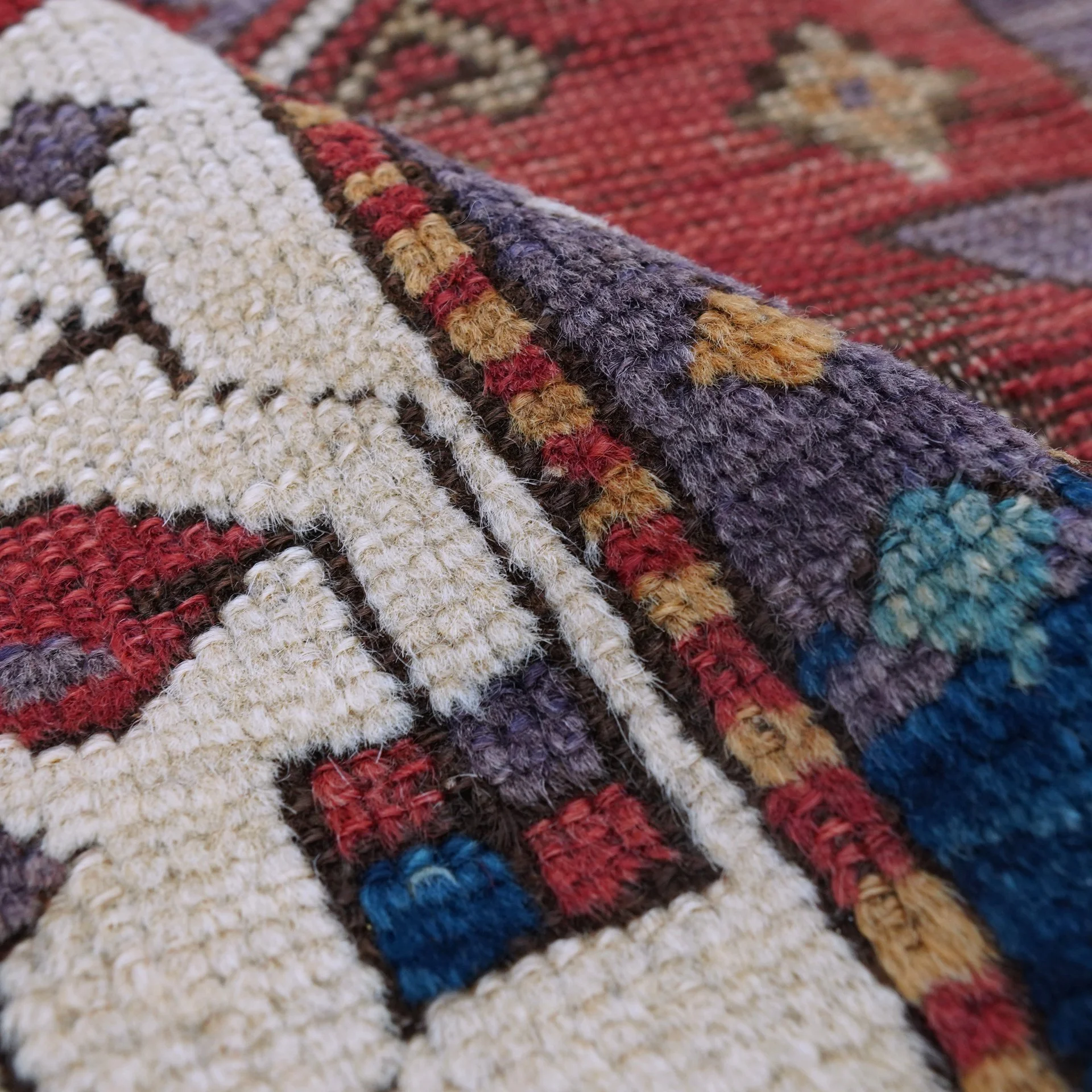 Image 11 of 11