2601
3'-8" x 5'-6"
AGE & ORIGIN:
19th C.
Caucuses
OVERVIEW:
You would be forgiven in thinking this is nothing more than a common, Bordjalou (Borchalo) prayer rug. The casual observer may find the trappings of a village production; the wonkiness of the drawing, the miscalculated proportions. In fact, one may only make a judgement based solely on the overall condition (good, but certainly not mint, even missing original elements (edges)) before dismissal would overtake their eyes to the next production.
However, the obsessive would take note of one small detail that gives this unassuming rug the coveted adjective we described above; and it all comes down to a single hexagon.
It is not unusual for these Bordjalou Kazak prayer rugs to have medallions. Diamonds and hexagons are most common, typically encasing one of several simple designs, including the one on this rug; an evolved version of the medieval Armenian cross, usually referred to as the ‘shield’ motif. What turns this from standard to extraordinary though, is the number of these medallions. To only have one of these…well, I’ll let author Ralph Kaffel, a scholar with extensive knowledge on these sorts of weavings, finish:
In referencing two plates, he says…
“…[these two prayer rugs] also represent two examples of a very rare design variant of Borchalo rugs: the single central diamond. This motif appears on about three percent of the known prayer rugs from the district.” - Caucasian Prayer Rugs, 1998 pg. 43
While there is a discrepancy between the usage of ‘diamond’ and ‘hexagon’, the focus is to be put on the issue of a ‘singular’ usage of this motif. In fact, it’s arguable that it’s a ‘single shield’ may even play up the rarity even more.
In conclusion, what at first may seem like an innocuous, if not common Bordjalou gains slight envy in the eye of a collector through the simple subtraction of other medallions. They say “less is more”, and here that is literally the case.
CONDITION:
Some areas of slight wear and oxidation of the browns. Slight end loss and edges not original.
2601
3'-8" x 5'-6"
AGE & ORIGIN:
19th C.
Caucuses
OVERVIEW:
You would be forgiven in thinking this is nothing more than a common, Bordjalou (Borchalo) prayer rug. The casual observer may find the trappings of a village production; the wonkiness of the drawing, the miscalculated proportions. In fact, one may only make a judgement based solely on the overall condition (good, but certainly not mint, even missing original elements (edges)) before dismissal would overtake their eyes to the next production.
However, the obsessive would take note of one small detail that gives this unassuming rug the coveted adjective we described above; and it all comes down to a single hexagon.
It is not unusual for these Bordjalou Kazak prayer rugs to have medallions. Diamonds and hexagons are most common, typically encasing one of several simple designs, including the one on this rug; an evolved version of the medieval Armenian cross, usually referred to as the ‘shield’ motif. What turns this from standard to extraordinary though, is the number of these medallions. To only have one of these…well, I’ll let author Ralph Kaffel, a scholar with extensive knowledge on these sorts of weavings, finish:
In referencing two plates, he says…
“…[these two prayer rugs] also represent two examples of a very rare design variant of Borchalo rugs: the single central diamond. This motif appears on about three percent of the known prayer rugs from the district.” - Caucasian Prayer Rugs, 1998 pg. 43
While there is a discrepancy between the usage of ‘diamond’ and ‘hexagon’, the focus is to be put on the issue of a ‘singular’ usage of this motif. In fact, it’s arguable that it’s a ‘single shield’ may even play up the rarity even more.
In conclusion, what at first may seem like an innocuous, if not common Bordjalou gains slight envy in the eye of a collector through the simple subtraction of other medallions. They say “less is more”, and here that is literally the case.
CONDITION:
Some areas of slight wear and oxidation of the browns. Slight end loss and edges not original.


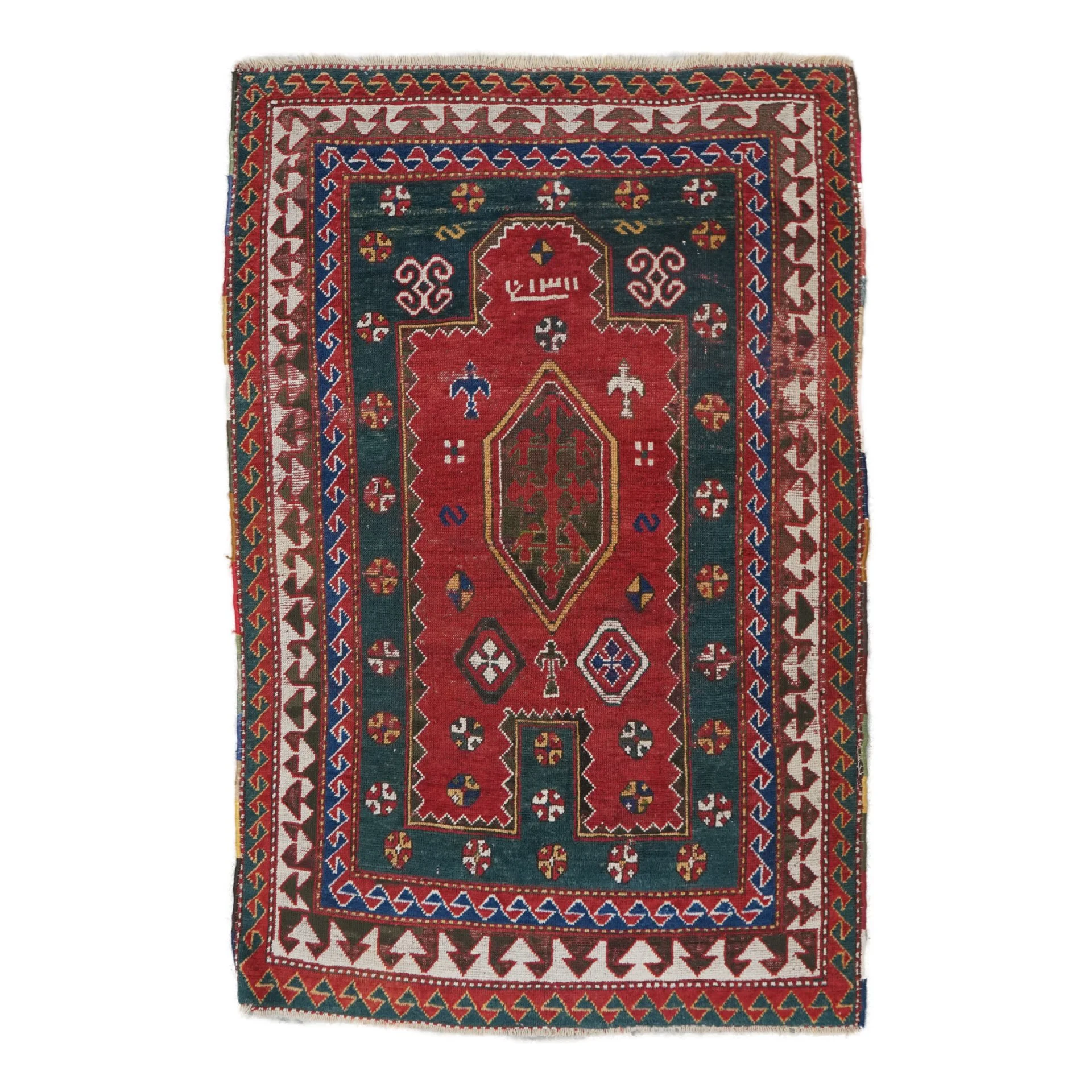 Image 1 of 12
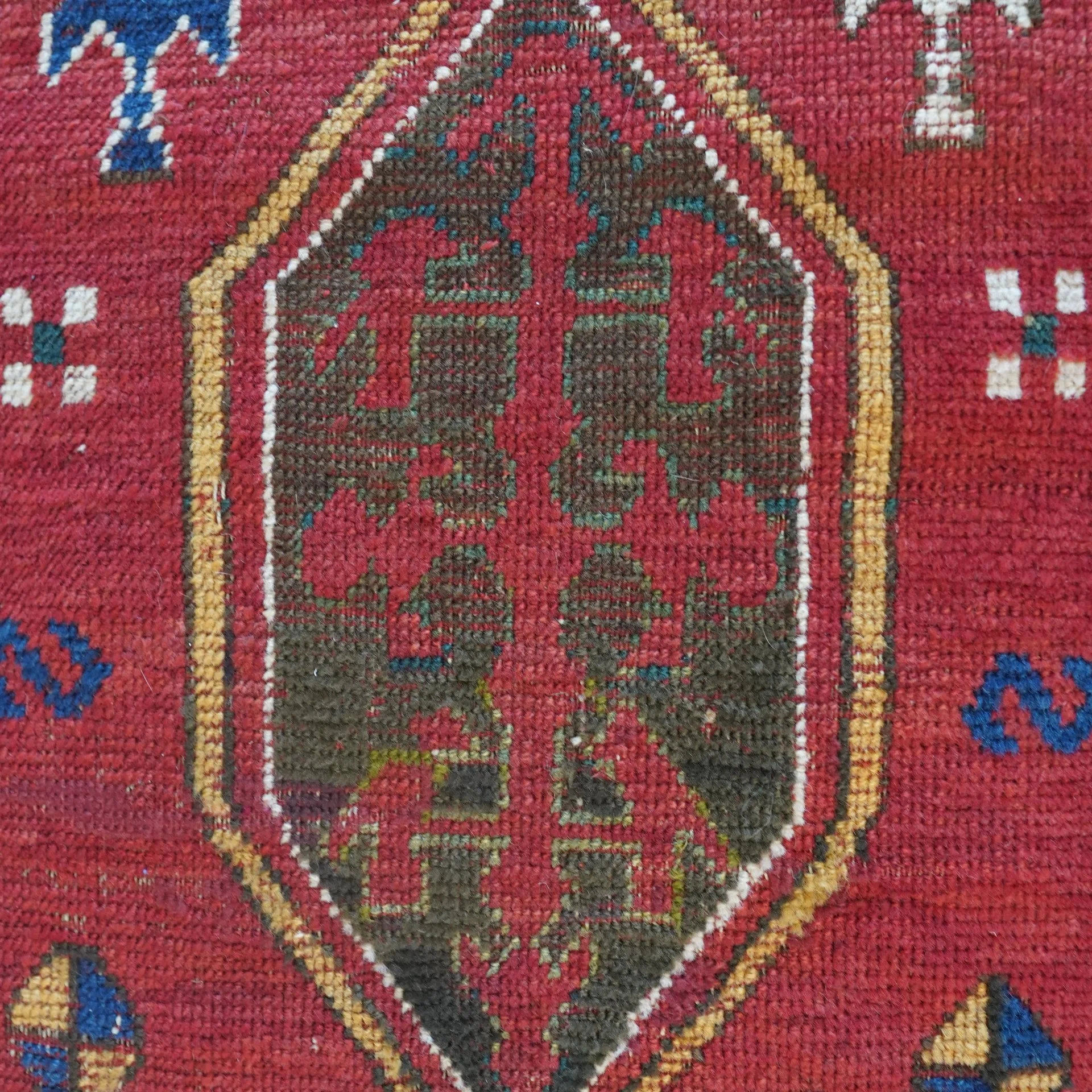 Image 2 of 12
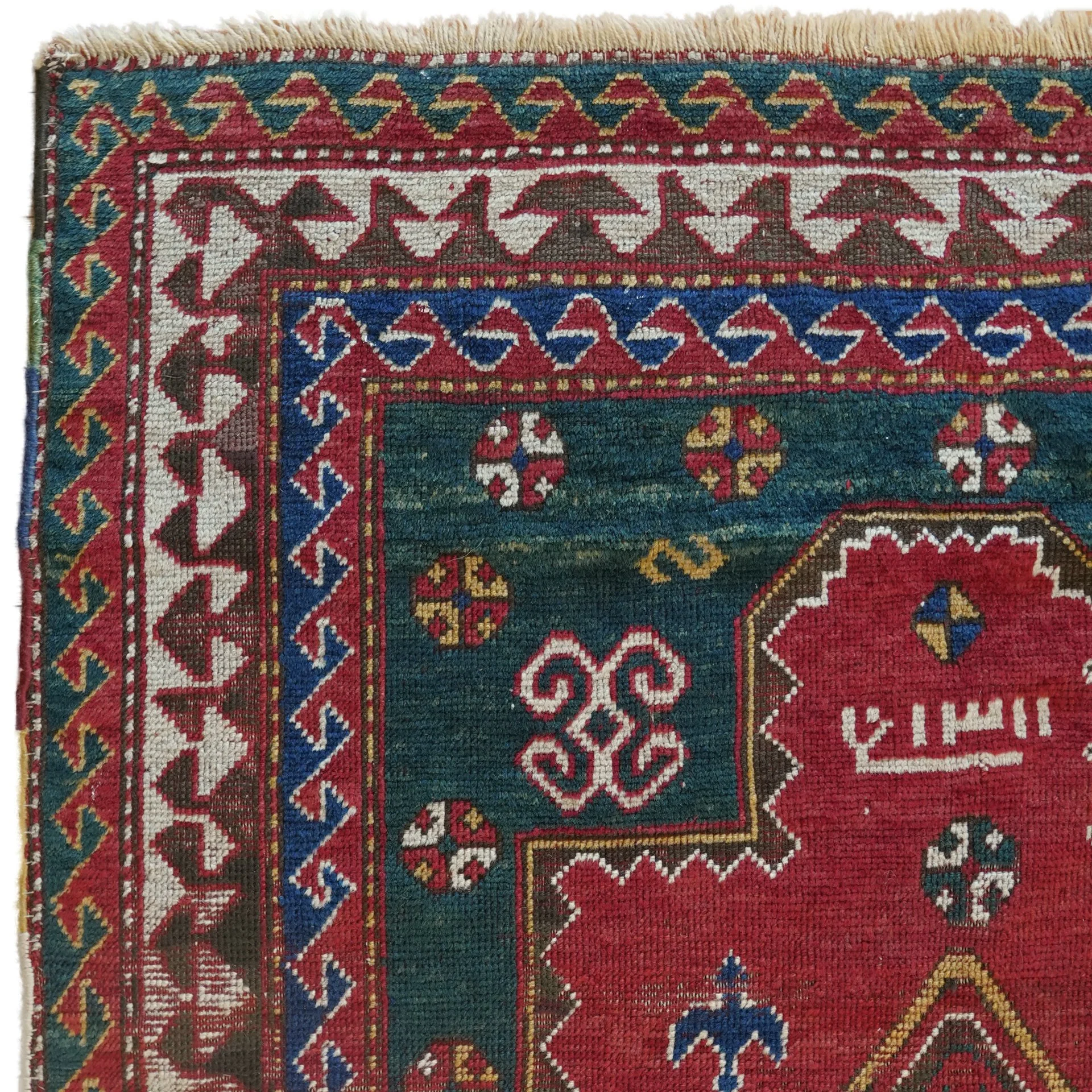 Image 3 of 12
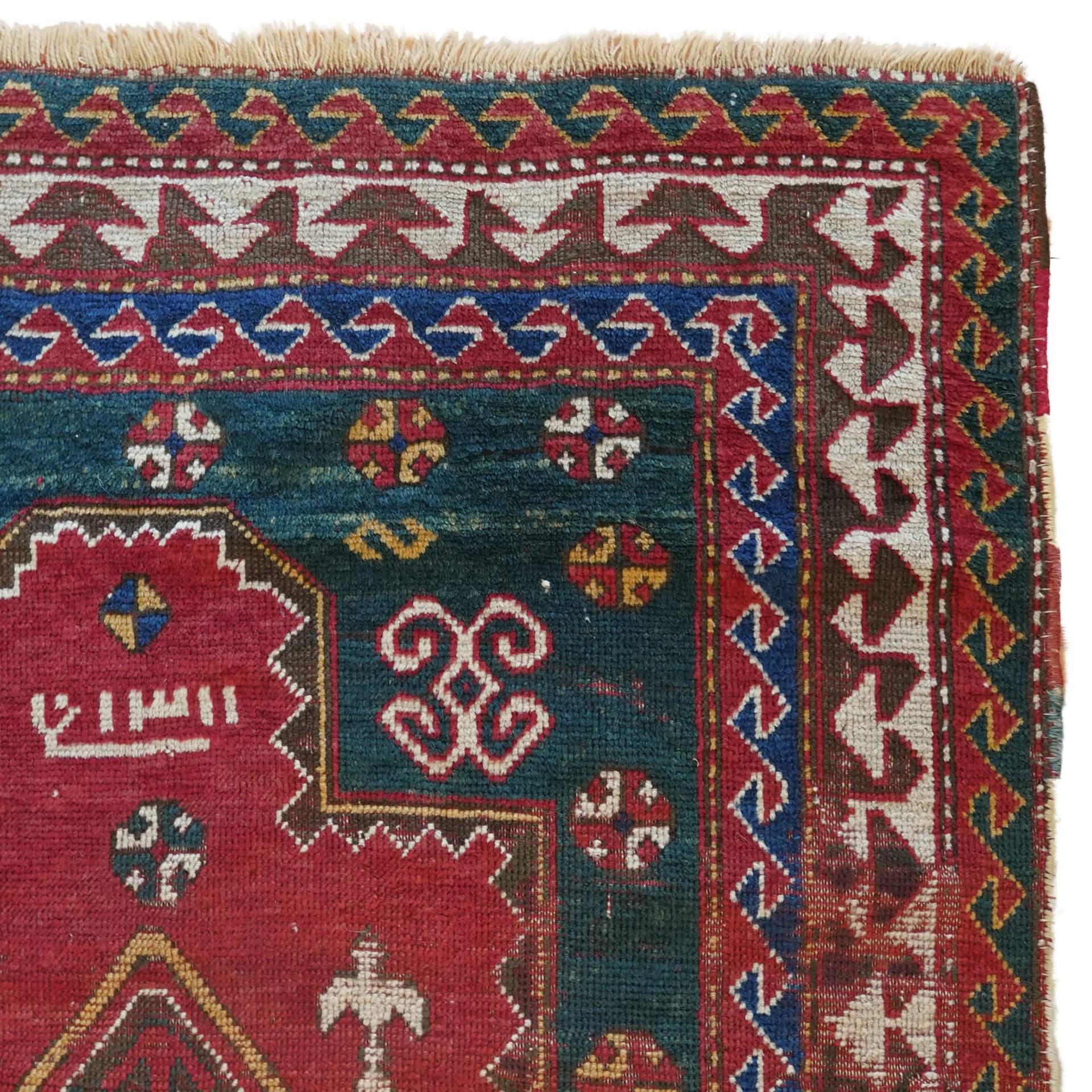 Image 4 of 12
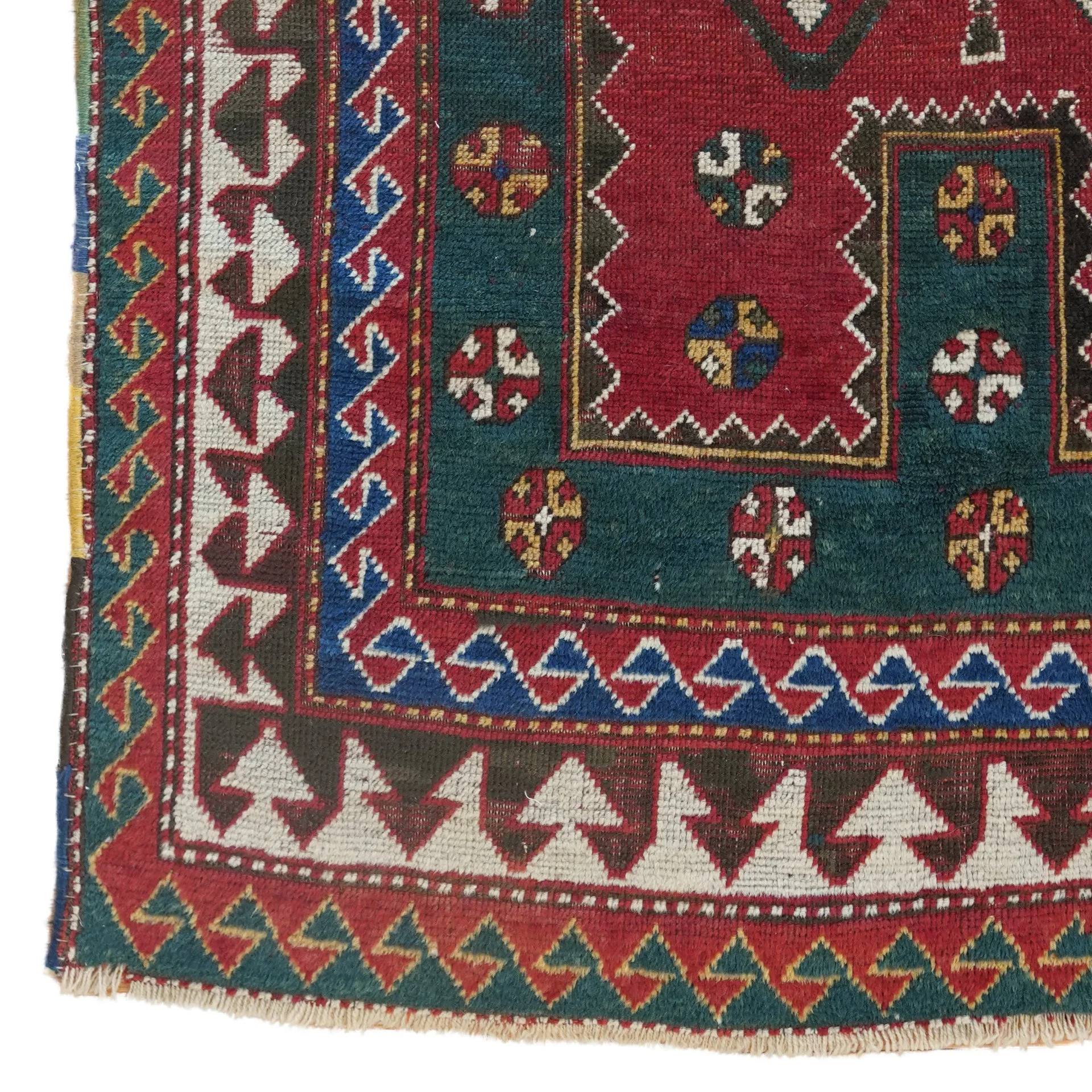 Image 5 of 12
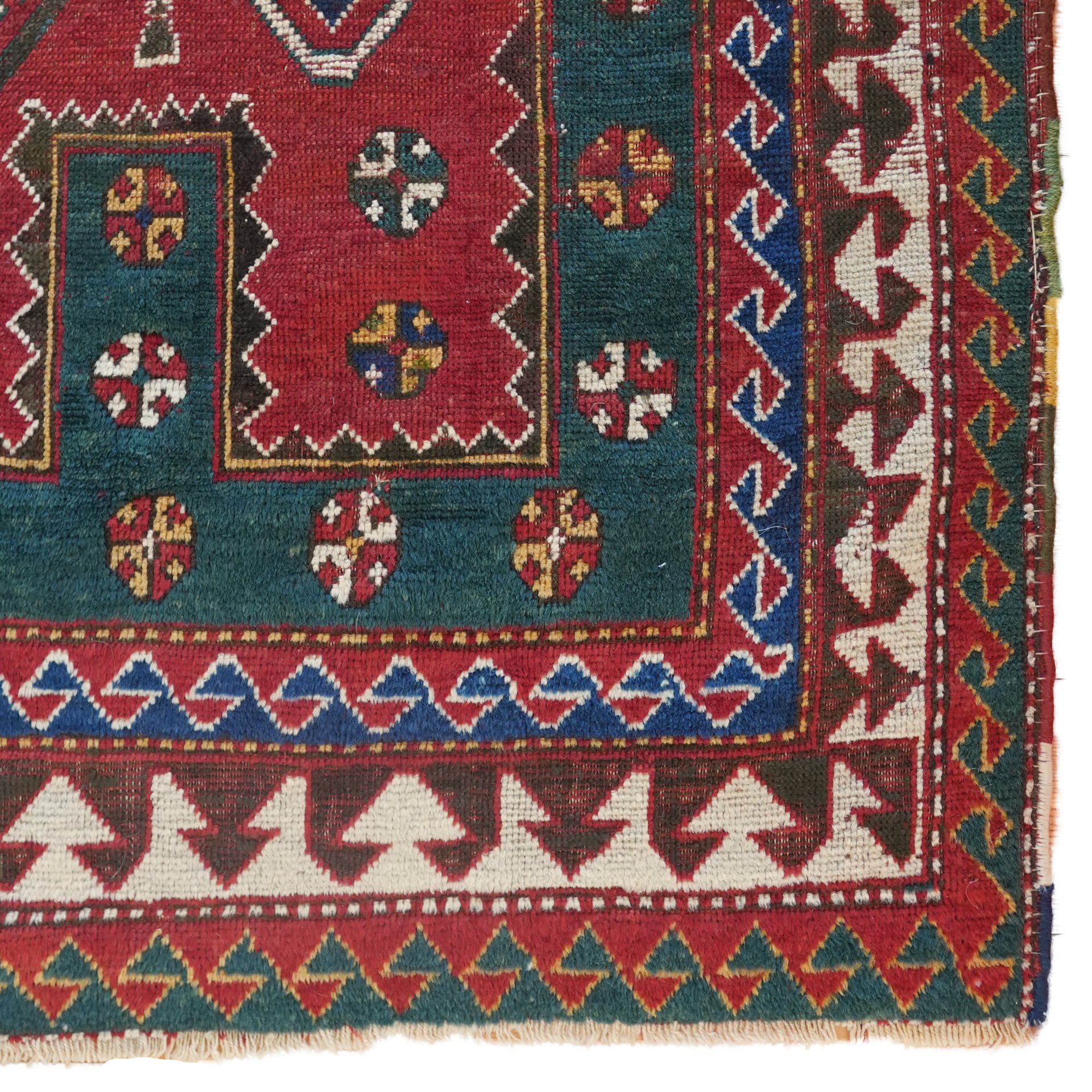 Image 6 of 12
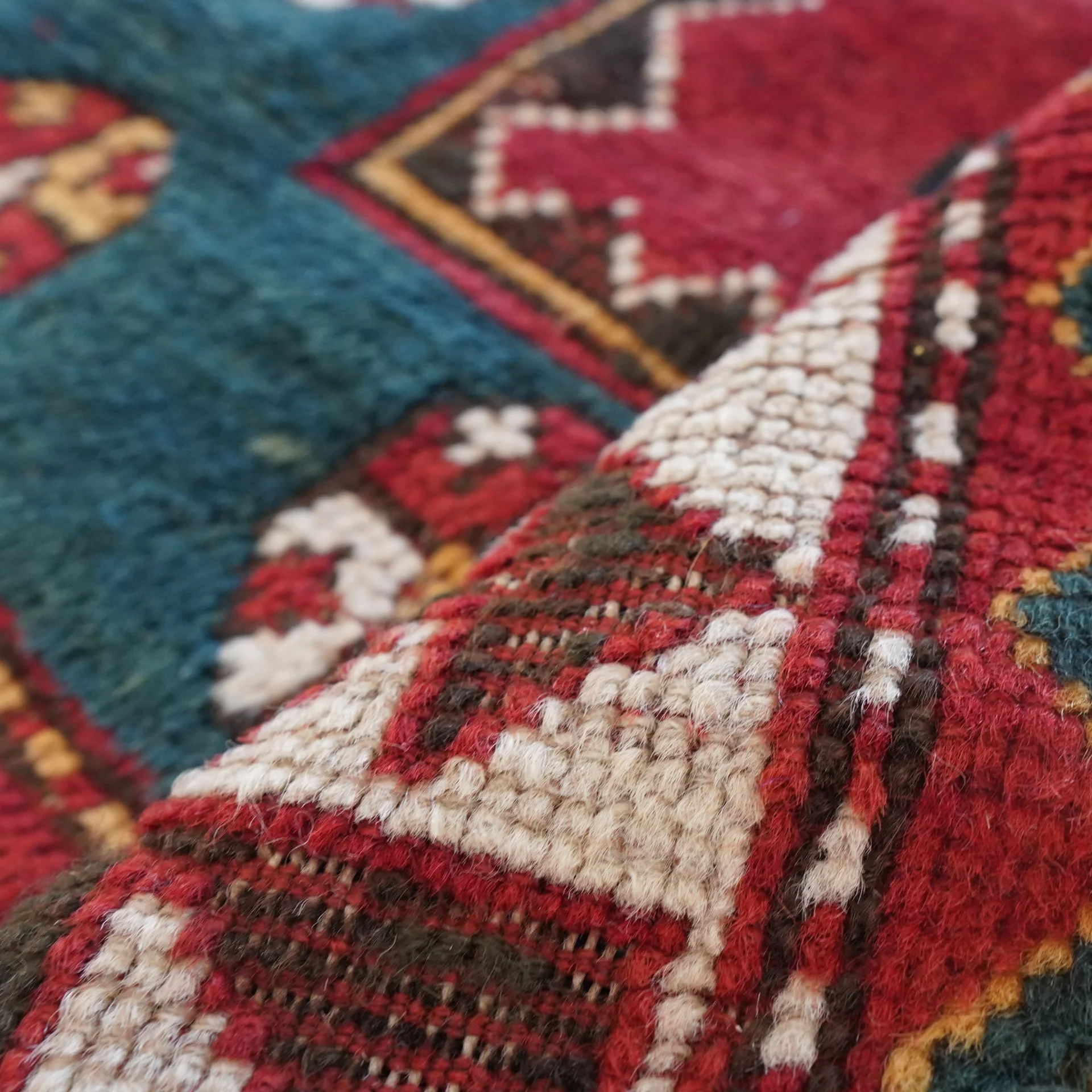 Image 7 of 12
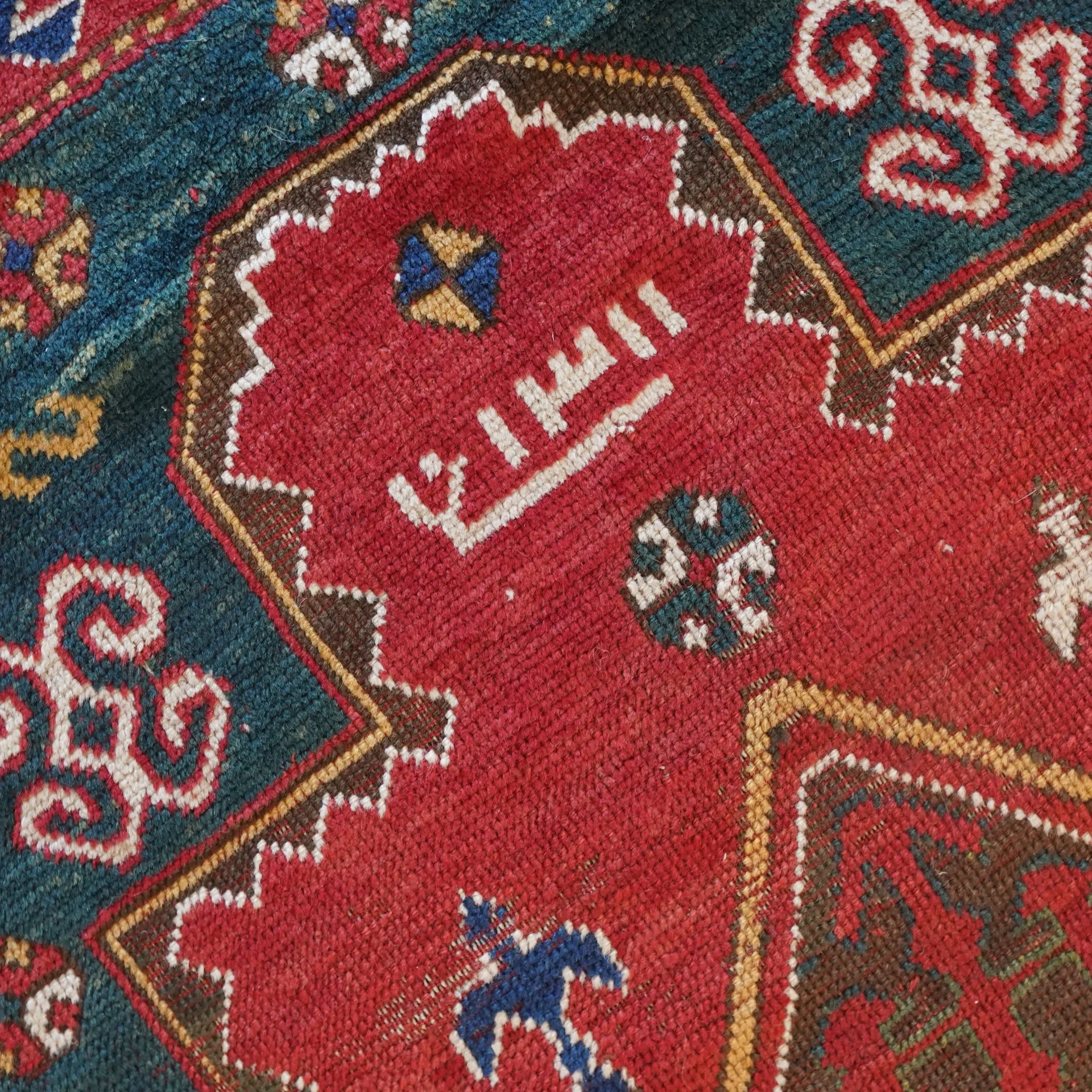 Image 8 of 12
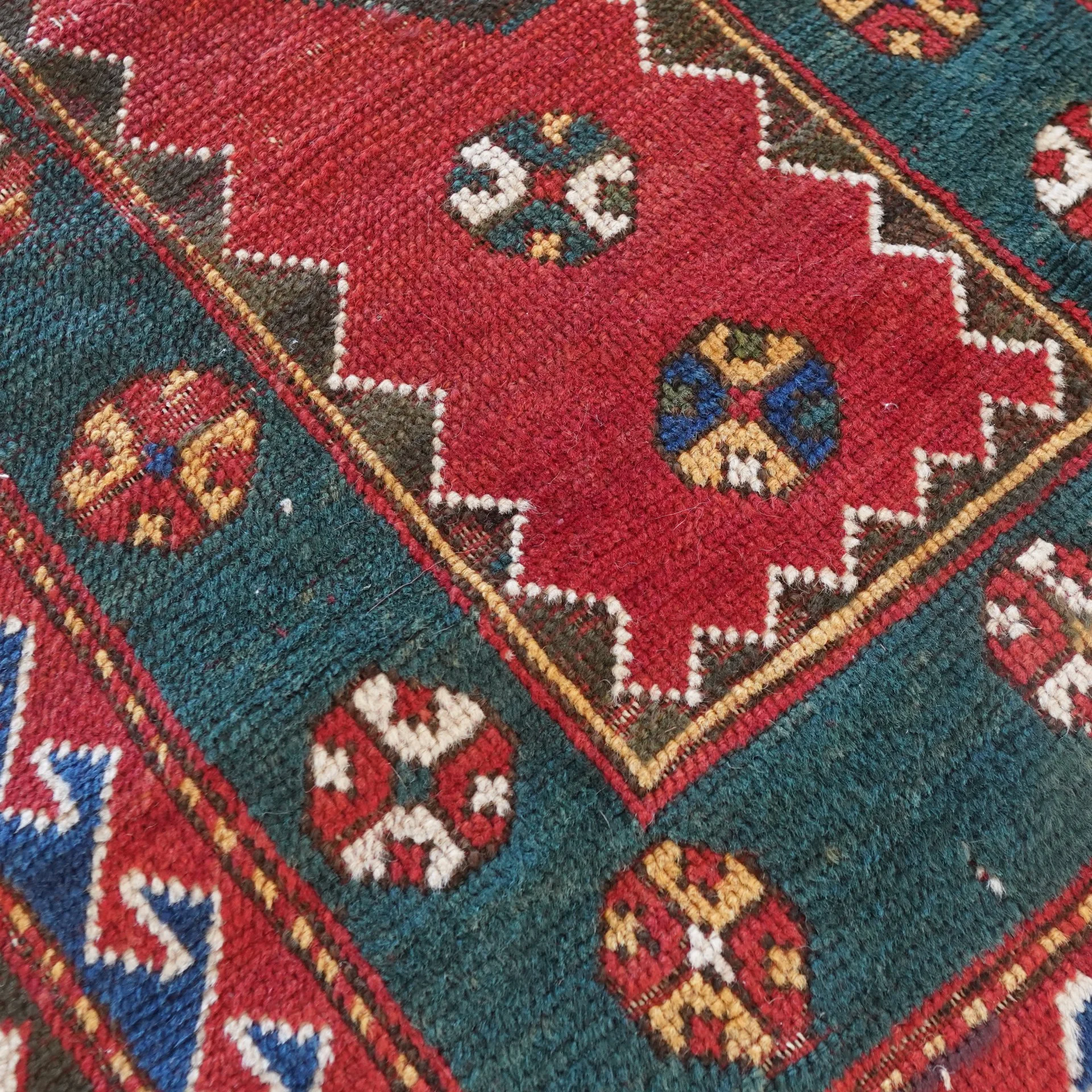 Image 9 of 12
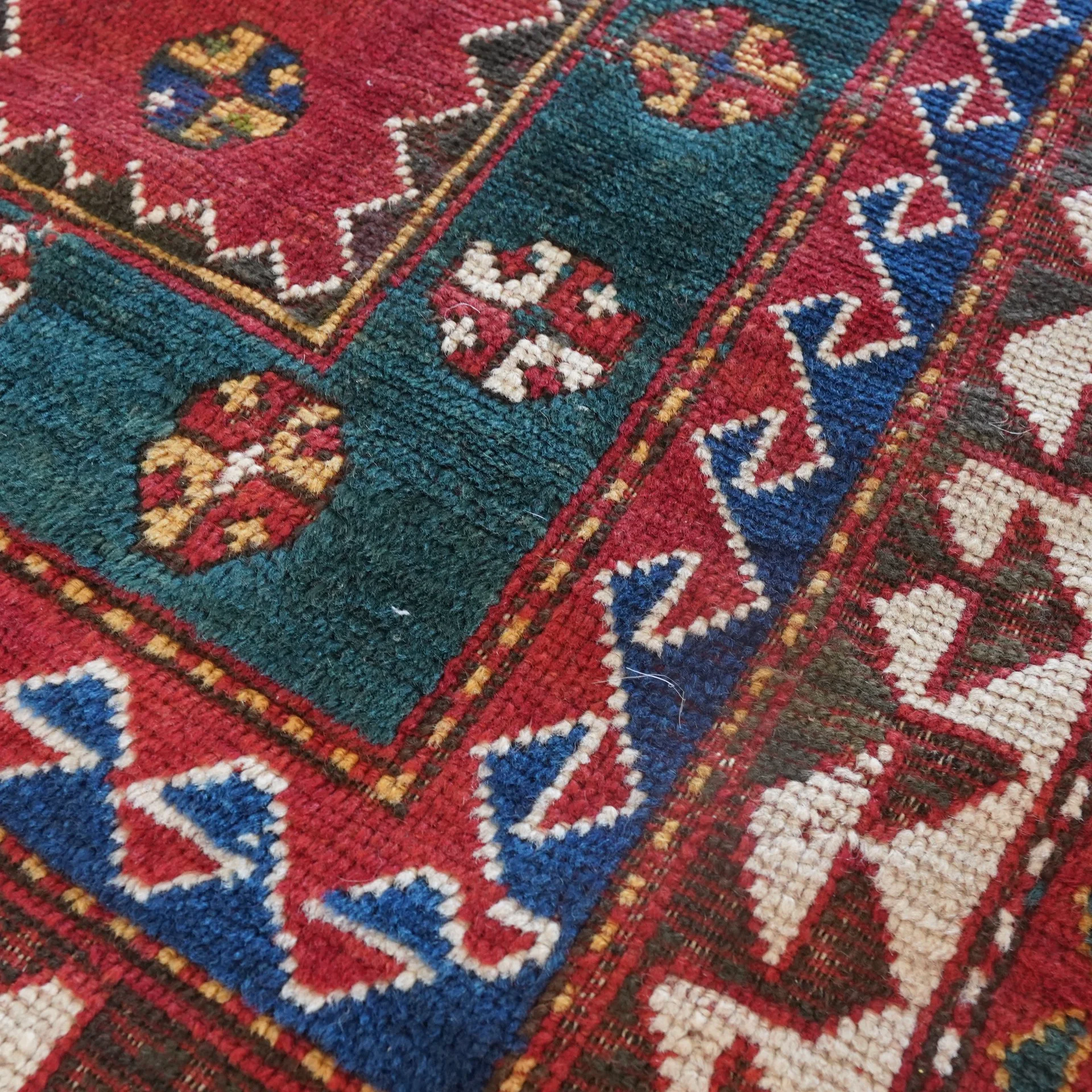 Image 10 of 12
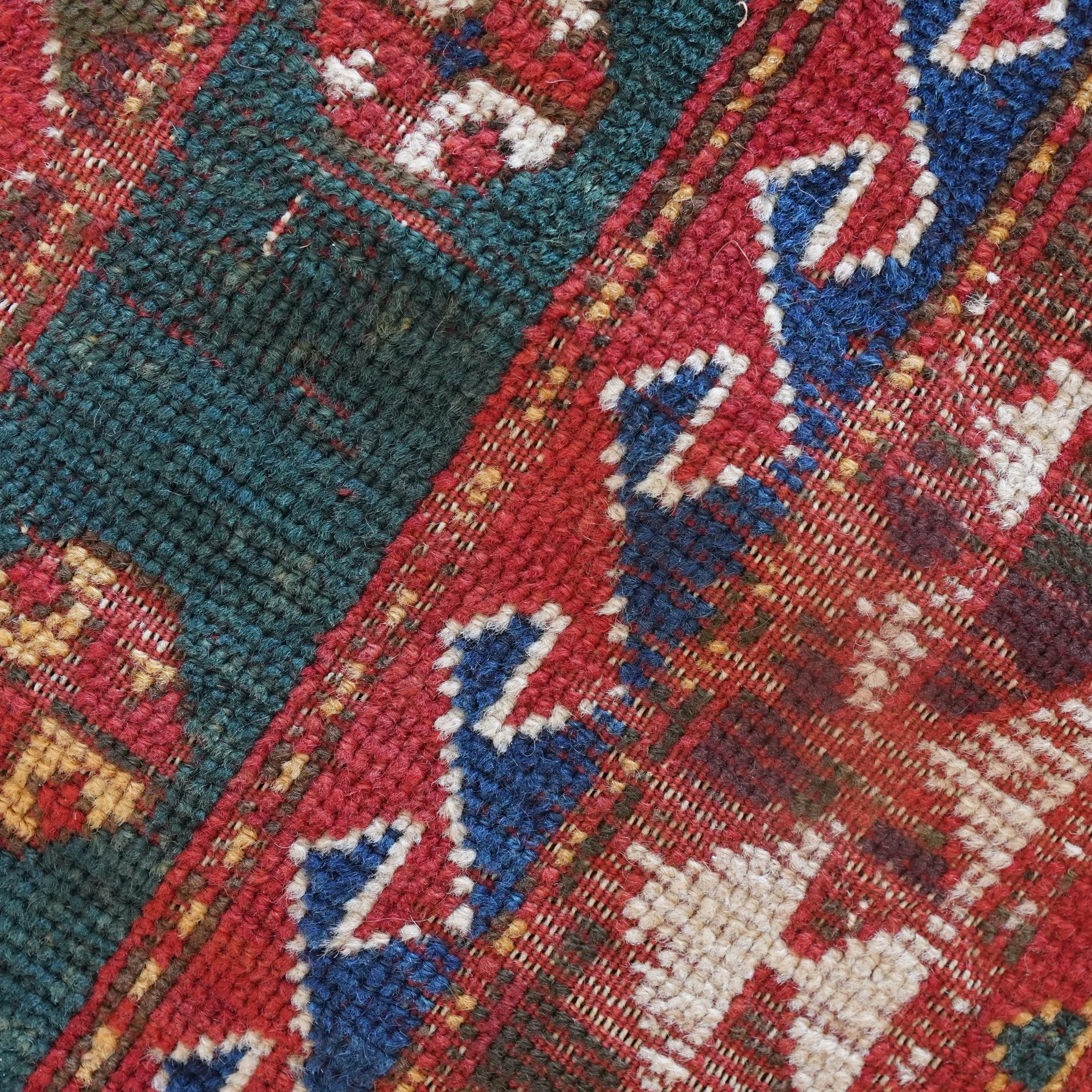 Image 11 of 12
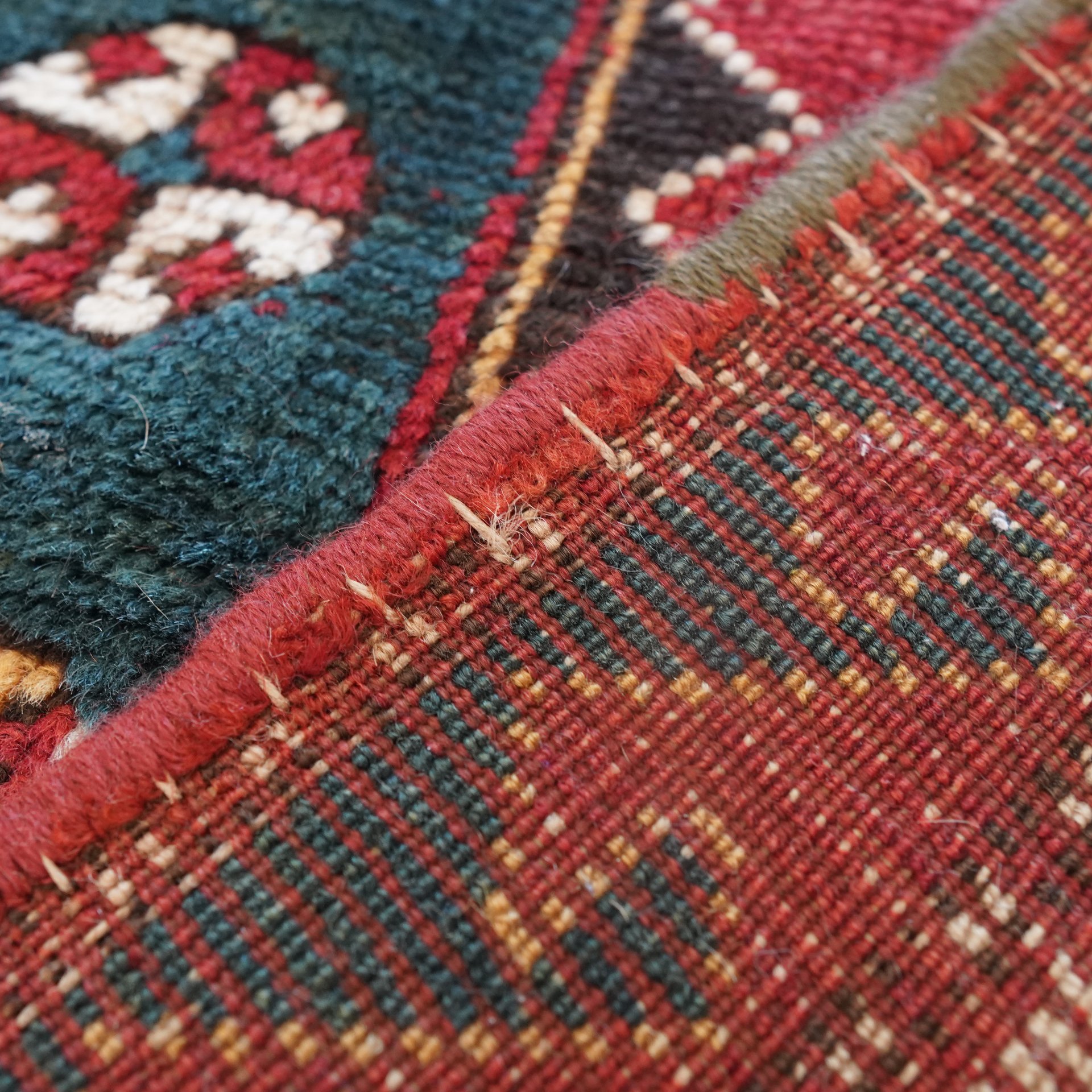 Image 12 of 12